Heavy-Duty Warehouse & High Bay Racking Solutions
Explore our primary industrial racking lines engineered for vertical volume optimization, seismic stabilization, strict FIFO/LIFO turnover, and extreme load capacities up to 15,000 kg.
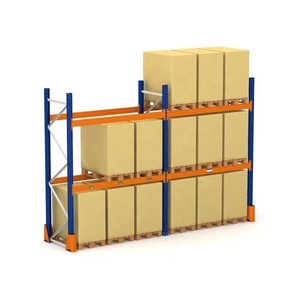
Storage Stacking Racks Pallet Steel Metal Shelves Garage Warehouse Racking
- Modular post design & nestable base
- 1,000–2,500 kg capacity per unit
- Powder coat or hot-dip galvanised
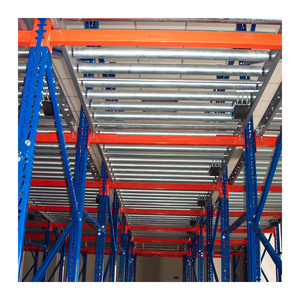
Pallet Flow Rack High Quality FIFO Warehouse Storage Racks Gravity Pallet Flow Racking First in First Out
- Inclined roller tracks with brake rollers
- Strict date-sensitive stock rotation
- Eliminates internal picking traffic
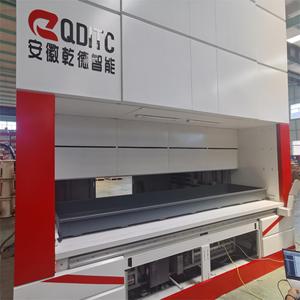
Industrial Stacking Racks Shelves-Mobile Durable Alloy Steel 15000kg Load Capacity System
- Ultra-high strength alloy steel tubing
- Certified 15,000 kg stack load limit
- Flexible seasonal staging layout
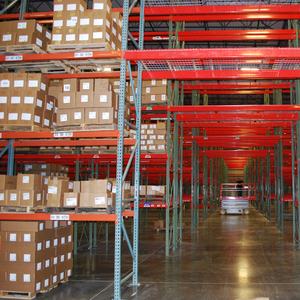
Steel Material Warehouse Rack Numbering System Warehouse Racking Systems for Goods
- WMS integrated barcode & bay markers
- Precision cold-rolled structural bays
- High visibility load capacity signage
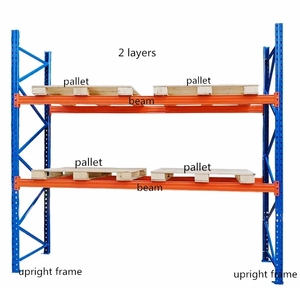
Blue And Orange Pallet Racking, Metal Hanging Carpet Shelf Rack, Sample Metal Racks
- Custom beam levels & hanging mandrels
- Long-span roll & fabric merchandise
- Scratch-resistant thermoset finish
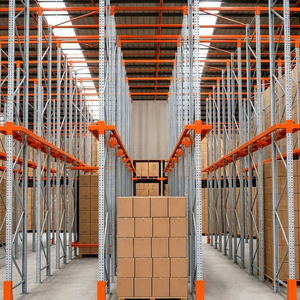
Industrial Heavy Duty Drive in Rack High Density Storage System for Warehouse
- Continuous rail channels without cross-aisles
- Up to 80% floor footprint reduction
- Heavy gauge floor guide rails included
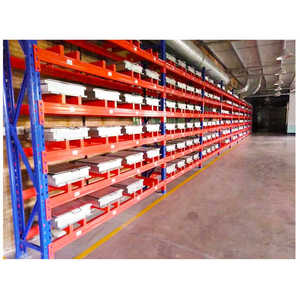
Direct Factory Free Layout Design High-Density Drive-In Pallet Storage Rack Steel Narrow Lane
- High-grade Q355B cold-formed uprights
- Custom engineering for narrow mast trucks
- Optimized for homogeneous batch storage
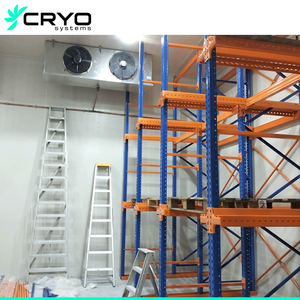
Cold Room Warehouse Pallet Storage Racking Systems Poultry Meat Walk in Freezer
- Certified operation down to -30°C
- Specialized low-temp zinc/powder finish
- Thermal shrinkage compensated joints
High Bay Storage Racking Engineering: Structural Integrity & Global Standards
Modern high bay storage racks represent a sophisticated convergence of structural civil engineering, metallurgy, and automated intralogistics. Unlike conventional low-rise shelving, high bay systems operate at elevations ranging from 12 meters to over 40 meters. In these soaring vertical envelopes, deflection tolerances, torsional buckling, baseplate load dispersal, and seismic resonance become critical risk factors. Guangzhou Heda Shelves Co., Ltd., established in 2001, has engineered and delivered over 10,000 warehouse projects globally, resolving complex structural challenges through rigorous adherence to international engineering criteria.
From an engineering standpoint, high bay racking must comply with stringent international standards including the Australian Standard AS 4084-2023 (Steel Storage Racking), European EN 15512 / FEM 10.2.02 guidelines, and the American RMI (Rack Manufacturers Institute) MH16.1 specifications. Achieving this compliance requires continuous analysis of second-order sway effects (P-Delta effects), live load variations, and pallet beam connection stiffness. By deploying premium Q235B and Q355B cold-rolled structural steel, every upright column profile is roll-formed with precise cold-work hardening that optimizes the strength-to-weight ratio without introducing internal residual stresses.
High bay vertical uprights feature continuous, computer-monitored hole punching patterns along 50mm, 75mm, or 76.2mm pitch configurations. This allows millimeter-precision beam adjustment to conform exactly to changing SKU dimensions while preventing eccentric pallet loading. For global installations in earthquake-prone regions such as New Zealand (NZS 1170.5) and the Pacific Rim, upright base plates are customized with multi-anchor dynamic chemical bolting and reinforced internal portal bracing, transferring seismic ground acceleration safely across the concrete slab.
Comparative Engineering Matrix: High Bay & Density Systems
Selecting the optimal high bay racking configuration requires evaluating warehouse volume utilization, stock rotation velocity, forklift infrastructure, and structural floor slab tolerances (e.g., DIN 18202 Table 3 Group 4 flat floor standards). The following engineering comparison outlines the key operational parameters across standard industrial high bay configurations:
| Racking System Type | Space Utilization | Pallet Selectivity | Inventory Turnover | Aisle Width Req. | Target Industries |
|---|---|---|---|---|---|
| Selective High Bay | 40% – 50% | 100% Immediate | FIFO / LIFO Dynamic | 3.0m – 3.5m | 3PL Distribution, FMCG, Retail Fulfillment |
| VNA (Very Narrow Aisle) | 65% – 75% | 100% Immediate | FIFO / High Velocity | 1.6m – 1.9m | Pharma, E-Commerce, Spare Parts Hubs |
| Drive-In / Drive-Through | 75% – 85% | 20% – 30% Bulk | LIFO (Strict FIFO on Drive-Thru) | Forklift Dimension | Cold Storage, Seasonal Produce, Bulk Chemical |
| Pallet Flow (Gravity) | 80% – 88% | Face Access Only | Strict FIFO | Dedicated In/Out Aisles | Dairy, Perishables, Pharmaceutical Cold Chain |
| Radio Shuttle High Bay | 85% – 92% | Lane Dependent | Automated FIFO / LIFO | Transfer Aisle Only | Deep Freeze, Beverage Bottling, Raw Materials |
| Stackable Stillage Racks | 50% – 65% | Modular Block | Flexible Staging | Variable / Open Yard | Tire Distribution, Metal Fabrications, Garages |
Factory-Direct Manufacturing: From Raw Coil to Certified Installation
Guangzhou Heda Shelves Co., Ltd. controls the complete manufacturing chain inside an expansive 30,000 m² modern manufacturing hub operating with an automated production output exceeding 30,000 tons per month. Because high bay racking carries enormous dynamic and static mass, manufacturing precision cannot be compromised. Our manufacturing facility integrates 10 distinct automated processing milestones to ensure structural consistency across every upright frame, box beam, and bracing channel.
1. Metallurgical Screening
Every batch of high-tensile hot-rolled steel strip undergoes spectrometer analysis and tensile yield tests (Q235B ≥ 235 MPa, Q355B ≥ 355 MPa) with full mill test certificates (MTC) supplied.
2. CNC Roll-Forming Lines
Continuous CNC multi-roller profiling lines cold-form upright columns and closed interlocking beams with tight dimensional tolerances within ±0.5mm across 12-meter continuous sections.
3. Robotized MIG Welding
Automated dual-torch robotic welding stations weld beam connectors with zero spatter, deep penetration, and continuous seam consistency, ensuring maximum shear-load resistance.
4. Pre-Treatment Chemistry
Automated multi-stage immersion pickling and phosphating removes all surface oxidation and grease, creating an iron phosphate nano-coating that permanently binds powder to the substrate.
5. Electrostatic Powder Coat
Utilizing high-grade thermosetting polyester powder cured at 180°C–200°C to achieve a 60–90μm uniform barrier, passing 500-hour neutral salt spray tests (ASTM B117) without blistering.
6. CE & ISO Quality Gate
Our quality management system is certified under ISO 9001:2015 (No. 18624Q00169R0M) and structural steel execution verified under CE Certification (No. 2435-CPR-8605159).
Strategic Procurement & Technology Trends in High Bay Storage (2025–2030)
Global logistics operators, real estate investment trusts (REITs), and industrial directors are currently pivoting away from standard manual racking toward dynamic, automated, and decarbonized storage ecosystems. Procurement managers navigating cross-border sourcing from China must account for several major technology shifts unfolding across high bay installations:
1. Convergence of Structural Racking with Automated Guided Vehicles (AGVs) & AMRs
Traditional static racking designs are increasingly adapted for seamless autonomous mobile robot (AMR) and radio shuttle integration. Racking bases must feature lower bottom clearances, precision optical reflector mounts, and ultra-flat floor guide rails that allow high-speed robotic shuttles to dock with sub-millimeter accuracy. Structural steel deflection calculations must now incorporate dynamic harmonic vibrations induced by autonomous acceleration and deceleration cycles.
2. Cold-Chain Optimization and Sub-Zero Steel Metallurgy
With global cold chain logistics expanding rapidly for pharmaceuticals and premium fresh foods, high bay freezers operating at -25°C to -30°C demand specialized steel grades that resist ductile-to-brittle transitions. Sourcing engineers specify low-carbon manganese-alloyed steel formulations with verified Charpy V-notch impact toughness tested down to -40°C, combined with anti-corrosion galvanized or epoxy finishes that resist continuous condensation cycles.
3. Circular Economy & Low-Carbon Steel Certification
International procurement frameworks (particularly across the EU, Australia, and North America) increasingly mandate Environmental Product Declarations (EPDs) and carbon footprint tracing on structural steel. China's top racking suppliers are transitioning to electric arc furnace (EAF) recycled steel scrap inputs and adopting closed-loop powder recycling booths that virtually eliminate volatile organic compounds (VOCs) and reduce embodied carbon per pallet position by up to 28%.
4. Digital Twin Simulation & Real-Time Load Telemetry
Before steel is cut, engineering layout approval relies on 3D finite element analysis (FEA) and dynamic warehouse throughput simulation models. Future-ready high bay installations are integrating IoT-enabled strain gauges on critical load-bearing uprights. These sensors relay real-time structural stress and eccentric impact telemetry to warehouse management systems (WMS), preventing catastrophic progressive rack collapses caused by forklift strikes.
Technical Buyer FAQ: Navigating Factory Sourcing, Standards & Logistics
Procuring warehouse racking from an overseas manufacturer requires full transparency regarding design criteria, certifications, duty documentation, and field assembly. Below are detailed technical responses to the most critical inquiries submitted by international logistics engineers and purchasing executives:
Our structural engineering department conducts custom calculations referenced to AS 4084-2023 (Australia) and NZS 1170.5 (New Zealand). We supply complete structural calculation packs, section properties (Z, I, A values), and connection stiffness data so your independent local structural certifier can issue building sign-offs with full confidence.
We strictly utilize premier cold-rolled and hot-rolled coils from certified state-owned steel mills conforming to GB/T Q235B and Q355B (equivalent to EN 10025 S235JR and S355JR). Thickness is controlled within strict tolerances of ±0.05mm. Mill Test Certificates (MTCs) detailing chemical and mechanical properties accompany each dispatch batch.
For interior ambient warehouses, our 60–90μm electrostatic polyester powder coating provides superior resistance. For coastal regions, open-sided staging sheds, or high-humidity cold rooms, we provide hot-dip galvanizing conforming to ISO 1461 / ASTM A123 with a minimum coating thickness of 65–85μm, delivering maintenance-free corrosion resistance for over 20 years.
All upright frames, beams, and pallet flow rails are bundled on dedicated heavy-duty steel stillages or ISPM-15 heat-treated, certified timber skids. This guarantees rapid clearance through strict agricultural biosecurity inspections such as Australia's DAFF and New Zealand's MPI without quarantine delays or chemical fumigation rejections at the port.
To configure an optimal racking layout within 24 hours, our engineering team requires: (1) Architectural floor plan showing column grids, overhead trusses, dock doors, and fire sprinkler clearance; (2) Pallet dimensions (L × W × H including overhang) and maximum loaded weight; (3) Forklift model, turning radius, and maximum reach height; and (4) Desired SKU turnover model (FIFO or LIFO).
Yes. We act as an OEM and ODM manufacturing partner for leading racking distributors worldwide. We provide custom upright slot profiles (teardrop, 50mm pitch, 75mm European pitch, 76.2mm Australian pitch), custom brand laser-cut logos on end-frame protectors, custom RAL colors, and branded installation instruction manuals.
Engineer Your High Bay Storage Facility with Heda Shelves
Connect directly with our senior structural racking engineers today. Receive a complimentary 3D CAD warehouse layout design, load-deflection calculation pack, and factory-direct quotation tailored to your operational specifications.