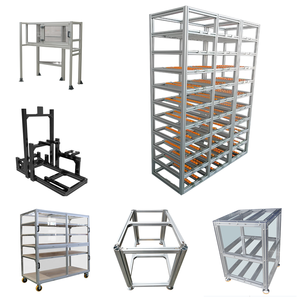
All-in-One Industrial Aluminum Profiles Framing Display Stand Flow Rack Aquarium Stand Equipment Protective Guard Enclosure
- Modular T-Slot Extrusions
- High Modulus Rigidity
- Robotics Guarding Ready
Explore factory-direct industrial storage frameworks, engineered to tight tolerances for manual, semi-automated, and robotic very narrow aisle configurations.
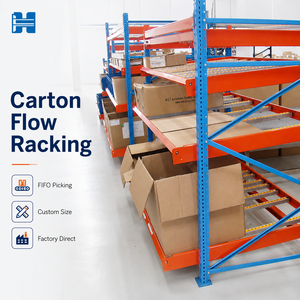
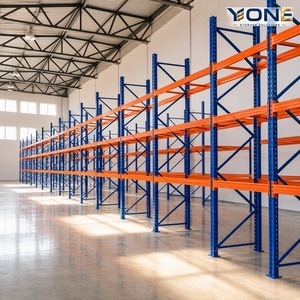
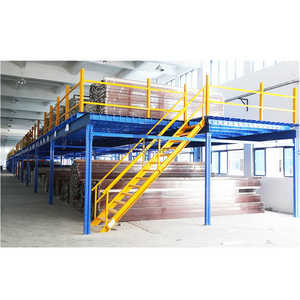
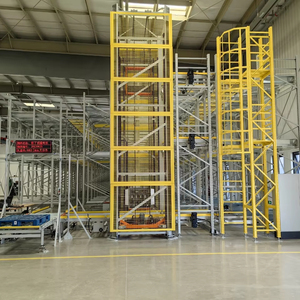
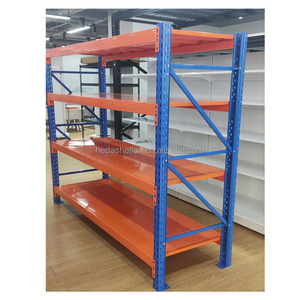
In modern high-density intralogistics, Very Narrow Aisle (VNA) Pallet Racking bridges the operational threshold between conventional selective racking and multi-million dollar automated crane systems (ASRS). Standard selective layouts demand aisle widths ranging between 3.2 and 4.0 meters to accommodate conventional counterbalanced forklifts, which sacrifices up to 60% of horizontal warehouse footprint solely to non-revenue vehicle maneuvering. By condensing working aisles to 1.5 to 1.8 meters and scaling upright heights up to 15 to 18 meters, VNA architectures reclaim over 45% of dormant cubic airspace while preserving 100% individual pallet selectivity.
Operating turret trucks (man-down or man-up order pickers) at mast heights exceeding 14 meters magnifies micro-dynamic loads into destructive kinetic resonance. Every millimeter of floor unevenness or upright deflection can shift the vehicle mast head dangerously by several inches. Consequently, tier-one Chinese structural manufacturers implement certified steel section properties engineered per finite element analysis (FEA). We control lateral deflection ratios far beyond generic building tolerances, satisfying rigorous deflection limits stipulated by AS 4084:2023 (Australia/Oceania), EN 15512:2020 (Europe), and RMI ANSI MH16.1 (North America).
Structural VNA mandates either mechanical floor guidance (low-profile steel inverted angle or C-channels anchored with high-tensile chemical anchors) or wire-induction guidance recessed into slab saw-cuts. Mechanical guide rails safeguard both the upright base plates and moving truck chassis against cross-track deviation while high-reach trucks navigate at full speed.
High-bay installations rely on concrete slab flatness conforming strictly to DIN 18202 Table 3 Group 4 or TR34 (Category DM1/DM2). Chinese master-grade roll-forming ensures upright cold-rolled profiles (100–140mm face profiles) deliver uniform structural wall thickness, matching heavy anchor baseplate seismic requirements under extreme live loads.
For towering vertical runs exceeding 12 meters, overhead structural aisle portal ties link opposing upright runs across the narrow working aisle. This rigid overhead triangulation converts cantilevered upright columns into continuous braced portals, effectively eradicating high-level mast-induced harmonic vibration and optimizing cyclic picking speeds.
Evaluate structural payload density, capital expenditure per pallet position, and inventory accessibility to calibrate your operational search intent.
| System Architecture | Aisle Width (mm) | Maximum Working Height | Floor Space Utilization | Individual Selectivity | CapEx Factor / Pallet |
|---|---|---|---|---|---|
| Wide Aisle (Selective) | 3,200 – 3,800 mm | Up to 9.0 meters | 35% – 42% | 100% (Direct) | Baseline ($) |
| Double-Deep Racking | 3,000 – 3,400 mm | Up to 10.5 meters | 50% – 58% | 50% (Requires shunting) | 1.25x Baseline |
| Very Narrow Aisle (VNA) | 1,500 – 1,800 mm | Up to 18.0 meters | 65% – 72% | 100% (Direct) | 1.35x – 1.6x Baseline |
| Automated Cranes (ASRS) | 1,400 – 1,600 mm | Up to 40.0+ meters | 80% – 90% | 100% (Programmed) | 6.0x – 10.0x Baseline |
Global warehouse operators are modernizing their procurement frameworks. These five macro shifts dictate structural steel specifications over the next five years.
Transitioning from manually steered articulated turret trucks to driverless automated guided VNA vehicles (AGVs). Upright designs now incorporate laser target plates, optical alignment reflectors, and sub-millimeter punching tolerances to facilitate unassisted robotic pallet extraction.
Global logistics corridors demand seismic verification. Racking systems are engineered with site-specific seismic baseplate configurations, oversized footings, and dual-shear structural bolting that flex elastoplastically during peak ground acceleration without catastrophic structural buckling.
The cost per refrigerated cubic meter is soaring. Cold chain facilities are retrofitting with galvanized or multi-stage epoxy VNA systems, achieving sub-zero air circulation through high-density vertical flue channels while slashing electrical refrigeration overhead per stored pallet.
Supply chain leaders specify racks embedded with structural telemetry. Smart strain sensors placed on lower upright columns quantify dynamic impact loads and structural fatigue in real time, feeding operational health metrics directly into enterprise facility dashboards.
International environmental disclosures require audited embodied carbon metrics. Leading Chinese manufacturers are responding by shifting toward certified electric arc furnace (EAF) scrap steel blends, sustainable multi-stage nano-ceramic pre-treatment lines, and low-VOC thermosetting powder coatings.
Combining structural metallurgy, certified automation testing, and full international logistics compliance from our dedicated 30,000 m² industrial manufacturing complex.
Fully automated roll-forming lines, computerized continuous punching units, and robotic beam welding lines capable of executing mega-scale logistics park contracts on stringent timelines.
Strict third-party audited quality control systems: CE Certification No. 2435-CPR-8605159 and ISO 9001:2015 Certification No. 18624Q00169R0M verifying dimensional tolerances.
In-house team of structural engineers delivering parametric 3D simulation renders, building CAD integrations, and comprehensive beam deflection calculation packages within 24 hours.
Pre-palletized on heavy-gauge steel stillages or ISPM-15 certified heat-treated timber packaging, eliminating biosecurity quarantine demurrage at major global container terminals.
Crucial engineering and commercial insights to inform project risk assessments, facility layout planning, and tender specifications.
VNA turret trucks require strict slab profiles: DIN 18202 Table 3 Group 4 or the British Concrete Society TR34 (Category DM1/DM2) standard. Because minor floor dips cause substantial mast tilt at 14+ meters, floor profile grinding must be verified along truck wheel tracks before mechanical guide rail installation.
For mechanically guided operations, side clearance between pallet load edges or truck outer boundaries and racking columns typically ranges from 75 mm to 100 mm per side. For wire-guided installations, clearance is often expanded slightly to 100 mm to 125 mm to prevent corner strikes during electronic steering adjustments.
Yes. Certified Chinese manufacturers use high-tensile Q235B and Q355B structural coil steel. Detailed engineering calculations conform to AS 4084 (Oceania), NZS 1170.5 (New Zealand seismic), and FEMA/RMI guidelines. Uprights are reinforced with heavier wall gauges, enlarged baseplates, and high-tensile anchor studs.
Because VNA turret trucks rarely exit narrow aisles to avoid travel cycle penalties, dedicated Pick-and-Deposit (P&D) stations are situated at the head of every aisle. Standard counterbalanced forklifts or AGVs feed incoming loads to these cantilevered stations, allowing VNA mast equipment to focus solely on high-speed putaway and retrieval cycles.
Send your warehouse dimensions, ceiling clear heights, and pallet specifications to our structural engineering department. We will generate a complimentary 3D spatial layout and comprehensive load calculation dossier.
Send an Inquiry