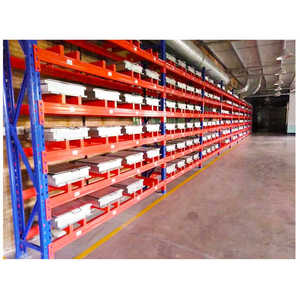
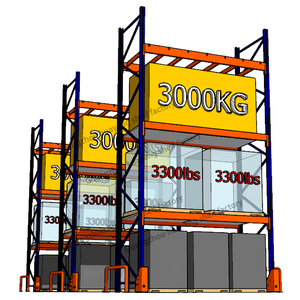
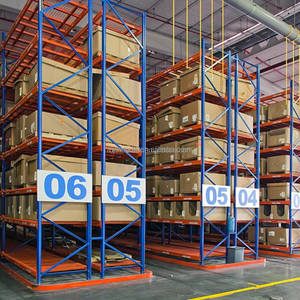
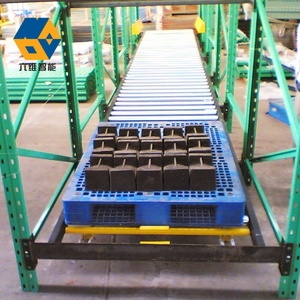
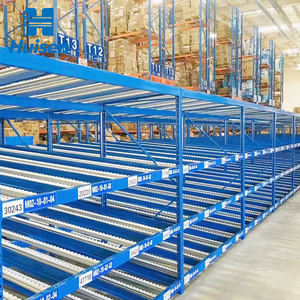
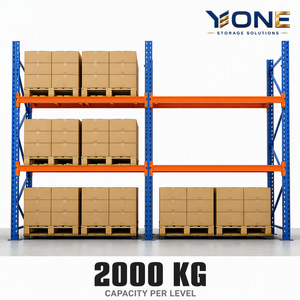
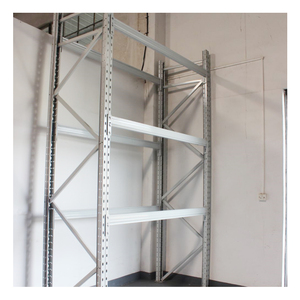
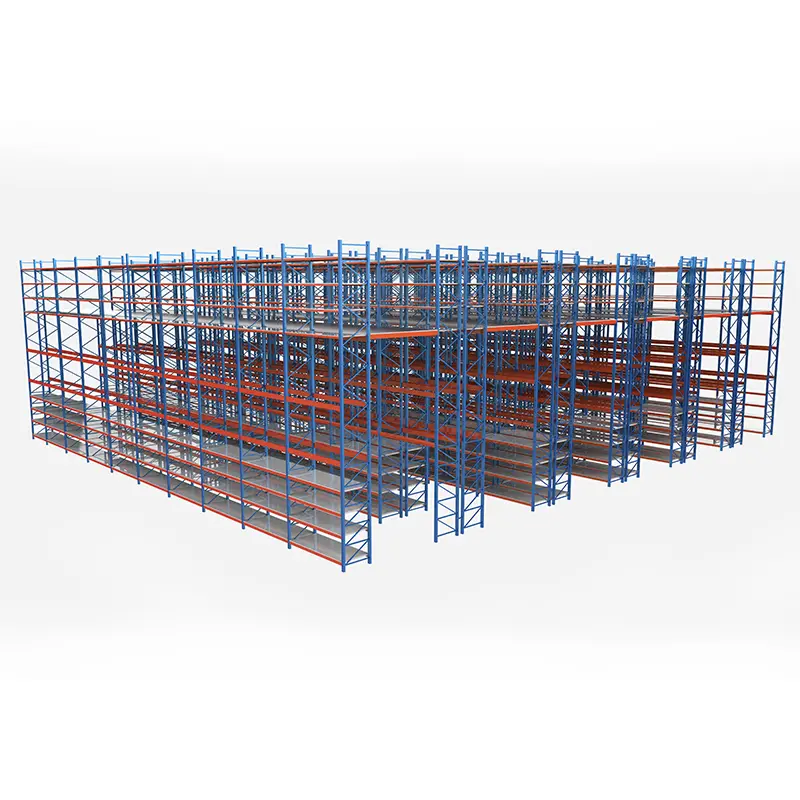
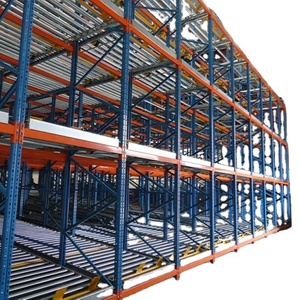
URGO Professional Intensive Storage Flow Rack Roller Pallet Racking for Gravity Racks
- Load Capacity: 500–1,500 kg/pallet
- Rotation Logic: Strict FIFO Auto-Flow
- Roller System: Heavy-Duty Steel Brakes
Manufactured using certified structural Q235B/Q355B cold-rolled steel, custom-tailored for regional pallets, narrow aisles, and deep-reach material handling equipment.
Established Year
Manufacturing Base
Monthly Steel Output
Engineers & Specialists
The Double Deep Pallet Racking System represents an optimal middle ground between pure single-selective pallet racking and ultra-dense, low-selectivity systems like Drive-In or Gravity Flow. By placing two pallet storage positions back-to-back from a single operating aisle, a double-deep configuration eliminates approximately 50% of the working aisles required in conventional selective systems.
This layout increases overall floor storage density by 30% to 40% without forcing warehouse operators into single-SKU massive lanes. Forklift access requires specialized material handling equipment—specifically pantograph reach trucks or deep-reach articulating mast forklifts outfitted with dual-pantograph scissors or telescopic hydraulic forks.
Designed around the Last-In, First-Out (LIFO) inventory methodology per bay channel, double deep configurations excel in logistics operations where SKUs arrive and depart in pairs or multi-pallet batches, such as fast-moving consumer goods (FMCG), temperature-controlled cold chains, chemical packaging, and bulk manufacturing distribution centers.
Fabricated using high-grade Baosteel Q235B and Q355B coil. Upright columns feature continuous multi-bend roll forming with 50mm or 75mm connection pitch, providing extreme torsional resistance and maximum vertical buckling safety.
Closed dual-C profile interlocking box beams with automated robotic welding. Fitted with 3-pin and 4-pin integral end connectors and spring-loaded safety locks, guaranteeing deflection limits well within EN 15512 and AS 4084 standards (L/200).
Because the second pallet is stored deep within the frame structure, welded heavy-gauge pallet support bars, wire mesh decks, and guide channels prevent pallet tipping and ensure fail-safe structural support across uneven pallet footprints.
Evaluate how Double Deep Pallet Racking compares directly against conventional and dynamic alternatives across critical capital and operational metrics.
| Evaluation Parameter | Standard Selective Racking | Double Deep Pallet Racking | Drive-In Pallet Racking | Radio Shuttle Racking |
|---|---|---|---|---|
| Volumetric Space Utilization | 35% – 42% | 55% – 65% | 65% – 75% | 75% – 85% |
| Direct Pallet Selectivity | 100% Immediate Access | 50% Immediate Access | 10% – 15% Deep Lane Access | Lane-based Automated Access |
| Inventory Rotation Model | FIFO or LIFO | LIFO per Double Channel | Strict LIFO (FIFO in Drive-Through) | Flexible FIFO or LIFO |
| Forklift Machinery Requirement | Standard Counterbalance / Reach | Pantograph Reach / Telescopic | Narrow-Chassis Counterbalance | Standard Forklift + Radio Carrier |
| Relative Capital Expenditure (CAPEX) | Baseline Lowest | Low-to-Moderate (+10%–15% vs Selective) | Moderate (+30% vs Selective) | High (Automation & Electronics) |
| Rack Strike Damage Risk | Moderate | Low-to-Moderate (Truck remains in aisle) | High (Truck enters physical bay) | Minimal (Truck stays outside lanes) |
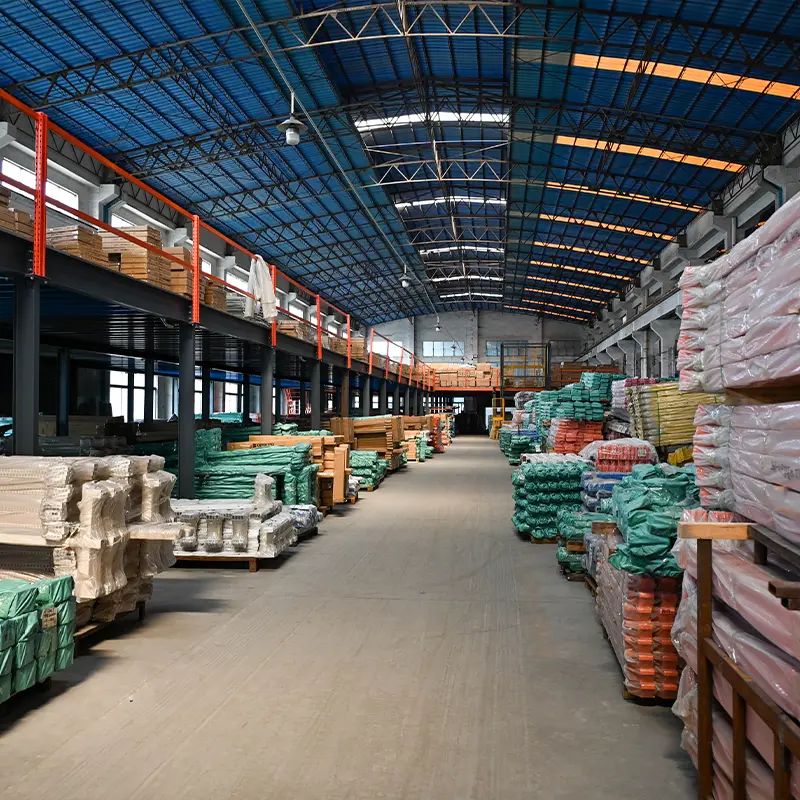
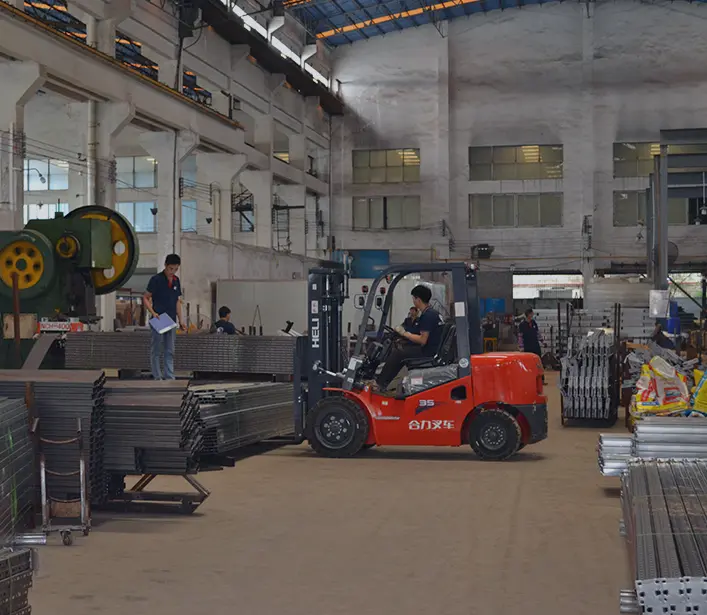
Founded in 2001, Guangzhou Heda Shelves Co., Ltd. has evolved from an industrial fabrication workshop into a premier global designer, manufacturer, and exporter of high-density warehouse racking systems. Headquartered in Guangzhou, our production infrastructure spans a 30,000 square meter intelligent manufacturing base powered by 300+ structural engineers, precision machinists, and export compliance specialists.
We produce over 30,000 metric tons of finished structural steel racking components per month. Our export-grade double deep racking systems are actively deployed in over 10,000 warehouse, cold-storage, and distribution center projects across 130+ nations, including Australia, New Zealand, the United States, Germany, and the Middle East.
Every beam, upright column, and seismic frame tie-back manufactured in our factory adheres to rigorous physical testing and traceability benchmarks. We work directly with procurement directors, turnkey automation integrators, and independent regional distributor partners under flexible OEM and ODM arrangements.
Raw coil validation from tier-1 steel mills ensuring yield strength and elongation comply with ASTM A1011 and EN 10025 standards.
Multi-station automated cold roll-forming lines creating flawless Omega column geometries with micro-tolerance punch alignments.
Automated MIG welding fixtures for beam end connectors, guaranteeing deep weld penetration and defect-free stress redistribution.
Non-toxic epoxy-polyester electrostatic powder coating baked at 180°C–200°C, providing 60-80μm scratch and corrosion-resistant finishes.
How automation, material science, and supply chain pressures are reshaping double deep racking engineering and B2B global procurement strategies.
The traditional human-operated pantograph reach truck is rapidly giving way to autonomous mobile reach robots (AMRs) and automatic guided vehicles (AGVs) equipped with optical LiDAR sensors and precise fork extension actuators. Double deep racking systems are increasingly engineered with ultra-rigid guide curbs, camera alignment visual reflectors, and millimeter-precise beam level tolerances to facilitate lights-out autonomous 24/7 pallet retrieval.
Rising international shipping container freight rates have catalyzed a shift toward advanced High-Strength Low-Alloy (HSLA) steels such as Q355B and Q420. By optimizing cross-sectional moment of inertia, our structural engineers can reduce the physical tare weight of upright frames by 12% to 18% while maintaining identical or superior working load ratings, dramatically slashing transoceanic container shipping costs and embedded carbon footprints.
Energy tariffs have made cold storage real estate among the most expensive cubic footage in modern distribution networks. Procurement trends demonstrate rapid conversion of standard selective racks into double deep layouts within sub-zero freezer facilities (-25°C). Utilizing specialized low-temperature impact-resistant steel grades and specialized anti-brittle powder coatings, double deep configurations slash refrigeration operating expenses per stored pallet position.
When sourcing heavy-duty structural warehouse equipment offshore, regulatory non-compliance can halt project commissioning, invalidate warehouse building insurance, and endanger facility personnel. Guangzhou Heda Shelves operates under complete transparency, supplying comprehensive engineering calculations, material mill certificates, and finite-element analysis (FEA) models to verify structural safety.
Our double deep systems comply with the latest revisions of AS 4084 (Steel storage racking - Australia & New Zealand), EN 15512 / FEM 10.2.02 (European standard for adjustable pallet racking), and the American RMI MH16.1 specifications.
For high-risk seismic environments (including New Zealand seismic zones under NZS 1170.5 and Pacific Rim geological belts), our structural engineering team custom-calculates enlarged footplate anchors, heavy ductile column baseplates, horizontal frame portal bracing, and overhead row-to-row ties to resist peak ground acceleration (PGA) forces.
Authoritative technical, commercial, and operational guidance addressing the most common inquiries from industrial engineers and international warehouse procurement directors.
Standard counterbalanced forklifts cannot access the rear pallet positions in a double deep system. Warehouses must deploy specialized reach trucks equipped with dual-pantograph mechanical scissor mechanisms or hydraulic telescopic extending forks.
Key forklift specifications include mast lift height corresponding to your highest beam level (typically 6.5m to 11.5m), appropriate residual lift capacity derating when forks are fully extended into the second depth, and required aisle operating widths (typically 3.0m to 3.4m depending on chassis wheel base and turning radius).
In a double deep layout, direct access selectivity is 50% compared to 100% in standard single-selective pallet racking. To access the rear pallet (depth 2), the front pallet (depth 1) in that specific bay tier must be removed.
Because of this, double deep racking operates on a Last-In, First-Out (LIFO) inventory model per double-tier lane. It is ideally suited for medium-velocity SKUs where products are stored and retrieved in batches of two or more pallets, effectively eliminating "honeycombing" storage loss while vastly outperforming selective racking in volumetric storage density.
Yes. Guangzhou Heda Shelves supplies complete engineering data packs with every project quote. Our structural engineers use advanced finite-element analysis software to determine section modulus, moment capacities, second moment of area, and beam deflection ratios under full working load conditions.
We provide full documentation for submission to your locally certified chartered structural engineers, verifying safety factor compliances with Australian Standard AS 4084-2023, European standard EN 15512:2020, and American RMI MH16.1. We also stamp certified aluminum load notice signage for installation on every rack row.
Due to reduced driver visibility when positioning pallets into the second deep location, we recommend three critical safety enhancements: (1) Heavy-duty welded guide angle floor tracks or inductive wire guidance to keep reach trucks perfectly centered in narrow aisles; (2) Dual pallet support bars or reinforced wire mesh decking underneath the deep storage positions to prevent dropped loads; and (3) Forklift camera systems with laser target alignment mounted on the fork carriage to assist operators at heights above 6 meters.
Standard manufacturing lead time for full container load (FCL) orders (ranging from 1 to 10 x 40ft High Cube containers) is 15 to 25 business days following final CAD layout sign-off and deposit receipt. Transoceanic transit times from South China ports (Guangzhou, Shenzhen, Nansha) to Australian/New Zealand ports (Sydney, Melbourne, Auckland) typically take 14 to 22 days; European main ports (Rotterdam, Hamburg) take 28 to 35 days; and US West Coast ports take 16 to 22 days.
All materials are bundled into specialized steel stillages and secured with industrial strapping. Timber blocking adheres strictly to ISPM-15 heat-treated phytosanitary standards to ensure seamless customs and biosecurity clearance.
Every shipment is packaged with color-coded bundle identification and itemized container packing lists matched to detailed 3D step-by-step assembly drawings. Upright frames are either shipped fully knocked-down (KD) to optimize sea freight container cubing or pre-bolted upon request.
We supply installation instruction manuals, bolt torque tightening specifications, and remote video technical guidance. For large-scale logistics hub installations (exceeding 5,000 pallet locations), we can dispatch an experienced site installation supervisor to lead and audit local contractor erection teams.
Provide your warehouse dimensions, clear operating ceiling height, forklift model, and pallet load parameters. Our senior warehouse storage design engineers will return a complete 2D/3D CAD layout, capacity chart, and wholesale price quote within 24 business hours.