5/6 Layer Heavy Duty Shelving Warehouse Material Handling Rack
Engineered for extreme load density, high-capacity battery cell distribution, and heavy-duty parts picking with reinforced cold-rolled upright columns.
In an era characterized by escalating commercial warehouse real estate rents, tight supply chain margins, and urgent cold chain fulfillment requirements, conventional selective racking fails to provide adequate volumetric density. As a premier Chinese manufacturer and global exporter, Guangzhou Heda Shelves Co., Ltd. delivers high-precision pallet flow and carton flow racking that converts passive dead storage aisles into self-propelled, gravity-driven dynamic storage lanes.
Explore our factory-engineered dynamic flow systems, heavy-duty industrial shelving, automated carriers, and specialized workshop components configured for immediate containerized export.
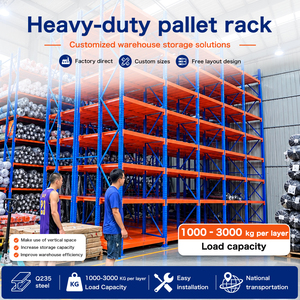
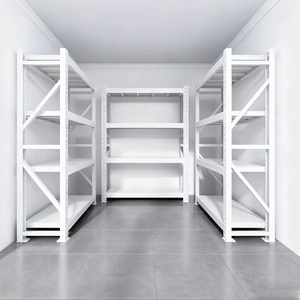
Engineered for extreme load density, high-capacity battery cell distribution, and heavy-duty parts picking with reinforced cold-rolled upright columns.
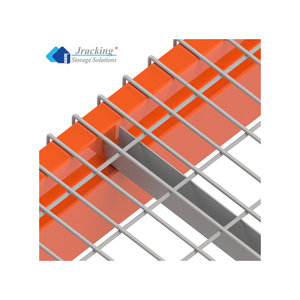
Galvanized wire mesh decking featuring waterfall safety edges, optimizing overhead sprinkler compliance, illumination penetration, and anti-drop protection.
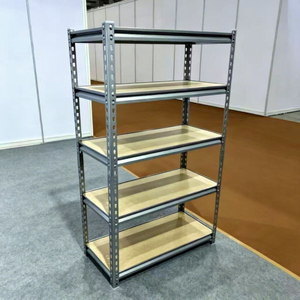
Rapid snap-in assembly shelving engineered for e-commerce picking stations, fulfillment centers, maintenance facilities, and hardware store display.
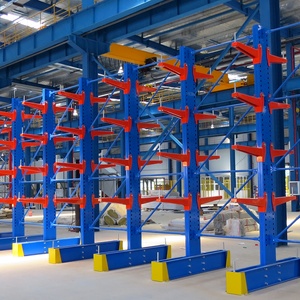
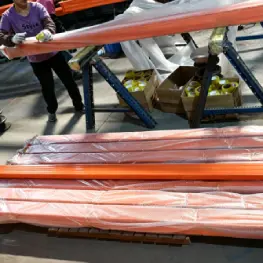
Clear-front continuous storage arms designed for extruded aluminum, steel pipes, timber, gypsum boards, and unconventional linear construction inventories.
Standard 75mm/50mm pitch adjustable selective storage engineered for 100% pallet accessibility, compatible with counterbalanced, reach, and VNA forklifts.
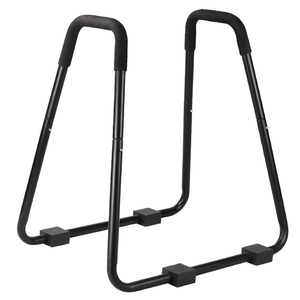
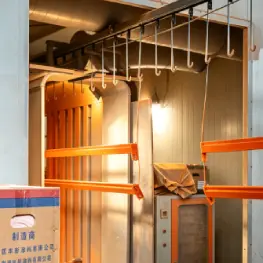
Precision cold-bent tubular steel frame system highlighting our factory's comprehensive robotic welding, stability engineering, and electrostatic finishing capabilities.
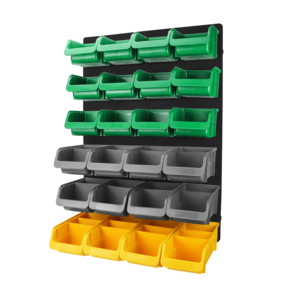
Industrial-grade polypropylene bin modules mounted to cold-rolled louvered steel upright panels for high-density automotive fasteners and small SKU picking.
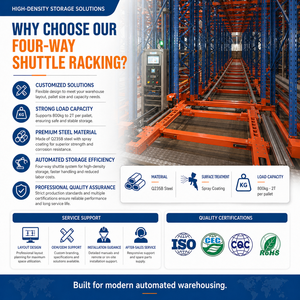
Intelligent semi-automated pallet handling system featuring high-speed 4-way intelligent shuttle rovers, laser guidance, and high-density deep-lane storage matrices.
Gravity flow racking (often designated as dynamic live storage or pallet flow) operates on a passive inclined roller plane where gravitational potential energy is converted into kinetic sliding motion. For procurement officers and warehouse logistics engineers, designing an unpowered system that safely and repeatedly transports 500 kg to 1,500 kg unit loads requires exact kinematic calculation, roller selection, and brake retarder frequency configuration.
Standard pallet flow lanes are calibrated precisely between 2.5% and 3.5% (approx. 1.5° to 2.0°). Insufficient pitch causes pallet stalling halfway through the track, while excessive gradient leads to dangerous terminal impact velocity at the discharge pick face.
To counteract continuous gravitational acceleration, mechanical internal-gear brake rollers are spaced every pallet length along the lane. These govern pallet velocity to a controlled 0.2 to 0.3 meters per second, irrespective of pallet weight variances.
At the discharge end, severe hydrostatic line pressure occurs when 10–20 trailing pallets press forward. Our pneumatic or mechanical separation catches isolate the lead pallet by 300 mm, allowing forklift operators to extract it safely without back-pressure friction.
Procurement directors must weigh capital expenditure against labor throughput, pallet rotation integrity, and building volume utilization. The table below presents verified operational trade-offs:
| Storage Architecture | Rotation Logic | Floor Area Utilization | Forklift Travel In-Rack | Throughput Speed | Relative CapEx Index |
|---|---|---|---|---|---|
| Gravity Flow Racking (Live Storage) | Strict FIFO (100%) | 80% – 88% | Zero (Dedicated Entry/Exit Aisles) | Ultra-High (Simultaneous Put/Pick) | Moderate to High |
| Selective Pallet Racking | FIFO / LIFO Variable | 40% – 48% | Aisle-bound only | High (100% direct selectivity) | Baseline (Low) |
| Drive-In / Drive-Through Rack | Strict LIFO (Drive-In) | 65% – 75% | Deep Rack Entry Required (High Hazard) | Slow (Travel time & collision risk) | Moderate |
| Push-Back Cart Racking | LIFO Only (2-6 Deep) | 70% – 78% | Aisle Face Only | Moderate (Single operator per bay) | Moderate |
| Automated Radio Shuttle Racking | Flexible FIFO / LIFO | 82% – 90% | Zero (Automated Rover Handling) | Very High (Automated lane transfer) | High (Battery & Rover CapEx) |
Understanding how industrial flow racking evolves over the coming decade empowers supply chain leaders to source future-proof infrastructure from Chinese manufacturing partners.
Next-generation gravity tracks incorporate micro-electromechanical sensors (MEMS) within idle rollers. These monitor line velocity, detect stalled pallets, measure ambient bearing friction, and transmit real-time lane occupancy signals directly to the facility Warehouse Management System (WMS).
With global pharmaceutical cold chain and frozen protein distribution surging, gravity rollers now feature synthetic cryogenic lubricants and specialized polyurethane elastomeric shells that retain impact dampening down to -30°C without embrittlement or surface glazing.
Modern gravity flow installations are shedding traditional forklift interface requirements. Heavy-duty intake guides are re-engineered with precision optical centering cones to accommodate autonomous counterbalanced tuggers and Automated Guided Vehicles (AGVs) delivering 1,200 kg pallets autonomously.
Procurement frameworks across Europe, North America, and Australia prioritize Scope 3 carbon compliance. Exported flow systems increasingly mandate green electric-arc-furnace (EAF) recycled steel and trivalent chromium-free zinc-flake corrosion coatings, achieving 1,000+ hours in salt spray testing.
E-commerce fulfillment centers demand rapid seasonal reconfiguration. Drop-in, pre-punched aluminum track beds with high-density universal skate wheels allow warehouse maintenance teams to reset lane widths and split carton tracks within minutes without tools.
Transitioning away from friction-pad centrifugal brake rollers, modern heavy flow lanes incorporate contact-free neodymium permanent-magnet eddy-current retarders. These offer zero internal friction wear, zero maintenance schedule overhead, and absolute braking reliability across decades of operation.
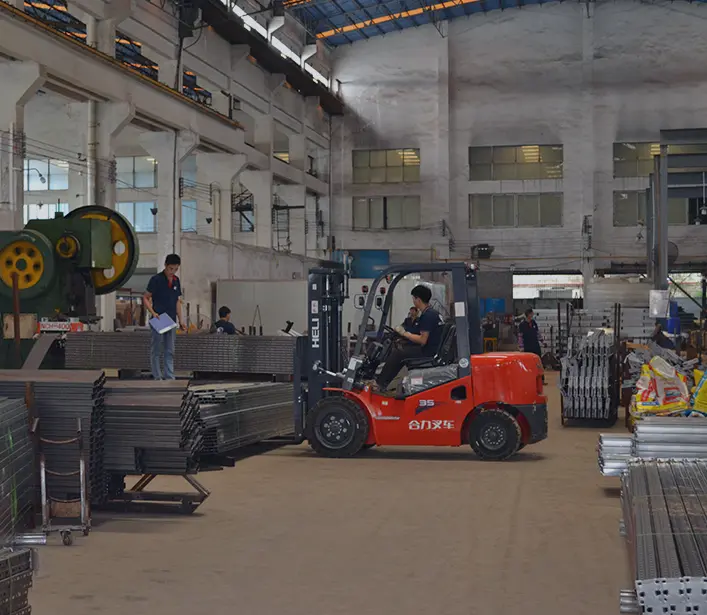
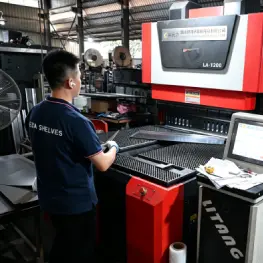
Established in 2001 in Guangzhou, China, HEDA Shelves operates a state-of-the-art 30,000 m² heavy manufacturing infrastructure powered by 300+ structural engineers, CNC technicians, and international export specialists.
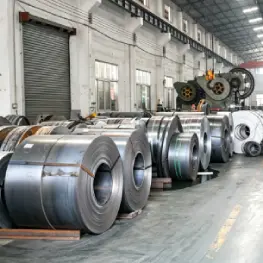
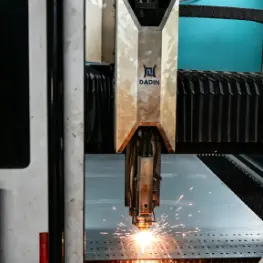
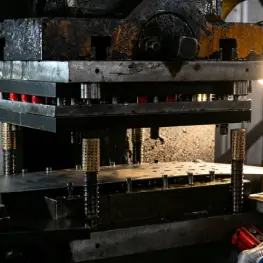
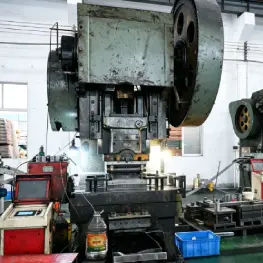
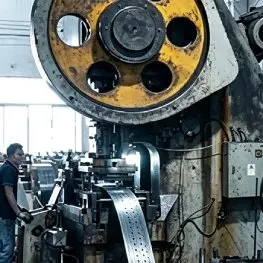
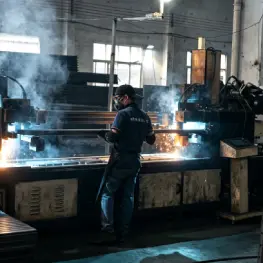
Unlike commercial trading intermediaries, HEDA Shelves maintains complete vertically integrated control over every physical and chemical phase of structural fabrication. From primary raw coil uncoiling to precision automated punch-pressing and robotic GMAW welding, our internal QA protocols guarantee structural integrity that complies with the world's most rigorous building codes.
Every batch of cold-formed uprights, load-bearing box beams, and gravity flow tracks passes through ten distinct quality gates before sea freight consolidation:


Our streamlined, engineering-led four-phase project lifecycle guarantees accurate delivery timelines, zero component mismatch, and seamless local certification across all international ports.
We analyze your CAD dwg drawings, pallet bottom board configurations (skid vs GMA vs perimeter base), clear ceiling heights, slab load ratings, and forklift mast data.
Our structural engineers produce full 3D CAD models, load tables, lane deceleration calculations, and beam deflection models for site certifier sign-off.
Production across automated roll forming lines. Sample roller beds are assembled in our Guangzhou plant and tested with customer-specified pallet samples for slide velocity.
Export components are banded on steel stillages, packaged with full ISPM-15 dunnage, labeled per bay, and shipped with complete 3D installation blueprints.
Detailed answers addressing load physics, bottom board tolerances, safety certifications, seismic engineering, and international shipping logistics.
Gravity flow performance relies entirely on uninterrupted contact between the pallet underside and the roller track. The ideal configuration is a full perimeter-base wooden pallet or rigid plastic pallet with continuous longitudinal bottom runners oriented parallel to the roller track. Pallets with warped, split, or missing bottom deck boards, protruding nails, or non-rigid soft stretch wrap hanging beneath will catch on the rollers and induce jams. For skid-style two-way entry pallets (lacking bottom boards in one direction), full-width cylindrical steel rollers or multi-track wheel assemblies must be selected based on our test evaluations.
Our engineering protocol mandates positioning one centrifugal brake roller at every pallet position starting from the second pallet entry position onwards. In steep lanes or high-density lines handling payloads between 1,000 kg and 1,500 kg, brake rollers are clustered closer (e.g., every 1.1 meters) near the terminal discharge zone to counteract terminal velocity spikes. Each brake roller contains an internal planetary speed-increasing gear mechanism driving friction brake pads that engage proportionally to rolling velocity, ensuring lighter pallets and heavier loads travel at an identical steady speed of ~0.25 m/s.
Yes. Guangzhou Heda Shelves manufactures cold-formed steel racking referencing Australian AS 4084-2023 (Steel Storage Racking), European EN 15512 / FEM 10.2.02, and US RMI MH16.1. For international projects, our engineering office provides comprehensive calculation packs, including upright frame sectional properties, gross and effective area moments of inertia, Euler buckling checks, beam end connector shear ratings, and permissible beam deflection tables (L/200 limit). These documents allow your registered independent structural engineer or certifier to verify and sign off the site permit without friction.
Standard manufacturing lead times for customized gravity flow installations range from 20 to 30 calendar days following technical drawing sign-off. High-volume orders benefit from our factory's 30,000-ton monthly capacity. For shipping, flow beds, uprights, and beams are nested using custom software-optimized container stuffing algorithms. Upright frames are either shipped knock-down (unbolted) to pack maximum tonnage into 40ft High Cube containers or pre-assembled in dedicated steel stillages. Transit times from South China (Nansha / Huangpu / Yantian) to Australia/NZ range from 14 to 28 days; to Europe, 28 to 35 days; and to US West Coast ports, 16 to 22 days.
Every discharge lane features heavy-gauge 6mm structural steel end-stops reinforced with thick vulcanized shock-absorbing rubber buffers. Furthermore, we supply cold-formed wrap-around upright column protectors (bolted to the foundation slab with M12 chemical anchors) and continuous aisle-end heavy tubular crash barriers. These isolate the delicate roller mechanisms and vertical columns from direct forklift mast impacts during high-frequency pick cycles.
Yes. Gravity flow is one of the most efficient systems for frozen food distribution because refrigerated real estate carries high operational expense. For cold stores (-20°C to -30°C), HEDA equips roller tracks with low-viscosity synthetic grease bearings that resist freezing solid, zinc-electroplated or hot-dip galvanized steel rollers that resist moisture condensation corrosion, and polyurethane brake rollers rated for sub-zero elasticity. The slope gradient is frequently increased by 0.5% (approx. 3.5% to 4.0%) to overcome frost-induced friction coefficients.
Supply your facility dimensions, floor plan dwg, pallet weight specifications, and clear stack height. Our structural engineering team will prepare an optimized 3D CAD gravity flow proposal and formal quotation within 24 hours.