OEM & ODM Direct Manufacturer · CE & ISO 9001:2015
China Wholesale Teardrop Warehouse Shelving Suppliers & Exporter
Heavy-duty teardrop pallet racking systems engineered for universal North American compatibility, international seismic resilience (RMI ANSI MH16.1 & AS 4084), and automated intralogistics throughput.
Industrial Racking & Storage Matrix
High-Performance Warehouse Systems & Engineered Enclosures
Explore factory-direct industrial storage lines precision-manufactured with premium high-tensile steel, automated roll-forming tolerances, and certified structural integrity for global logistics facilities.
The Structural Engineering Principles of Teardrop Pallet Racking Architecture
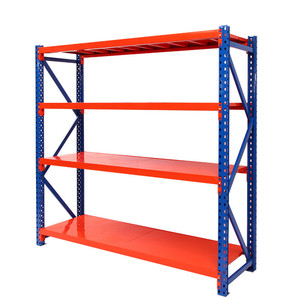
Teardrop warehouse pallet racking remains the quintessential industry standard across North America, Latin America, and expanding Oceania fulfillment operations. As a dominant cold-formed steel configuration, its enduring industry dominance is rooted in its boltless, self-locking connection geometry, universal modularity, and superior mechanical load dispersion under both static gravity and seismic excitation regimes.
From an architectural standpoint, the teardrop profile features a signature punch pattern punched continuously at 2-inch (50.8 mm) vertical center increments along the column faces. This geometry accommodates 3-pin or 4-pin tapered rivet connectors welded securely onto roll-formed step beams. As load increases on the horizontal plane, gravitational downward force wedges the tapered rivets deeper into the narrowing teardrop throat. This physical interlock induces a mechanical moment-resisting connection that inherently limits rotational deflection without requiring through-bolts.
Cold-Rolled Metallurgy & Yield Integrity
Manufactured strictly utilizing certified high-tensile structural coil steel (Q235B, Q355B, and ASTM A1011 Grade 50 equivalents). Our high-precision multi-stage cold roll forming ensures consistent cold working, elevating the yield strength to exceeds 345 MPa while preventing micro-fissures along profile radius bends.
Tri-Lug Integral Gravity Lock Mechanism
Every step beam end-connector features heavy-gauge cold-stamped lugs complemented by an integrated spring-steel auto-lock safety pin. This dual mechanical constraint ensures resistance against dislodgement forces exceeding 1,000 lbs (4.45 kN) under accidental upward forklift mast impacts, meeting RMI ANSI MH16.1 protocols.
Closed-Box Step Beam Dynamic Torsion Resistance
Rather than standard open C-channels, our step beams utilize continuous automated submerged arc and plasma seam-welded dual C-sections, forming a structurally monolithic rectangular tube with a dedicated step ledge. This profile counters lateral-torsional buckling under deep-lane pallet loadings.
Cross-Standard Performance Verification: RMI, AS 4084 & FEM 10.2.02
When sourcing industrial racking from China, procurement engineers must verify compliance with local civil and seismic engineering codes. The teardrop framework produced within our export facilities is subjected to rigorous empirical testing that aligns directly with North American RMI (Rack Manufacturers Institute) ANSI MH16.1-2021 specifications, Australian Standard AS 4084:2023 (Steel Storage Racking), and European EN 15512 standards.
Performance Dimension
American Standard (RMI ANSI MH16.1)
Australian Standard (AS 4084:2023)
HEDA Shelves Engineered Parameters
Vertical Deflection Limit
L / 180 of clear beam span
L / 200 of clear beam span
Conservative L / 250 Design Criteria
Upright Column Section
50.8 mm (2") punch teardrop
76.2 mm (3") diamond / slotted
Universal Teardrop 50.8 mm + AS 76.2 mm Dual Capability
Global Procurement Trends: What Sourcing Directors Expect in 2025–2035
The global logistics infrastructure landscape is undergoing a structural transition driven by warehouse automation, geopolitical nearshoring, ESG decarbonization mandates, and the surging cost of industrial square footage. Sourcing directors, third-party logistics (3PL) conglomerates, and distributor purchasing leads are altering how they evaluate Chinese industrial manufacturing partners.
1. Automation-Ready Engineering Tolerances
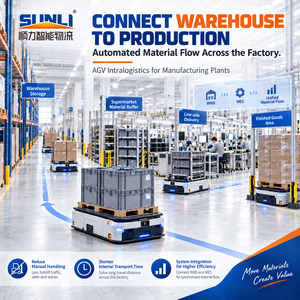
Historically, manual forklift operators accommodated slight racking deflection or misalignment during daily pick-and-pack cycles. The accelerated adoption of Autonomous Mobile Robots (AMRs), Automated Guided Vehicles (AGVs), and stacker cranes (AS/RS) demands structural dimensional tolerances tighter than ±1.0 mm across entire structural runs. Future-proof procurement requires teardrop upright columns roll-formed on computer-controlled continuous punching lines to eliminate cumulative height variations over 12-meter to 18-meter vertical elevations.
2. Nearshore Resilience Combined with Direct Tier-1 Sourcing
Rather than relying on local distribution intermediaries who levy 40% to 60% import markups on standardized steel racking, enterprise supply chains are establishing direct framework procurement agreements with Chinese Tier-1 original equipment manufacturers (OEMs). By consolidating custom engineering, 3D BIM/CAD layout generation, pre-shipment quality verification, and direct-to-port ocean freight forwarding into a single vendor contract, buyers achieve 22% to 35% Total Landed Cost (TCO) reductions.
3. Low-Carbon Steel & Eco-Certified Finishing
Global corporations operating under Scope 3 emissions reporting protocols now require verifiable green steel documentation. Forward-looking Chinese suppliers are transitioning to electric arc furnace (EAF) steel feedstocks, closed-loop zero-discharge phosphating pre-treatment chemical baths, and solvent-free, heavy-metal-free thermosetting powder coatings that emit negligible Volatile Organic Compounds (VOCs), fully verified under RoHS and REACH testing directives.
Technological Innovations in Warehouse Storage Systems
The technical evolution of teardrop pallet racking extends far beyond passive structural steel. Modern high-throughput logistics hubs incorporate active telemetry, intelligent dynamic storage media, and high-performance metallurgical enhancements to protect capital assets and staff.
Dynamic Kinetic Impact Absorption
Structural column uprights positioned adjacent to busy traffic intersections are vulnerable to recurring forklift collisions. Next-generation systems integrate modular sacrificial column protectors fabricated from ultra-high-molecular-weight (UHMW) polymers backed by rubberized shear dampening cores, dissipating up to 8,000 Joules of kinetic impact without transferring dynamic shear forces to the floor concrete anchors.
Radio Frequency Pallet Shuttle Integration
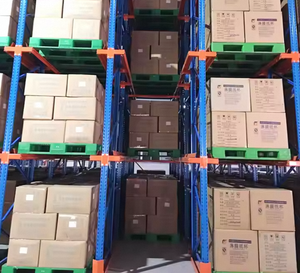
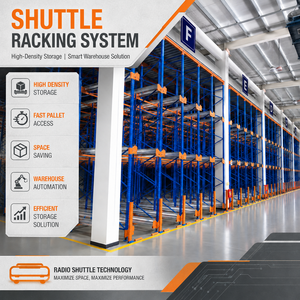
By pairing classical teardrop rack upright frames with heavy-duty galvanized shuttle guide rails, traditional static storage converts into semi-automated high-density deep-lane storage. The battery-operated radio shuttle vehicle travels underneath pallet loads at velocities up to 1.1 m/s, managed via handheld tablet interfaces, eliminating the need for forklift trucks to enter the physical storage rack cube.
Laser-Guided Inline Upright Quality Control
To eliminate hole spacing drift during cold rolling, manufacturing facilities now employ real-time laser profiling sensors that read pitch positioning at 250 measurements per second. Any drift exceeding 0.15 mm over a 6-meter span initiates automatic servo corrections on the rotary punching wheel, ensuring rapid field installation where cross beams seat securely without mechanical binding.
Founded in 2001, Guangzhou Heda Shelves Co., Ltd. has developed over two decades into an internationally respected engineering authority in heavy-duty logistics systems, mezzanine platforms, automated shuttles, and commercial storage infrastructure. Operating out of an expansive 30,000 square meter specialized manufacturing compound with more than 300 experienced engineers, CNC machine operators, certified AWS welders, and export logistical specialists, we supply reliable structural racking systems across North America, Australia, New Zealand, Europe, and the Middle East.
Verified Certification
EN 1090 & CE Approval
Our structural steel manufacturing processes are certified under CE Certificate No. 2435-CPR-8605159, legally entitling structural export into rigorous international markets with complete factory production control (FPC) audit trails.
Quality Management
ISO 9001:2015 Accredited
Fabrication, welding, powder coating, and structural dispatch are governed by ISO 9001:2015 Certification No. 18624Q00169R0M, encompassing incoming steel coil ultrasound verification, weld penetration depth checking, and cross-hatch coating adhesion testing.
Global Logistical Execution
Biosecurity & Phytosanitary Assurance
All export crating utilizes heavy-duty recyclable steel stillages or ISPM-15 certified heat-treated timber. This ensures zero customs quarantines or fumigation delays across Australian DAFF, New Zealand MPI, US Customs, or Canadian CBSA ports of entry.
Comprehensive Procurement FAQ for Engineering & Sourcing Teams
Are your teardrop pallet racking systems 100% interchangeable with existing North American brands?
Yes. Our teardrop punch tooling conforms precisely to the standard North American 2-inch (50.8 mm) center-to-center pitch with standard teardrop hole diameters (tapering from 1.25" down to 0.65"). Our step beams seat directly into existing upright frames from major historical manufacturers (such as Interlake, Mecalux, Ridg-U-Rak, and Speedrack), while our upright frames accept standard American teardrop step beams without retrofitting or modifications.
What steel grades and metallurgical mill test certificates (MTC) do you provide?
We exclusively procure prime structural hot-rolled and cold-rolled coil steel from accredited state-owned mills (such as Baosteel, Shougang, and Ansteel). We utilize certified Q235B (Yield ≥ 235 MPa, Tensile 375–500 MPa) for standard ambient warehousing and high-strength Q355B or ASTM A1011 Grade 50 (Yield ≥ 355 MPa) for heavily loaded high-bay uprights. Complete EN 10204 Type 3.1 Mill Test Certificates are dispatched with every container, providing complete chemical ladle analysis and mechanical elongation verification.
How do you calculate and verify load ratings under seismic conditions?
Our licensed structural engineering division executes finite element analysis (FEA) modeling in SAP2000 and ANSYS. When designing for designated seismic zones (such as California IBC Seismic Design Categories D/E/F, New Zealand NZS 1170.5, or Australian AS 1170.4), we calculate second-order P-Delta effects, amplify upright column steel gauge, introduce heavy seismic ductile baseplates with dual concrete expansion anchors, and incorporate dynamic spine cross-bracing and top-tie portal frames to guarantee structural stability.
What pre-treatment and powder-coating technologies are used for rust protection?
Components pass through an automated 10-stage chemical pre-treatment tunnel featuring spray degreasing, hot water rinsing, surface conditioning, zinc phosphate conversion coating, and deionized water rinsing to completely eradicate rolling oils and surface oxidation. Electrostatically sprayed thermosetting epoxy-polyester hybrid powder is subsequently cured at 190°C–210°C for 25 minutes. The resulting finish exhibits 60–80 micron dry film thickness (DFT), passes the 500-hour ASTM B117 salt spray test, and resists chipping during daily pallet loading. For extreme outdoor or coastal environments, we provide hot-dip galvanizing per ISO 1461.
How many pallet positions can be packed per 40ft High Cube (40HQ) ocean container?
Because racking components are inherently dense and heavy, ocean containers generally reach their legal payload weight limit (approximately 26 to 28 metric tons) before volume is exhausted. Upright frames are typically nested flat on engineered dunnage, while step beams are packed into banded, steel-strapped bundles with protective corner angles. On average, a standard 40HQ container accommodates components for 600 to 1,200 selective pallet positions, depending upon beam span length, frame depth, and upright column steel gauge.
What lead times should international buyers anticipate from deposit to delivery?
Standard fabrication cycles for a 1-to-5 container order average 15 to 22 business days from final 3D CAD shop drawing approval and deposit receipt. Ocean transit from major southern and eastern Chinese shipping gateways (Guangzhou, Shenzhen, Ningbo, or Shanghai) ranges from 14 to 18 days to the US West Coast, 28 to 35 days to the US East Coast, 16 to 22 days to Australian primary ports (Sydney/Melbourne), and 28 to 35 days to Northwestern European main ports.
Request an Engineered Layout & Wholesale Container Quote
Accelerate your warehouse setup with free structural engineering consultations, comprehensive CAD/3D BIM layout design, and competitive wholesale factory-direct pricing tailored to your floor capacity and pallet dynamics.
24-Hour 3D CAD Layout Turnaround
AS 4084, RMI & CE Stamped Calculations
OEM/ODM Private Labeling for Distributors
Complete Ocean Door-to-Port Logistics
Connect immediately with our chief storage systems engineering division for live project assessments: