Engineering Principles of Custom OEM Bin Shelving in Modern High-Throughput Facilities
In modern warehousing, logistics engineering, and advanced manufacturing environments, component presentation and high-density micro-storage have transcended standard open-shelf racking. A custom OEM bin shelving system operates as an engineered infrastructure matrix designed to optimize SKU density, accelerate pick-to-light processes, and eliminate operational bottlenecks caused by chaotic bin proliferation. By tailoring upright perforations, cold-rolled beam profiles, divider slot tolerances, and bin retention lip dimensions to specific inventory profiles, modern factories achieve direct ergonomic and space-utilization gains that off-the-shelf catalog racks cannot deliver.
Structural Metallurgy & Structural Calculations: The Q235B Cold-Rolled Advantage
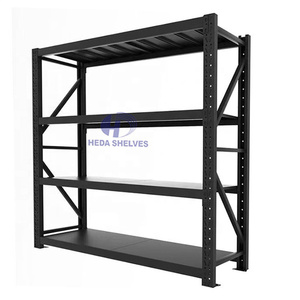
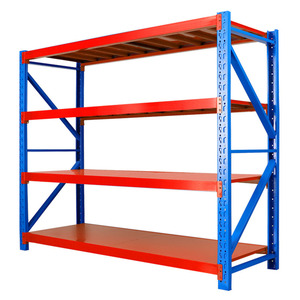
High-performance warehouse bin shelving systems require careful balancing between high tensile yield strength and precise roll-formed ductility. At Guangzhou Heda Shelves Co., Ltd., our OEM bin shelving components are cold-rolled exclusively from certified prime Q235B/SPCC structural grade steel coils. Unlike low-grade uncertified scrap feeds prone to micro-cracking at structural bends, our 10-step precision manufacturing pipeline features automated punching and continuous roll profile forming that preserves structural grain integrity throughout upright omega profiles, shelf step beams, and heavy-duty bin drop lips.
Structural stability calculations reference the stringent criteria defined in AS 4084 (Steel Storage Racking) and EN 15512 European Standards. Uprights undergo automated progressive cold punching with precise 50mm or 75mm pitch adjustments. Shelf tiers incorporate multi-flange longitudinal cold-bend box channels that distribute downward point pressures evenly when bins are loaded with dense iron castings, copper fittings, fasteners, or aerospace electronics. Fully loaded compartments withstand uniform distributed loads (UDL) up to 800 kg per shelf tier with structural deflection metrics strictly restricted below 1/200th of clear span length.
| Engineering Attribute | HEDA Custom OEM Bin Shelving | Standard Commodity Boltless Rack | Light-Duty Angle Shelving |
|---|---|---|---|
| Steel Substrate Grade | Certified Q235B Prime Strip | Commercial Grade Q195 / Scrap Mix | Low-Grade Cold Strip Steel |
| Upright Gauge & Profile | 1.5mm - 2.0mm Omega / Hex Multi-Fold | 1.0mm - 1.2mm C-Channel | 0.8mm - 1.0mm Single Angle |
| UDL Load Rating (Per Tier) | 300 kg – 800 kg / Tier | 100 kg – 200 kg / Tier | 50 kg – 90 kg / Tier |
| Deflection Ratio Allowance | < L / 200 (Engineering Verified) | L / 120 (Noticeable Sagging) | Uncertified Failure Prone |
| Surface Pre-Treatment & Coat | Pickling + Phosphating + 75μm Powder | Flash Wash + Single Layer Coat | Air-Dried Enamel Dip |
| Compliance Engineering Cert | CE (CPR-8605159) / ISO 9001:2015 | None / Self-Declared | None |
Ergonomics, Modular Compartmentalization, and Lean Kitting Integration
Custom bin shelving achieves maximum productivity when tailored specifically to human-centered order picking and robotic shuttle bin transfer. Standard catalog shelves leave wide gaps above plastic tote containers, resulting in up to 35% empty cubic headroom. In contrast, our OEM production lines build precision horizontal sliding guides, drop-in dividers, removable sub-troughs, and angled ergonomic presentation rails that position SKU bins at a 15-degree forward tilt toward line operators.
In discrete automotive assembly plants and medical hardware distribution hubs, this lean presentation facilitates two-handed pick-and-place rhythms, aligns with visual 5S lean manufacturing guidelines, and accommodates conductive ESD (Electrostatic Discharge) bins for critical PCB boards and sensor assemblies. Integrated front card holders, magnetic barcode rail faces, and RFID tag receiver zones allow instant software pairing with leading Warehouse Management Systems (WMS).
Direct OEM System Recommendations by Operational Topology
Selecting the correct bin shelving hardware configuration depends fundamentally on throughput velocity, total inventory mass, and pick replenishment frequencies: