High-Density Storage & Material Handling Equipment
Explore factory-direct industrial storage solutions manufactured under stringent metallurgical testing, custom roll-forming tolerances, and seamless automation compatibility.
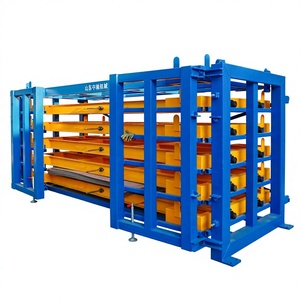
Heavy Duty Durable Steel Multi-drawer Storage Drawers
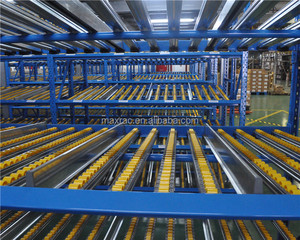
Maxrac Carton Flow Rack for Carton Box Storage
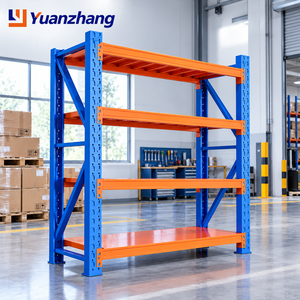
YZ Multi-layer Commercial Steel Workshop Storage Shelves
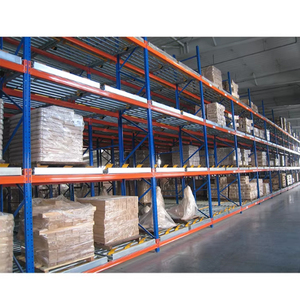
Warehouse FIFO Storage Racking System Pallet Roller Rack
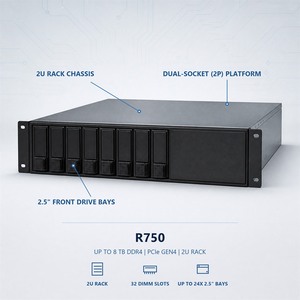
R750 / R740xd2 2U Industrial Hot-Swap Network Storage Chassis
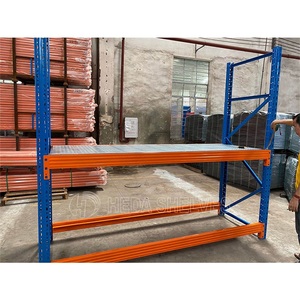
1500kg Per Layer Heavy Duty Warehouse Pallet Racking
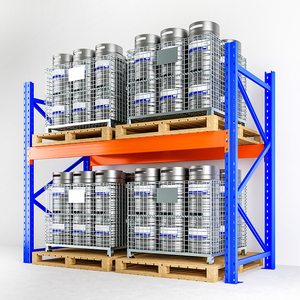
5000KG Ultra Heavy-Duty CE Certified Pallet Storage Systems
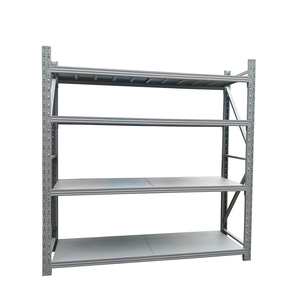
Long Span Steel Light & Medium Duty Warehouse Shelving
HEDA Shelves: Engineered Excellence Since 2001
Operating from a 30,000 m² high-capacity production base, we supply fully certified shuttle, pallet, and mezzanine racking backed by over two decades of global OEM precision engineering.
Shuttle Racking vs Alternative High-Density Configurations
A structural and kinematic comparison outlining why custom OEM shuttle racking delivers superior volumetric utilization and minimal equipment abrasion in automated warehouse environments.
| Storage Metric / Architectural Aspect | Radio Shuttle Racking (Semi/Full Auto) | Drive-In Pallet Racking | Push-Back Cart Systems | Dynamic Gravity Pallet Flow |
|---|---|---|---|---|
| Volumetric Space Utilization | 85% – 92% (Maximum Density) | 70% – 75% | 65% – 75% | 80% – 88% |
| Operational Access Mode | Configurable FIFO & LIFO | Strictly LIFO Only | Strictly LIFO Only | Strictly FIFO Only |
| Structural Upright Impact Risk | Negligible (Forklifts Stay in Aisle) | Extremely High (Mast Enters Racks) | Moderate (Bay Face Only) | Low (Loading/Picking Faces Only) |
| Lane Storage Depth Capability | Up to 40+ Pallets per Channel | Max 6 – 10 Pallets (Safety Limit) | Max 5 – 6 Pallets Deep | Max 15 – 20 Pallets Deep |
| Cold Storage Performance (-30°C) | Exceptional (Cold-Resistant Lithium/PLC) | High Operator Discomfort / Slow | Mechanical Spring Resistance Drops | Brake Roller Oil Viscosity Issues |
| Labor & Handling Cycle Efficiency | Reduced by 50% – 60% per Cycle | Baseline Labor Demands | Moderate Handling Speed | High Picking Speed |
Emerging Procurement Trends in Custom OEM Shuttle Racking
How supply chain leaders, 3PL giants, and industrial distribution developers are shifting procurement specifications to derisk operations and meet automated warehouse benchmarks.
1. WMS/WCS Microservices Interoperability
Procurement teams are no longer sourcing disconnected mechanical racks. They mandate that the OEM shuttle controller communicates seamlessly with proprietary cloud warehouse software using OPC-UA, Modbus-TCP, and RESTful APIs for autonomous batch cycling.
2. Cold Chain & Controlled Atmospheric Resiliency
The acceleration of grocery e-fulfillment requires sub-zero operational endurance down to -30°C. Modern specifications demand low-temp lithium-iron-phosphate (LiFePO4) self-heating cells and specialized stainless running surfaces to curb condensation corrosion.
3. Finite Element Analysis (FEA) Structural Compliance
Institutional buyers mandate rigorous seismic qualification. In Australia, compliance references AS 4084; in seismic-active zones such as New Zealand, NZS 1170.5 dictates dynamic ductility verification, baseplate sizing, and cold-formed profile bracing.
Future Development Trends in Autonomous Shuttle Systems
The material handling sector is witnessing a convergence of artificial intelligence, high-density mechanics, and IoT monitoring that will redefine warehouse automation by 2030.
4D Multi-Directional Autonomous Shuttles
Moving beyond conventional single-axis lane movement, next-generation 4D shuttles switch tracks across longitudinal and lateral rails and enter vertical lifts unassisted, eliminating forklift handling during channel-to-channel transfers.
Supercapacitor Rapid-Charging Cycles
While lithium chemistries dominate current installations, ultra-capacitors are emerging as the preferred energy reservoir for continuous operation. Charging in under 15 seconds at the home dock, they support true 24/7 run-times with virtually zero maintenance downtime.
Embedded Digital-Twin Structural Health Monitoring
Sensors integrated into upright footplates and shuttle guide rails continuously log deflection, vibration, dynamic beam impact, and seismic stress in real time, alerting safety managers to misalignments before structural failure can occur.
Frequently Asked Questions: Technical Sourcing & Compliance
In-depth responses covering engineering verifications, seismic compliance, and international shipping protocols for high-density racking projects.