High Density AS/RS
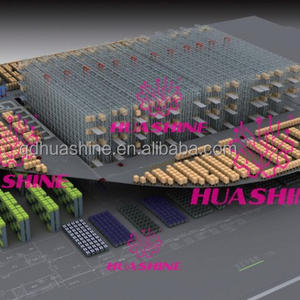
Factory-direct structural cantilever racking, high-density selective systems, automated AS/RS shuttles, and specialized industrial containment solutions manufactured to global ISO and CE specifications.
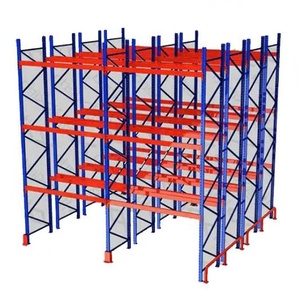
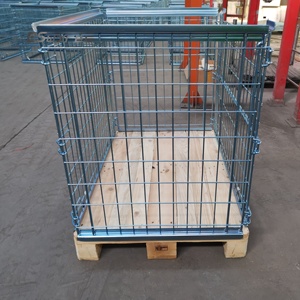
An authoritative engineering breakdown of moment deflection, tapered arm cambering, and seismic anchor sizing for industrial lumber, steel pipe bundles, and irregular profile storage.
Unlike standard selective pallet racks that distribute loads symmetrically across two horizontal beams, cantilever racking relies on single-point cantilevered arms anchored to central vertical uprights. The bending moment ($M = F \times L/2$) induced by uneven loading dictates that columns be constructed from high-tensile hot-rolled H-sections (UB/UC series) or double-welded cold-formed C-profiles. Our custom OEM designs calculate column base plate anchor pull-out shear stress using finite element analysis (FEA), ensuring structural integrity under full asymmetrical payload conditions.
Under elastic deformation limits governed by international standards (such as ANSI MH16.2, AS 4084, and FEM 10.2.02), arms experience downward deflection under static load. HEDA Shelves engineers our OEM cantilever arms with an intentional 1.5° to 2.5° upward built-in camber angle. When structural loads (timber packs, steel extrusions, or PVC conduit) are deposited by side-loaders or articulated forklifts, the arm deflects to an exact horizontal plane, preventing product slippage and eliminating hazardous snag points.
Traditional rigid welded cantilever connections are prone to irreversible metal fatigue and weld fracture when hit by forklift tines. Our OEM cantilever arm systems incorporate precision-punched grade 8.8 high-shear steel pivot pins with retention spring pins. If an upward collision occurs during stock elevation, the arm pivots freely upward without fracturing the column face or shearing anchor bolts, drastically reducing structural warehouse maintenance overheads.
| Cantilever Class | Typical Column Profile | Arm Capacity Range | Primary Material Grade | Deflection Criteria | Target Handling Industry |
|---|---|---|---|---|---|
| Light-Duty Roll Formed | 160 × 60 × 2.0–2.5mm C-Channel | 150 kg – 450 kg / arm | Q235B Cold-Rolled Steel | $L/180$ Max Deflection | Plastic Extrusions, Molding, Plywood Sheets |
| Medium-Duty Roll Formed | 200 × 80 × 3.0mm Box/C-Section | 500 kg – 900 kg / arm | Q235B / Q355B Steel | $L/200$ Max Deflection | Light Steel Conduit, Furniture, Bulk Carpeting |
| Heavy Structural H-Beam | IPE 200 – IPE 360 / UC Columns | 1,000 kg – 2,500 kg / arm | Q355B Hot-Rolled Structural | $L/250$ Max Deflection | Structural Timber, Rebar Bundles, Heavy Piping |
| Extra Heavy High-Bay Shed | HEB 300 – HEB 500 Heavy Columns | 3,000 kg – 5,000+ kg / arm | Q355B / S355JR Heavy Flange | $L/300$ Max Deflection | Steel Coils, Sheet Metal Packs, Precast Concrete |
Strategic analysis for procurement directors, logistics engineers, and warehouse investors navigating automated handling, climate mitigation, and total cost of ownership (TCO).
Traditional cantilever rack layouts required aisle widths exceeding 4.5 to 5.5 meters to accommodate front-loading counterbalanced forklifts. Modern warehouse procurement strategies prioritize narrow-aisle (VNA) designs utilizing guided 4-directional side-loaders or laser-guided automated guided vehicles (AGVs). By integrating bottom mechanical guide rails (50×50×5mm angle steel) or wire-induction channels directly into the cantilever column base assembly, aisle widths are reduced to 2.2–2.6 meters, increasing cubic volumetric capacity by up to 65%.
Escalating commercial real estate and steel construction prices have fueled massive global demand for "Rack-Clad" or "Building-Supported" cantilever sheds. Instead of erecting an independent structural building and placing racks inside, the heavy-duty structural cantilever columns themselves act as the structural support for the warehouse roof trusses, exterior wall purlins, and gutter systems. OEM procurement of rack-clad cantilever systems reduces overall civil construction Capex by 25–35% while slashing local municipal permitting timelines.
Procurement audits across maritime ports, Pacific Island distribution yards, and humid processing zones demand anti-corrosion lifespans exceeding 20 years. Single-layer wet paint or standard indoor powder coating fails within 24–36 months under ISO 12944 C4/C5 atmospheric corrosivity categories. Leading exporters now utilize Hot-Dip Galvanizing (HDG) per ISO 1461 (>85 μm zinc layer thickness) or duplex systems (hot-dip galvanized underlying steel sealed with electrostatic thermoset polyester powder coating), mitigating corrosion even in direct marine salt-spray exposures.
From prime Baosteel/Shougang hot-rolled coils to automated robotic welding, ultrasonic flaw inspection, and ISO 9001 certified batch tracking.
Spectrometric chemical analysis and tensile yield verification (Q235B ≥ 235 MPa, Q355B ≥ 355 MPa) against Mill Test Certificates.
Laser and high-speed CNC plasma cutting to ±0.5mm linear tolerance, eliminating internal stress concentrations on structural edges.
Continuous hydraulic gang punch dies stamp column upright connector holes at standard 75mm, 100mm, or 140mm incremental pitches.
Multi-stand continuous roll formers execute progressive cold-forming to create high-moment section moduli without micro-cracking.
CO2 gas shielded metal arc welding (GMAW) performed by automated 6-axis robotic cells to ensure continuous weld throat penetration.
Automated wheel shot-blasting to Sa 2.5 cleanliness rating, stripping all mill scale, rust, and surface oxides to maximize surface anchor profile.
Immersion degreasing, ultrasonic water rinsing, and silane/zinc-phosphate passivating wash to prevent sub-film cathodic blistering.
Automated Swiss Gema powder application guns deposit 60–90 μm of high-adhesion outdoor polyester powder coating cured at 200°C.
Hydraulic test fixtures apply 1.5× design proof load to verify arm camber recovery, weld ductility, and zero plastic deformation.
Bundling into customized heavy steel stillages, non-marring cushion dunnage, and ISPM-15 heat-treated wood for DAFF / MPI clearance.
Guangzhou Heda Shelves Co., Ltd. is not merely a trading intermediary; we are a tier-1 engineering design and manufacturing house. With over 300 experienced structural engineers, certified welders, and export logistical handlers, we solve complex storage challenges across Australasia, Southeast Asia, the Middle East, the Americas, and Europe.
Whether requiring custom brand laser cutouts, custom RAL powder finishes, or non-standard arm lengths with specialized saddle retainers, our Guangzhou factory handles complete bespoke production workflows:
Clear, technically accurate answers addressing structural certification, deflection limits, packaging biosecurity, and installation standards.
Connect directly with HEDA Shelves' senior structural engineering division. Receive free custom 3D CAD layout proposals, exact moment load calculations, and competitive factory-direct export quotations within 24 hours.