Cold Room Pallet Storage Racking Systems
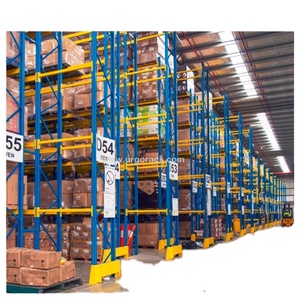
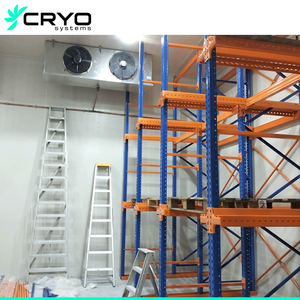
Engineered for blast freezers and food logistics hubs. Special low-temperature surface passivation prevents micro-cracking and brittleness under sub-zero thermal cycling.
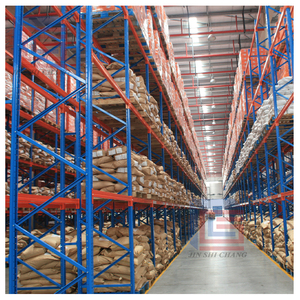
Direct from our automated manufacturing lines: High-precision pallet racks, boltless modular wire units, multi-tier picking architectures, and specialized dynamic flow systems engineered to European FEM, American RMI, and Australasian AS 4084 benchmarks.
Engineered for blast freezers and food logistics hubs. Special low-temperature surface passivation prevents micro-cracking and brittleness under sub-zero thermal cycling.
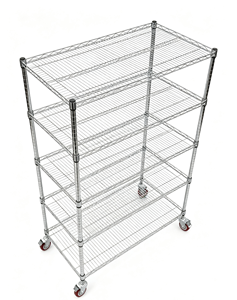
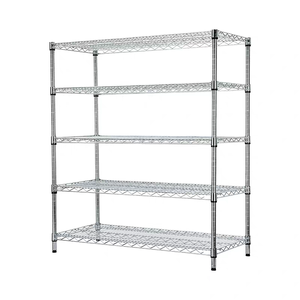
High-strength carbon steel wire matrix with grooved upright sleeves. Delivers optimal light penetration, overhead sprinkler pass-through, and zero dust accumulation.
Designed for high-throughput fulfillment centers. Features cold-bent roll-formed uprights and stepped beams with integrated safety clips for fast level reconfigurations.
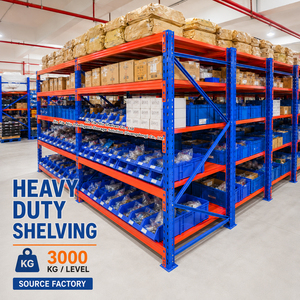
Heavy-gauge corrugated steel shelves backed by heavy channel tie-bars. Perfect for dense tote bins, tooling dies, automotive castings, and dense industrial hardware.
Self-regulating gravity roller beds designed for expiration-sensitive consumables. Eliminates inner-aisle traffic and slashes pallet handling time by up to 45%.
Very Narrow Aisle (VNA) system engineered for turret trucks. Maximizes vertical airspace up to 15 meters while maintaining rigid deflection tolerances under structural load.
Built from structural pre-galvanized or hot-dipped coil. Resists chemical exposure, coastal salt spray, and indoor humidity without structural steel integrity degradation.
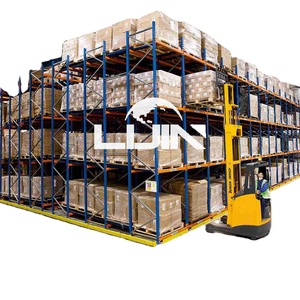
The international industry baseline for fast SKU distribution. Supports standard Australian 1165×1165mm, European EUR/EPAL, and North American GMA pallet parameters.
From bolted slotted angle iron to automated precision-formed teardrop, rivet, and keyed interlocking profiles: How modern metallurgical advances and cold-roll bending redefine warehouse installation speed, dynamic bay capacity, and warehouse ROI.
In modern industrial intralogistics, storage racking represents far more than inert structural steel; it constitutes the primary load-bearing operational skeleton of global supply chains. For over two decades, enterprise distribution facilities struggled with bolted angle iron shelving systems. These legacy configurations exhibited substantial structural vulnerabilities: localized stress concentrations at drilled bolt perforations, chronic hardware loosening induced by micro-vibrations from forklift transit, labor-prohibitive assembly schedules, and unpredictable failure points under asymmetrical live loading.
The transition to precision OEM/ODM boltless warehouse shelving marks a watershed advancement in structural storage engineering. Boltless systems eliminate hardware fasteners through precision-stamped interlocking tabs, tapered rivet lugs, or teardrop-and-pin geometries. As vertical gravity load increases, the male connector wedges deeper into the tapered female upright slot, producing a mechanical phenomenon known as gravity-assisted wedge-lock rigidity. This engineering attribute improves total torsional stiffness while cutting installation and bay reconfiguration man-hours by up to 72%.
Our manufacturing protocols employ certified premium structural steel alloys—primarily Q235B and Q345B structural carbon steel (equivalent to ASTM A36 and ASTM A572 Grade 50). By using cold-rolled sheet rather than hot-rolled strip, the material undergoes work-hardening during rolling, enhancing tensile yield limits without adding deadweight. We engineer upright columns with multi-flanged, complex roll-formed open profiles containing up to 12 cold-bent return facets. These multiple bends relocate the profile's shear center closer to its centroid, dramatically raising the critical elastic buckling threshold under axial compression.
When evaluated in accordance with AS 4084 (Steel Storage Racking), EN 15512 (European Industrial Racking Specification), and ANSI MH16.1 (RMI Design Standards), upright frames must resist combined axial compression and biaxial bending moments. Our robotic automated cold-forming lines uphold tight sectional tolerances (±0.15mm), ensuring identical load transfer across every column run and eliminating structural eccentricity across multi-bay configurations.
Procurement directors must balance floor space utilization, equipment access aisles, floor slab loadings, and budget parameters. The table below illustrates the structural performance and engineering characteristics of primary warehouse racking classifications manufactured across our OEM/ODM facilities.
| Racking Topology | Typical Beam / Shelf Load (UDL) | Standard Upright Height | Access Selectivity | Deflection Limit Criterion | Primary Application Environment |
|---|---|---|---|---|---|
| Boltless Rivet Shelving | 150 kg – 600 kg / level | 1.8m – 3.6m | 100% Manual Hand-Pick | L / 200 (Elastic Mid-Span) | E-commerce fulfillment, spare parts, archive rooms |
| Selective Pallet Racking | 1,000 kg – 4,500 kg / level | 2.5m – 12.0m | 100% Forklift Access | L / 250 (EN 15512 Baseline) | General 3PL distribution, FMCG warehousing |
| Very Narrow Aisle (VNA) | 1,500 kg – 4,000 kg / level | 6.0m – 16.5m | 100% Turret Truck Access | L / 300 to L / 350 (Ultra Rigid) | High-density urban mega-DCs, pharmaceutical stock |
| Gravity Flow Dynamic Rack | 500 kg – 1,500 kg / pallet | 2.0m – 8.0m | FIFO (First-In, First-Out) | Track Slope: 2.5% – 3.5% | Perishables, beverage processing, cold storage freezers |
| Heavy Cantilever Racking | 800 kg – 3,000 kg / arm | 3.0m – 9.0m | 100% Side Front Access | Arm Deflection Limit < L / 180 | Timber lumber yards, steel tube & pipe bundles |
Established in 2001, Guangzhou Heda Shelves Co., Ltd. operates a 30,000 m² advanced fabrication complex. We engineer, certify, and export complete industrial racking kits with verified compliance credentials.
Independently verified manufacturing compliance: CE Certification No. 2435-CPR-8605159 and ISO 9001:2015 Quality Management System No. 18624Q00169R0M. We supply raw material spectroscopic reports, weld penetration NDT certificates, and zinc coat thickness testing with every bill of lading.
Our in-house design engineering desk utilizes parametric 3D CAD and Revit BIM modeling. Submit warehouse architectural DWGs, clear heights, and turning radii to receive complete bay distribution drawings, flue-space allowances, and egress aisle plans within 24 hours.
Complete OEM/ODM customization for regional racking brands. Upright pitch configurations available in 50mm, 75mm, and 76.2mm (3-inch North American teardrop pattern). We provide custom RAL powder coatings, embossed beam branding, and retail-ready knock-down export packaging.
Specialized structural calculations for high-seismic zones across New Zealand (NZS 1170.5) and the Pacific Rim. Our engineers design enlarged baseplate footings, high-ductility anchor brackets, and double cross-bracing frameworks engineered to absorb seismic energy during ground acceleration.
Shipments destined for Oceania, North America, and Europe are secured on specialized heavy-gauge steel stillages or ISPM-15 heat-treated wood pallets. Clean customs clearance avoids pest inspection quarantines with Australian DAFF, New Zealand MPI, and USDA biosecurity authorities.
Every container is supplied with stamped commercial invoices, weight packing lists, certificates of origin (qualifying for ChAFTA, RCEP, and Bilateral trade agreements), engineering load charts, and color-coded step-by-step field assembly instruction manuals.
The convergence of automation, decarbonized steel supply chains, and high-density fulfillment requires logistics directors to evaluate storage systems beyond basic cost-per-pallet calculations.
Traditional static racking layouts were engineered exclusively for human-operated counterbalanced and reach forklifts. Modern high-velocity distribution centers now integrate hybrid pick operations, where autonomous mobile robots (AMRs) navigate beneath the lowest shelf tier or pick cartons from dynamic live beds. This shift requires tighter floor-level manufacturing tolerances. Beam clear entry dimensions must maintain millimetric consistency (±1.0mm) to prevent robotic optical LiDAR orientation errors. Modern boltless shelving for automated facilities now incorporates bottom ground-rail ties and laser-aligned guide channels to facilitate unobstructed automated vehicle transit.
Global environmental disclosures and ISO 14064 carbon-accounting mandates are prompting procurement leaders to evaluate the carbon footprint of steel warehouse storage racking. Conventional manufacturing utilized heavier structural steel sections (up to 3.0mm thickness) to achieve desired load envelopes. By adopting high-strength low-alloy (HSLA) steel coils containing micro-alloyed niobium and vanadium, our factories can achieve higher yield strengths (up to 450 MPa) while reducing component wall thickness by 18% to 24%. This yields a dual benefit: substantially lower embodied carbon emissions per pallet location and decreased international ocean container freight costs.
Urban last-mile logistics require modular, easily relocated shelving infrastructure. Boltless rivet and slotted systems have evolved into reconfigurable multi-tier mezzanine picking towers. Warehouses with expanding SKU counts can convert standard single-floor industrial boltless shelving into a two- or three-tier rack-supported picking platform simply by clipping in structural bridging joists, kickplates, and intermediate steel grid decking—without site welding, flame cutting, or structural building alterations.
E-commerce grocery fulfillment and cold-chain pharmaceutical facilities require surface coatings that withstand rigorous sanitization chemicals, caustic washes, and high relative humidity without peeling. The shift toward electrostatic zinc-phosphate pretreatment followed by epoxy-polyester hybrid powder coats cured at 200°C provides superior impact resistance (tested to 50 kg/cm direct impact via ASTM D2794). For aggressive environments, continuous hot-dip galvanization (HDG) delivering minimum 65 μm zinc coverage remains the primary defense against pitting and sub-film oxidation.
From prime hot-rolled coil de-coiling to automated CNC multi-station punching, robotic GMAW welding, and 200% dynamic load testing: our vertically integrated process guarantees consistent structural integrity.
Incoming steel coils undergo spectroscopic testing to verify carbon, manganese, and sulfur content according to strict Q235B / Q345B structural specifications.
Hydraulic expansion uncoilers feed master rolls into continuous precision edge-trim slitting lines to achieve strip-width tolerances within ±0.05mm.
High-speed mechanical presses execute simultaneous upright slot, keyhole, teardrop, and beam connector hole punching at exact pitch intervals without micro-fracturing.
Uprights and interlocking beams pass through up to 24 progressive cold-forming roll passes, building compound return angles that maximize section modulus.
Automatic multi-axis robotic welders join beam end-connectors with continuous shielding gas arc welds (GMAW), preventing localized fatigue failure points.
Complete surface immersion removal of scale, mill grease, and oxides, applying a zinc phosphate conversion layer for superior primer adhesion.
Automated reciprocator spray booths apply thermosetting polyester resins at 60-90 μm thickness, followed by 200°C convection curing for scratch-proof durability.
Batch-run samples undergo hydraulic jack compression and uniform distributed load (UDL) deflection testing up to 2.0x working capacity safety factors.
Answers to common structural safety, compliance standards, customization tolerances, and ocean logistics questions asked by international procurement directors.
Partner directly with an established engineering manufacturer. Submit your floor dimensions, target pallet volumes, clear ceiling heights, and equipment specifications to receive an engineered 3D CAD design proposal and transparent freight quotation within 24 hours.