Engineered High Bay Racking & Pallet Storage Systems
Manufactured with high-tensile structural steel, multi-bend upright geometry, and automated robotic welding to guarantee micron-level vertical plumb and high load safety factors.
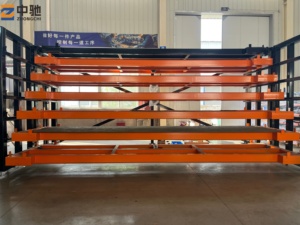
High Load Capacity 8-Layer Anti-Rust Powder Coated Steel Rack Heavy Duty Warehouse Storage System
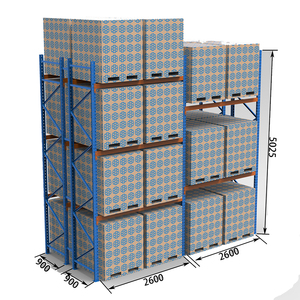
Pallet Racking Supply Certificated Factory 2 Ton Selective Double Deep Commercial Pallet Rack
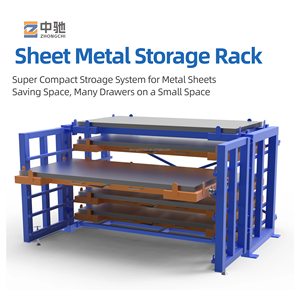
Warehouse Pallet Rack System Heavy Duty Durable Steel Anti-Rust Drawer Type Storage Shelving
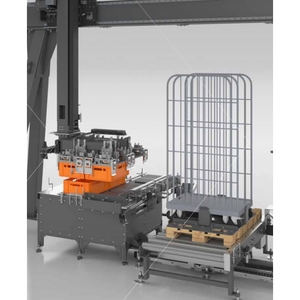
TRAPO PalletMaster Tailored Solution For Efficient Palletizing Packaging Processing Line Systems
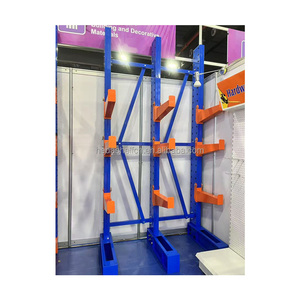
Wholesale Industrial Shelves Double Sided Heavy Duty Cantilever Racking System Cantilever Racks
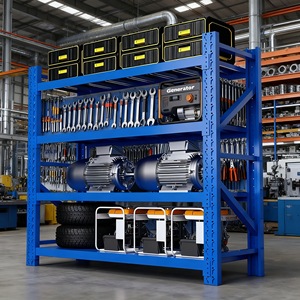
Iron Metal Shelves 4-Layer 400kg Heavy Duty Stackable Racking for Garage & Commercial Basement
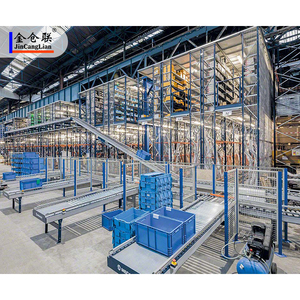
Express System Remote Control Shuttle Car Radio Shuttle Robot Pallet Racking Intelligent Shelving
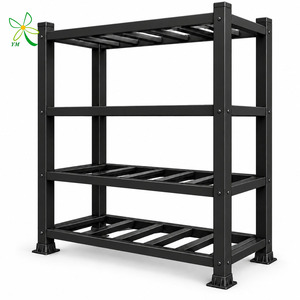
Global Export Corrosion Protection Lightweight Stackable Heavy Duty 1200mm FRP Storage Rack
Architectural Engineering of High Bay Racking Systems
Modern high bay rack storage represents the pinnacle of cold-formed structural steel engineering. When storage infrastructure extends from 12 meters up to 40+ meters in height, traditional pallet racking design methodologies become obsolete. High bay structures exist in two distinct structural topologies: Free-Standing Internal High Bay Racks housed inside pre-engineered steel buildings, and Rack-Clad Building Systems (RBS) where the racking framework itself acts as the primary structural skeleton supporting the roof, side wall claddings, and external wind/snow loads.
At our 30,000 m² Guangzhou manufacturing complex, every high bay component undergoes rigorous parametric design using Finite Element Analysis (FEA) software. We simulate complex real-world dynamics including second-order P-Delta (P-Δ) destabilizing effects, torsional-flexural buckling modes, beam-end connector semi-rigidity (rotational stiffness \(C_d\)), and dynamic harmonic seismic loading compliant with AS 4084-2023 (Australia), EN 15512 (European Standard), RMI MH16.1 (USA), and NZS 1170.5 (New Zealand Seismic).
Future Procurement Trends in High Bay Storage Systems
Industrial supply chain procurement is transitioning rapidly from purchasing disconnected material handling components toward investing in unified, turnkey logistics assets. Procurement directors, 3PL executives, and facility owners must evaluate high bay racking not merely as warehouse furniture, but as high-frequency automated physical computing hardware. Five seismic shifts are dictating future B2B procurement strategies:
| Procurement Dimension | Traditional Legacy Approach | 2025–2035 Next-Gen High Bay Standard | Impact on Facility TCO |
|---|---|---|---|
| Structural Integration | Building constructed first; standard racking bolted to slab. | Rack-Clad Building Systems (Silos) where rack forms the structural frame. | Reduces total civil construction CapEx by 18% to 27%; accelerates time-to-commissioning. |
| Automation Readiness | Forklift manual access aisles with wide 3.2m clearances. | ASRS & Autonomous Mobile Robot (AMR) narrow-lane high-speed interfaces. | Cuts labor reliance by up to 70%; increases volumetric cube utilization by up to 85%. |
| Carbon Accounting | Ignoring Scope 3 emissions; uncertified black steel sourcing. | Decarbonized Steel with Environmental Product Declarations (EPD). | Ensures compliance with European CBAM and Australasian green building standards. |
| Seismic Mitigation | Generic prescriptive row bracing; site-level retrofits. | Site-Specific Dynamic Spectrum FEA & base isolation dampers. | Mitigates catastrophic warehouse progressive collapse and lowers insurance premiums. |
| Surface Protection | Basic wet paint or single-coat thin powder (35–45μm). | Automated Zinc Phosphate + 80–120μm Epoxy-Polyester coatings. | Eliminates micro-cracking in -30°C cold stores and high-humidity tropical coastal hubs. |
Key Technological Developments Shaping High Bay Manufacturing
The manufacturing of high bay storage is undergoing deep robotic transformation. In our factory, automated CNC coil slitting lines directly feed continuous multi-station cold roll-forming machines. Each upright profile receives cold-work hardening throughout its cross-sectional geometry—forming stiffening ribs and omega curls that enhance critical axial load resistance without unnecessary dead weight.
Key technological breakthroughs now deployed in our OEM/ODM manufacturing workflows include:
Frequently Asked Questions for Engineering & Procurement
Common inquiries from international project engineers, logistics contractors, and procurement executives prior to factory audit and order placement.