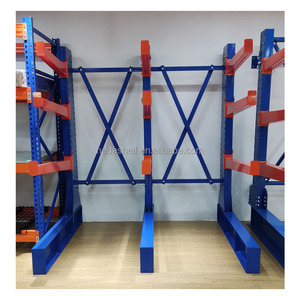
 Heavy Duty
Warehouse Cantilever Racking Systems Timber Storage Racking
Free Front Access
1000–3000 kg/Arm
Custom Column H
Designed according to rigorous static calculation models, cold-roll formed profiles, and modular adaptability across complex FMCG, 3PL, and industrial facilities.
Heavy Duty
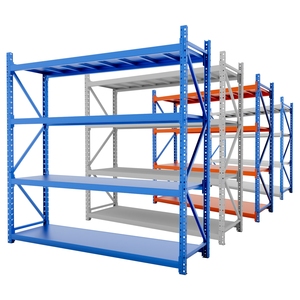 Standard Selective
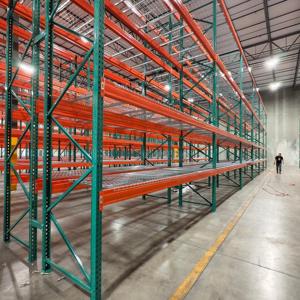 US Standard
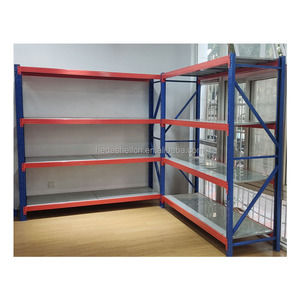 Boltless Medium
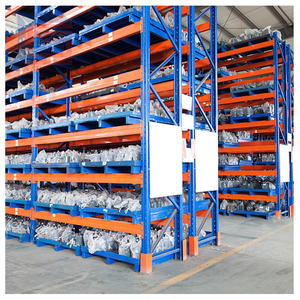 High Adaptability
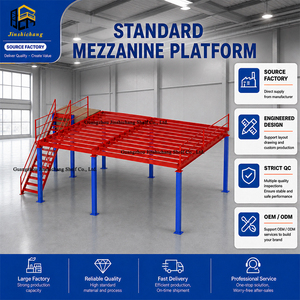 Space Multiplier
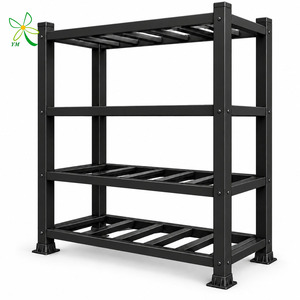 Corrosion Proof
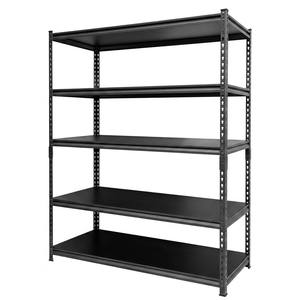 Commercial Hybrid
Global supply chain disruptions and surging land acquisition costs have reshaped industrial racking procurement from simple steel commodity sourcing into an analytical, lifecycle-engineered investment.
With urban warehousing real-estate appreciating at exponential rates across Australasia, North America, and Western Europe, enterprise buyers prioritize volumetric utilization. Racking procurement strategies increasingly favor VNA (Very Narrow Aisle) and self-supporting High-Bay Rack-Clad structures exceeding 14 meters in clearance.
Automated Guided Vehicles (AGVs), Autonomous Mobile Robots (AMRs), and four-way Radio Shuttle systems demand beam deflection thresholds far more stringent than standard manual forklift tolerances. Modern contracts require fabrication deflection ratings tightened from 1/200 down to 1/350 or 1/500 under full static loading.
Procurement in seismically dynamic belts—including New Zealand, Japan, and Western coastal Americas—demands site-specific non-linear time-history structural simulations. Importers require pre-engineered base-plate sizing, dual-anchor post configurations, and reinforced cross-aisle portal ties conforming strictly with NZS 1170.5 and AS 4084.
Under-engineered racking introduces systemic catastrophic collapse hazards. Our factory implements high-tensile certified steel (Q235B and Q355B equivalent to S235JR and S355JR under EN 10025 standards). Upright profiles are roll-formed through a consecutive multi-pass cold rolling station, ensuring continuous structural fiber flow without localized work-hardening micro-fractures.
To resist industrial warehouse impact, our Omega-profile upright posts feature multi-bend returns providing heightened inertia moments ($I_x$, $I_y$), significantly mitigating torsional buckling under extreme axial down-loads.
Request Structural Calculations| Engineering Metric | Standard Commercial | HEDA Industrial Grade |
|---|---|---|
| Steel Specification | Commercial Grade Q195-215 | High-Yield Q235B / Q355B |
| Punching Accuracy | ± 0.5 mm cumulative | ± 0.05 mm CNC Auto Punch |
| Surface Pretreatment | Manual degreasing spray | 8-Stage Immersion Pickling & Phosphating |
| Coating Thickness | 40–60 Microns | 70–95 Microns Pure Epoxy Powder |
| Seismic Compliance | Basic Static Tables | Dynamic Finite Element Analysis (FEA) |
From passive physical storage to intelligent, sensorized logistical hubs: examine the transformative shifts taking place in enterprise warehousing infrastructure.
Next-generation rack infrastructure integrates embedded micro-strain gauges, tri-axial impact accelerometers, and tilt sensors directly inside the upright foot-assemblies. This alerts safety directors in real-time when a forklift collision compromises column verticality beyond critical tolerances.
Procurement now intersects deeply with building design. Turnkey projects utilize BIM (Building Information Modeling) objects at LOD 400 (Level of Development), allowing mechanical engineers and structural architects to simulate MEP clashes, sprinkler fire spray cone clear-paths, and HVAC flows prior to component rolling.
As cold chain operators face staggering energy consumption, cold-storage racking surfaces are engineered with infrared-reflective powdered resins, preventing localized heat absorption during maintenance cycling. Furthermore, hexavalent-chromium-free galvanization methods guarantee zero chemical leaching in pharmaceutical dry rooms.
Established in 2001, Guangzhou Heda Shelves Co., Ltd. has spent over two decades eliminating the execution pitfalls inherent in international intralogistics supply.
We supply private-label distribution networks globally. From proprietary teardrop and slotted profiles to specialized 76.2mm, 50mm, and 75mm beam connector claw punchings, we match existing legacy rack systems for seamless brownfield expansions.
Our management and manufacturing operations adhere strictly to CE (Factory Production Control Certificate No. 2435-CPR-8605159) and ISO 9001:2015 Management Standards (Registration No. 18624Q00169R0M), guaranteeing batch traceability from steel coil heat numbers to the completed bay.
Before allocating your capital budget, tap into our 300+ strong workforce of technical and operational specialists. We deliver comprehensive 3D layout simulations, flue space design, egress modeling, and mechanical equipment coordination diagrams within 24–48 hours.
Our shipping protocols safeguard international consignments against port impoundments. Racking components are bundled in custom heavy-duty steel stillages or ISPM-15 heat-treated wood dunnage, ensuring seamless compliance through Australia DAFF, New Zealand MPI, and US CBP inspections.
We bridge the distance between factory floor and site commissioning. Every order ships with itemized QR-coded bundle tagging, comprehensive layout blueprints, torque specifications for floor anchor anchors, and direct factory engineer video link support for certified installation crews.
Practical, engineering-backed answers addressing the complex technical, structural, and regulatory challenges of overseas racking procurement.
Our engineering department utilizes structural finite element modeling benchmarked specifically against AS 4084-2023 (Steel Storage Racking) and EN 15512. We deliver complete engineering documentation packages including Section Modulus, Moment of Inertia, and frame buckling calculations, enabling your locally registered certifier or Chartered Professional Engineer (CPEng) to issue local site compliance certificates without redesign.
Box Beams consist of two interlocking cold-rolled C-channels seam-welded to deliver maximum torsional stiffness, ideal for heavy standard pallets. Step Beams feature an inward-facing recess (commonly 1/2" to 7/8") specifically designed to flush-mount steel wire mesh decking, cross-bars, or timber infills. Our engineers select the profile geometry directly based on your deck interface requirements and distributed load thresholds.
For indoor ambient warehouses, we utilize an 8-stage automated pre-treatment line followed by electrostatic powder coating baked at 200°C (70–90 microns). For high-humidity facilities, coastal ports, or unheated outdoor storage sheds, we provide Hot-Dip Galvanization conforming to ISO 1461, achieving zinc barrier coatings exceeding 85 microns that withstand hundreds of hours of salt spray exposure.
To generate our free 3D CAD layout, our technical team requires: 1) Architectural floor drawings displaying column grid spacing, floor flat-slab class (e.g., FM2/FM3), dock doors, and fire exits; 2) Clear building height beneath overhead ceiling obstructions (sprinkler mains, HVAC, purlins); 3) Pallet specifications (dimensions, overhang, gross load weight); and 4) Precise forklift data (lift height, mast collapsed height, minimum turning radius, and right-angle stack aisle width).
We prepare clean, fully itemized commercial shipping dossiers including Bill of Lading (B/L), packing lists referencing component ID markings, mill test certificates (MTC), fumigation validation documents, and Certificates of Origin (CO). This documentation enables our partners to claim preferential zero-tariff or reduced rates under applicable bilateral trade frameworks like ChAFTA or NZ-China FTA agreements.
Standard factory production lead time is typically 15 to 25 business days from final 3D CAD approval, depending on custom profile rolling and finish specifications. Ocean freight transit varies by destination port: approximately 12–18 days to Australia/NZ major terminals, 18–24 days to US West Coast, and 28–35 days to European ports.