Featured OEM/ODM Industrial Racking Systems
Discover our primary heavy-duty storage configurations, custom-fabricated with structural steel profiles, high-durability roller beds, and modular load interfaces tailored for global supply chains.
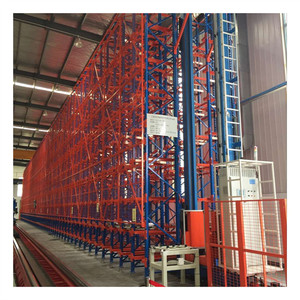 Automated AS/RS
Heavy Duty Industrial Automated Steel Racking System
- Payload: 500 – 2,500 kg / pallet
- Integration: Crane & Stacker interface
- Finish: Anti-wear electrostatic coat
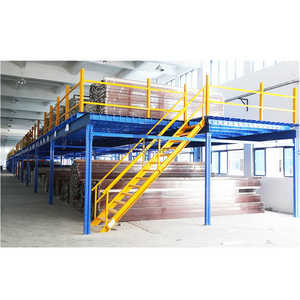 Multi-Tier Mezzanine
Corrosion-Resistant Steel Mezzanine Racks System
- Deck Load: 300 – 1,200 kg / m²
- Structure: High-tensile Q235B steel
- Safety: Integrated handrails & stairwells
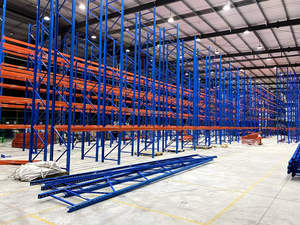 Heavy-Duty Shelving
Adjustable 5-Layer Storage Shelves with Safety Railguards
- Capacity: 200 – 800 kg / level
- Adjustability: 50mm pitch pitch-hole
- Application: Van racking & depot storage
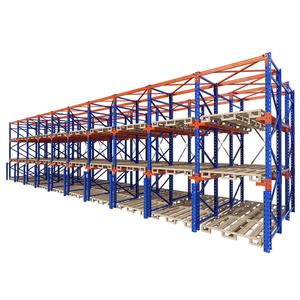 High-Density Pallet
High-Density Cost-Effective Drive-In & Drive-Thru Racking
- Lane Depth: Up to 10+ pallets deep
- Configuration: LIFO & FIFO options
- Ideal for: Cold storage & bulk SKU
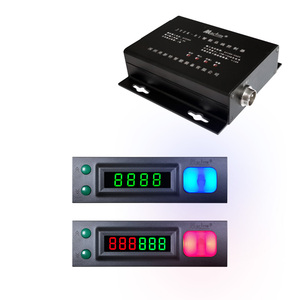 Live Carton Flow
Warehouse E-Commerce Pick-to-Light Flow Rack System
- Roller: Polypropylene split rollers
- Logic: Digital wired / wireless bus
- Throughput: High-speed piece picking
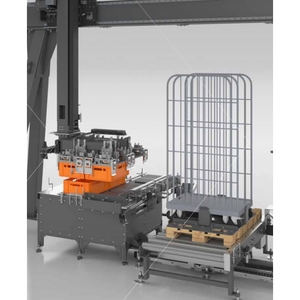 Palletizing Automation
PalletMaster Tailored Line Packaging & Flow System
- Automation: Integrated discharge rails
- Line Rate: Continuous palletizing cycle
- Compatibility: Standard & Euro pallets
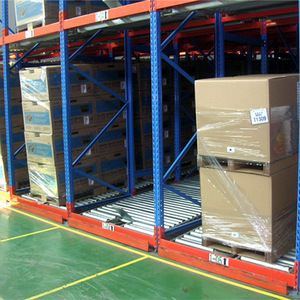 Pallet Live Storage
SUNLI Customizable Heavy Duty Gravity Pallet Racking
- Mechanism: Steel gravity roller beds
- Braking: Centrifugal speed regulators
- Protection: ESD & powder coated finish
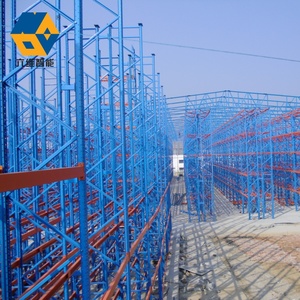 Rack-Clad Structure
Rack-Clad Warehouse Building & Numbering System
- Concept: Racking acts as building structure
- Height: High-bay builds up to 40m
- Cost Savings: Civil concrete roof reduction
Physics of Live Storage: Gravity Flow Dynamics & Engineering Controls
Live storage racking (Pallet Flow and Carton Flow) functions as a compact, self-replenishing buffer utilizing gravity inclination. Understanding roller physics, speed modulation, and separator kinetics ensures zero product deformation and high throughput.
In modern industrial logistics, live storage racking represents the pinnacle of compact mechanical efficiency. Operating on an unpowered, slope-driven FIFO (First-In, First-Out) kinematic principle, dynamic live racking eliminates redundant forklift aisles while guaranteeing continuous stock replenishment at the pick face. As an experienced OEM/ODM live storage racking manufacturer, our structural calculations account for dynamic live loads, viscoelastic deflection of timber and plastic pallets, and controlled velocity gradients.
The standard gradient for industrial pallet live storage systems is strictly calculated between 3.0% and 4.0% inclination (equivalent to approximately a 1.7° to 2.3° angle), depending on the bottom-deck characteristics of the pallet (Euro pallets, CHEP GMA 48x40-inch pallets, or Australian 1165x1165mm standard runners). For lightweight carton flow channels, this gradient is calibrated between 2.5% and 5.0% using ultra-low-friction thermoplastic acetal roller assemblies mounted on precision-stamped zinc profiles.
Full-Width & Split Roller Beds
Fabricated from heavy-duty cold-drawn galvanized steel tubes with internal shielded deep-groove ball bearings. Configured in full-width roller arrangements or dual/triple split tracks to support varying bottom runner orientations, ensuring deflection under full payload does not exceed L/200.
Centrifugal Speed Retarders
Internal gear-driven centrifugal brake rollers maintain a terminal pallet velocity below 0.3 m/s. As the rolling speed increases, planetary centrifugal weights press against the drum interior, preventing runaway impacts in deep-lane runs exceeding 15 to 30 meters depth.
Time-Delay Pallet Separators
Mechanical or pneumatic load separators isolate the pick-face pallet from line pressure generated by rear accumulating pallets. This mechanism completely neutralizes extraction resistance, protecting forklift mast components and eliminating crushing loads on delicate packaging.
| Dynamic Parameter | Pallet Live Storage (Heavy-Duty) | Carton Live Storage (Light / Medium) | AS/RS Automated Gravity Buffer |
|---|---|---|---|
| Load Capacity Range | 300 kg – 1,800 kg per pallet position | 5 kg – 50 kg per box / tote | 500 kg – 1,500 kg automated unit loads |
| Incline Slope Gradient | 3.0% – 4.0% (1.7° – 2.3°) calibrated | 2.5% – 5.5% adjustable steel brackets | 3.2% – 3.8% precision leveled beds |
| Roller / Wheel Material | Zinc-plated seamless steel tube (Ø60/Ø80mm) | High-impact polypropylene or HDPE wheels | Machined steel rollers with polyurethane rings |
| Braking Mechanism | Centrifugal internal brake rollers (1 per pallet) | Natural rolling resistance & end-stops | Eddy-current magnetic retarding rollers |
| Structural Standards | AS 4084:2023, FEM 10.2.02, EN 15512 | FEM 10.2.06, RMI MH16.1 specifications | EN 15620, DIN 18800 Class 1 high-tolerance |
| Aisle Utilization Ratio | Up to 75% volumetric footprint reduction | Up to 60% pick-path compaction | Up to 85% high-bay cubic utilization |
Why Tier-1 Integrators Partner With Guangzhou Heda Shelves Co., Ltd.
With over two decades of metallurgical precision, global export compliance, and complete in-house manufacturing, we deliver turnkey OEM/ODM racking systems with engineered certainty.
Founded in 2001, Guangzhou Heda Shelves Co., Ltd. has grown into an international leader in heavy-duty logistics equipment, racking fabrication, and intelligent storage design. Spanning a state-of-the-art 30,000 m² manufacturing plant equipped with automated robotic welding arms, continuous cold-roll forming lines, and multi-stage powder coating systems, we maintain an uncompromising monthly production capability exceeding 30,000 tons of finished steel racking.
Our dedicated engineering group of over 300 technical specialists, structural engineers, and quality assurance inspectors ensures that every OEM/ODM order conforms strictly to the structural and seismic requirements of its target destination. Whether addressing the rigorous AS 4084 (Steel Storage Racking) regulations in Australia, seismic coefficient modeling under New Zealand's NZS 1170.5, or European CE compliance under EN 15512 (CE Certificate No. 2435-CPR-8605159), our design packs deliver full section property calculations, load limit plaques, and finite element analysis (FEA) models ready for immediate independent certification.
Complimentary 3D & CAD Layouts
We do not simply fabricate steel; we engineer volumetric solutions. Clients provide warehouse blueprints, building clear heights, and pallet specifications, and our engineers deliver comprehensive 3D CAD visualization models and load capacity charts within 24 hours.
ISO 9001 & CE Certified Metallurgy
Operating under verified ISO 9001:2015 (Registration No. 18624Q00169R0M) and European CE directives, our raw coils of high-strength Q235B and Q355B steel undergo systematic yield stress testing, ultrasonic weld inspection, and adhesion tests before roll profiling.
Biosecurity-Compliant Export Bundling
Shipments to Australasia, Oceania, Europe, and the Americas arrive strictly packaged on custom fabricated steel stillages or ISPM-15 heat-treated certified timber. Complete documentation ensures seamless customs clearance through Australian DAFF, New Zealand MPI, and international ports.
Future Procurement Trends in Industrial Live Storage (2025–2030)
Global supply chain pressures are fundamentally shifting capital allocation from static racks toward hybrid dynamic flow systems. Discover the procurement benchmarks defining next-generation logistics hubs.
Procurement directors and 3PL facility managers are facing an unprecedented dual challenge: skyrocketing commercial warehouse leasing rates and severe labor shortages across manual material handling roles. Consequently, the procurement of OEM/ODM live storage racking is experiencing a marked transition from simple off-the-shelf equipment purchases toward highly integrated, data-enabled dynamic buffer solutions.
AMR & AGV Front-End Interfacing
Procurement teams increasingly require live storage racking to interface directly with Autonomous Mobile Robots (AMRs) and counterbalanced AGVs. This requires tight manufacturing tolerances on discharge bed deflection (<2mm) and heavy-gauge pallet positioning stops to facilitate automated optical sensor alignment.
TCO & Zero-Power ESG Prioritization
With industrial electricity tariffs rising and corporate Scope 2 carbon mandates tightening, passive gravity flow systems offer massive Total Cost of Ownership (TCO) advantages over continuous electric conveyors. Gravity consumes zero kW/h, operating reliably across decades with minimal routine bearing greasing.
Sub-Zero Cold Chain Optimization
Refrigerated and frozen distribution centers (-25°C to -30°C) represent the costliest cubic footage in modern logistics. Procurement is surging for specialized hot-dip galvanized live storage tracks equipped with low-temperature synthetic ester lubricants that eliminate grease solidification and roller freezing.
Technological Innovations in Live Racking Design & Materials
From eddy-current contactless deceleration to modular click-in roller brackets, continuous engineering R&D is redefining dynamic rack durability and flexibility.
The historical vulnerability of dynamic pallet flow systems lay primarily in mechanical brake wear and hydraulic seal degradation caused by high-frequency shock loading. Modern OEM/ODM manufacturing at Heda Shelves circumvents these failure modes through advanced material metallurgy and non-contact retarding physics.
Magnetic Eddy-Current Retardation: High-specification lanes now implement contactless permanent-magnet eddy-current brake rollers. As conductive aluminum or copper sleeves pass internal neodymium magnet clusters, opposing magnetic fields develop in direct linear proportion to velocity. Because there is zero physical friction or fluid seal pressure, these brakes are virtually indestructible and perform consistently from ambient humidity to sub-zero freezer vaults.
Universal Modular Profile Tooling: Our upright profiles and horizontal structural ties are cold-formed on high-precision German CNC multi-station profiling lines. This ensures 50mm and 75mm teardrop and hexagonal hole-pitch centers maintain a cumulative dimensional tolerance of less than ±0.5mm across a 12-meter single column upright. For international OEMs, this modular standardization allows our live roller beds to seamlessly retrofit into third-party upright frames, including Dexion, Mecalux, Stow, and Schaefer configurations.
Kinematic Simulation
Computer modeling of pallet weight variance, centroid stability, roller spacing pitch, and deceleration profiles across desired cycle volumes.
Tooling & Cold Forming
High-speed punching, uncoiling, cold-roll forming of certified Q235B/Q355B steel sections, and robotic continuous seam welding of box beams.
Surface Passivation
Automated 10-stage pre-treatment, chemical degreasing, zinc phosphating, and electrostatic epoxy-polyester powder thermosetting cured at 200°C.
Assembly Integration
Precision calibration of roller tracks, brake drum positioning, entry guide funnels, and mechanical separation levers pre-tested before crating.
Frequently Asked Questions for Global Procurement & Engineering Teams
Authoritative answers addressing engineering tolerances, seismic verification, pallet dynamics, fire safety codes, and international delivery timelines.
How do you calculate pallet flow roller spacing and the quantity of brake rollers required per lane?
Roller spacing (pitch) is fundamentally dictated by the bottom runner geometry of the pallet. Under industrial standard FEM 10.2.02 and AS 4084 guidelines, a minimum of three roller shafts must contact the pallet runner deck at all times to prevent surging, chattering, or snagging in the gaps. For a standard 1200mm deep pallet, roller pitch is typically set between 100mm and 150mm centers.
Brake roller frequency depends on the total lane depth and pallet gross weight. As an engineering baseline, one centrifugal brake roller is positioned at every pallet storage position beyond the entry point (e.g., a 10-pallet deep lane requires 8 to 9 speed retarders spaced symmetrically along the gradient). For heavy loads exceeding 1,200 kg, double brake rollers are placed adjacent to the load separator to absorb dynamic kinetic deceleration.
Can your live storage racking designs achieve AS 4084 compliance in Australia and NZS 1170.5 seismic verification in New Zealand?
Yes. As an OEM/ODM manufacturer with extensive export history to Oceania, our structural designs reference the strict standards of AS 4084:2023 (Steel Storage Racking) and the New Zealand Building Code (NZS 1170.5 Seismic Design Actions). We provide comprehensive engineering verification packs, including upright profile section properties, weld strength calculations, and baseplate anchor shear analysis.
For high-risk seismic zones (such as Wellington or Christchurch, NZ), we increase structural upright section gauges, reinforce diagonal frame bracing nodes, expand footplate anchor dimensions, and install heavy-duty double-row spacers to ensure structural stability during lateral ground acceleration events.
What are the key differences between full-width steel rollers and twin/triple split roller tracks?
Full-width rollers span the entire bay width (e.g., 1000mm to 1350mm) and represent the most forgiving solution for warehouses handling variable pallet qualities, mixed pallet sizes (Euro 800x1200mm alongside GMA 1000x1200mm), or pallets with broken bottom deckboards. They distribute weight evenly and prevent runner drop-through.
Split roller tracks (consisting of two or three narrow parallel roller channels) are optimized for standardized pallet fleets where runner dimensions are strictly controlled. Split tracks substantially reduce total steel tare weight, facilitate the integration of middle-lane magnetic brakes and mechanical floor separators, and yield lower logistics shipping weight per container.
How does live storage racking integrate with warehouse fire sprinkler codes (NFPA 13 & FM Global)?
Because live storage racking forms an ultra-dense solid block with negligible internal aisles, fire prevention protocols under NFPA 13 and FM Global Data Sheets 8-9 require dedicated consideration. Standard ceiling sprinkler water cannot penetrate deep multi-tier solid roller beds.
Our OEM/ODM engineering accounts for this by integrating vertical longitudinal flue spaces and custom sprinkler riser pipe brackets within the racking structure. Where required, our roller tracks feature perforated galvanized beds or segmented tracks that facilitate vertical water drainage, allowing in-rack intermediate sprinkler heads (ESFR) to protect every tier compliant with local municipal fire safety certifiers.
What lead times, shipping parameters, and import documentation should procurement anticipate?
Standard fabrication lead time for a 40ft high-cube container (approx. 22-26 tons of racked material) ranges between 15 to 25 working days from final CAD layout sign-off. Transit by ocean freight from South China ports (Nansha, Yantian, Chiwan) to major global ports typically requires: 12-18 days to Australia/NZ; 20-28 days to the US West Coast; and 28-35 days to European main ports (Rotterdam, Hamburg, Felixstowe).
Every shipment is accompanied by commercial invoices, mill test certificates (MTC) detailing steel chemical composition, packing lists with barcoded pallet bundles, CE declarations of conformity, and Certificates of Origin (allowing duty reductions under trade agreements such as ChAFTA or RCEP).
How does your powder coating finish hold up in humid, tropical, or coastal distribution hubs?
Standard indoor racking components undergo automated electrostatic epoxy-polyester powder thermosetting with a nominal dry film thickness (DFT) of 60 to 90 microns, passing 500-hour neutral salt spray tests (ASTM B117). For corrosive coastal facilities, uninsulated rural sheds, or tropical island regions (e.g., Queensland, Pacific Islands), we provide two superior options:
1. Heavy-duty zinc-rich epoxy primer undercoat followed by an exterior architectural polyester topcoat; or 2. Full Hot-Dip Galvanizing (HDG) conforming to ISO 1461 / AS/NZS 4680, delivering a metallurgical zinc alloy barrier capable of resisting extreme maritime and high-condensation environments for decades.
Engineer Your Custom Live Storage Racking Solution
Send us your warehouse CAD floor plan, clear height, pallet dimensions, and SKU throughput velocity. Our engineering team at Guangzhou Heda Shelves Co., Ltd. will deliver a tailored 3D system design, static load calculations, and a competitive factory-direct quote within 24 hours.
Contact Us