Featured Industrial Pallet Racking Feet & Stillage Baseplates
Explore our precision-fabricated racking shoes, foldable stillage cups, heavy-duty round nesting feet, and structural column load distributors engineered to deliver absolute point-load stability across heavy warehousing environments.
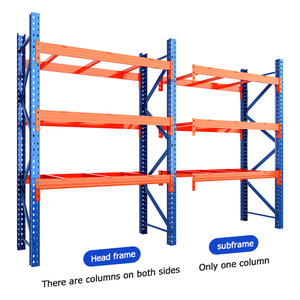
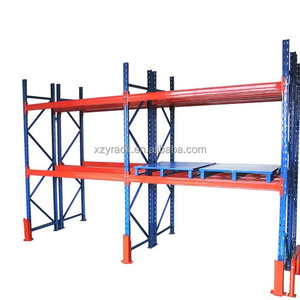
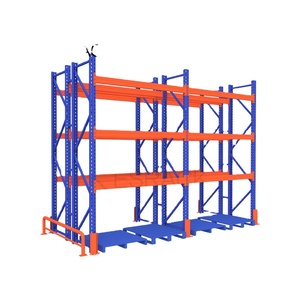 Heavy-Duty Beam
Custom Heavy Duty Industrial Steel Storage Carpet Roll Display Warehouse Beam Pallet Racking Systems Stacking Racks & Shelves
Designed for heavy coil and carpet roll racking frames requiring broad footprint load diffusion to protect warehouse concrete slabs against high shear stresses.
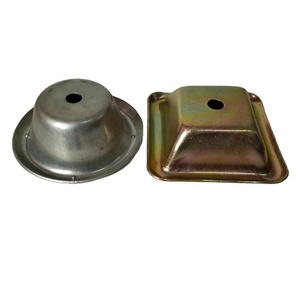 Stamping • SS304
Stamping Double Sided Foldable Stainless Steel Pallet Feet for Storage Stillages Racking Equipment for Pallets
Deep-drawn stamping construction optimized for cold storage, chemical stillages, and pharmaceutical post-pallet nesting without deformation under repeated cyclic loading.
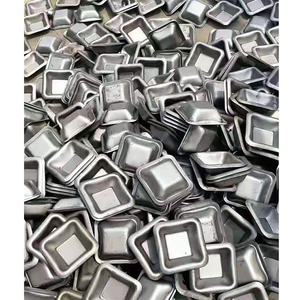 Foldable Stillage
Metal Pallet Feet for Detachable and Foldable Steel Stillage Stacking Racks
Precision engineered cup design enabling fast self-locating alignment during forklift drop-off, providing rigid interlock geometry for multi-tier vertical storage.
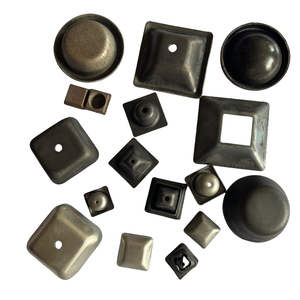 Round Cup Form
Best Quality Heavy Duty Round Stacking Steel Pallet Stillage Feet Stacking Racks Bottom Feet
Heavy-gauge round nesting shoes manufactured via heavy progressive pressing; engineered to prevent column kick-out and structural slippage under seismic accelerations.
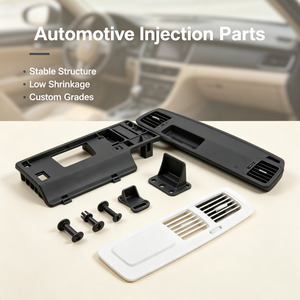 Reinforced PP / Polymer
Custom Injection Molded Plastic Parts Reinforced PP Pallet Feet For Warehouse Automatic Logistics Transport Rack Parts
Engineered for cleanroom logistics, automated sorting tracks, and epoxy-coated floor facilities where non-marking, non-sparking, and low-friction sliding are mandatory.
 Adjustable Leveling
Quality Factory Price Q235 Customized Adjustable Leveling Feet Warehouse Pallet Racking Corrosion Protection Powder Coated Easy
Heavy-threaded adjustable leveling foot assemblies delivering millimeter-accurate vertical alignment across uneven concrete floors without reliance on loose structural shims.
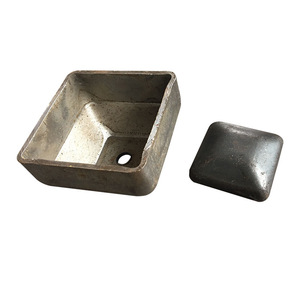 Anti-Rust Coated
Anti-rust Carbon Steel Shelf Sheet Stillage Stacking Pallet Feet
High-durability stamped steel cups manufactured with multi-stage phosphating and anti-rust surface treatments, designed for harsh manufacturing and staging yards.
 Upright Baseplate
Pallet Rack Steel Feet for Pallet Rack Pallet Racking Box Beam
Structural steel upright post footplates with precision-punched mechanical anchor hole patterns, integrated stiffener ribs, and compliant load transmission geometry.
Structural Metallurgy, Stress Transfer & Slab Bearing Mechanics
In high-density pallet racking systems, the baseplate serves as the critical mechanical interface between dynamic vertical rack frames and the industrial floor slab. Proper structural foot design is vital to prevent concrete crushing, bolt pull-out, and progressive collapse.
Finite Element Analysis (FEA) & Yield Resistance
Our engineering team applies non-linear FEA simulation to evaluate baseplate behavior under combined axial compression, transverse base shear, and overturning moments ($M_x$, $M_y$). By optimizing plate thickness (from 4.0mm to 12.0mm) and pressing cold-formed stiffener gussets directly into the flange geometry, we eliminate plastic hinging at the column-to-plate weld toe.
This stress distribution ensures that point loads from high-bay uprights—often exceeding 180 kN per column—are diffused over sufficient concrete slab surface area, safeguarding against localized slab punching shear.
Certified Metallurgy: Q235B vs. Q355B vs. SS304
Selecting structural feedstock relies entirely on environmental exposure and dynamic demand. For standard ambient logistics warehousing, hot-rolled Q235B carbon steel delivers exceptional weldability and cold ductility with yield strengths $\ge 235\text{ MPa}$.
In seismic zones or high-rack automated installations exceeding 12 meters, we employ low-alloy Q355B steel, offering minimum yield strengths of $355\text{ MPa}$ and elevated notch toughness. For cryogenic cold-storage facilities and corrosive washdown environments, austenitic Grade 304 and 316 stainless steel stamping configurations eliminate hydrogen embrittlement and catastrophic stress-corrosion cracking.
Weld Penetration & Seismic Energy Dissipation
The connection between the cold-formed upright profile and the racking foot forms a semi-rigid or rigid base joint. In compliance with EN ISO 3834-2 and AWS D1.1 structural welding specifications, our robotic MIG lines maintain robotic root penetration along 100% of the contact perimeter.
Under seismic ground accelerations defined by standards like AS 4084 and NZS 1170.5, our dual-anchor slot geometries allow controlled inelastic rotational capacity, functioning as sacrificial energy-dissipation nodes that protect main columns from buckling.
| Footplate Profile Type | Material Specification | Yield Strength ($R_e$) | Standard Thickness | Corrosion Protection | Primary Industrial Application |
|---|---|---|---|---|---|
| Standard Selective Rack Shoe | Q235B Cold-Formed Steel | ≥ 235 N/mm² | 4.0 mm – 6.0 mm | Epoxy Powder / Zinc Plating | Standard Distribution Warehouses, Retail 3PL |
| Heavy Seismic Baseplate | Q355B Low Alloy High Tensile | ≥ 355 N/mm² | 8.0 mm – 16.0 mm | Hot-Dip Galvanized (ISO 1461) | Seismic NZS 1170.5 / High-Bay AS/RS Uprights |
| Deep-Drawn Stillage Foot | SPCC / DC01 Deep Drawing Steel | ≥ 190 N/mm² | 3.0 mm – 5.0 mm | Zinc Chromate / E-Coating | Stackable Post Pallets, Automotive Stillages |
| Stainless Cold-Store Shoe | AISI 304 / 316 Stainless | ≥ 205 N/mm² | 4.0 mm – 8.0 mm | Passivated / Electro-Polished | Blast Freezers, Seafood Cold Stores, Food Pharma |
| Heavy-Duty Adjustable Leveler | 45# Carbon Steel + Q235 Cast | ≥ 335 N/mm² | M24–M36 Spindle | Dacromet / Geomet 500 | VNA Racking, Sloped Concrete Slabs, AS/RS In-feeds |
Future Procurement Trends for Industrial Racking Hardware (2025–2030)
Procurement directors and warehouse safety compliance engineers are shifting focus from commoditized rack prices to holistic lifecycle metrics. Here are the core structural and operational trends dictating international procurement today.
Rigorous Seismic Ductility & Strict Anchor Verification
Global logistics hubs located in active seismic corridors (including the Australasian Ring of Fire and the US West Coast) require baseplates certified under AS 4084:2023, FEM 10.2.02, and RMI MH16.1. Procurement contracts increasingly demand factory-supplied section properties, documented tensile pull-out shear tests, and slotted base configurations engineered for mechanical wedge anchors or chemical epoxy capsules.
Ultra-Tight Tolerances for AGV & AMR Operational Interfaces
With the rapid roll-out of Autonomous Mobile Robots (AMRs) and automated shuttle storage systems, floor flatness tolerances (DIN 18202 / TR34) have become paramount. Footplate designs that feature micro-adjustable threaded stems and spherical base seats eliminate irregular shimming stacks, providing continuous sub-millimeter level surfaces that keep AMR guidance sensors and lidar beams calibrated.
High-Durability Eco-Friendly Surface Treatments (RoHS / REACH)
Hazardous hexavalent chromium zinc baths have been completely replaced by lead-free zinc phosphatizing, electrostatic TGIC-free polyester powder coats, and eco-friendly Dacromet finishes. Furthermore, facilities operating in humid sub-tropical climates or marine ports mandate pre-hot-dip galvanizing exceeding 85 μm zinc thickness (BS EN ISO 1461) to guarantee 25-year structural service lifespans without maintenance downtime.
Universal Interchangeability & Modular Nesting Foot Geometries
International supply chain conglomerates are demanding standardized modular stillage feet that seamlessly cross-stack across diverse fleet designs. By engineering progressive multi-flange dies, our OEM manufacturing services produce stacking cups compatible with both round tube post stillages and square hollow section (SHS) stacking racks, cutting reverse-logistics repositioning costs.
Evolution of Racking Foot Architecture: Generation 1 to Generation 4
Observe how structural baseplate engineering has evolved from rudimentary punched steel shims to complex, digitally engineered kinematic leveling assemblies.
Flat Laser-Cut / Punched Carbon Steel Plates
Characterized by simple 2D shapes with pierced anchor holes. Prone to edge curl under anchor torque and incapable of dissipating transverse seismic moments without severe slab chipping. Relies heavily on dangerous steel loose shims on sloped slabs.
Progressive Die Ribbed & Flanged Baseplates
Utilizes 500-ton hydraulic progressive stamping presses to coin stiffening ridges directly into 4.0mm–6.0mm plates. Enhances section modulus by up to 45% without adding steel weight. Incorporates multi-slot bolt configurations to bypass slab reinforcement rebar.
Spherical Self-Aligning Threaded Assemblies
Combines heavy-gauge trapezoidal lead screws (M24–M36) with ball-and-socket baseplates. Compensates for up to 5 degrees of concrete slab camber or drainage slopes, ensuring true vertical upright plumbness essential for Very Narrow Aisle (VNA) turret trucks.
IoT Load-Sensing & Shock-Damped Hybrid Baseplates
Features vulcanized elastomeric vibration dampers integrated between high-strength steel housings and composite non-marking polymer floor liners. Embeds wireless strain gauges and piezoelectric shock sensors to monitor real-time rack overloading and forklift collisions.
Why International Contractors & OEMs Choose HEDA Shelves
Established in 2001, Guangzhou Heda Shelves Co., Ltd. operates as an authoritative, engineering-led manufacturer powering large-scale racking projects across Australia, New Zealand, Europe, and the Americas.
Verified Compliance & Certifications
Operate under fully certified quality regimes including CE Certification No. 2435-CPR-8605159, ISO 9001:2015 Management System No. 18624Q00169R0M, and comprehensive RoHS environmental material verifications.
In-House Stamping & Progressive Tooling
Equipped with 160T to 800T high-tonnage stamping presses, automatic multi-station cold blanking, CNC laser tube cutting, and in-house progressive die development for bespoke OEM foot designs with rapid mold turnaround.
Biosecurity & Export Precision
Shipments are packed in customized heavy steel stillages or ISPM-15 heat-treated timber crates, ensuring hassle-free biosecurity clearance through Australian DAFF, New Zealand MPI, and strict North American customs portals.
Frequently Asked Technical Questions on Racking Feet
Direct answers to the engineering, material verification, and shipping inquiries most often raised by industrial procurement teams and racking certifiers.
How do you calculate the minimum baseplate surface area to prevent concrete slab failure?
Can your pallet racking feet be certified to Australian Standard AS 4084 and NZS 1170.5 seismic codes?
What is the advantage of stamped stillage feet over welded three-piece fabricated feet?
When should warehouse planners use adjustable threaded leveling feet versus traditional steel shims?
How does HEDA prevent galvanic corrosion when stainless or plastic feet interface with carbon steel uprights?
What are the standard lead times, MOQs, and tooling costs for custom OEM/ODM racking foot development?
Request Technical CAD Layouts, Load Tables & OEM Quotations
Submit your column profile drawings, slab specifications, or target footprint dimensions. HEDA Shelves' engineering team returns detailed 3D CAD models, finite element stress reports, and containerized pricing within 24 hours.