Engineered Dynamic Roller & Warehouse Racking Systems
Precision-manufactured with premium cold-rolled Q235B/Q355B steel, calibrated gradient slopes, and fail-safe magnetic/mechanical speed deceleration controllers.
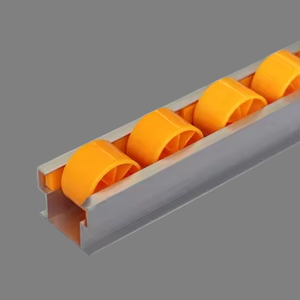 Dynamic FIFO
Racking System Gravity Flow Racks Pallet Flow Roller Shelving Carton Flow Industrial Warehouse Modular Metal Heavy Duty Storage
- Load Rating: 500 – 1,500 kg / pallet
- Flow Incline: 2.5° to 3.5° adjustable
- Centrifugal speed controllers included
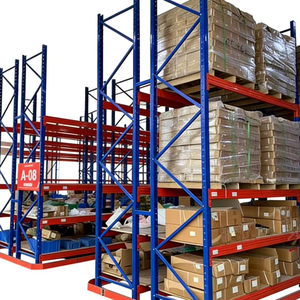 Cold-Rolled Steel
Heavy-Duty Thickened Cold Rolled Steel Epoxy Coated Factory Warehouse Shelving Logistics Express Basement Storage Rack Shelves
- Steel Grade: Thickened SPCC / Q235B
- Finish: Electrostatic Epoxy Polymer 80μm
- Pitch Adjustability: 50mm / 75mm increments
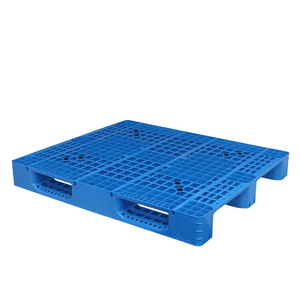 Pallet Interface
NEXARA 1311 1300*1100*160mm Single-faced Logistics Euro Pallet Rack Three Runners Colorful Stacking Deck Grid Surface Storage
- Dimensions: 1300 × 1100 × 160 mm
- Deck Structure: 3-Runner Grid Flow Surface
- Roller Contact: Anti-slip HDPE / PP matrix
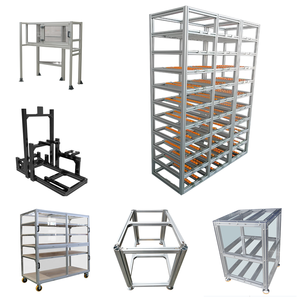 Modular Profile
All-in-One Industrial Aluminum Profiles Framing Display Stand Flow Rack Aquarium Stand Equipment Protective Guard Enclosure
- Extrusion: 6063-T5 Anodized Aluminum
- Application: Lean Carton Flow & Cell Stations
- T-Slot track modular roller integration
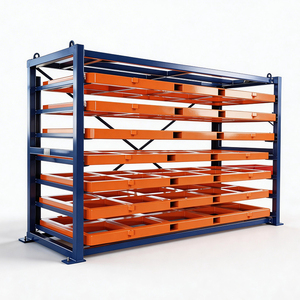 CE Certified
 Industrial Warehouse Steel Shelving System Heavy Duty Storage Racks Metal Racking Durable Cargo Shelves
- Compliance: CE No. 2435-CPR-8605159
- Capacity: 1,000 – 4,000 kg per beam level
- Structural Design: Multi-bend upright profiles
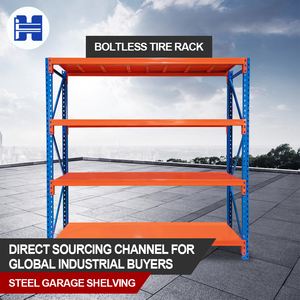 Boltless Medium Duty
Long Span Medium Duty 5 Layer Durable Steel Industrial Shelving Racking Boltless Warehouse Storage Rack System Adjustable OEM
- Assembly: Interlocking rivet & keyhole pin
- Shelf Load: 200 – 800 kg / uniform level
- Carton flow track retrofit compatibility
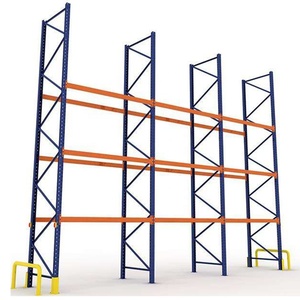 Selective Base
Industrial Steel Selective Pallet Rack Adjustable Heavy Duty Galvanized Powder Coated Warehouse Storage
- Design Standard: AS 4084 / FEM 10.2.02
- Corrosion Finish: Hot-dip Galvanized & Hybrid
- Frame Height: Scalable up to 12+ meters
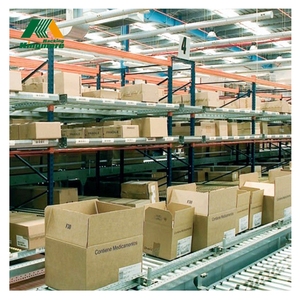 Custom Gravity Bed
Customized Gravity Carton Flow Pallet Roller Rack System
- Roller Wheels: High-impact POM / Galvanized
- Track Configuration: Variable pitch drop-in
- Pick Face: Integrated tilt tray presentation
Industrial Roller Racking Architecture: Dynamic Physics & Kinematic Deceleration
In high-density modern intralogistics, roller racking systems (commonly referred to internationally as gravity flow racks, dynamic pallet flow systems, or carton live storage) represent the premier intersection between unpowered mechanical gravity transport and high-density warehouse storage. Unlike static selective pallet racking, which requires dedicated forklift access aisles for every pair of pallet rows, a dynamic roller racking system consolidates floor footprints by up to 60% through deep-lane configurations, supporting anywhere from 2 to over 25 pallets deep on a single continuous gravity-fed incline.
The core mechanical integrity of our systems relies on precise gravitational slope calibration. Operating on an engineered gradient of 2.5% to 3.5% (approx. 1.4° to 2.0°), pallets advance autonomously from the loading (replenishment) face to the discharge (picking) face via continuous cold-drawn steel or impact-modified polymer rollers. To mitigate runaway pallet acceleration—a primary cause of cargo crush and structural rack frame failure—our OEM engineering integrates centrifugal brake rollers and self-modulating magnetic eddy-current decelerators spaced precisely at single pallet intervals. These speed controllers govern velocity to a steady 0.2 to 0.3 meters per second, irrespective of whether the pallet gross weight is 250 kg or 1,500 kg.
Furthermore, each lane is equipped with a heavy-duty, spring-actuated pallet separator mechanism situated at the pick face. When a forklift engages the lead pallet, the separator isolates the subsequent queue line, shielding the front pallet from rearward line pressure. Only after the lead pallet has safely exited the bay does the mechanical trip latch reset, releasing the queued pallets forward. This critical safety architecture safeguards warehouse personnel, prevents fork truck mast damage, and ensures seamless compliance with international safety protocols including AS 4084, FEM 10.2.02, and ANSI MH16.1.
Technical Specification Matrix: Heavy-Duty vs. Medium-Duty Roller Systems
Every industrial logistics node demands exact component configuration based on structural deflection limits (typically L/200 under full static deadweight), temperature conditions, and pallet runner typology. Below is our direct factory baseline manufacturing specification:
| Engineering Attribute | Pallet Flow Roller Beds (Heavy Duty) | Carton Flow Live Storage (Medium Duty) | Custom Lean Manufacturing Tracks |
|---|---|---|---|
| Primary Structural Steel | Q235B / Q355B Cold Rolled Structural Steel | High-Yield Cold-Rolled Strip Steel SPCC | 6063-T5 Structural Aluminum / Extruded Steel |
| Payload Range | 400 kg – 1,800 kg per pallet position | 20 kg – 80 kg per linear meter | 50 kg – 200 kg per assembly tier |
| Roller Core & Coating | Galvanized Ø50mm/Ø60mm carbon steel with dual bearings | High-impact POM / ABS / Zinc-plated steel rollers | Low-friction polymer wheels / stainless steel axels |
| Speed Regulation | Centrifugal mechanical or magnetic brake rollers | Gravity ramp friction & manual end-stops | Self-dampening guide rails & tilt presentation stops |
| Operating Temperature | -30°C (Cold Storage) to +50°C (Ambient) | -10°C to +40°C | 0°C to +45°C |
| Surface Protection | Electrostatic powder coat (80μm) or Hot-Dip Galv (65μm) | Epoxy thermoset powder coat / Zinc chromate | Natural clear anodizing (Class 10) / powder coating |
| Pallet / Bin Compatibility | Euro (1200×800), ISO (1200×1000), AU (1165×1165) | Plastic totes, corrugated master cartons, KLT crates | Modular electronic bins, custom automotive jigs |
| System Compliance | CE 2435-CPR / AS 4084 | ISO 9001:2015 | RoHS Certified |
Future Sourcing & Procurement Trends (2025–2030)
How global supply chain directors and third-party logistics (3PL) conglomerates are reshaping capital expenditures for dynamic warehousing assets.
1. Shift to Hybrid AMR & Gravity Roller Synergy
Procurement teams are no longer buying isolated racking systems. Modern facilities require roller tracks engineered to interface with Autonomous Mobile Robots (AMRs) and automated guided forklifts (AGVs). This mandates tighter manufacturing tolerances (±1.0mm frame squareness) and specialized docking interfaces at pick/drop stations.
2. Volumetric Efficiency Over Land Acquisition
With industrial land costs and warehouse lease rates continuing to escalate across North America, Europe, Australia, and East Asia, buyers are abandoning single-deep selective racking in favor of multi-tier dynamic roller flow. By eliminating up to 75% of access corridors, gravity flow racking yields maximum cubic utilization.
3. Decarbonization & Green Steel Sourcing
Enterprise ESG mandates are driving procurement audits toward suppliers with certified lower carbon footprints. Our cold-bending and roll-forming processes leverage sustainably recycled scrap-blend structural steels and energy-efficient powder coating lines that generate zero volatile organic compound (VOC) emissions.
4. Cold Chain & Deep Freezer Resilience
The rapid expansion of global temperature-controlled food logistics and biopharma cold chains has prompted surging demand for cold-room specialized roller beds. Sourcing managers require low-temperature synthetic lubricants, non-embrittling synthetic polymers, and hot-dip galvanized steel capable of operating at -30°C continuously.
5. Direct-from-Factory OEM/ODM Partnerships
Distributors and project engineering integrators are increasingly bypassing multi-tier regional brokers. By contracting directly with primary tier-1 manufacturing exporters who supply verified structural calculations, CAD shop drawings, and customs-ready documentation, buyers cut landed procurement costs by 22% to 35%.
6. Biosecurity and Fast-Track Port Clearances
Customs and quarantine regimes (such as DAFF in Australia, MPI in New Zealand, and CBP in North America) heavily penalize non-compliant timber packaging. Forward-thinking procurement now demands zero-timber or ISPM-15 certified steel-frame stillage packing that facilitates immediate clearance without fumigation holdups.
Product Engineering & Development Trajectories
How next-generation mechanical engineering and material science are advancing roller racking performance.
Contactless Magnetic Eddy-Current Braking
Traditional friction-based brake rollers suffer from mechanical wear over millions of cycles. Our latest R&D integrates permanent neodymium magnetic disc assemblies inside sealed roller casings. As the pallet rolls over, electromagnetic resistance scales exponentially with speed—providing zero-contact, maintenance-free deceleration that never wears out brake pads.
Split-Roller & Polyurethane Wheel Track Modularity
To overcome pallet bottom imperfections (such as broken bottom boards, missing runners, or irregular plastic pallet grids), modern roller systems utilize triple-track split-roller architectures. By distributing the pallet weight across independent, staggered roller segments, point-load stresses are eliminated and tracking deviation is prevented.
IoT Smart Sensors & Dynamic Lane Monitoring
Emerging top-tier installations are piloting passive RFID and optical sensor arrays integrated directly within the roller side channels. These sensors feed real-time inventory dwell times, queue fill percentages, and pick face clearance events directly into Warehouse Management Systems (WMS) without manual scanning.
Factory-Direct OEM/ODM Manufacturing Excellence
Combining 25 years of structural engineering, heavy automated machinery, and comprehensive export compliance for clients in over 130 countries.
30,000 m² Facility & 30,000t Capacity
Established in 2001, our facility runs automated continuous cold-bending rolling lines, high-precision laser profile cutters, and multi-axis welding robots producing over 30,000 tons of racking per month.
Compliant Seismic Structural Engineering
All designs reference regional building standards including AS 4084 (Australia), NZS 1170.5 (New Zealand Seismic), FEM 10.2.02 (Europe), and ANSI MH16.1. We supply complete calculation packages for local certifiers.
Certified Quality Verification
Independently audited and certified under CE No. 2435-CPR-8605159, ISO 9001:2015 Quality Management System No. 18624Q00169R0M, and RoHS hazardous materials controls. Transparent quality assurance.
Free 3D Layout & CAD Design SLA
Provide your warehouse dimensions, clear height, forklift model, and pallet specifications. Our senior engineering team returns fully calculated CAD layouts and 3D photorealistic renderings within 24 to 48 hours.
Advanced In-House Surface Finishing
Equipped with an automated 10-stage pre-treatment line (degreasing, pickling, phosphating, deionized washing) and electrostatic powder coating chambers ensuring corrosion resistance exceeding 500-hour salt spray tests.
Strict Biosecurity & Export Stillage Packing
Cargo is secured on custom welded steel stillages or ISPM-15 heat-treated skids with heavy waterproof shrink wrap and strapping. Fully compliant with DAFF and MPI inspection protocols to avoid quarantine port delays.
Preferential Tariff Documentation
Complete international shipping documentation, including Commercial Invoice, detailed Packing Lists, Bills of Lading, Mill Test Certificates (MTC), and Certificates of Origin (COO) under ChAFTA and regional FTAs.
Turnkey OEM & Private Label Branding
Tailored manufacturing support for overseas distributors and engineering contractors: custom corporate powder coat matching (RAL color codes), branded load capacity signage, and client-branded packaging.
Frequently Asked Questions by Industrial Buyers
Detailed engineering and logistical insights addressing critical purchasing, installation, and operational criteria.
How is the optimal gradient and roller pitch determined for pallet flow roller racking?
The standard incline angle for gravity pallet flow racking ranges between 2.5% and 3.5% (approximately 1.4° to 2.0° of slope). Determining the exact gradient requires calculating three core variables:
- Pallet Quality and Bottom Surface: Smooth three-runner wooden pallets travel easily, requiring a gentler 2.5% slope. Perimeter-base pallets or composite plastic pallets with grid patterns have different friction coefficients and often require 3.0% to 3.5% incline.
- Gross Pallet Weight: We design systems to handle varying loads across the same lane (e.g., 400 kg to 1,200 kg). A 3% slope combined with centrifugal brake rollers ensures that light pallets overcome static friction while heavy pallets are safely governed.
- Roller Pitch Spacing: Standard engineering rules dictate that a minimum of three to four rollers must be in continuous contact with the pallet runner at all times to prevent sag and high point deflection. For standard 1200mm deep pallets, roller center-to-center pitch is typically set between 150mm and 200mm.
What mechanism prevents pallets from crashing into each other at the discharge face?
Two distinct safety devices prevent pallet impact and structural damage:
- Centrifugal & Magnetic Brake Rollers: Integrated at periodic intervals (typically one brake roller per pallet position along the flow lane), these units create dynamic resistance that limits pallet rolling speed to a maximum safe velocity of 0.25 to 0.3 m/s.
- End-of-Lane Pallet Separator / Latch Stop: Located behind the front-most pallet at the pick face, this mechanical foot-activated or spring-loaded lever physically locks the subsequent pallets in the lane approximately 300mm to 450mm back. When the forklift lifts the first pallet, the back-pressure is zero. Once the pallet clears the bay, the separator automatically trips to advance the queue safely forward by one position.
Can your roller racking systems be deployed in cold storage and blast freezing environments?
Yes. Over 25% of our gravity roller systems are exported for cold chain warehouses, meat processing abattoirs, and pharmaceutical chillers operating between -25°C and -30°C. For sub-zero operations, we implement specific material adaptations:
- Steel components are specified with Charpy V-notch impact toughness certified to resist cold-temperature embrittlement.
- All internal roller bearings utilize low-temperature synthetic non-freezing greases that maintain kinematic fluidity without congealing.
- Roller tracks and frames receive either high-micron hot-dip galvanization (minimum 65μm thickness) or specialized exterior-grade thermoset polyester powder coatings to guard against condensation-induced oxidation during defrost cycles.
How do you verify compliance with Australian (AS 4084), New Zealand (NZS 1170.5), and European standards?
Guangzhou Heda Shelves designs and tests all racking systems in rigorous alignment with cold-formed steel structural design codes:
- Engineering Calculations: We supply full structural section properties (moment of inertia, section modulus, effective yield stress) and finite element analysis (FEA) models showing axial compression and beam deflection within allowable limits (deflection limit ≤ L/200).
- Seismic Engineering: For earthquake-prone regions such as New Zealand, the Pacific Rim, and the Americas, our engineers adjust baseplate thickness (12mm–20mm), utilize heavy chemical anchoring bolts, and double the cross-aisle and down-aisle bracing sets to satisfy NZS 1170.5 dynamic seismic load coefficients.
- Independent Verification: We provide full engineering data sheets so your local registered structural engineer can verify and issue site-specific producer statements (e.g., PS1 in New Zealand) for building code compliance.
What information is required to receive a customized 3D CAD design and engineering quotation?
To deliver an accurate 3D CAD layout, load capacity calculation, and formal quotation within 24–48 hours, our engineering office requires:
- Warehouse Architectural Drawing: Floor plan indicating building length, width, column grid positions, dock door locations, and clear height to the lowest overhead obstruction (sprinklers or lighting fixtures).
- Pallet & Unit Load Profile: Pallet dimension (Length × Width × Height including cargo), entry direction, bottom runner configuration (e.g., three-stringer, perimeter base), minimum weight, and maximum weight.
- Operational Parameters: Desired number of pallet lanes, lane depth (how many pallets deep), daily throughput turnover speed (FIFO requirement), and forklift truck mast height and turning radius.
What are your standard export lead times, shipping configurations, and biosecurity precautions?
Our typical manufacturing cycle is 15 to 25 business days depending on project scale and surface finish. Ocean freight transit from Guangzhou/Shenzhen ports ranges from 12–18 days to Australia/NZ and 20–30 days to European or American base ports.
Regarding biosecurity: All uprights, beams, and roller bed assemblies are packed into custom welded steel logistics cradles. We avoid solid raw timber dunnage to eliminate risks under Australian DAFF and NZ MPI biosecurity border inspections. Where timber blocks are required, they are heat-treated, certified, and clearly stamped to ISPM-15 international phytosanitary standards.
Request an Engineered Layout & Direct Factory Quotation
Connect with our technical racking engineering department. We provide complimentary 3D rendering designs, static/dynamic load analyses, and turnkey export quotes tailored to your exact warehouse footprint.