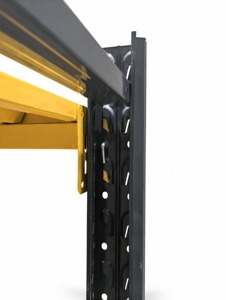
 Medium Duty
Detachable Butterfly Hole Rack Storage System for Warehouse Manual Picking Use
- 200–800 kg/tier
- Boltless Jointing
- Pitch: 50mm
Direct factory fabrication from certified Q235B and Q355B high-tensile structural steel. Precision-engineered for high-bay logistics centers, cold-storage chains, industrial raw materials, and high-density manual distribution hubs.
Medium Duty
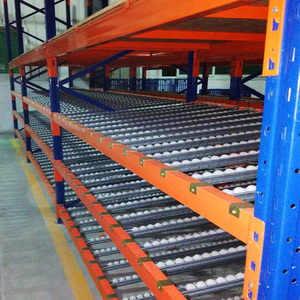 FIFO Dynamic
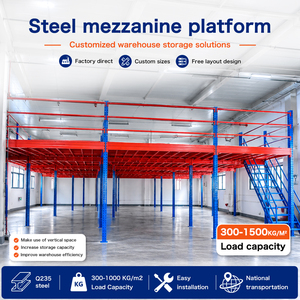 Mezzanine
 Sanitary/Utility
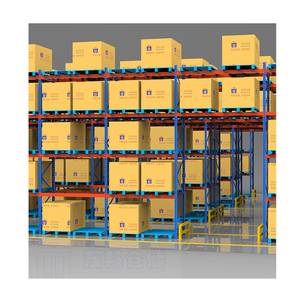 Heavy Duty
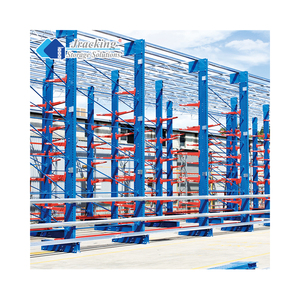 Long Loads
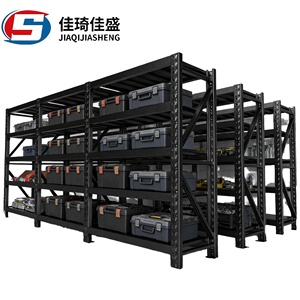 Light Duty
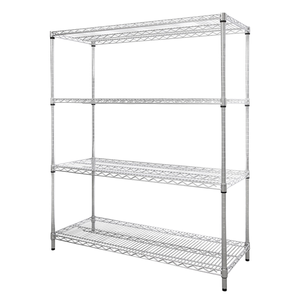 Wire Decking
In modern international supply chains, industrial shelving and pallet racking systems have transitioned from passive warehouse infrastructure into precision-engineered, load-bearing mechanical assets. International procurement teams—spanning third-party logistics (3PL) conglomerates, automated fulfillment operators, global EPC contractors, and distribution facility engineers across North America, Europe, Australia, and New Zealand—face an increasingly complex challenge: balancing capital expenditure (CapEx) against stringent building structural codes, dynamic seismic regulations, and high-cycle warehouse fatigue safety.
As the world's leading manufacturing hub for cold-formed structural steel, China represents over 65% of global warehouse racking export volumes. However, identifying a genuine tier-1 industrial shelving exporter demands engineering-focused scrutiny. Top China manufacturers distinguish themselves through rigorous metallurgic controls, traceable mill certifications, fully automated continuous roll-forming lines, computerized multi-stage pre-treatment, and direct alignment with international structural frameworks such as AS 4084:2023 (Australia), FEM 10.2.02 / EN 15512 (Europe), and RMI ANSI MH16.1 (United States).
The bedrock of structural racking safety resides in raw material selection. Leading exporters source directly from tier-1 state-owned steel mills (such as Baosteel, Shougang, and Ansteel), eliminating the risk of micro-cracking and brittle failure associated with re-rolled scrap coil.
For standard ambient selective racking, medium-duty longspan shelving, and butterfly-hole manual picking units, Grade Q235B (yield strength $f_y \ge 235 \text{ MPa}$, tensile strength $R_m = 370\text{--}500 \text{ MPa}$) delivers optimal ductility and impact damping. Conversely, for high-bay installations exceeding 12 meters, automated shuttle racking uprights, cantilever columns bearing unilateral heavy crane loads, and multi-tier mezzanine primary bearers, Grade Q355B (yield strength $f_y \ge 355 \text{ MPa}$) provides the high strength-to-weight ratio needed to reduce structural dead loads while preventing local web crippling and post-buckling beam failure under maximum rated flexure.
| Engineering Attribute | Tier-1 China Exporters (e.g., HEDA Shelves) | Secondary Trading Brokers | Western Domestic Fabricators |
|---|---|---|---|
| Steel Origin & Traceability | Prime hot/cold-rolled coils from Tier-1 mills with complete EN 10204 3.1 MTRs | Mixed uncertified local spot coils; high non-metallic inclusion risk | Domestic mills, certified, high baseline material cost |
| Engineering Verification | Full 3D FEA (ANSYS) simulations, cyclic load testing, AS 4084 / FEM / RMI verification | Generic uncertified load tables; copied CAD templates | Locally PE stamped; reliable but premium fee schedule |
| Profiling Tolerance | CNC continuous 24-station rolling lines; pitch punching precision ≤ ±0.2mm | Manual mechanical punch presses; accumulated spacing errors | Automated rolling lines; excellent dimensional precision |
| Surface Pre-Treatment | 9-Stage pickling, alkaline degreasing, silane/iron phosphating + Swiss Gema powder line | Manual solvent wipe or 3-stage dip; premature flaking & sub-film corrosion | Standard multi-stage automated electrostatic line |
| Direct CapEx Advantage | 35% – 55% Cost Savings with identical or superior load certifications | Low initial price, but hidden failure costs, customs rejections, & zero site sign-off | Baseline benchmark (Highest CapEx, longer production queues) |
Founded in 2001 in Guangzhou, China, HEDA Shelves operates a modern 30,000 square-meter production facility, supported by more than 300 experienced engineers, structural detailers, and metallurgical technicians.
Our dedicated structural design division delivers complimentary 24-hour turnaround 3D CAD models, structural floor calculations, flue-space analyses, and forklift turning radius simulations tailored precisely to your facility.
Complete verifiable quality credentials including CE Certification (No. 2435-CPR-8605159), ISO 9001:2015 Quality Management (No. 18624Q00169R0M), and certified RoHS non-toxic finishes for food/pharma warehouses.
Operating 20+ automated continuous roll-forming lines, robotic CNC beam welding cells, and continuous automated powder coating tunnels, ensuring tight delivery timelines even on megawatt 10,000-pallet projects.
Custom dynamic seismic engineering factoring in spectral acceleration ($S_s, S_1$) for New Zealand (NZS 1170.5) and US West Coast zones, combined with hot-dip galvanized finishes for high-humidity and sub-zero conditions.
Specialized container nesting protocols using custom steel stillages or ISPM-15 heat-treated dunnage, eliminating biosecurity quarantine delays at Australian DAFF and New Zealand MPI international entry ports.
Issuance of preferential Certificates of Origin under ChAFTA, RCEP, and ASEAN agreements, coupled with transparent commercial invoicing, comprehensive structural test reports, and erection mark drawings for rapid sign-off.
Every upright profile, boxed beam, and structural bracing component passes through our integrated closed-loop quality tracking workflow.
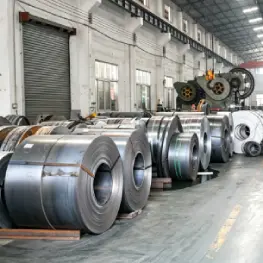 Step 01
Raw Material Mill Ultrasonic Test
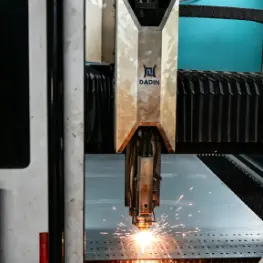 Step 02
High-Speed Precision CNC Slitting
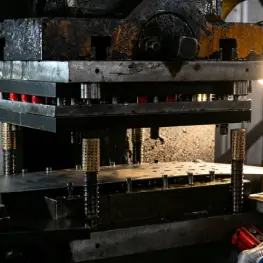 Step 03
Automated Upright Pitch Punching
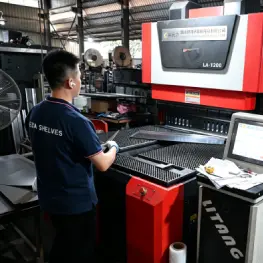 Step 04
Multi-Station Cold Bending
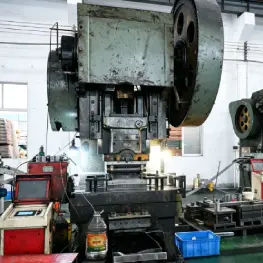 Step 05
Continuous Profile Roll Forming
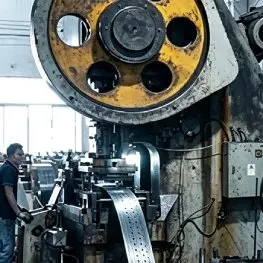 Step 06
Mechanical Polishing & Deburring
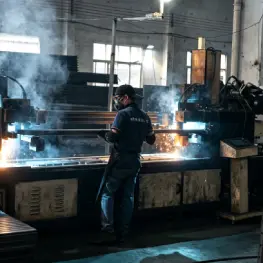 Step 07
Robotic Beam Claw MIG Welding
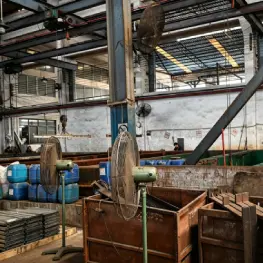 Step 08
9-Stage Chemical Phosphating
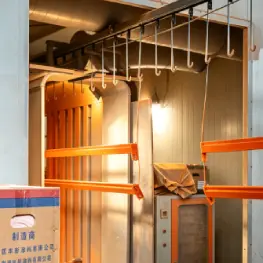 Step 09
Swiss Gema Powder Spraying
 Step 10
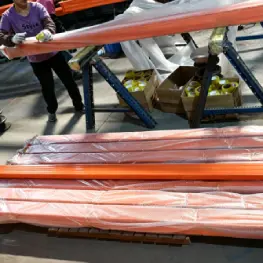
Destructive QC & Export Stillage Packing
Warehouse operations across the globe are grappling with skyrocketing land acquisition costs, urban last-mile delivery pressures, and chronic labor shortages across manual material handling sectors. As a result, the procurement criteria for industrial shelving systems are shifting rapidly from simple cubic static capacity toward dynamic automation readiness, supply chain resilience, and life-cycle carbon accountability.
While selective pallet racking remains the universal benchmark for fast-turnover low-SKU inventory, industrial facilities are increasingly replacing traditional drive-in systems with semi-automated radio shuttle racking. Drive-in systems suffer from high forklift structural collision rates, operator fatigue, and slow pallet cycle times. In contrast, 4-way pallet shuttle systems operating within high-density China-manufactured precision steel channels reduce operating lane widths, eliminate internal forklift travel, and increase storage cube density by up to 75% over conventional wide-aisle configurations.
Traditional procurement cycles that required weeks of email exchanges to finalize floor layouts have become obsolete. Progressive buyers now demand BIM (Building Information Modeling) interoperability (Revit, IFC) where structural racking columns, flue clearances, NFPA ESFR in-rack sprinkler conduits, and HVAC evaporator drops are clash-tested in 3D simulation software before steel coils are even slit. HEDA Shelves leads this paradigm with parametric CAD engineering pipelines delivering verified layouts and load deflection models within 24 hours of brief submission.
While regional distribution centers in the US, Europe, and Australasia maintain small local buffer stocks for repairs, primary project expansions rely on factory-direct China sourcing to mitigate domestic fabrication markups. The primary efficiency battleground has shifted to Container Cube Utilization. High-density packing engineering—utilizing interlocking upright packaging, nested beam pairs, and demountable structural mezzanine joists—allows tier-1 exporters to load up to 26–28 metric tons per 40ft High Cube container, reducing ocean freight costs per pallet position by 20% to 35%.
Corporate ESG (Environmental, Social, and Governance) mandates and Scope 3 emissions reporting now dictate global procurement policies. Leading manufacturers have abandoned heavy-metal solvent dip treatments in favor of heavy-metal-free zirconium or iron-phosphate conversion layers, paired with 100% recyclable, TGIC-free polyester powder formulations cured in clean-fuel natural gas ovens. This guarantees that warehouse shelving components emit zero toxic off-gassing, complying fully with EU REACH and RoHS environmental standards in enclosed e-commerce picking facilities.
In seismic-active zones such as New Zealand (Wellington, Christchurch), the Pacific Rim, and western Americas, racking collapses represent catastrophic financial and life-safety hazards. Modern racking engineering no longer relies on simplified static equivalent calculations. Advanced finite element analysis (FEA) examines post-yield connection rotation, beam-to-column semi-rigid claw hysteretic dissipation, and floor anchor shear capacity. Exporters configure seismic kits featuring reinforced Omega-profile columns, heavy baseplates with double chemically grouted wedge anchors, and top-tier cross-aisle portal ties to absorb harmonic lateral accelerations.
The exponential expansion of global refrigerated logistics (biologics, seafood, frozen protein) exposes steel storage racks to severe cold embrittlement. Standard commercial steels risk catastrophic brittle cleavage failure at temperatures below -15°C. For sub-zero installations, HEDA Shelves utilizes impact-tested steel grades with verified Charpy V-notch toughness down to -40°C, combined with thick-wall baseplate thermal isolators to prevent floor frost heave from migrating into the load-bearing vertical uprights.
High-volume logistics centers operating 24/7 are beginning to adopt integrated beam-deflection telemetry and wireless ultrasonic upright impact sensors. These micro-sensors, mounted within column protector channels, instantly broadcast alert telemetry to warehouse management systems (WMS) whenever a forklift strikes a structural member with an impact exceeding allowable structural deformation tolerances, ensuring real-time preventative maintenance.
Key engineering, regulatory, logistic, and structural considerations addressed by HEDA Shelves’ technical export division.
Our structural engineering team produces calculation packs strictly calibrated to the Limit State Design principles of AS 4084:2023 (Steel Storage Racking) and NZS 1170.5:2004 (Structural Design Actions - Earthquake actions). We provide full section properties, connection rotational stiffness values, beam load deflection ratios (limiting vertical deflection to $L/200$), and site-specific seismic baseplate anchor calculations.
When you submit your local soil classification (Class A through E), building importance level, and spectral acceleration figures, we supply structural documentation ready for submission to your local independent chartered structural engineer (RPEQ / CPEng) for local building consent sign-off.
The fundamental distinction lies in yield and tensile capability. Q235B steel offers a guaranteed minimum yield strength ($f_y$) of $235 \text{ MPa}$, making it an economical, ductile, and easily formable material ideal for selective pallet rack beams, light/medium shelving, and low-rise frames.
Q355B steel, with a minimum yield strength of $355 \text{ MPa}$ (approx. 51% higher yield capacity), is engineered for heavy-load structures such as cantilever columns, automated crane-access high-bays, and mezzanine main beams spanning wide column grids. Utilizing Q355B allows for reduced wall thicknesses while maintaining structural rigidity, lowering total tonnage shipping costs while preserving high safety factors.
Ocean freight across equatorial zones causes heavy container condensation ("container rain"). HEDA Shelves addresses this through multi-tier protection: components are wrapped in heavy-duty polyethylene stretch film with heavy-gauge corrugated corner guards and integrated desiccant packs inside the container.
To avoid costly port rejections by authorities like the Australian Department of Agriculture, Fisheries and Forestry (DAFF) or New Zealand Ministry for Primary Industries (MPI), all shipments utilize either 100% heavy steel transport stillages (no timber) or fully certified, debarked, fumigated timber complying with ISPM-15 and officially stamped with heat treatment (HT) marks.
Standard production turnaround for custom orders of 1 to 5 forty-foot high-cube (40'HQ) containers is typically 15 to 25 calendar days from 3D layout sign-off. High-volume megawatt projects are sequenced in rolling production batches to feed progressive installation crews on site.
Our 3D packing algorithm mathematically optimizes container nesting: heavy upright frames are packed base-to-top, beams are bundled in interlocking hex-packs with high-tensile steel strapping, and smaller brackets and hardware are secured in heavy wooden/steel crates placed in center balance wells. This consistently achieves maximum allowable gross container weights of 26,000 to 28,000 kg per 40'HQ without void space.
To deliver a fully clash-free, optimized warehouse layout within 24 hours, our engineering office requires six core operational data points:
Yes. While our standard industrial configuration is Safety Orange beams (RAL 2004) and Industrial Ultramarine Blue frames (RAL 5005 / 5015), our automated powder tunnel supports any color specified in the international K7 / K5 Classic RAL palette with no premium on production runs over 10 tons.
For external outdoor cantilever systems or humid washdown areas, we provide hot-dip galvanization to ISO 1461 with coating thicknesses exceeding 65–85 μm. For regional racking distributors, we provide complete OEM private-label branding, including custom column punch profiles, custom-embossed steel connector plates, and customer-branded load safety capacity signage.
Storage systems balance selectivity, density, and capital expense:
Our documentation team provides full customs clearance packages matching your regional port tariff codes (typically HS Code 7308.90.00 for structures of iron or steel).
For countries with bilateral trade agreements with China, we issue certified Certificates of Origin (such as ChAFTA for Australia, NZ-China FTA, Form E for ASEAN, or RCEP), often reducing import tariffs to 0%. Packages include the original Ocean Bill of Lading, detailed Packing List with piece marks corresponding to site erection blueprints, Commercial Invoice, and factory mill test declarations.
Whether you are expanding a 3PL distribution center, retrofitting an industrial mezzanine, or designing a high-density automated shuttle facility, our engineering team is ready to analyze your floor plan and deliver a certified layout and quotation.