Engineered Heavy-Duty Warehouse Storage Solutions
Direct factory production certified under CE, ISO 9001:2015, and global racking performance criteria. Precision-engineered for high-bay logistics, FIFO/LIFO turnover, and cold-chain resilience.
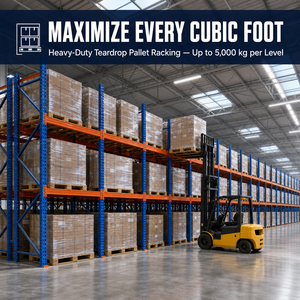
Large Scale E-Commerce Logistics Warehouse Pallet Racking System Customized High Load Industrial Conventional Heavy Duty Rack
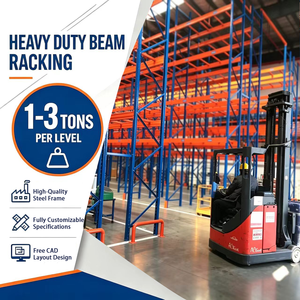
Custom Heavy Duty Steel Pallet Rack Industrial Storage Rack System for Warehouse Warehousing
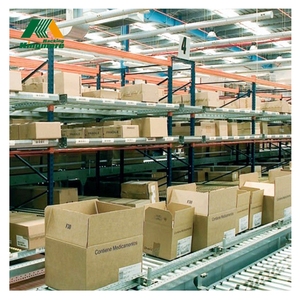
Customized Gravity Carton Flow Pallet Roller Rack System
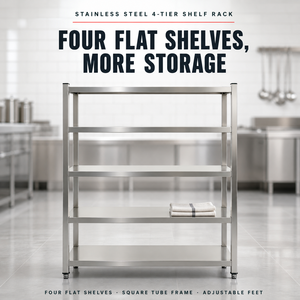
Stainless Steel 4 Tier Shelving Rack Commercial Kitchen Storage Shelf Heavy Duty Flat Shelves
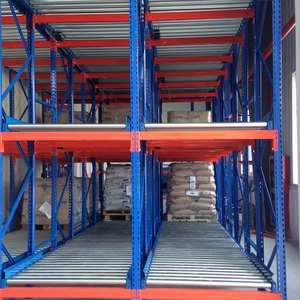
Hot Sale Steel Gravity Flow Roller Racking Systems Customized Heavy Duty Corrosion Protected Pallet Flow Rack
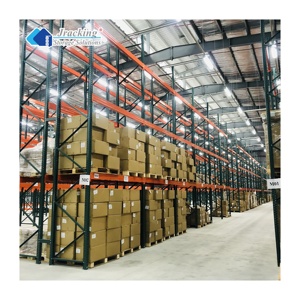
Jracking Vertical Warehouse Storage Shelving Rack Heavy-Duty Steel Teardrop Pallet Racking For Logistics Centers
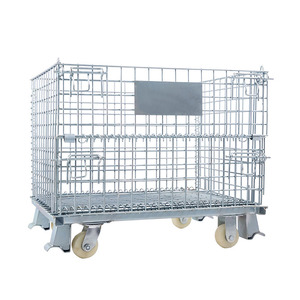
Industrial Bulk Storage Foldable Galvanized Wire Mesh Metal Cage Pallet With Casters
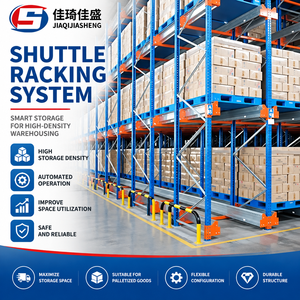
Custom Size Available Warehouse Automation OEM ODM Space Saving Intelligent Shuttle Rack for Logistics Center
The Structural Mechanics & Global Compliance of China Pallet Racking
Over the past two decades, China’s industrial storage manufacturing sector has transitioned from simple steel conversion into an advanced structural engineering industry. Modern high-bay warehouses and robotic fulfillment centers demand micro-millimeter tolerance thresholds, high-tensile hot and cold-rolled alloy optimization, and certified compliance with strict regional structural building codes.
For industrial plant owners, general contractors, and supply chain executives importing steel storage systems from China, technical due diligence begins at the metallurgical level. Upright profiles must utilize certified high-yield hot-rolled coils (such as Q355B or ASTM A572 Grade 50) capable of sustaining axial column forces under extreme compressive load while preventing local torsional buckling. Beam connector clips require high-precision automated progressive die stamping to maintain structural moment resistance under heavy dynamic loading cycles.
Guangzhou Heda Shelves Co., Ltd. integrates these critical engineering requirements into every customized design. Every racking project incorporates comprehensive stress calculations verifying beam deflection ratios under full permissible load (strictly observing the $L/200$ deflection criterion according to FEM 10.2.02 and AS 4084 guidelines). This analytical verification safeguards against upright collapse during seismic tremors, pallet drops, and dynamic forklift impacts.
Global Structural Standards Compliance
Industrial racking systems exported worldwide must undergo full third-party physical testing and software validation to guarantee structural integrity:
Industrial Racking Systems: Architecture & Density Analysis
Compare core operating metrics across warehouse racking systems to select the optimal configuration for your SKU velocity, pallet density, and material handling fleet.
| Racking Architecture | Floor Space Utilization | SKU Selectivity Ratio | Inventory Flow | Typical Load Capacity | Material Handling Equipment |
|---|---|---|---|---|---|
| Selective Pallet Racking | 40% – 50% | 100% Direct Immediate Access | FIFO / LIFO | 1,000 – 4,500 kg / level | Standard Counterbalance, Reach Trucks |
| Double-Deep Pallet Racks | 55% – 65% | 50% (Two-Pallet Depth) | LIFO | 1,000 – 3,000 kg / level | Deep-Reach Pantograph Forklifts |
| Drive-In / Drive-Through | 65% – 75% | 20% – 30% (Per lane batch) | LIFO (Drive-In) / FIFO | 1,000 – 2,500 kg / position | High-Clearance Counterbalance / Reach |
| Gravity Pallet Flow | 70% – 85% | 1 Facing SKU per Track | Strict FIFO | 500 – 2,000 kg / roller lane | Standard Forklifts (Split Entry/Exit) |
| Radio Shuttle Automation | 80% – 90% | High Density Lane Control | Flexible FIFO or LIFO | 500 – 2,500 kg / pallet | Autonomous Shuttle + Standard Lift |
| Heavy Duty Cantilever | Variable (Linear) | 100% Linear Front Face | Open Storage | 500 – 3,000 kg / arm | Side Loaders, Multi-Directional Trucks |
Procurement & Technological Trends Reshaping Warehouse Storage
Global supply chain disruptions, rising urban land costs, and decarbonization mandates are transforming international industrial racking purchasing.
Vertical High-Bay Cube Optimization
Rising real estate leasing costs in major logistics gateways (such as Western Sydney, Greater Melbourne, Auckland, Rotterdam, and US Inland Empires) are driving warehouse clear heights from 9 meters upward to 15-24 meters. Sourcing high-tensile cold-formed uprights capable of handling 20+ ton frame loads without floor deformation is now the primary metric for minimizing storage cost per pallet position.
4-Way Shuttle Automation Migration
Traditional static drive-in storage is rapidly giving way to semi-automated and fully autonomous radio shuttle systems. Procurement teams are specifying deep-lane shuttle channels that decouple forklift travel from the rack matrix. This architectural transition decreases lift-truck fleet operation costs by 40%, reduces rack collision strikes by over 75%, and supports both FIFO perishables and LIFO bulk staging.
Low-Carbon Metallurgy & Circularity
Global environmental reporting (Scope 3 supply chain greenhouse audits) now influences structural procurement. Tier-1 exporters are adopting EAF (Electric Arc Furnace) recycled green steel, low-VOC non-toxic thermoset powder coating lines, and RoHS-compliant pre-treatment chemistry. This gives international logistics operators audited carbon certifications for LEED and BREEAM industrial buildings.
Seismic FEA Modeling for Active Fault Zones
Procuring warehouse racking for seismically active regions like New Zealand (NZS 1170.5), Japan, the US West Coast, and the Pacific Rim requires verified non-linear structural modeling. Overseas buyers now demand custom ductile baseplates, enlarged seismic floor anchors, and reinforced diagonal truss configurations designed to absorb ground acceleration waves while preventing progressive collapse.
Direct-from-Factory Engineering & Export Stillage Logistics
Third-party trading margins are disappearing as end-users, 3PL managers, and local distributors work directly with OEM/ODM manufacturing facilities in South China. Importers receive full factory-direct pricing, customized CAD/BIM drawing packs, complete installation marks, and specialized ISPM-15 treated wood or welded steel stillage packaging that sails through Australian DAFF and NZ MPI biosecurity inspections without costly quarantine hold-ups.
Guangzhou Heda Shelves Co., Ltd.: 25 Years of Engineering Excellence
Established in 2001, Heda Shelves has grown from an industrial workshop into an international storage manufacturing complex. Serving over 10,000 corporate clients across Australia, New Zealand, Europe, the Americas, and the Asia-Pacific.
Proprietary 10-Stage Precision Manufacturing Workflow
Every upright frame and load beam undergoes strict physical and chemical testing to ensure complete structural reliability:
Raw Material QC
Spectrometric steel coil analysis (Yield ≥ 355MPa).
Precision Slitting
CNC laser and uncoiling sheet cutting within 0.1mm.
Auto Punching
High-speed continuous progressive teardrop/omega punches.
Cold Roll Forming
24-station roll-forming lines for cold-worked profile strength.
Beam Profiling
Interlocking twin-C box beam welding with automatic seam tracks.
Surface Grinding
Robotic de-burring and joint polishing prior to chemical rinse.
Robotic Welding
Automated multi-axis MIG welding on beam connectors.
Phosphating Line
Multi-stage pickling, degreasing, and silane rust prevention.
Powder Coating
Nordson automated electrostatic spray booth (60-90μm cure).
Export Packing
Steel stillage or ISPM-15 treated timber with clear bundle tags.
Frequently Asked Questions for Sourcing Industrial Racking
Answers to common structural, regulatory, shipping, and installation questions asked by international project directors, logistics engineers, and warehouse managers.
How do you guarantee AS 4084 compliance for Australian installations?
We engineer every racking structural profile using certified Q355B or high-tensile steel, cross-referenced against AS 4084-2023 design principles. We supply comprehensive structural engineering packs—including section properties, moment-rotation connection curves, beam load tables, and floor anchor calculation data. This allows your local Australian chartered structural certifier to review and issue compliance sign-offs for occupational health and safety (WHS) audits.
Can you provide seismic engineering for New Zealand and earthquake zones?
Yes. For seismically sensitive areas (such as New Zealand reference zones under NZS 1170.5, Southern California, or the Mediterranean), our engineering team utilizes site-specific ground acceleration coefficients ($C_h(T, Z)$). We configure heavy-duty welded baseplates, oversized expansion or chemical drop-in anchors, reinforced frame bracing matrices, and seismic spine cross-ties designed to absorb horizontal dynamic loads without frame joint dislodgement.
What surface finishes are recommended for sub-zero cold storage facilities?
Cold storage facilities operating between -5°C and -30°C face severe condensation, thermal contraction, and freeze-thaw cycles. We recommend our high-durability electrostatic thermoset polyester powder coating with low-temperature crosslinking curing agents to prevent coating micro-cracks. For high-humidity cold chambers or coastal regions, hot-dip galvanizing according to ISO 1461 (yielding a zinc coating thickness exceeding 75–85 microns) provides long-term corrosion resistance.
How are export shipments protected to pass biosecurity inspections?
To avoid costly biosecurity rejections, port fumigation costs, or customs hold-ups (such as Australian DAFF or New Zealand MPI standards), we use dedicated heavy-duty structural steel stillages and custom bundling frames. If wood crating or timber dunnage is requested, all wood is certified HT (Heat Treated) to ISPM-15 standards, stamped with official inspection logos, and accompanied by accredited treatment certificates.
What details are required to generate a complete 3D & CAD layout design?
To produce an optimized warehouse layout within 24 hours, our engineering department needs: (1) Warehouse architectural drawings indicating clear height under roof joists, column spacings, floor flat-slab ratings, and dock/door positions; (2) Pallet specifications (width, depth, height including overhang, and maximum gross weight); (3) Material handling fleet capabilities (forklift turning radius, mast lift height, and minimum aisle width requirements); (4) Inventory SKU counts and required FIFO/LIFO turnover rates.
How do you support overseas on-site installation and assembly?
All exported components are bundled with color-coded, weather-resistant tracking labels matching detailed isometric CAD layout drawings and installation manuals. Each frame and beam level features pre-punched connector locations to ensure straightforward site assembly. For large-scale projects, we can deploy seasoned installation supervisors on-site or provide live digital support to guide your local rigging and installation crews.
Plan Your Warehouse Racking Project with Factory Engineers
Submit your warehouse floor plans and storage requirements. Guangzhou Heda Shelves Co., Ltd. delivers certified CAD layout proposals, complete structural calculation packs, and clear factory-direct pricing within 24 hours.