Specialized Heavy-Duty & Compact Storage Systems
Sub-3,000 m² facilities demand high volumetric efficiency, clean picking clearances, and verified load deflection integrity. Explore our 8 flagship engineered racking configurations below.
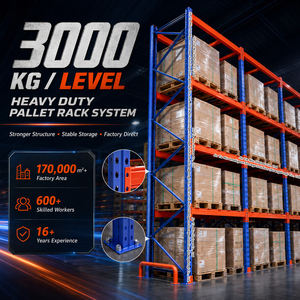
4 Storage Levels Durable Heavy Duty Pallet Rack For Factory And Warehouse Storage 3000KG
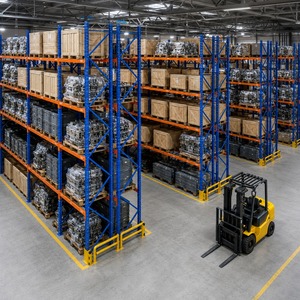
Selective Pallet Racking System Steel Storage Rack Q235B Heavy Duty Warehouse Industrial Racks Powder Coated
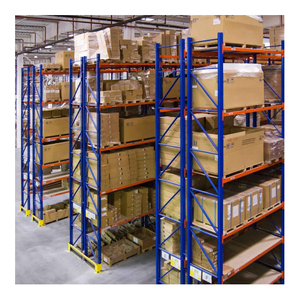
Peterack CE Certified Warehouse Storage Steel Heavy Duty Stacking Racks Shelves Selective Pallet Racking System
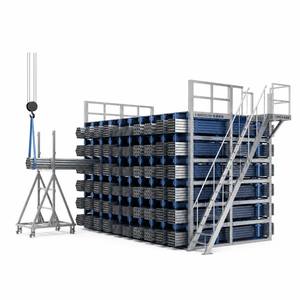
Industrial Heavy Duty Customizable Honeycomb Structure Steel Pipe Profile 3000kg Roll Pipe Storage Rack CE/ISO Certified
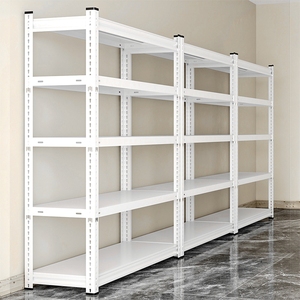
Heavy Duty Steel Storage Rack Adjustable Metal Shelving Warehouse Pallet Racking Corrosion Resistant Industrial Shelves
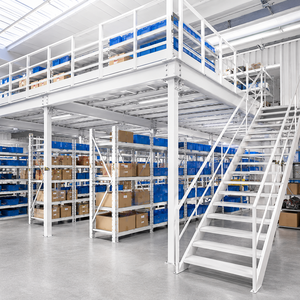
Factory Price Multi Tier Rack Customized Storage Shelf Warehouse Multi-Level Storage Platform Steel Mezzanine Racking System
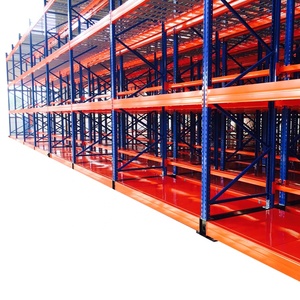
High Density Warehouse Automated Retrieval Type Electric Mobile Pallet Racking
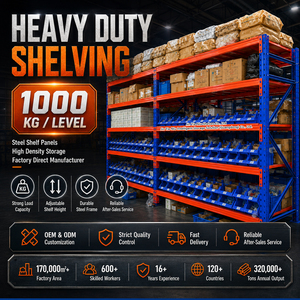
1000KG 5-tier Beam Structure Industrial Warehouse Rack with Steel Panels for Carton and Parts Picking
Engineering Small Warehouse Footprints: Solving the Cubic Density Deficit
Small-format fulfillment hubs, urban distribution nodes, and sub-3,000 square meter enterprise warehouses face severe operational friction. Unlike mega-distribution centers with 12-meter clear ceiling heights and unlimited aisle runs, compact footprints require meticulous structural load distribution, zero-wasted-aisle kinematics, and strict adherence to structural deflection ratios.
Vertical Cubic Maximization vs. Floor Slab Point-Loads
When physical square footage cannot expand outwards, warehouse engineering must build upward. However, in smaller older facilities, concrete slab thickness rarely exceeds 150 mm to 180 mm, limiting permissible single-point compressive loading. Guangzhou Heda Shelves Co., Ltd. solves this structural hurdle through engineered oversized baseplates (typically 180×160×8mm or customized up to 240×200×12mm) featuring dual or quad anchoring holes. This design redistributes dynamic forklift impact force and dead structural loads across wider slab pressure zones, allowing 3-tier to 5-tier pallet storage without catastrophic concrete punching shear.
Aisle Kinematics & Reach Truck Turning Geometries
The single greatest consumer of small warehouse floor area is aisle clearance. Standard counterbalance forklifts mandate wide working aisles of 3,500 mm to 3,800 mm, leaving as little as 35% of overall surface area for revenue-generating inventory. By configuring custom narrow aisle (VNA) or articulated reach-truck profiles (down to 1,800 mm aisle clearances) and pairing them with wire-guided or rail-guided bottom profiles, compact facilities experience immediate volumetric density surges exceeding 65% across identical real estate.
Seismic Lateral Bracing & Torsional Rigidity
Compact warehouse racking often operates near perimeter walls or in multi-story mixed-use urban industrial zones. Under seismic event cycles (such as New Zealand's NZS 1170.5 criteria or global seismic zone 3/4 standards), small high-density racking runs experience intense torsional moments. Our cold-formed omega upright profiles feature multi-bend stiffeners along the flange edges and are reinforced with high-tensile diagonal and horizontal cross-bracing bolted at 600 mm intervals to permanently resist cyclic rack swaying and progressive joint deformation.
Small Warehouse Storage Topology Comparison Matrix
Select the optimal racking architecture based on pallet turnover velocities, SKU distribution, and structural investment return.
| Racking Topology | Volumetric Storage Yield | Selectivity Ratio | Required Aisle Width | Load Capacity Range | Recommended Facility Suitability |
|---|---|---|---|---|---|
| Selective Pallet Racking | 40% – 50% | 100% Direct | 3,000 mm – 3,600 mm | 1,000 – 4,000 kg / tier | High-SKU diversity, e-commerce fast picks, 3PL inventory. |
| Rack-Supported Mezzanine | 180% – 200% | 100% Manual Tier Access | 900 mm – 1,200 mm (Walkway) | 300 – 1,000 kg / m² | Manual pick operations, auto-parts sorting, low ceiling expansion. |
| Electric Mobile Pallet Racking | 80% – 90% | 100% Direct (via motor) | Single dynamic aisle (2,800 mm) | 2,000 – 3,500 kg / tier | Cold storage rooms, ultra-expensive micro-warehouse footprints. |
| Honeycomb Profile Tube Rack | 70% – 85% | Targeted Cellular | Cantilever or overhead crane | 1,500 – 3,000 kg / cell | Extrusions, steel bar stock, PVC piping, fabric rolls. |
| 5-Tier Shelving with Steel Panels | 60% – 70% | 100% Hand Pick | 900 mm – 1,100 mm | 500 – 1,000 kg / tier | Bin storage, carton picking, spare parts hubs, maintenance rooms. |
Future Procurement Trends in Small Warehouse Storage (2025–2030)
Driven by surging real estate costs, urban last-mile delivery nodes, and green supply-chain mandates, industrial storage procurement is undergoing tectonic shifts. International buyers must evaluate the following four procurement transformations when commissioning Chinese manufacturing partners.
1. Modular Reconfigurability & Boltless Interlocks
Small warehouse leases are shortening from 10-year commitments to 2-3 year flexi-terms. Consequently, buyers are abandoning rigid welded systems in favor of modular beam-to-column connector assemblies. Utilizing cold-rolled omega upright columns punched with precision 75mm or 50mm pitch tear-drop and trapezoidal apertures, operators can demount, expand, or adjust beam heights within hours without requiring hot work permits or structural re-welding.
2. AMR / AGV Fleet Readiness in Compact Footprints
Automation is no longer exclusive to 50,000 m² mega-fulfillment centers. Autonomous Mobile Robots (AMRs) and compact robotic reach trucks are rapidly infiltrating small distribution depots. Forward-looking procurement specifications now mandate beam clearances and bottom floor clearances calibrated specifically for robotic QR-code scanning, LIDAR navigation, and precision laser alignment plate fixtures on bottom upright bases.
3. Standards-Backed Traceability & Digital Mill Testing
Global warehouse operators face strict insurance and building regulatory audits. The era of uncertified generic structural imports is over. International procurement contracts now stipulate mill test certificates (MTC) according to EN 10204 3.1, confirming carbon equivalents, yield points, elongation indices, and chemical composition of Chinese prime steel (Q235B and Q355B), directly matched to individual production batches.
Why Global Importers Partner with Heda Shelves
Established in 2001, Guangzhou Heda Shelves Co., Ltd. has developed into an internationally recognized designer, structural fabricator, and exporter of industrial warehouse racking. Our 30,000-square-meter facility executes strict end-to-end quality assurance across every phase of steel processing.
Free 24-Hour 3D CAD Layout Optimization
Our dedicated engineering department converts raw architectural PDFs, building floor plans, and clear height dimensions into comprehensive 3D CAD spatial models within 24 hours. We evaluate column spacing, fire protection sprinkler flue spaces, egress pathways, and forklift turn envelopes to present an optimized pallet configuration that prevents post-delivery installation surprises.
Verified Standards Compliance (AS 4084, CE, ISO)
Heda Shelves designs, calculates, and manufactures systems adhering strictly to CE Certification (No. 2435-CPR-8605159) and ISO 9001:2015 Quality Management Systems (No. 18624Q00169R0M). For Australia, New Zealand, and Pacific Island sites, our engineering packages reference AS 4084 structural guidelines and NZS 1170.5 seismic regulations, furnishing full calculation books for regional structural sign-off.
Biosecurity Export Packaging & Ocean Logistics
Cross-border customs inspections often paralyze projects due to timber packaging infractions. Heda eliminates border quarantine risks by packing shipments on heavy-duty customized steel stillages or strictly certified ISPM-15 heat-treated timber. With comprehensive documentation—including ChAFTA / RCEP Certificates of Origin, bills of lading, and millimeter-accurate packing manifests—shipments sail smoothly to major ports worldwide.
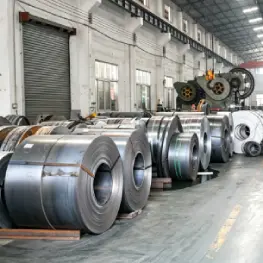
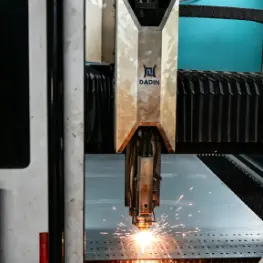
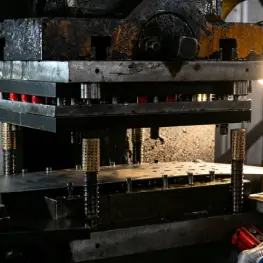
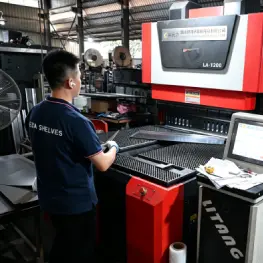
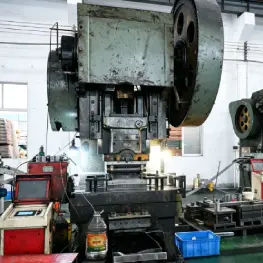
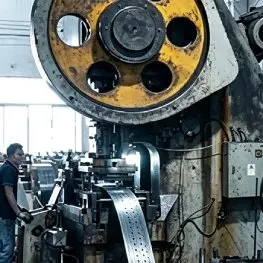
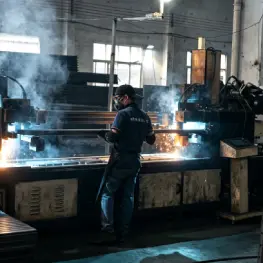
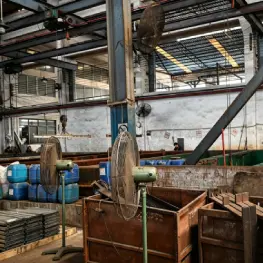
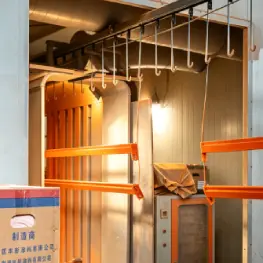
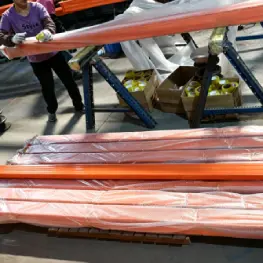
Our 10-Stage Precision Steel Manufacturing Process
From raw prime steel coil inspection through CNC cold roll forming to automated electrostatic curing, every structural beam and upright passes a continuous quality inspection checklist.
Frequently Asked Questions by Small Warehouse Buyers
Direct, engineering-backed answers addressing structural design, international trade, customs compliance, and installation safety for industrial storage systems.
Ready to Double Your Small Warehouse Storage Capacity?
Provide our engineering department with your warehouse dimensions, clear ceiling heights, pallet specifications, and target forklift equipment. We will generate an optimized 3D CAD layout, load calculation schedule, and factory-direct quotation within 24 hours.
Contact Our Technical Engineers
Instant consultation for project engineers, procurement officers, and warehouse directors.
Get a Quote