[email protected] Supplying Australia, New Zealand & the Pacific Islands
Engineering Whitepaper & Sourcing Index

Top China VNA Warehouse Racking Factories & Suppliers

A rigorous engineering evaluation of Very Narrow Aisle (VNA) steel storage systems, DIN 18202 / TR34 floor tolerances, automated cold-forming metallurgy, and direct Tier-1 procurement standards.

Direct Factory Catalog

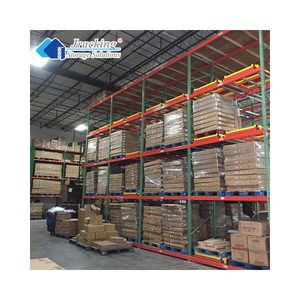
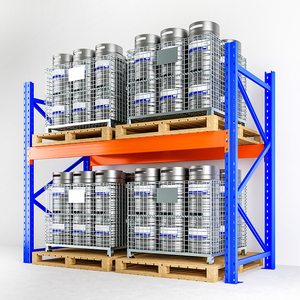
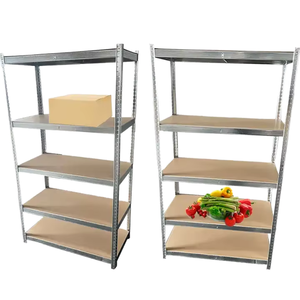
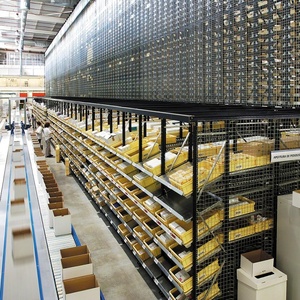
Featured Heavy-Duty & High-Density Racking Inventory

Procure factory-certified, precision-engineered pallet and heavy storage configurations straight from Guangzhou manufacturing lines. Engineered with high-yield cold-rolled structural steel compliant with AS 4084, FEM 10.2.02, and ANSI MH16.1 specifications.

2001
Established Foundation
300+
Engineers & Specialists
30,000t
Monthly Steel Output
30,000m²
Factory Footprint
Structural Systems & Physics

Engineering Architecture: Very Narrow Aisle (VNA) Systems

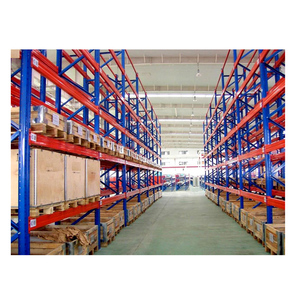
In modern high-throughput logistics, floor surface conservation is an urgent commercial mandate. Very Narrow Aisle (VNA) racking systems represent the pinnacle of static pallet storage mechanics, compressing transit aisles down to 1,500 mm – 1,800 mm compared to the standard 3,200 mm – 3,800 mm required by counterbalance lift trucks. By reclaiming up to 45% to 50% of otherwise dead aisle floor space and driving vertical operating heights past 15 to 18 meters, VNA architectures yield unparalleled volumetric efficiency without abandoning 100% selective SKU accessibility.

However, narrowing the operational corridor shifts immense physical demands onto structural members, connection nodes, and slab interaction points. Because VNA systems utilize specialized turret trucks (man-up or man-down order-picking mast vehicles) operating with clearances as low as 100 mm between pallet overhangs and upright profiles, standard manufacturing deflection allowances are categorically unacceptable.

Structural Deflection & Verticality Thresholds

Under FEM 10.2.02 and AS 4084 guidelines, standard selective racking allows plumb out-of-vertical deflection ratios up to 1:500. For high-bay VNA installations reaching beyond 12 meters, top-tier Chinese manufacturers enforce a stringent tolerance of 1:1000 under full rated design load. Unchecked mast deflection combined with structural sway creates severe collision hazards at elevated storage tiers.

Mechanical Guide Railing

Fabricated from heavy continuous structural steel angles (typically 100×75×8mm or 125×75×10mm) anchored directly into the slab using chemical anchors at 500mm pitches. Absorbs dynamic lateral impact loads from high-capacity turret truck guidance rollers.

Inductive Wire Guidance

Low-frequency AC guide wires (typically 5 kHz to 10 kHz) embedded 15–20mm below the finished concrete surface. Eliminates physical floor rails, allowing rapid pallet drop-off at row ends while reducing vehicle component wear.

DIN 18202 / TR34 Slabs

VNA functionality depends strictly on superflat industrial floor standards. Elevation deviations of merely 1.5mm across the wheel track amplify into mast deflections exceeding 60mm at 15 meters, making floor classification compliance indispensable.

Engineering Benchmarks

VNA System Architecture vs. Competing Storage Formats

When planning high-bay distribution centers, global logistics engineers evaluate capital expenditure against throughput velocity and floor utilization. The table below outlines how certified VNA systems compare technically with Wide-Aisle Selective, Double-Deep, and Radio Shuttle configurations.

Evaluation Parameter Very Narrow Aisle (VNA) Selective (Standard APR) Double-Deep System Radio Shuttle Racking
Operating Aisle Width 1,500 mm – 1,800 mm 3,200 mm – 3,800 mm 3,100 mm – 3,400 mm Custom / Central Aisle
Floor Utilization Ratio Up to 60% – 65% 35% – 40% 50% – 55% 75% – 85%
Direct Pallet Selectivity 100% (Instant SKU Access) 100% (Instant Access) 50% (Requires Shuffling) Low (Per Lane Batching)
Maximum Achievable Height 15 m – 20 m (High Bay) Up to 10 m – 12 m Up to 10 m Up to 24 m (ASRS Hybrid)
Floor Flatness Requirement Superflat (TR34 DM1 / DIN 18202) Standard Flat (TR34 FM3) Standard Flat (TR34 FM3) Standard Flat (TR34 FM2)
Handling Equipment Type Turret Truck / Man-Up Stacker Standard Counterbalance / Reach Pantograph Reach Truck Standard Forklift + Automated Shuttle
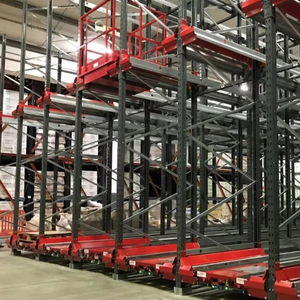
Relative CapEx per Pallet Moderate – High Low (Baseline) Moderate High (Robotic Assets)
Manufacturing Auditing

China Sourcing Landscape: Manufacturing Audits & Cold-Formed Steel Metallurgy

China accounts for more than 40% of the world's structural racking production, driven by massive integrated steel production hubs in Jiangsu, Shandong, and Guangdong provinces. However, evaluating Tier-1 manufacturers from regional fabricators requires granular oversight of raw material chemistry, cold-roll profile geometry, automated piercing precision, and multi-stage surface treatments.

Industrial racking systems undergo critical cyclic loading and compressive axial stresses. Tier-1 facilities partner with primary domestic steel giants (such as Baosteel, Shougang, and Ansteel) to procure certified structural coils conforming strictly to Q235B (yield strength ≥ 235 MPa) or high-strength Q355B (yield strength ≥ 355 MPa, equivalent to European S355JR and ASTM A572 Grade 50). Using commercial-grade hot-rolled coils lacking batch trace mill test certificates (MTC) introduces micro-cracks during continuous cold forming, severely compromising cold-environment ductility and load capacities.

Cold-Forming Tolerances

Precision roll-forming lines feature 18 to 24 roll stations, shaping Omega-profile upright posts and box beams incrementally. Continuous mechanical punch lines maintain hole pitch accuracy within ±0.2 mm over an 11-meter single upright run.

8-Stage Surface Chemistry

Proper metal pre-treatment includes ultrasonic degreasing, acid pickling, rinse cycles, and iron-zinc phosphating prior to electrostatic powder deposition. High-cure thermal ovens bake pure polyester epoxy resin at 180°C–200°C for superior impact resilience.

Robotic Submerged Arc Welding

Beam end connectors (3-claw or 4-claw engineered brackets) are fused onto step beams using Panasonic dual-arm robotic arc welding units. Eliminates cold-lap defects and guarantees moment-resisting rotational connection stiffness.

Market Horizon 2025–2035

Future Procurement Trends: Autonomous Mobility & High-Density Integration

The global warehousing landscape is evolving rapidly beyond manual operations. Procurement managers, logistics engineers, and 3PL executives are adjusting their equipment specifications around several key industrial shifts:

1. Vision-Guided Autonomous Turret Trucks & VNA AGVs

The historic reliance on human operators sitting inside 15-meter man-up cabins is shifting toward fully driverless, LiDAR-guided Autonomous Mobile Robots (AMRs) and turret AGVs. Autonomous navigation demands zero structural drift in the rack aisle. Racking manufacturers now incorporate high-precision optical barcode datum plates along bottom beam levels and floor rails to provide continuous positional feedback for onboard navigational SLAM algorithms.

2. Hybrid VNA-ASRS Transition Infrastructure

Rather than committing immediately to multi-million-dollar automated crane infrastructure, operators increasingly procure ASRS-ready VNA racking. Under this strategy, beam heights, post gauges (typically 2.0mm to 2.5mm cold-rolled profiles), and base plate anchor patterns are engineered to handle the higher dynamic accelerations of automated mini-load or stacker cranes, allowing brownfield conversions without discarding installed racking assets.

3. Low-Temperature Cold Chain Resilience

With explosive demand across pharmaceutical biologics and deep-frozen food distributions, VNA systems are engineered specifically for -30°C freezer environments. Low-temperature operation induces severe steel embrittlement in inferior metallurgy. Procurement standards now mandate Charpy V-notch impact testing down to -20°C and -40°C, alongside hot-dip galvanizing (HDG) conforming to ISO 1461 to eliminate condensation-driven rust under continuous thermal cycling.
Enterprise Credentials

Guangzhou Heda Shelves Co., Ltd.: Manufacturing Capabilities & Engineering Edge

Founded in 2001, Guangzhou Heda Shelves Co., Ltd. has established itself as an engineering-driven manufacturing partner for tier-1 warehouse distributors, 3PL giants, and industrial supply groups globally. Operating an advanced 30,000 m² primary production facility in Guangzhou with over 300 experienced engineers, technicians, and QA specialists, Heda combines high-volume industrial output with custom design flexibility.

Verified Global Certifications

Every beam, upright, and connector is produced under strict quality regimes: CE Certification No. 2435-CPR-8605159, ISO 9001:2015 Quality Management System No. 18624Q00169R0M, and comprehensive RoHS chemical compliance.

Turnkey 3D & FEA Layout Design

Our in-house structural engineering office delivers complete 3D modeling, load calculation tables, and Finite Element Analysis (FEA) simulations within 24 hours of receiving site drawings, clear ceiling heights, and forklift specifications.

Seismic Engineering & Global Standards

Racking designs cross-reference international standards including Australian AS 4084, New Zealand NZS 1170.5 seismic regulations, European FEM 10.2.02, and American RMI specifications, providing pre-calculated documentation for local site engineers.

Export-Grade Biosecurity & Packaging

Zero customs delays. All racking bundles are strapped into custom welded steel stillages or ISPM-15 heat-treated timbers, fully meeting strict biosecurity protocols (e.g., Australian DAFF and New Zealand MPI requirements) with full FTA documentation.

Procurement Intelligence

Frequently Asked Questions: Technical VNA Sourcing

Essential technical, compliance, and logistical clarifications for logistics directors and procurement engineers preparing to import commercial racking systems from China.

What exact floor flatness tolerance is required for a 15-meter VNA installation?
For operational heights exceeding 12 meters, standard industrial slabs (FM3 or general industrial tolerances) are completely inadequate. The floor must conform to DIN 18202 Table 3 (Group 4) or British Concrete Society Technical Report 34 (TR34) Class DM1 (Defined Movement Category 1) or Superflat. Elevation differences across the turret truck's load wheels must not exceed 1.5mm. Without superflat tolerances, truck mast oscillation induces dynamic lateral shocks that exceed rack beam clearance safety margins.
How do guide rails compare with wire induction guidance systems in VNA aisles?
Physical guide rails (low-profile angles or C-channels anchored at the base of upright frames) provide immediate mechanical fail-safe security. They prevent any truck deviation, require zero electrical floor infrastructure, and protect upright bottom sections from lateral impacts. In contrast, inductive wire guidance embeds an electrical frequency line inside a cut groove in the floor. While wire guidance creates clean aisles without floor tripping hazards and permits side pallet pickup at row ends, it requires pristine floor maintenance, high-precision calibration, and failsafe electronic sensors on the truck.
Can Chinese structural steel profiles meet Australian AS 4084 or US RMI seismic standards?
Yes, provided you partner with a certified manufacturer utilizing verified structural steel grades (such as Q355B or certified Q235B) with full Mill Test Certificates. Guangzhou Heda Shelves supplies comprehensive engineering packages—including section modulus (Zx, Zy), moment of inertia (Ix, Iy), connector rotational stiffness values, and structural weld calculations—allowing registered local engineering certifiers in Australia, New Zealand, or the US to verify full compliance with AS 4084, NZS 1170.5, or ANSI MH16.1.
What are typical manufacturing and transit lead times for multi-container projects?
For typical warehouse projects ranging from 5 to 20 forty-foot high-cube containers (40' HQ), manufacturing lead times at our Guangzhou facility range between 20 and 30 calendar days following CAD drawing and color sign-off. Ocean freight transit from South China ports (Nansha, Yantian, Hong Kong) is approximately 14–22 days to Australian/NZ main ports, 18–26 days to US West Coast, and 28–35 days to European main ports.
How does Heda Shelves prevent shipping damage and container unloading complications?
Improperly packed racking components can shift during sea voyages, resulting in deformed uprights and hazardous container un-stuffing. Heda pre-bundles upright frames and beams with protective corrugated buffers, heavy-duty PET strapping, and corner guards. Bundles rest upon custom welded steel bases or certified ISPM-15 compliant timber dunnage equipped with pull-out lifting straps, enabling smooth unloading via standard reach forklifts in under 45 minutes per container.
What technical data is required to generate a definitive 3D VNA warehouse layout?
To prepare an engineering-grade layout, our structural team requires: (1) An architectural CAD drawing showing building boundaries, column locations, dock doors, and building egress paths; (2) Clear underside building height beneath trusses, sprinkler heads, and HVAC ducts; (3) Exact pallet dimensions (width, depth, overall load height including pallet base); (4) Maximum and average pallet gross weights; (5) Forklift fleet specifications (specifically model, collapsed mast height, max lift elevation, and overall truck chassis width).

Engineer Your High-Density Warehouse with Direct Factory Precision

Request an engineer-certified 3D CAD storage layout, structural load analysis, and direct FOB/CIF container procurement estimate. Our Guangzhou engineering department prepares complete technical plans within 24 business hours.

Get a Quote