Advanced High-Density Warehouse Racking Ecosystems
Modern distribution centres and high-throughput facilities demand structural storage solutions that eliminate unutilised cubic space without bottlenecking operational velocity. Unlike conventional selective systems that sacrifice up to 60% of slab area to forklift aisles, engineered Drive Through Racking and its companion high-density technologies achieve up to 85% volumetric space utilisation through continuous pallet rails and dual-entry access corridors.
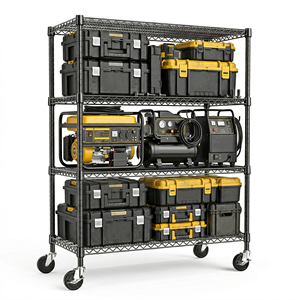
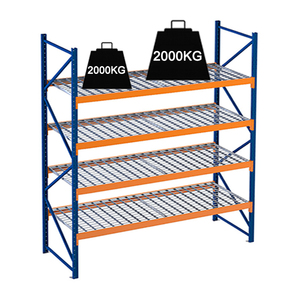
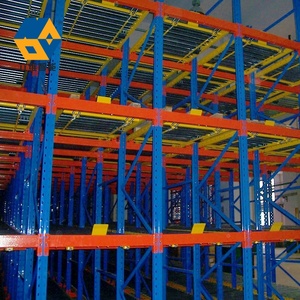
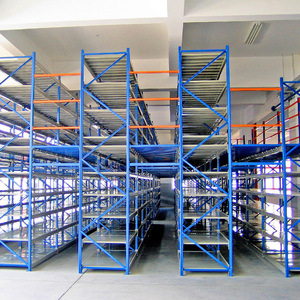
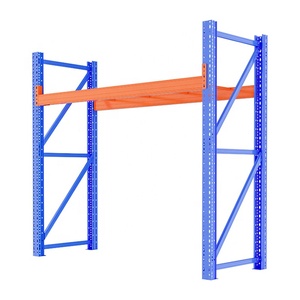
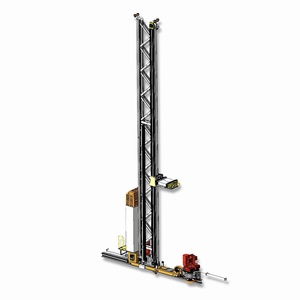
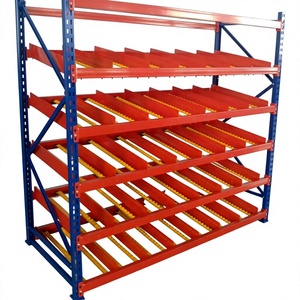
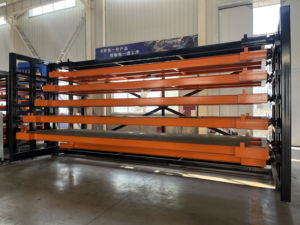
Engineering Architecture of Drive Through Racking: FIFO Kinematics & Structural Mechanics
In the procurement lexicon of heavy-duty materials handling, precision terminology dictates operational reality. While Drive-In Racking operates on a First-In, Last-Out (FILO/LIFO) sequence utilising a solitary access face, Drive Through Racking incorporates dual-access portals—permitting material handlers to load inventory from an ingress aisle and pick stock from an opposite egress aisle. This kinematic separation delivers pure First-In, First-Out (FIFO) stock rotation, making it the premier structural configuration for perishable cold storage, pharmaceutical warehousing, and time-sensitive FMCG logistics.
From a mechanical engineering perspective, Drive Through systems eliminate standard longitudinal cross-beams across the operating bays. Instead, pallets sit directly on heavy-duty cantilevered pallet support rails fabricated from cold-formed high-tensile steel (typically Q235B or Q355B grades). Because forklifts traverse directly inside the structural racking cube, the design mandates rigorous structural deflection analyses in accordance with international codes such as AS 4084 (Steel Storage Racking), ANSI MH16.1 (RMI Standard), and European FEM 10.2.02 / EN 15512.
Structural & Operational Comparison: High-Density Racking Topologies
Procurement directors must balance space density, cycle velocity, and equipment capital expenditures. The following matrix delineates operational parameters across primary industrial racking topologies.
| Racking Topology | Inventory Flow | Volumetric Floor Density | Selectivity Profile | Forklift Equipment Constraint | Risk & Impact Factor |
|---|---|---|---|---|---|
| Drive Through Racking | Strict FIFO | 75% – 85% | Batch / High Volume | Counterbalance / Reach (Narrow Mast) | Moderate (Tunnel Guarding Required) |
| Drive-In Racking | LIFO / FILO | 75% – 85% | Single SKU Deep Block | Counterbalance / Reach | Moderate to High (Single Entry Point) |
| Radio Shuttle System | FIFO or LIFO | 80% – 90% | Automated Lane Batching | Standard Forklift (Does Not Enter Bay) | Ultra-Low (Carrier Automation) |
| Gravity Flow Racking | Strict FIFO | 70% – 80% | High Velocity Pallet Flow | Conventional Forklift Fleet | Low (Self-Regulated Roller Beds) |
| Selective Pallet Racking | Unrestricted Access | 35% – 45% | 100% Direct Individual SKU | Universal Material Handling Equipment | Low (Generous Operating Aisles) |
What Separates Tier-1 Racking Manufacturers from Regional Fabricators?
Specifying a heavy-duty storage system that supports continuous loads in excess of 1,500 kg per pallet position across vertical heights exceeding 10 metres requires verifiable metallurgical and manufacturing consistency. Certified manufacturing factories implement a rigorous 10-step fabrication matrix that guarantees load bearing security:
1. Automated Continuous Roll-Forming: Precision roll-forming machines transform high-yield cold-rolled steel coils into complex upright profiles with multi-bend geometries. Upright columns with up to 12 cold-rolled bends exhibit vastly superior torsional stiffness and sectional properties compared to generic open-channel sections.
2. CNC Continuous Pitch Punching: High-precision numerical stamping creates teardrop, diamond, or 50mm/75mm pitch slot patterns with micro-millimetre tolerances. Pitch precision ensures cantilever support arms lock into the upright column without play, preventing harmonic frame vibrations during forklift entry.
3. Dual-Sided Robotic Welding: Load rail connector brackets, baseplates, and top portal tie-beams undergo automated robotic welding. Consistent weld penetration eliminates brittle fracture zones and ensures compliance with AWS D1.1 structural welding protocols.
4. Chemical Pre-Treatment & Electrostatic Powder Coating: Raw steel undergoes a 7-stage immersion process including degreasing, acid pickling, zinc phosphating, and deionised water rinsing before receiving a thermo-hardened polyester epoxy powder coat (60–90 microns). For extreme cold stores and coastal port facilities, hot-dip galvanising (ISO 1461 compliant, 80+ microns) prevents micro-corrosion underneath sub-zero condensation cycles.
Guangzhou Heda Shelves Co., Ltd. Engineering Strengths
Established in 2001, Guangzhou Heda Shelves Co., Ltd. has developed into a premier industrial storage designer and structural steel manufacturer. Our 30,000 m² heavy-production facility houses advanced automated roll-forming lines, state-of-the-art robotic welding cells, and eco-certified powder coating systems.
Massive Production & Scale
Over 300 experienced engineers, structural detailers, and metallurgical technicians produce up to 30,000 tons of engineered industrial racking every month, supporting mega-projects globally.
Certified Engineering Veracity
Fully compliant with CE Mark standard EN 15512 (Certificate No. 2435-CPR-8605159) and ISO 9001:2015 Quality Management Systems. Comprehensive FEA reports and structural calculations accompany orders.
Turnkey 3D CAD & BIM Layouts
We supply gratis 3D CAD modeling, clearance simulations, and slab-loading calculations based on your specific forklift mast profiles, turning initial blueprints into fully verified structural plans.
Regional Code & Seismic Adaptability
Our structural team adapts section sizing, baseplate dimensions, anchor embedment depths, and cross-aisle portal bracing to satisfy Australian AS 4084, New Zealand NZS 1170.5 seismic mandates, and US RMI standards.
Biosecurity Export Packaging
Shipments destined for Oceania, North America, and Europe are strapped in custom heavy-duty steel stillages or ISPM-15 heat-treated dunnage, guaranteeing rapid clearance through DAFF, MPI, and CBP ports.
Global OEM / ODM Supply Chain
HEDA Shelves acts as the trusted silent manufacturing arm for international rack integrators and distributors, offering private label manufacturing, branded laser marking, and dedicated project containerization.
Future Procurement Trends in Drive Through & High-Density Racking
Warehousing real estate costs and labour constraints are driving structural storage evolution. Global supply chain leaders are specifying systems engineered not only for current forklift traffic, but for upcoming autonomous and robotic ecosystems.
AGV/AMR Tunnel Integration
Drive Through lanes are transitioning from manned reach trucks to laser-guided AGVs. Modern manufacturers engineer recessed floor guide angles and magnetic docking strips that protect upright structures from robotic blind-spot collisions.
Ultra-High-Tensile Micro-Alloys
Procurement specifications are shifting toward dual-phase and niobium-microalloyed steels. These cold-rolled structural sections deliver higher yield strengths (up to 450 MPa), allowing lighter frame deadweight while maintaining seismic compliance.
Structural Health Monitoring (SHM)
Next-generation upright frames incorporate integrated piezo-electric impact sensors and optical fiber strain gauges. Operators receive instant real-time telemetry if a forklift strike exceeds permissible structural tolerance limits.
Cold-Chain Low-Bake Polymer Finishes
Thermal cycling in blast freezers (-30°C) causes standard powder coatings to become brittle and micro-crack. Advanced low-bake TGIC-free polyester powder systems maintain elastic elongation at cryo-temperatures, preventing subsurface rust.
Frequently Asked Questions on Drive Through Racking Procurement
Authoritative technical guidance compiled by our senior structural engineering team to assist supply chain managers and project engineers.
? What is the precise operational difference between Drive-In and Drive Through Racking?
The distinction lies entirely in entry geometry and inventory flow. Drive-In Racking features one shared entry/exit aisle; forklifts enter and reverse out of the same face, creating a strict Last-In, First-Out (LIFO) inventory sequence. Drive Through Racking features separate ingress and egress aisles at opposite ends of the storage cube. Forklifts load pallets from one side and retrieve from the other, enabling pure First-In, First-Out (FIFO) stock management without intermediate aisle space.
? How do you safeguard upright frames from forklift impact inside drive-in tunnels?
Because forklifts operate with tight clearances (typically 75–100mm on either side), Drive Through systems incorporate heavy structural floor guide rails (such as hot-rolled steel angles or heavy hollow sections anchored to the slab). In addition, factories provide wrap-around column protectors, reinforced double-upright bottom sections, and high-visibility chamfered entry guides to channel forklift wheels smoothly into the bay.
? How do you ensure seismic compliance under AS 4084, NZS 1170.5, or RMI codes?
Seismic validation requires site-specific engineering analysis. HEDA Shelves engineers utilize Finite Element Analysis (FEA) software to calculate base shear, dynamic overturning moments, and story drift. In high seismic zones (such as New Zealand or coastal tectonic belts), we increase baseplate surface area, specify high-embedment seismic chemical anchors, thicken upright profiles, and install top-level portal cross-bracing ties.
? What are the minimum warehouse slab specifications required for high-density racking?
Due to concentrated point loads transmitted through upright baseplates, slabs generally require a minimum compressive concrete strength of 25–30 MPa (approx. 3,500–4,500 PSI) with minimum thickness of 150mm to 200mm, reinforced with steel mesh. Floor flatness must adhere to DIN 18202 Table 3 or ASTM E1155 (F-min / FF/FL standards) to eliminate mast tilt when reach trucks lift pallets to upper rail levels.
? Can Drive Through Racking handle mixed pallet dimensions (e.g. 1200x1000mm & 1165x1165mm)?
Pallet support rails are fixed at a determined horizontal span designed specifically for the pallet width. While standard Australian pallets (1165 × 1165mm) and ISO/Euro pallets (1200 × 800mm or 1200 × 1000mm) cannot be placed interchangeably in the exact same lane without risking rail slippage, our engineering team can design segregated lanes or integrate stepped dual-flange rails to accommodate multi-standard fleets.
? What documentation and certifications are provided for customs and structural sign-off?
Every commercial export order includes a full certified documentation dossier: ISO 9001:2015 certificate, CE Declaration of Conformity (EN 15512), mill test certificates (MTC) proving steel chemical composition, comprehensive 3D assembly shop drawings, loading rating plaques to be affixed on bay entries, and Certificate of Origin (supporting FTA preferential customs tariffs).
Ready to Maximize Your Cubic Storage Capacity?
Submit your warehouse layout, clear building height, pallet specifications, and forklift model. Our senior structural engineering team will deliver a comprehensive 3D CAD proposal, load capacity chart, and direct factory-gate quotation within 24 hours.