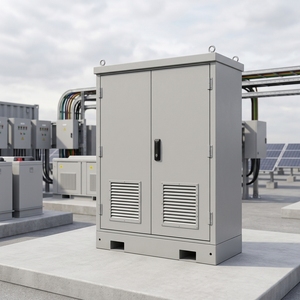
Custom Size IP54 Energy Storage Cabinet Enclosure SPCC Cold Rolled Steel
- 1.2mm SPCC Cold Rolled Steel
- IP54 Weatherproof Sealed
- 600x600x1200mm Power Distribution
Precision-manufactured in our ISO 9001:2015 and CE certified factory. Fully compliant with international seismic codes, high-throughput material flow, and industrial warehouse compliance.
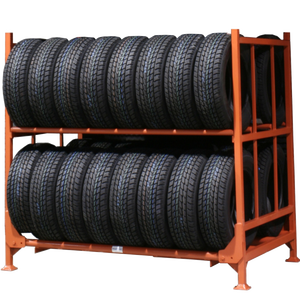
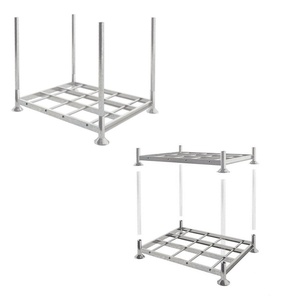
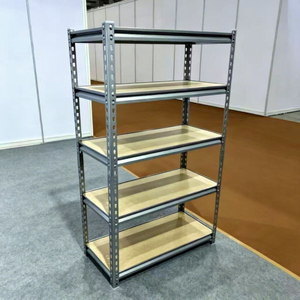
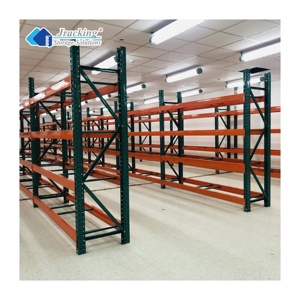
In modern supply chain infrastructures, long-format, awkward, and non-palletized freight presents the most severe structural handling challenges. Standard selective racking relies on fixed front vertical columns that obstruct items exceeding typical pallet dimensions. Industrial Cantilever Racking solves this geometric constraint by employing a completely open-face front architecture supported by heavy-gauge vertical columns, rigid moment-resisting base connections, and cantilevered arms engineered specifically to absorb combined bending, torsional, and deflection stresses.
Selecting between cold roll-formed sheet profiles and hot-rolled structural steel sections is the most critical commercial and structural engineering decision. While cold-rolled systems offer exceptional cost-efficiency for light-to-medium retail lumber applications (under 800 kg per arm), heavy industrial applications involving steel billet cassettes, structural tubes, and commercial timber demand hot-rolled structural steel profiles (such as IPE, HEA, or UB profiles) with yield strengths surpassing $355 \text{ N/mm}^2$ (Q355B / S355JR).
| Structural Metric | Roll-Formed Cantilever (Omega / C-Profile) | Hot-Rolled Structural Cantilever (IPE / HEA / H-Beam) |
|---|---|---|
| Raw Steel Grade | Q235B / Cold-Rolled SPCC (High ductility) | Q355B / S355JR Structural Carbon Steel |
| Individual Arm Capacity | 250 kg – 1,000 kg per arm (Medium Duty) | 1,000 kg – 3,500 kg+ per arm (Heavy-Duty Extreme) |
| Impact Resilience | Susceptible to torsional buckling if impacted by tines | Immense impact absorption; rigid thick flange resistance |
| Maximum Frame Height | Up to 6,000 mm clear column height | Up to 12,000 mm+ for AS/RS and heavy sideloader aisles |
| Primary Target Goods | Plastic piping, PVC conduits, light molding, furniture | Steel beams, rebar bundles, structural timber, tooling dies |
Accidental forklift strikes represent over 78% of catastrophic racking damage incidents worldwide. Standard rigid welded arm connections transfer the kinetic energy of an upward fork impact directly into the vertical column, causing column twisting and structural compromise. Our engineering team designs heavy-duty cantilever systems with hinged safety pivot-pins. If an operator inadvertently catches the arm while elevating or lowering a forklift mast, the cantilever arm pivots upward harmlessly, dissipating kinetic energy without transferring torsional stress to the structural column or stripping the connection hardware.
Global logistics procurement has evolved beyond simply looking at "steel price per kilogram". Forward-thinking warehouse directors, logistics property investors, and tier-1 procurement managers evaluate lifecycle engineering, warehouse automation compatibility, and seismic-climate longevity. Based on our delivery across 10,000+ global facilities, we have identified four macro trends transforming industrial cantilever procurement:
Automated Stacker Cranes and robotic guided vehicles (AGVs) are replacing conventional counterbalance forklifts in long-load warehouses. This requires ultra-tight fabrication tolerances (±1.0mm per 6m vertical run) and optical sensor targets mounted directly to column webs to allow millimetric sensor-guided robotic picking.
Rising international container freight rates have driven the adoption of high-tensile micro-alloyed steels (such as Q355B and S420 structural alloys). These formulations reduce component deadweight by 14% to 18% while maintaining identical ultimate load moments, drastically slashing sea shipping and carbon footprint costs.
Industrial lumber yards and coastal ports in regions like Australasia and the Pacific are phasing out basic indoor powder paints in favor of full continuous Hot-Dip Galvanizing (HDG) with an 85μm minimum zinc coating thickness. This prevents corrosion under high humidity, salt spray, and extreme UV degradation for 30+ years.
Established in 2001, Guangzhou Heda Shelves Co., Ltd. has grown over 25 years into one of the world's most trusted manufacturers and exporters of heavy-duty industrial storage systems, selective pallet racking, structural steel mezzanines, and precision-engineered cantilever configurations. Based in a modern 30,000 square meter intelligent manufacturing complex, our team of over 300 experienced engineers, CNC technicians, and logistics specialists outputs up to 30,000 tons of structural steel storage systems per month.
We provide full calculation packs and Section Property Data referencing AS 4084:2023 (Australia) and NZS 1170.5 (New Zealand seismic design). Base plates, column back-to-back ties, and anchors are dimensioned specifically for local geotechnical and seismic zone parameters to ensure rapid sign-off by registered local engineers.
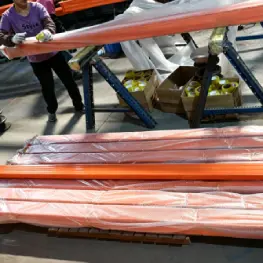
Custom export bundles packed on custom steel stillages or strictly ISPM-15 certified heat-treated timber dunage. Every export shipment clears strict Department of Agriculture, Fisheries and Forestry (DAFF - Australia) and Ministry for Primary Industries (MPI - NZ) inspections without port delays or costly fumigation demurrage.
Verified CE Certification (Certificate No. 2435-CPR-8605159) and ISO 9001:2015 Quality Management System (No. 18624Q00169R0M). Every production heat is tracked back to certified primary steel mills, complete with Mill Test Certificates (MTC) detailing chemical composition and tensile testing.
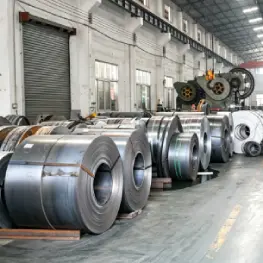
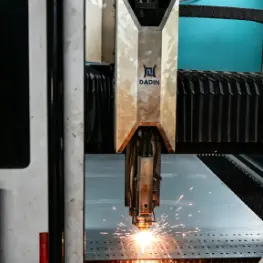
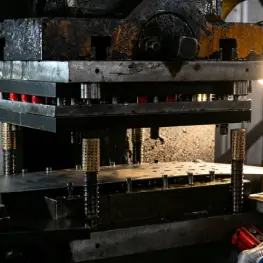
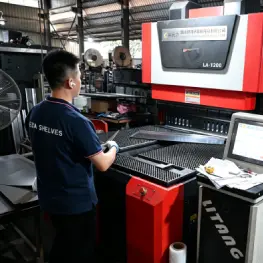
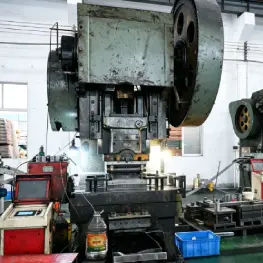
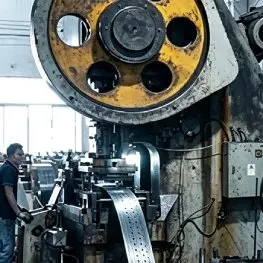
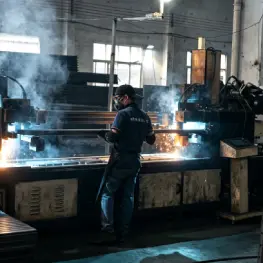
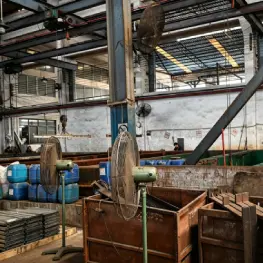
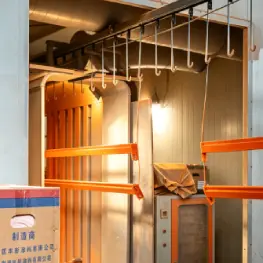
Every batch of raw structural coil and hot-rolled beam goes through ten distinct, automated quality control stations to ensure complete dimensional precision, structural weld penetration, and long-lasting powder coat adhesion:
Clear, engineering-backed answers addressing the most common design, certification, and import questions raised by warehouse managers, structural engineers, and logistics procurement teams:
Single-sided cantilever racks are designed to stand against warehouse walls with load arms extending from one face of the central column. These require wider, heavily ballasted base footings anchored with high-tensile epoxy or chemical wedge anchors to resist un-countered overturning moments. Double-sided systems utilize a central spine column with arms protruding symmetrically from both faces. This balanced configuration naturally offsets dynamic bending moments, enabling significantly taller vertical clear heights (often exceeding 10 meters) and superior structural economy per linear meter stored.
We provide our international clients with full finite element analysis (FEA) packages, section modulus calculations ($Z_x, Z_y$), radius of gyration, and certified yield figures based on AS 4084 (Steel Storage Racking) principles. For earthquake-prone zones such as New Zealand (NZS 1170.5) or dynamic seismic zones in the Pacific rim, our engineers integrate enhanced cross-bay diagonal bracing towers, oversized high-grade floor baseplates, and ductile pivot arm pins that allow local structural certifiers to issue sign-off certificates with zero delays.
Upon formal 3D layout confirmation and CAD drawing sign-off, standard factory fabrication requires 18 to 25 calendar days, depending on custom steel profiles and finishing options (electrostatic powder coat vs. hot-dip galvanizing). Direct sea freight transit from our southern China port facilities to key destinations like Sydney, Melbourne, Brisbane, Auckland, Tauranga, or Port Moresby takes approximately 12 to 24 days. Complete door-to-port or door-to-facility DDP tracking is maintained through our global logistics desk.
Uniformly distributed loads (UDL) assume rigid cargo that spans multiple cantilever arms uniformly. However, flexible materials (such as small-diameter PVC pipes, copper tubing, or lightweight timber bundles) sag between arms, creating intense localized point-loads on central arms. In such scenarios, our engineering software evaluates arm spacing (e.g., reducing span from 1,500mm to 900mm) or integrates continuous wire mesh decking, heavy steel grating shelves, or longitudinal fork-support saddle rails across the arms to prevent load drop and dynamic deflection.
Non-compliant timber packaging represents one of the most common causes of customs detention at Australian DAFF and New Zealand MPI borders. We address this by packing our cantilever columns, arms, and bracing towers primarily on customized heavy-gauge steel stillages. Where timber dunnage is required, all wood is certified kiln-dried, heat-treated to 56°C for 30 minutes, stamped with official ISPM-15 certification marks, and accompanied by full fumigation documentation, commercial invoices, and ChAFTA / RCEP Certificates of Origin.
Take the guesswork out of structural capacity, slab anchor forces, and clearance design. Provide your site parameters and our senior engineering office will prepare a comprehensive Free 3D CAD Layout, Section Loading Matrix, and Quotation within 24 Hours.