[email protected] Supplying Australia, New Zealand & the Pacific Islands
ISO 9001:2015 & CE Certified Heavy Duty Systems

Top Trusted Industrial Racking And Shelving Manufacturers & Exporters

Engineered Logistics Infrastructure, Precision Cold-Formed Steel Storage Solutions, and Global Export Supply Chains Built to AS 4084, FEM, and EN Engineering Standards.

Direct Factory Product Showcase

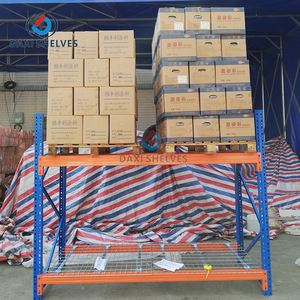
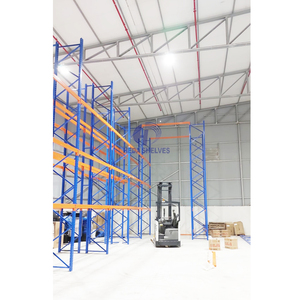
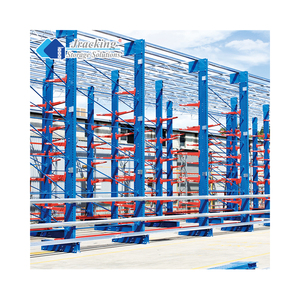
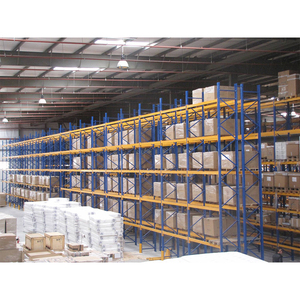
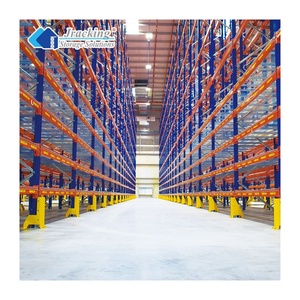
Engineered Warehouse Storage Racks & Specialized Logistics Components

Directly manufactured using high-tensile structural steel profiles, certified robotic GMAW welding, and thermo-hardened electrostatic powder coatings. Designed for ultra-high load capacities and high-throughput distribution environments.

25 Years Manufacturing Prowess

Why Major Supply Chains Partner With Guangzhou Heda Shelves

Established in 2001, Guangzhou Heda Shelves Co., Ltd. has grown into one of Asia's most prominent industrial storage manufacturers. Operating an expansive 30,000 square meter advanced production facility with over 300 experienced engineers, structural technicians, and export specialists.

2001
Established Year
30,000m²
Factory Floor Area
30,000t
Monthly Steel Output
10,000+
Global Projects Completed

Internationally Certified Quality

Our fabrication systems hold rigorous third-party credentials, including ISO 9001:2015 Quality Management (Certificate No. 18624Q00169R0M) and European CE Factory Production Control Certification (No. 2435-CPR-8605159), ensuring compliance across global jurisdictions.

Region-Specific Structural Codes

We engineer storage racking systems matching localized building legislation. Layouts designed for Australia adhere strictly to AS 4084 steel storage racking standards, while New Zealand projects integrate rigorous NZS 1170.5 seismic tie-back, floor-anchor, and frame calculations.

Turnkey Biosecurity & Shipping

Export cargo is packed exclusively on custom steel stillages or ISPM-15 heat-treated, certified timber. This streamlines entry inspections under Australian DAFF and New Zealand MPI bio-security screening, preventing costly quarantine fumigation hold-ups.

Free 3D Layout & CAD Modeling

Our design engineering office delivers high-resolution 3D virtual walkthroughs and structural CAD site plans within 24–48 hours. We calculate exact egress clearances, forklift turning radii, overhead sprinkler flue spaces, and structural slab point loadings.

Global Port Delivery Logistics

Operating close to primary shipping terminals in South China (Guangzhou, Shenzhen, Nansha), we organize continuous containerized sailings straight to Sydney, Melbourne, Brisbane, Auckland, Tauranga, Suva, Port Moresby, and international regional hubs with full FTA documentation.

OEM & Private-Label Services

We partner with leading regional racking distributors, material handling suppliers, and structural engineering integrators worldwide, supplying private-label rack profiles, custom-matched RAL powder coatings, and pre-stamped client load warning signage.

Precision 10-Stage Heavy Steel Fabrication Pipeline

01
Raw Coil QC

Spectrometric & ultrasonic testing of Baosteel/Shougang Q235B/Q355B coils.

02
CNC Slitting

High-speed slitting line cuts master steel coils to millimeter-exact widths.

03
CNC Punching

High-tonnage continuous punching presses create uniform 50mm/75mm upright pitch slots.

04
Roll Forming

24-station continuous cold roll forming mills shape closed box and omega beam profiles.

05
Laser Trimming

3D fiber laser cutting ensures burr-free end cuts and beam connector connector notches.

06
Robotic Welding

GMAW multi-axis robotic arms weld beam end connectors under Argon shielding gas.

07
Acid Pickling

Multi-stage immersion cleaning strips oxidation scale, oil film, and contaminants.

08
Phosphating

Nanoscale zinc-phosphate bath creates a microscopic anti-corrosion bonding layer.

09
Powder Coating

Automated electrostatic spray booths apply high-adhesion outdoor-rated polyester resin.

10
Curing & Pack

Baking at 200°C for thermo-hardening followed by shrink-wrap steel stillage banding.

Industry Engineering White Paper

Structural Engineering Evolution & Technological Trends in Racking Systems

As modern automated distribution centers scale vertically to optimize footprint real estate, warehouse storage systems are transitioning from passive static steel structures into highly engineered, dynamic load-bearing assets.

1. Advanced Finite Element Analysis (FEA) & Seismic Ductility

Historically, racking structures were dimensioned through basic Euler-buckling formulas. In modern intralogistics engineering, thin-walled cold-formed steel sections require sophisticated non-linear Finite Element Analysis (FEA) to account for torsional-flexural buckling, beam-to-column connector rotational stiffness, and baseplate anchorage plasticity. For earthquake-prone regions such as New Zealand and the Pacific Rim, rack frames must satisfy dynamic response spectrum checks under NZS 1170.5 and AS 4084-2023. By incorporating engineered energy-dissipating base connections and high-ductility diagonal bracing profiles, modern racking absorbs kinetic ground acceleration without brittle structural collapse.

2. Robotic Pallet Interfaces & ASRS / Shuttle Integration

The acceleration of Automated Storage and Retrieval Systems (ASRS) and 4-way Radio Shuttle carriers demands unprecedented structural tolerances. Where manual forklift operations permit a frame deflection margin of L/200, automated crane high-bay channels require strict beam deflections under L/400 or tighter to prevent sensor misalignments during high-speed extraction. Precision profile cold-rolling technology ensures beam straightness within 1:1000 tolerances over 4-meter spans. These systems integrate electro-galvanized guiding tracks, optical sensor reflectors, and impact-resistant rack entry funnels engineered to cycle continuous 24/7 autonomous logistics.

3. Harsh Environment Metallurgy & Cold Chain Surface Engineering

The explosion of temperature-controlled pharmaceutical and frozen food cold chains (operating at continuous temperatures down to -30°C) presents profound metallurgical challenges. Low-carbon structural steels undergo ductile-to-brittle transition phenomena under sustained cryogenic conditions. Modern rack engineering utilizes specialized low-silicon, fine-grained aluminum-killed steel alloys (such as high-grade Q355ND) to preserve high impact toughness. Concurrently, surface engineering has advanced: multi-stage zinc phosphating combined with anti-microbial, cross-linked polyester TGIC-free powder coats prevents hairline micro-fissuring and rust creep caused by condensation cycles in high-humidity loading docks.

4. Digital Twin BIM Modeling & Lifecycle Structural Health Monitoring

Leading logistics operators are integrating racking frameworks directly into 3D Building Information Modeling (BIM Level 3) workflows using Industry Foundation Classes (IFC) protocols. This enables virtual clash detection against HVAC ducts, lighting lines, and ESFR fire sprinkler head discharge cones prior to on-site steel arrival. Emerging developments include the deployment of battery-free RFID and IoT piezoelectric strain-sensor nodes embedded within critical upright base connections. These sensors register minor forklift impact shocks and deflection thresholds, feeding data directly to warehouse facility dashboards to prompt safety inspections before structural failures occur.

Storage System Type Pallet Accessibility Floor Space Utilization Typical Beam Deflection Limit Primary Industrial Use Case
Selective Pallet Racking 100% Direct Immediate Access 40% – 45% (Aisle Intensive) L / 200 (Standard Commercial) FMCG, 3PL Distribution, Multi-SKU Retail
Double-Deep Racking 50% Direct Accessibility 55% – 60% (Fewer Aisles) L / 200 (Pantograph Forklift) High-Volume Manufacturing Reserve Stock
Drive-In / Drive-Thru Last-In, First-Out (LIFO) 65% – 75% (Dense Channels) L / 250 (Continuous Cantilever Rails) Cold Storage, Seasonal Harvest Processing
Radio Shuttle Automation FIFO or LIFO Selectable 75% – 85% (Ultra-High Density) L / 350 to L / 400 (Cart Trackway) Beverage Bottling, Dairy, Frozen Protein DCs
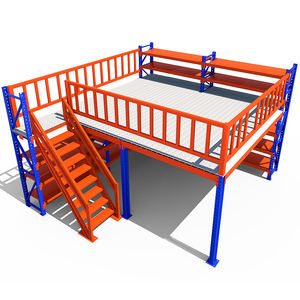
Structural Mezzanine Floor Full Footprint Doubling 100% Overhead Cubed Space L / 300 to L / 500 (Live Decking Load) E-Commerce Order Packing, Light Assembly
Strategic Sourcing Advisory

Strategic Industrial Storage Procurement Trends (2025–2030)

Corporate supply chain directors and warehouse facility procurement teams are moving away from evaluating racking solely on price-per-tonne of steel. Sourcing strategy is shifting toward comprehensive lifecycle Total Cost of Ownership (TCO).

Total Cost of Ownership (TCO) vs. CapEx

Forward-looking buyers recognize that upfront steel cost accounts for just 40–50% of a rack system's 15-year expenditure. Damage repair downtime, slab anchoring remediation, and modular relocation costs dominate the balance. Sourcing structural uprights engineered with thickened impact-zone geometries, reinforced roll-formed return lips, and pre-fitted heavy polymer floor column guards dramatically reduces long-term maintenance write-offs.

Standardized Modular Interoperability

Supply chain volatility requires physical warehouse infrastructure that can reconfigure rapidly. Leading 3PL and retail procurement executives are mandating modular universal connection pitches (such as standard 50mm and 75mm beam adjustment matrices). This allows warehouse managers to adjust beam elevations, convert selective bays into carton-flow picking levels, or incorporate pick modules without replacing whole upright frames.

ESG Decarbonization & Circularity

With multinational logistics enterprises committing to Net-Zero greenhouse gas emissions, Scope 3 supply chain auditing has entered industrial equipment procurement. Buyers increasingly require mill test certificates detailing the recycled scrap content ratio in raw steel coils, alongside environmentally safe, low-VOC, heavy-metal-free thermosetting polyester powder coatings that satisfy RoHS and REACH European environmental directives.

Turnkey Trans-Ocean Risk Mitigation

The geopolitical fluctuations of oceanic shipping have heightened the value of direct-from-factory manufacturers who manage nested container packing and export freight documentation in-house. Knock-down bolted frame assemblies save up to 40% in container cubic volume compared to pre-welded frames. Precision cubing algorithms guarantee maximum payload utilization per 40ft High Cube container while preventing in-transit salt-air chafing.

Local Certification Pack Deliverables

Importing warehouse racking without localized engineering certification creates immense insurance exposure. Procurement contracts in Australia and New Zealand now routinely specify that offshore manufacturers must provide complete engineering calculation packs—including section moduli, moment of inertia, baseplate shear ratings, and third-party certified steel tensile test certificates—ready for municipal certifier sign-off.

Integrated Safety & Fire Compliance

Modern procurement packages demand holistic fire protection integration. Rather than treating racks and fire sprinklers as separate entities, modern systems embed longitudinal and transverse flue space maintainers, wire mesh waterfall decking (with open surface ratios exceeding 70%), and integrated internal sprinkler pipe drop hangers engineered directly into beam connector slots.

Procurement Due Diligence

Frequently Asked Questions: Technical Sourcing & Global Compliance

In-depth answers addressing structural engineering criteria, international load codes, biosecurity clearing procedures, and oceanic shipping logistics.

How does your pallet racking achieve compliance with AS 4084-2023 in Australia and NZS 1170.5 in New Zealand?

Our engineering design methodology references Australian Standard AS 4084 (Steel Storage Racking) and New Zealand seismic standards. Every layout project is accompanied by a comprehensive technical calculation pack detailing upright section properties, beam section modulus, connector moment-rotation curves, and anchor bolt pull-out shear checks against typical concrete slab strengths (typically 25 MPa to 35 MPa).

For New Zealand installations located across high-hazard seismic zones (such as Wellington or Christchurch), we calculate base shear actions based on site-specific subsoil class spectra under NZS 1170.5. We supply engineered structural upgrades including heavy-gauge footplates (10mm to 16mm thick), dual chemical resin anchors, heavy-duty back-to-back row spacers, and elevated portal frame tie-backs to ensure the structure satisfies life-safety ultimate limit state (ULS) criteria.

What steel grades are utilized in structural roll-forming, and how are yield strengths verified?

Guangzhou Heda Shelves utilizes certified Q235B and high-yield Q355B hot-rolled structural steel coils sourced directly from top-tier state-owned mills (Baosteel, Shougang, Angang). Q235B exhibits a minimum yield strength ($f_y$) of 235 MPa and ultimate tensile strength of 370–500 MPa, utilized across standard beams and shelving decks. For heavy-duty high-bay uprights and deep cantilever columns, Q355B (yield strength $\ge 355$ MPa) provides superior load-bearing capacity with optimized profile wall thickness.

Every inbound coil undergoes destructive coupon tensile testing, yield strain elongation verification, and chemical spectrometry in our factory testing laboratory. Official Mill Test Certificates (EN 10204 3.1) are cataloged and provided with every export shipment for engineering verification.

What are the strict beam deflection design limits under full rated loading?

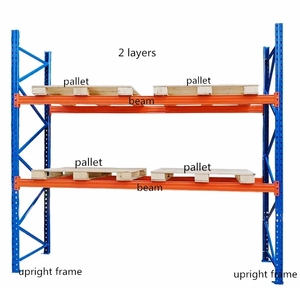
According to international norms (FEM 10.2.02, EN 15512, and AS 4084), pallet rack beams must be engineered such that maximum vertical elastic deflection ($\delta$) under full uniformly distributed load (UDL) does not exceed $\delta \le L/200$, where $L$ represents the clear beam span between upright columns. For a standard 2,700 mm beam carrying two 1,000 kg pallets, the permissible deflection is strictly capped at $\le 13.5$ mm.

For specialized automated environments, including high-speed shuttle channels and ASRS crane bays, we apply an ultra-conservative internal design threshold of $\delta \le L/350$ to $L/400$. This prevents shuttle wheel drag and maintains sensor line-of-sight during high-acceleration transport cycles.
How does your export packaging handle strict Australian DAFF and New Zealand MPI biosecurity controls?

Biosecurity regulations administered by the Australian Department of Agriculture, Fisheries and Forestry (DAFF) and the New Zealand Ministry for Primary Industries (MPI) enforce zero-tolerance protocols regarding timber pests (such as the Brown Marmorated Stink Bug and wood-boring larvae). Failure to comply results in costly off-shore vessel turn-arounds or mandatory depot fumigation delays.

We eliminate this risk at the source. All export racking components are bundled using heavy-duty recyclable steel stillages, metal banding straps, and heavy-gauge corrugated edge-protectors. When timber dunnage is mandatory for dunnage blocking, we exclusively utilize timber compliant with ISPM-15, subjected to certified heat treatment (56°C core temperature for 30 consecutive minutes) bearing clear official IPPC stamp marks. Full fumigation certificates and wood treatment declarations accompany the ocean bills of lading.

What documentation and parameters are required to generate an accurate warehouse layout quotation?

To receive a free 3D CAD layout, load capacity calculation, and formal export quotation within 24–48 hours, clients should supply:

  • Building Dimensions: Floor plan (CAD/PDF) showing length, width, column grid locations, personnel doors, dock positions, and clear height under roof trusses, lights, or ESFR fire sprinklers.
  • Pallet Characteristics: Pallet dimension (e.g., standard 1165 × 1165 mm Australian pallet, 1200 × 1000 mm ISO/industrial, or 1200 × 800 mm EUR pallet), maximum height including cargo overhang, and maximum pallet gross weight.
  • Material Handling Equipment (MHE): Forklift type (counterbalance, reach truck, VNA turret truck), mast collapsed height, maximum lift elevation, and manufacturer aisle turning requirement ($A_{st}$).
  • Environmental Data: Operating temperature (ambient vs. refrigerated vs. -25°C blast freezer) and project geographic coordinates (to determine seismic acceleration parameters).
What surface finish is recommended for high-humidity coastal sites or cold-chain blast freezers?

For standard temperature-controlled indoor distribution warehouses, our automated 9-stage zinc-phosphating pre-treatment followed by high-adhesion electrostatic thermosetting polyester powder coating (60–80 microns film thickness) provides superior corrosion resistance exceeding 500 hours in standard salt-spray testing (ASTM B117).

For unconditioned coastal facilities in the Pacific Islands or blast freezers with persistent condensation cycles, we recommend our hot-dip galvanized (HDG) finish conforming to ISO 1461. The steel components are submerged in a molten zinc bath at 450°C, producing an iron-zinc alloy coating with a minimum thickness of 75–85 microns. This metallurgical barrier delivers self-healing cathodic protection that prevents rust creep even if mechanically scratched by forklift forks.

What is the typical manufacturing lead time and ocean shipping transit schedule?

Standard fabrication lead time for full-container-load (FCL) orders typically spans 15 to 22 calendar days from final approval of engineering fabrication drawings. Production runs exceeding 500 tons are scheduled in staged container batches to synchronize with your on-site civil works and concrete floor curing schedules.

Direct oceanic transit times from our South China container terminals (Nansha / Yantian / Hong Kong) to major international ports include:

  • Sydney / Melbourne / Brisbane: 12 – 18 Days
  • Auckland / Tauranga (New Zealand): 16 – 22 Days
  • Suva (Fiji) / Port Moresby (PNG): 18 – 25 Days
  • European Primary Ports (Rotterdam / Hamburg): 28 – 35 Days
  • US West Coast (Long Beach / Oakland): 16 – 20 Days

Accelerate Your Warehouse Capacity With Direct Engineering

Partner with Guangzhou Heda Shelves Co., Ltd. for factory-direct engineering, certified structural reliability, and comprehensive global export support. Contact our engineering team today to review your warehouse floor plans and receive a complete 3D layout, structural load tables, and factory-direct project pricing.