Precision-Manufactured Warehouse Racking Systems
Explore our certified cold-formed steel racking systems and heavy-duty load units. Designed to meet AS 4084, EN 15512, and ANSI MH16.1 intralogistics structural benchmarks.
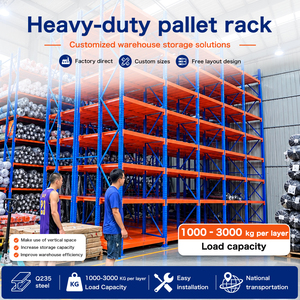
Steel Pallet Racking System Heavy Duty Warehouse Storage Rack Industrial Adjustable Beam High Capacity Storage Solution
- Material: Q235B Steel
- Pitch: 50mm / 75mm
- Beam: Box Beam
- Finish: Powder Coat
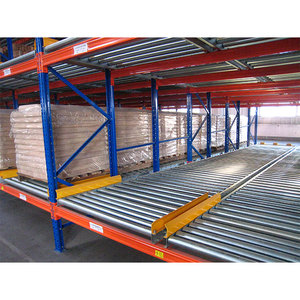
Q235 Steel 2000kg Capacity FIFO High Density Industrial Warehouse Storage Gravity Pallet Flow Rack System
- Rollers: Speed Controlled
- Grade: 3-4% Gradient
- Mode: Strict FIFO
- Cap: 2,000kg/Pallet
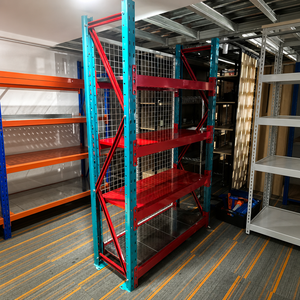
GM Heavy Duty Teardrop Pallet Rack Boltless Adjustable Steel Frame with Safety Beams for Warehouse Racking Operations
- Hole Type: Teardrop Punch
- Pitch: 2-inch (50.8mm)
- Assembly: Boltless Interlock
- Safety: Auto Pin Lock
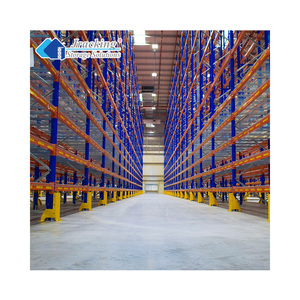
Jracking Dexion Pitch 76.2 mm Style Warehouse Beam Pallet Rack System
- Pitch: 76.2mm (3-inch)
- Hook: 5-Claw Connector
- Standard: AS 4084 / SEMA
- Span: 1,350 - 3,900mm
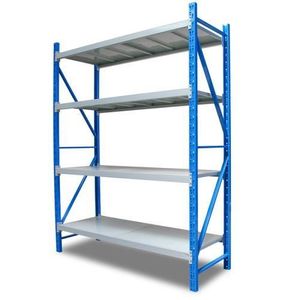
OEM Heavy-Duty Single Size Steel Metal Storage Shelf Adjustable Cantilever Rack for Warehouse Factory Durable Pallet-Packed
- Config: Single/Double Sided
- Arm Cap: 500 - 1,500kg
- Use: Pipe, Lumber, Bar
- Option: Galvanized Yard
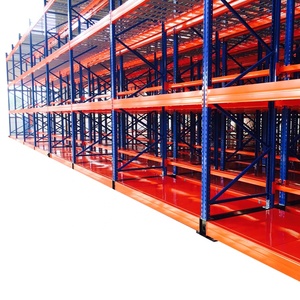
High Density Warehouse Automated Retrieval Type Electric Mobile Pallet Racking
- Space Gain: +85% Usable
- Drive: PLC Motorized Rail
- Safety: Optical Curtains
- Ideal For: Cold Stores & DCs
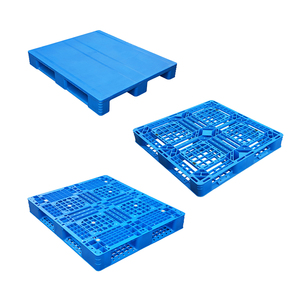
Preface 1200x1000 Light Duty HDPE 4-Way Entry Environmentally Friendly Euro Rack Open Bottom Deck Plastic Pallet
- Size: 1200 x 1000mm
- Entry: 4-Way Forklift
- Material: 100% Virgin HDPE
- Deck: Open Perforated
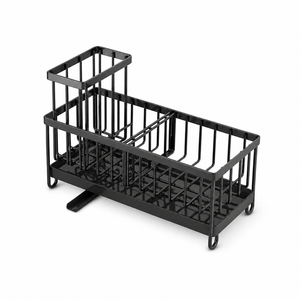
Modern Standing Custom Size Stainless Steel Waterproof Dish Drying Rack Cutlery Holder for Kitchen Countertop Storage Bulk
- Material: SUS 304 Stainless
- Corrosion: 100% Rust-Proof
- Structure: Boltless Modular
- Market: Wholesale & Retail
1. Structural Classification: Light Duty Pallet Racking vs. Heavy-Duty Selective Systems
In the domain of modern materials handling and intralogistics infrastructure, exact terminology defines structural safety, structural reliability, and capital efficiency. While colloquial industry language often blurs the line between "shelving" and "pallet racking," a strict distinction exists within structural engineering codes (such as EN 15512, Australian AS 4084, and US RMI MH16.1).
Light duty pallet racking (frequently engineered as heavy-duty wide-span or longspan pallet shelving) bridges the critical mechanical threshold between manual carton picking and palletized unit loads. Specifically, light duty pallet racking systems are engineered for uniformly distributed loads (UDL) ranging from 300 kg to 1,200 kg per beam level. Unlike lightweight boltless rivet shelving designed solely for hand-loaded cartons, true light duty pallet racking employs structural roll-formed upright omega profiles, heavy-duty baseplates anchored directly into C25/30 industrial slab concrete, and cold-formed stepped or box beams fitted with multi-claw end connectors and anti-dislodgement safety locking pins.
Core Structural Formula: In structural beam sizing, the allowable deflection under working serviceability limit state (SLS) is governed by δ = L / 200 (where L equals clear span length). For precision pharmaceutical and light automation cells, our engineering team enforces tighter deflection tolerances of δ = L / 250 to L / 300 to eliminate secondary dynamic harmonic vibrations caused by reach trucks and automated mobile robots (AMRs).
When procurement officers audit potential light duty pallet racking suppliers, the primary risk lies in steel profile down-gauging. Certified manufacturers utilize premium Q235B or Q355B structural coil steel with certified yield strengths ($f_y$) of 235 MPa and 355 MPa respectively. Uncertified workshops frequently substitute commercial-grade hot-rolled coils lacking verified elongation percentages, drastically lowering the overall buckling threshold of the vertical columns under eccentric axial loads.
2. Yield Strength, Elastic Buckling, and Perforation Engineering
The structural integrity of a light duty pallet racking upright is fundamentally governed by Euler’s critical buckling load formula modified for perforated, thin-walled cold-formed steel sections:
Pcr = (π² · E · Ieff) / (K · L)²
Where E represents Young’s Modulus of Elasticity (2.05 × 10⁵ MPa for structural carbon steel), Ieff is the effective moment of inertia accounting for cold-rolled slot punch reductions, L is the unbraced upright height, and K is the effective length factor governed by baseplate fixity and horizontal/diagonal frame bracing stiffness.
Every punched opening—whether it is an American teardrop, a European 50mm pitch diamond, or an Oceania 76.2mm Dexion-pattern slot—creates localized stress concentrations. At Guangzhou Heda Shelves Co., Ltd., our engineering division executes non-linear Finite Element Analysis (FEA) through ANSYS and parametric CAD modeling prior to tooling up production lines. We configure multi-stage cold roll forming mills featuring up to 24 rolling passes. This incremental shaping eliminates internal residual micro-stresses, preserving the maximum web and flange yield strength.
| Classification | Standard Beam Span (mm) | Max Rated Load / Level (kg) | Upright Profile Section (mm) | Beam Type | Applicable Safety Code |
|---|---|---|---|---|---|
| Ultra-Light Pallet Rack | 1,200 – 1,800 | 300 – 600 kg (UDL) | 55 × 45 × 1.5mm Omega | Stepped Beam + Steel Shelf | EN 15620 / Class 400 |
| Standard Light Duty Rack | 1,800 – 2,300 | 600 – 1,200 kg (UDL) | 70 × 50 × 1.8mm Omega | P-Beam / Small Box Beam | AS 4084 / SEMA |
| Medium-Duty Transition | 2,300 – 2,700 | 1,200 – 2,000 kg (UDL) | 80 × 60 × 2.0mm Omega | Twin-C Interlocking Box | ANSI MH16.1 / RMI |
| Heavy Duty Industrial | 2,700 – 3,900 | 2,000 – 4,500 kg (UDL) | 90 – 120 × 2.0 – 2.5mm | Heavy Structural C/Box | AS 4084 / FEM 10.2.02 |
3. 10-Stage Surface Treatment and Anti-Corrosion Chemistry
The operational lifespan of a light duty pallet racking system depends heavily on surface passivation chemistry. In humid fulfillment facilities, coastal distribution hubs, or non-climate-controlled logistics parks, sub-standard paint coatings rapidly peel, causing hidden subsurface oxidation at structural connector joints.
HEDA Shelves executes an automated 10-stage pre-treatment and electrostatic polymer powder coating process:
- Stages 1–3: Ultrasonic & Hot Alkaline Degreasing: Complete removal of heavy rolling lubricants and mill scale.
- Stages 4–5: Dual Reverse-Osmosis Acid Pickling & Water Rinsing: Acid deoxidation followed by neutralizing demineralized baths.
- Stage 6: Nano-Zirconium Phosphating Bath: Molecular bonding layer providing superior adhesion and active rust-creep inhibition.
- Stages 7–8: Passivation and High-Velocity Dehydration Drying: Moisture extraction at 140°C in industrial hot-air convection tunnels.
- Stage 9: Automated Electrostatic Powder Spraying: Swiss Gema robotic reciprocating spray guns apply 60 to 90 microns of thermosetting polyester epoxy hybrid powder.
- Stage 10: Thermal Cross-Linking Polymerization: Curing in an oven at 200°C for 22 minutes to achieve 2H pencil hardness and ASTM B117 salt-spray endurance exceeding 500 hours.
Why International Enterprise Buyers Choose Our Manufacturing Hub
Headquartered in Guangzhou with over 25 years of specialized fabrication experience, Guangzhou Heda Shelves Co., Ltd. serves warehouse operators, system integrators, and racking distributors worldwide.
Free 3D Layout & Parametric CAD
Within 24 hours of receiving your warehouse architectural drawings, our engineers calculate pallet capacity, flue spaces, forklift turning radiuses, and deliver photorealistic 3D CAD models free of charge.
Verified CE & ISO Certification
Full regulatory transparency: CE Certification No. 2435-CPR-8605159, ISO 9001:2015 Management System No. 18624Q00169R0M, and RoHS raw material compliance records verified independently.
Biosecurity Export Packaging
Export bundles prepared on heavy steel stillages or ISPM-15 heat-treated export timber. Fully certified to clear Australian DAFF, New Zealand MPI, and US CBP inspections without fumigation delays.
30,000 Tons/Month Throughput
With an expansive 30,000 m² factory floor, 300+ technical fabricators, and advanced automated cold-forming lines, we deliver multi-container enterprise contracts on schedule with strict batch traceability.
Global Standards Engineering
We tailor beam connectors and column gauge thickness to local safety standards: Australian AS 4084, New Zealand NZS 1170.5 seismic regulations, European EN 15512, and American RMI MH16.1 specifications.
Turnkey OEM & ODM Private Label
We engineer proprietary perforation styles, branded load signage, custom powder coating colors, and knock-down container packaging for regional racking brands and material handling equipment dealers.
Future Procurement Trends in Light Duty Pallet Racking
Global supply chain volatility, urban logistics shifts, and industrial sustainability targets are transforming racking acquisition strategies. Forward-looking procurement directors must anticipate several structural macro-trends.
Total Cost of Ownership (TCO) vs. Raw CAPEX Sourcing
Enterprise procurement teams are replacing lowest-bid purchasing with 15-year lifecycle models. Factors such as steel coating degradation, modular reconfiguration costs, and connector fatigue failure are heavily weighted over initial price per bay.
Urban Micro-Fulfillment & Hybrid Storage Cells
The explosion of same-day e-commerce delivery requires light-duty pallet racking combined with carton flow rollers, pick-to-light LED modules, and mezzanine structures positioned directly within high-density suburban logistics hubs.
Low-Carbon Green Steel Mandates
Global logistics operators are requiring Scope 1, 2, and 3 carbon verification. Tier-1 suppliers using electric arc furnace (EAF) steel and zero-effluent powder coating loops gain preferred status in multi-national ESG supply chain tenders.
Container Cube Optimization & Kitted Packaging
Rising ocean container freight rates demand intelligent nesting of upright omega columns and beam components. Pre-kitted, sub-assembled pallet bays reduce dead freight shipping volume by 25% to 32% per 40ft High Cube container.
Direct Engineering-to-Factory Integration
By bypassing traditional third-party trading intermediaries, procurement teams interface directly with manufacturer structural engineers. This direct pipeline accelerates drawing sign-offs, load calculations, and fast-tracked custom tooling.
Dual-Sourcing & Regional Resiliency Frameworks
To eliminate single-point supply chain bottlenecks, global distributors are partnering with large-scale hubs like HEDA Shelves to maintain standard interchangeable inventories (teardrop and 76.2mm pitch) ready for immediate deployment.
Next-Generation Technology Driving Pallet Rack Engineering
Racking systems are no longer static steel structures; they are active, data-integrated components of intelligent logistics ecosystems.
Smart Sensor Telemetry & Deflection Monitoring
Beam load pins and wireless IoT strain gauges integrated directly into light and heavy-duty beam connectors. They alert warehouse management systems (WMS) in real-time when uneven loading or fork impact threatens structural safety.
Seismic Nonlinear Pushover Optimization
Advanced computer modeling analyzes structural ductility and plastic hinge formation in high-risk seismic environments (e.g., New Zealand, Japan, and Western US), optimizing row spacer spacing and seismic footplate dimensions.
High-Strength Micro-Alloyed Steels
By adopting micro-alloyed carbon steel sheets infused with trace vanadium and titanium, cold-formed profiles reduce steel wall thickness by 12% while maintaining equivalent yield strength ($f_y \ge 355\text{ MPa}$) and bending moments.
AMR & AGV Floor Interface Engineering
Autonomous Mobile Robots require ultra-flat floor tolerances and unobstructed floor levels. Modern light-duty rack bases feature recessed anchor bolting and low-profile diagonal frame bracing to facilitate smooth robot undercarriage clearance.
Antimicrobial & Static-Dissipative Coatings
For cleanrooms, cold storage food preparation, and electronics logistics, powder formulations now feature antimicrobial silver-ion additives and surface resistivity ratings ($10^6 - 10^9\ \Omega/\text{sq}$) preventing electrostatic component discharge.
Modular Click-Lock Boltless Architecture
New structural connector designs eliminate all frame assembly bolting. Interlocking spring-loaded safety clips reduce on-site installation labor by up to 40%, cutting overall project schedule duration significantly.
Frequently Asked Questions: Technical & Commercial FAQ
In-depth structural engineering, regulatory, and supply chain answers to assist procurement directors, safety auditors, and facility managers.
What structural differences separate genuine light-duty pallet racking from medium and heavy-duty systems?
The core differences center on steel profile geometry, material thickness, connector claw count, and maximum uniformly distributed load (UDL) capacities:
- Light Duty Pallet Racking / Longspan: Upright omega profiles typically measure 55×45mm to 70×50mm with steel gauges between 1.5mm and 1.8mm. Beams use stepped profiles or light box profiles, engineered for loads from 300 kg to 1,200 kg per level. Perfect for hand-loaded cartons, light pallets, plastic bins, or archive containers.
- Heavy Duty Industrial Pallet Racking: Upright profiles scale from 80×60mm up to 120×95mm with steel thickness from 2.0mm to 3.0mm. Beams are heavy interlocking box sections engineered for 2,000 kg to over 4,500 kg per level, designed for direct counterbalance forklift loading of heavy timber or metal pallets.
- Structural Rigidity: While heavy-duty systems rely exclusively on forklift access aisles, light-duty pallet racking frequently incorporates wire mesh decks, timber shelving boards, or steel drop-in panels to support non-palletized or irregular goods.
How does HEDA Shelves ensure compliance with AS 4084, EN 15512, and ANSI MH16.1 standards?
Compliance is engineered into the design and confirmed via documented structural calculation packages:
- Material Verification: Raw coil steel from Tier-1 mills arrives with 3.1 Mill Test Certificates (MTC), documenting chemical composition and minimum yield strength ($f_y \ge 235\text{–}355\text{ MPa}$).
- Design Calculations: We calculate allowable axial upright loads and beam moment capacities using the finite limit state analysis principles specified in AS 4084 (Australia) and EN 15512 (Europe).
- Third-Party Validation: We maintain CE Marking (CE No. 2435-CPR-8605159) and ISO 9001:2015 certification. For international clients, we supply complete design packs—including moment diagrams, baseplate pressure calculations, and safe working load (SWL) plaque data—ready for verification by your local professional engineer.
Can your light-duty and heavy-duty racking systems be engineered for high seismic activity zones?
Yes. For seismically active regions such as New Zealand (NZS 1170.5), the Pacific Rim, and the western United States, our engineering team customizes the structural framework:
- Enlarged Seismic Footplates: We fabricate heavy-duty, ductile baseplates with dual or quad anchor hole configurations to disperse uplift forces and shear stresses across the floor slab.
- Reinforced Frame Bracing: The frequency of horizontal and diagonal bracing members along the upright frames is increased, reducing the effective unbraced column length ($K \cdot L$).
- Heavy-Duty Mechanical Anchors: We specify high-shear wedge or chemical epoxy anchors matched to local seismic spectral acceleration ($S_s, S_1$) coefficients.
What are the shipping lead times, container packaging, and biosecurity protocols for overseas delivery?
Our production lead time is typically 15 to 25 business days depending on custom color requirements and total order tonnage. Transit times from South China shipping hubs (Guangzhou/Shenzhen) to major destinations include:
- Australia & New Zealand: 14 to 24 days (Sydney, Melbourne, Brisbane, Auckland, Tauranga).
- Southeast Asia: 7 to 12 days (Singapore, Port Klang, Jakarta).
- Europe & North America: 25 to 38 days depending on port rotation and vessel routing.
- Biosecurity Protocol: All shipments strictly comply with DAFF (Australia) and MPI (New Zealand) quarantine standards. Upright frames and beams are strapped onto custom steel stillages or ISPM-15 certified heat-treated timber bunks, wrapped with waterproof protective stretch film, and documented with official fumigation and phytosanitary certificates.
Can light duty pallet racking be reconfigured or expanded into a multi-tier mezzanine structure?
Yes. One of the strongest advantages of HEDA’s modular cold-formed racking is vertical scalability. If your facility possesses sufficient clear ceiling height (typically $\ge 4.5\text{ meters}$), our engineering team can incorporate rack-supported mezzanine walkways, stairs, and handrail systems directly onto extended upright frames.
This rack-supported mezzanine approach doubles or triples floor storage capacity without requiring structural building modifications. All primary floor beams, joists, perforated steel decking, and self-closing pallet safety gates are engineered to support floor live loads from 300 kg/m² to 1,000 kg/m².