High-Efficiency Warehouse Racking Systems & Safety Infrastructure
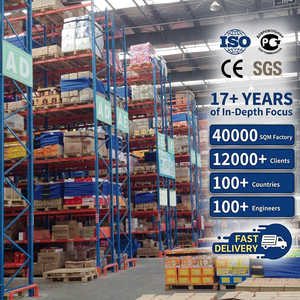
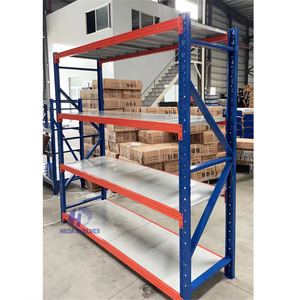
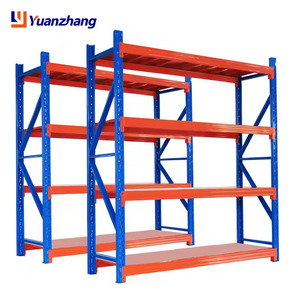
Engineered to international AS 4084, FEM 10.2.02, and RMI standards. Every system is roll-formed from certified Q235B/Q355B structural steel, pre-treated via nine-stage phosphating, and finished in electrostatic architectural powder coating.
Engineering Excellence & Supply Chain Resilience: The B2B Guide to Racking Pallet Systems
Modern intralogistics infrastructure has evolved beyond simple passive storage. With industrial warehouse rent across Australasia, North America, and Europe reaching record valuation plateaus, optimizing cubic meter volume ($m^3$) rather than mere surface floor area ($m^2$) is paramount. A high-density racking installation represents a capital expenditure where civil engineering, material metallurgy, stress distribution physics, and logistics throughput converge.
Core Structural Tenet: A certified industrial pallet rack system operates as an unbraced or semi-braced cold-formed steel structure subject to continuous dynamic load cycles, torsional forces from forklift interactions, and site-specific seismic accelerations ($S_s, S_1$). Selecting a trusted factory requires auditing steel yield strength, profile roll-forming integrity, welding automation, and third-party finite element analysis (FEA) verification.
Structural Metallurgy: Q235B vs. Q355B and Steel Grade Verifications
The foundation of any high-bay storage capacity begins at the raw steel coil stage. Reputable manufacturers specify high-tensile structural grades conforming to international equivalents such as ASTM A36, ASTM A572 Grade 50, AS/NZS 3678, and EN 10025 S355JR. Uprights subjected to massive axial buckling loads demand Q355B cold-rolled steel with yield points exceeding 355 MPa, ensuring superior elasticity under eccentric load stresses without sudden structural yielding.
Horizontal load beams utilize twin cold-formed "C"-sections interlocked and robotically stitch-welded into seamless box sections. This tubular geometry provides unmatched torsional rigidity compared to open-channel beams, significantly mitigating lateral torsional buckling (LTB) when subjected to unevenly distributed pallet masses or dynamic pallet placement impacts.
Global Engineering Compliance Standards: A Comparative Technical Benchmark
Procuring warehouse racking from an international manufacturer without verifying geographical compliance introduces acute operational and legal risks. Certified exporters must supply calculation packages validated against regional standards:
| Regulatory Standard | Applicable Region | Deflection Limit (Horizontal) | Safety Factor Requirements | Seismic Testing & Verification |
|---|---|---|---|---|
| AS 4084:2023 | Australia & Oceania | Span / 200 (Beam Deflection) | $\gamma_Q \ge 1.4$ for Live Loads | Mandatory static shear & cyclic connector tests |
| EN 15512:2020 | European Union / UK | Span / 200 to Span / 250 | Limit state design via partial factors | Finite Element Global Analysis (2nd order effects) |
| RMI MH16.1 | North America | Span / 180 under full design load | LRFD and ASD methodology applied | IBC seismic drift and ground acceleration checks |
| NZS 1170.5 | New Zealand | Strict inter-storey drift limits | Dynamic earthquake spectrum matching | Base plate anchor ductility & oversize footings |
Guangzhou HEDA Shelves Co., Ltd. supplies complete engineering design dossiers with every shipment, incorporating beam load tables, connector stiffness charts ($K_{cb}$), and baseplate stress calculations signed off for certified building approval.
Why International Supply Chains Rely on HEDA Shelves
Established in 2001, Guangzhou Heda Shelves Co., Ltd. has developed end-to-end vertical integration from raw coil slitting to automated multi-stage surface finishing, ensuring complete quality assurance for high-capacity warehouse builds.
Continuous CNC Roll-Forming
Over 20 automated rolling lines shape upright columns from 70mm to 140mm face dimensions with pitch tolerances within ±0.2mm, guaranteeing seamless compatibility and zero binding during cross-beam installation.
Automated Robotic Welding
Beam connectors and baseplates are joined via multi-axis OTC and Panasonic robotic welding cells. Continuous gas-shielded fillet welds eliminate voids, porosity, and human inconsistencies that compromise structural stability.
9-Stage Surface Pre-Treatment
Components pass through degreasing, hot water rinses, acid pickling, rust removal, and zinc phosphating prior to electrostatic powder curing. This provides over 600 hours of salt spray corrosion resistance (ASTM B117).
Our 10-Step Precision Manufacturing Process
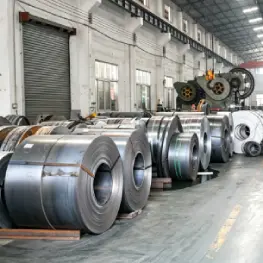
Coil Inspection & Mill Tests
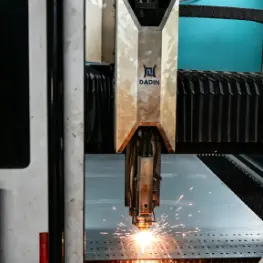
CNC Slitting & Cutting
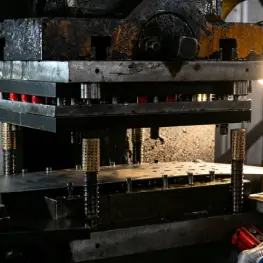
High-Speed Die Punching
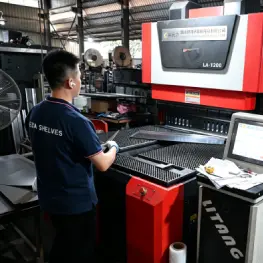
Multi-Roll Profile Bending
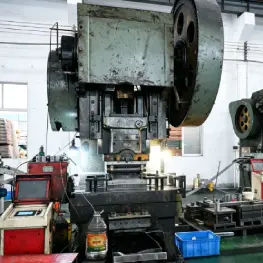
Precision Beam Forming
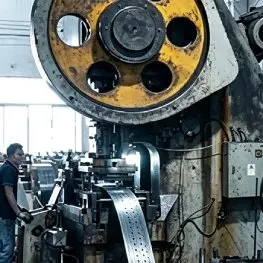
Mechanical Deburring
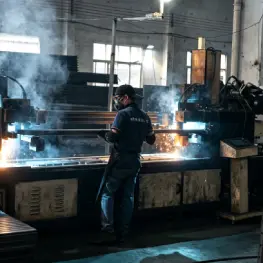
Robotic Connector Welds
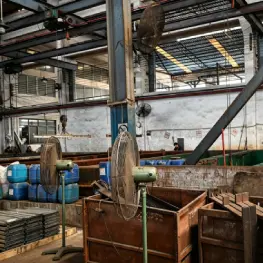
Pickling & Phosphating
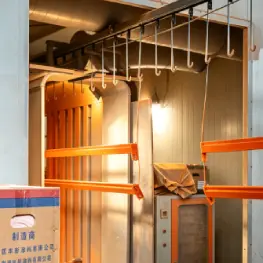
Electrostatic Coating
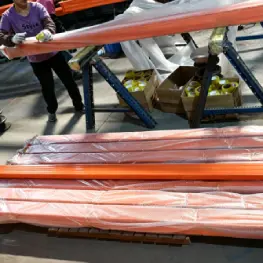
Pre-Shipment Calibration
Future Sourcing & Procurement Dynamics in Industrial Pallet Racking (2025–2030)
The global warehousing landscape is experiencing structural transformation. Supply chain executives can no longer evaluate pallet racking as an isolated, standalone hardware purchase. Procurement leaders are pivoting toward agile, automated, and decarbonized storage matrices:
1. Automated Material Handling & Shuttle-Ready Upright Configurations
As labor constraints and wage growth continue globally, traditional wide-aisle forklift operations are being systematically replaced by Radio Shuttle systems, autonomous mobile robots (AMRs), and semi-automated cranes. Forward-thinking procurement teams specify racking uprights manufactured with high structural straightness tolerances ($1/1000$ drift ratios) and pre-punched mounting patterns capable of accepting shuttle rails, busbar power lines, and sensor positioning reflectors without field welding or modification.
2. Cold-Chain Optimization & Sub-Zero Metallurgical Stability
Refrigerated warehouse expansion is surging due to global pharmaceutical and perishable cold chain requirements. Storing steel at -25°C to -30°C alters its crystal structure, increasing notch sensitivity and the risk of brittle fracture under impact. Procuring racking for sub-zero applications requires specifying aluminum-killed fine-grain steels with verified Charpy V-notch impact energy absorption ratings (e.g., minimum 27 Joules at -20°C), accompanied by low-temperature compliant powder coatings that resist flaking under cyclical thermal expansion.
3. Life-Cycle Costing (TCO) vs. Initial CapEx Arbitrage
Enterprise procurement professionals are shifting focus from purchase cost per pallet position to 20-year Total Cost of Ownership (TCO). Upright column damage accounts for over 85% of maintenance callouts. High-yield factories integrate sacrificial front-column leg inserts, heavy-gauge formed column protectors, and structural channel bottom sections that reduce operational downtime and repair liabilities over the system life cycle.
4. Biosecurity, Green Steel & Sustainable Logistics Protocols
Regulatory scrutiny regarding timber packaging has tightened across Australasia and the Americas. Non-compliant dunnage risks quarantine and costly demurrage. Leading exporters provide certified ISPM-15 heat-treated pallets or custom-engineered re-usable steel stillages. Simultaneously, carbon accounting mandates require factories to publish Environmental Product Declarations (EPDs), utilizing steel produced via electric arc furnace (EAF) scrap recycling and zero-emission curing ovens.
Engineered Storage Architectural Deployments
Operational efficiency depends on selecting the right racking geometry to match specific SKU turnover profiles, unit weights, handling equipment, and building envelope limits.
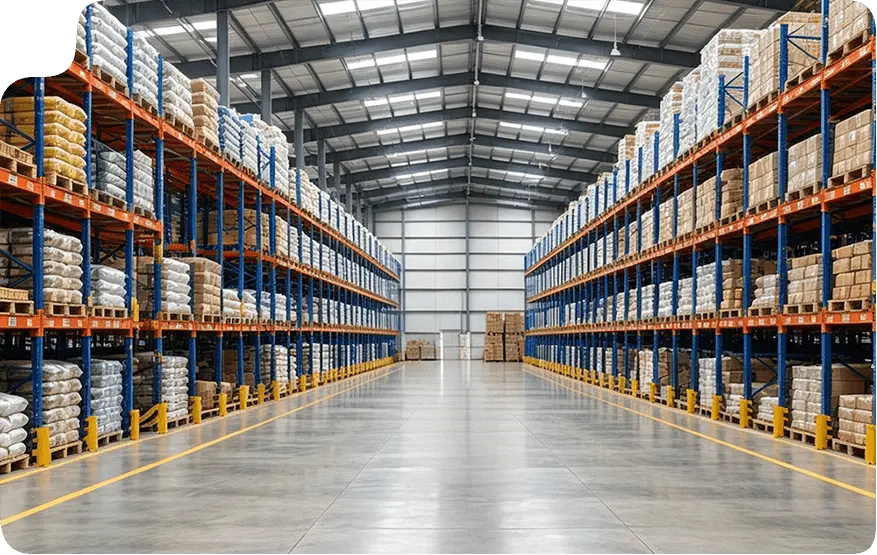
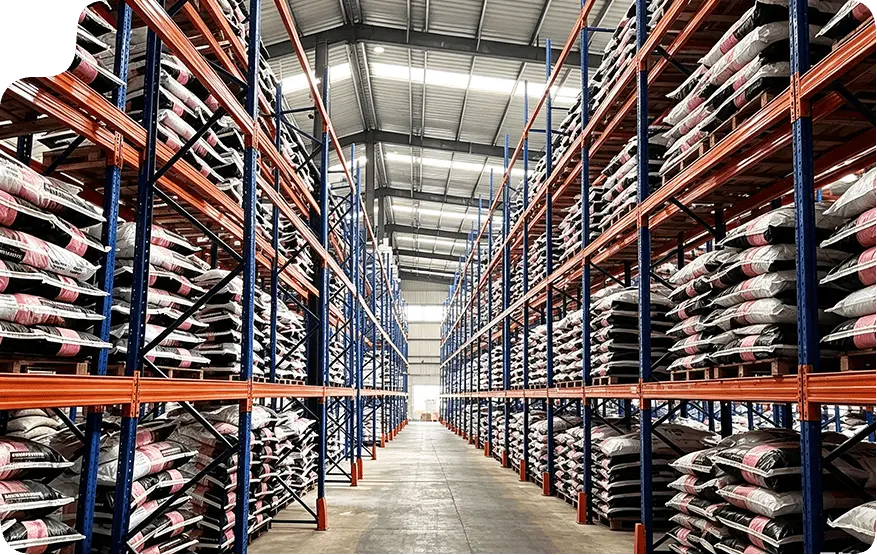
Agriculture & Bulk Fertilizer
Designed for heavy bagged goods, raw grains, and chemical fertilizers requiring high point-load distribution plates and heavy-duty wire mesh decking.
- Up to 2,500kg point-load capacity per bay
- Hot-dip galvanized anti-corrosive finishes
- High-clearance drive-in lanes for harvest surges
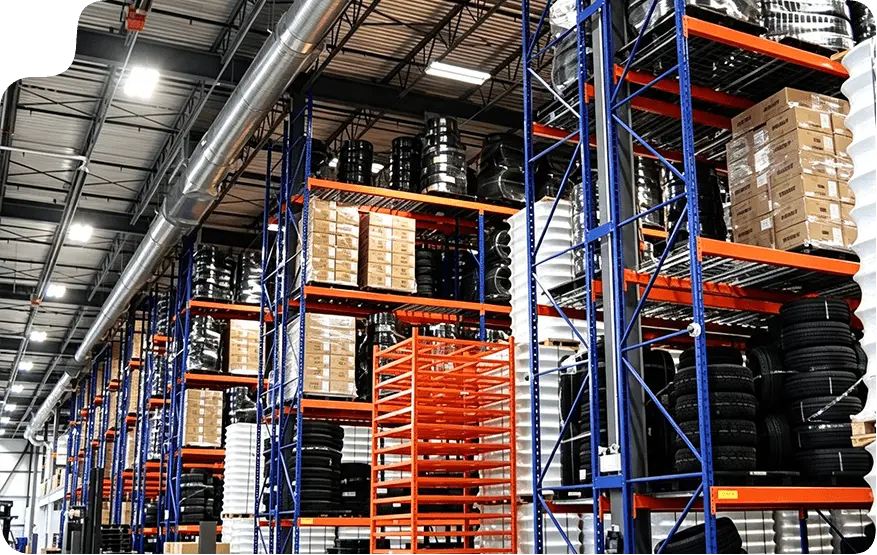
Automotive Spares & Assembly
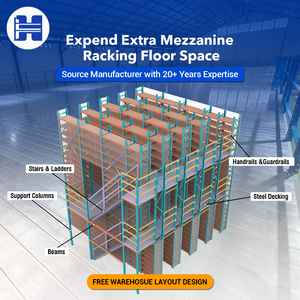
Hybrid multi-tier mezzanine layouts combining selective bulk pallet positions on ground floors with dense bin shelving above for rapid small-parts picking.
- Integrated catwalks and structural staircases
- Divided pigeon-hole shelving for specialized SKUs
- Drop-over mesh decks for non-standard stillages
Builders' Merchants & Timber
Heavy-duty structural cantilever systems providing uninterrupted horizontal arms for storing timber bundles, PVC conduit, rebar, and sheet products.
- Load capacities reaching 3,000kg per arm level
- Pivoting arm mechanisms to absorb forklift strikes
- Weatherproof galvanized options for open-air yards
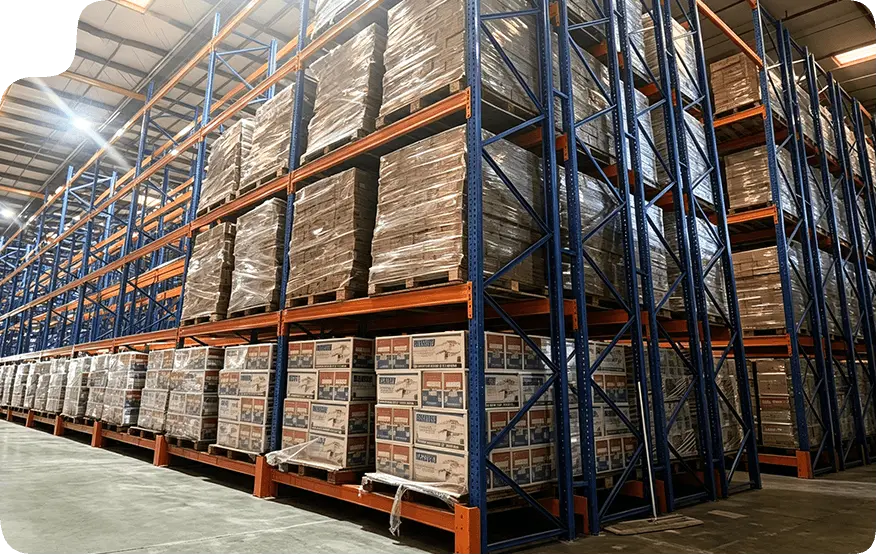
Food, Beverage & FMCG
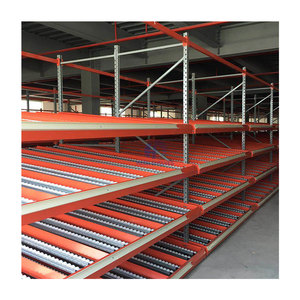
Strict First-In-First-Out (FIFO) gravity roller lanes and automated shuttle channels ensuring zero product expiration and automated stock rotation.
- Centrifugal brake rollers for smooth speed control
- High lane utilization rates exceeding 90%
- Cleanable electrostatic antimicrobial finishes
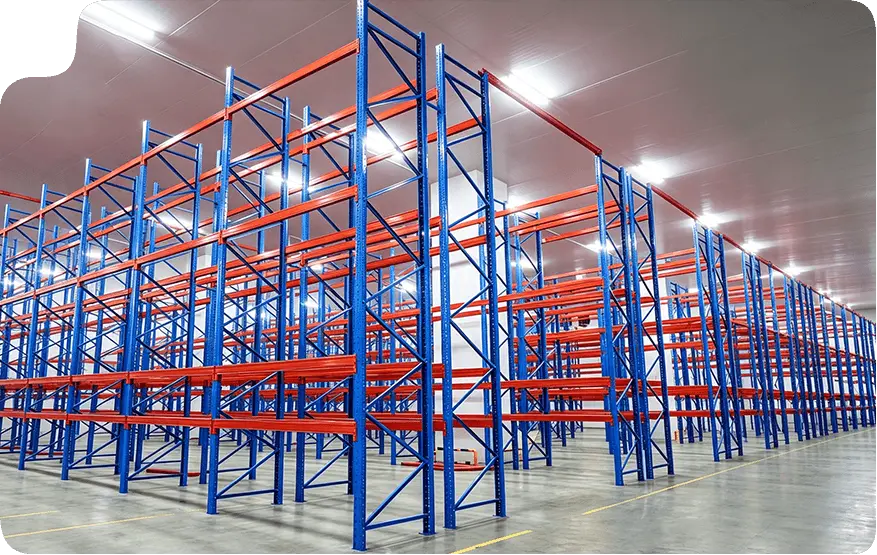
Refrigerated & Blast Cold Chains
High-density drive-in and radio shuttle architectures designed to minimize conditioned air volume waste in costly sub-zero facilities.
- Fine-grain impact-tested structural steel grades
- Minimized thermal bridging floor anchor designs
- Reinforced guide rails for reach truck precision
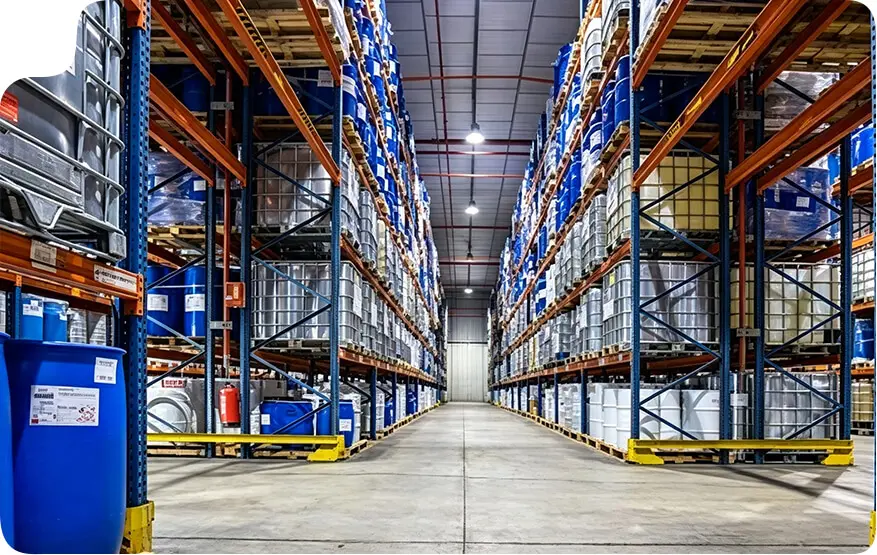
Chemicals & Hazardous Liquids
Spill-containment sump bays, barrel-cradle pallet adaptors, and specialized fire suppression sprinkler piping brackets built directly into the frames.
- Full compatibility with ESFR sprinkler grids
- Spill catchment bunding integration options
- Epoxy barrier coatings against aggressive vapors
Frequently Asked Questions: Sourcing from Offshore Factories
Essential guidance for warehouse directors, supply chain procurement managers, and engineering certifiers preparing to import factory-direct racking.
How can our structural engineer verify steel mill quality and tensile calculations prior to dispatch?
+
For every production batch, we issue traceable Mill Test Certificates (MTC) conforming to EN 10204 3.1 standards, showing the precise heat number, chemical composition (Carbon, Manganese, Silicon, Phosphorus, Sulfur), and mechanical properties (Yield Point $R_eH$, Tensile Strength $R_m$, and Elongation $A$). In addition, our internal quality lab performs destructive tensile tests on completed cold-formed sections and provides full Finite Element Analysis (FEA) models, allowing your local engineering consultant to cross-verify moment-rotation curves ($M-\phi$) and section properties against regional building codes.
What are the key technical differences between teardrop pattern racking and international metric box-beam systems?
+
Teardrop racking is predominantly utilized across North America and follows RMI specifications with a 2-inch vertical adjustment increment and gravity-locking pins. It offers rapid interchangeability across diverse US beam brands. Conversely, international metric systems (widely standard in Australia, New Zealand, Europe, and Asia) employ 50mm, 75mm, or 76.2mm hole pitches with high-strength forged 3-prong or 4-prong wrap-around connectors secured by dedicated safety lock clips. The metric box-beam design delivers superior resistance against accidental upward dislodgement during high-speed forklift handling operations.
What concrete floor slab specifications are required to support high-bay racking systems safely?
+
Standard installations generally require a reinforced concrete slab with a minimum compressive strength of 25 MPa to 32 MPa (3,600 to 4,600 PSI) and an uncracked depth of at least 150mm to 200mm. For high-bay installations exceeding 8 meters or heavily loaded cantilever racks, slabs should adhere to flatness tolerances specified by TR34 (Free Movement FM2 or Very Narrow Aisle DM2) or DIN 18202 standards. This ensures anchor bolts (chemical capsules or mechanical wedge anchors like M12/M16) achieve their designated tensile pull-out and shear capacities without concrete breakout cone failure.
How does HEDA handle international export logistics, biosecurity controls, and site assembly kits?
+
All ocean container shipments are staged using customized structural steel cradles or ISPM-15 compliant heat-treated dunnage, guaranteeing smooth clearance through strict biosecurity audits (such as Australian DAFF and New Zealand MPI inspections). Upright frames can be pre-assembled or flat-packed "knocked-down" with precision galvanized bracing and nylon-insert locknuts to maximize ocean container cube utilization. Every package is labeled with clear alphanumeric coding corresponding to CAD installation drawings, simplifying site assembly for local installation crews.
How are site-specific seismic parameters calculated for active earthquake zones?
+
For installations in seismically active regions (such as New Zealand, the US West Coast, Japan, or the Mediterranean), our engineering team requires the site soil classification, spectral acceleration values ($S_s, S_1$), and importance level factors. We adjust the structural configuration by increasing the steel thickness of the uprights, introducing heavy-duty baseplates with multiple anchors per foot, adding spine and plan horizontal cross-bracing, and using heavy-duty row spacers. This ensures the entire system safely absorbs dynamic energy during seismic events without collapsing.
What information is required to receive a full 3D CAD layout, static load calculations, and an itemized quote?
+
To provide an engineered proposal within 24 hours, our design office requires: (1) A warehouse architectural layout drawing showing column spacing, doorways, fire exits, and overhead clear heights below purlins or sprinkler heads; (2) Pallet dimensions (width, depth, overall height including cargo overhang); (3) Maximum design weight per pallet position; (4) Forklift specifications including mast lift height, minimum turning radius, and aisle width requirements; (5) Any specific industry requirements (ambient, cold chain, or seismic criteria).
Accelerate Your Warehouse Capacity with Certified Engineering
Partner directly with Guangzhou HEDA Shelves Co., Ltd. for factory-direct cost savings, transparent engineering calculations, and rapid global delivery to any port worldwide.
Request an Engineering Assessment
Our senior intralogistics engineers review site parameters and provide an optimized floor layout within 24 hours.
Get a Quote