Engineered Heavy-Duty Dynamic & Static Racking Systems
From zero-energy gravity-assisted roller beds and high-density push-back configurations to multi-tier shelving and logistics plastics, our production lines supply custom warehouse systems engineered to exact containerized export specifications.
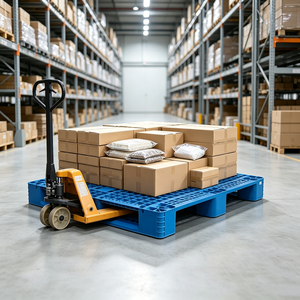
NEXARA 1212 Grid Surface Three Runner HDPE Pallet
1200x1200x150mm stackable heavy-duty virgin HDPE structural plastic pallet engineered specifically for smooth dynamic transport along gravity roller lanes without deflection.
- 1200x1200x150mm
- 3-Runner Base
- Static 6T / Dyn 1.5T
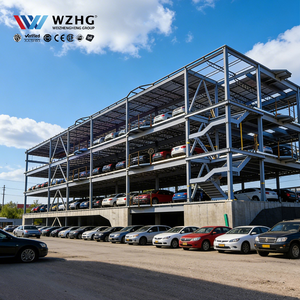
Steel Parking Tower Reserved Heavy Duty Workshop System
Certified structural steel tower framework featuring automated welded gussets, numbering space allocation systems, and corrosion-resistant industrial epoxy coatings.
- Q235B/Q355B Steel
- Welded Tower Frame
- Seismic-Ready
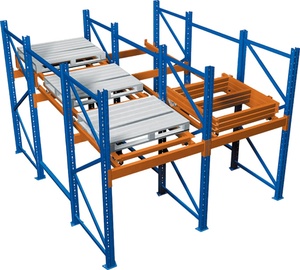
URGO Heavy Duty Push Back Intensive Storage Rack System
Nested rolling cart architecture supporting up to 6 pallets deep per lane. Balances high volumetric density with single-aisle operational speed and low rack impact risk.
- 2-6 Pallets Deep
- 1,500kg / Pallet
- Low Headroom Cart
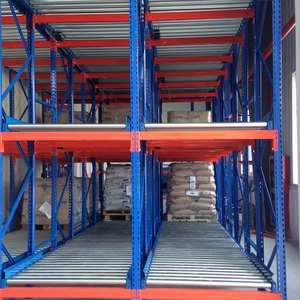
Heavy Duty Corrosion-Protected Steel Gravity Flow Pallet Rack
Precision-incline roller tracks with built-in centrifugal speed governors, separation end-stops, and zinc-electroplated rollers ensuring strict FIFO turnover.
- Full Steel Rollers
- Brake Retarder Fit
- Auto Pallet Separation
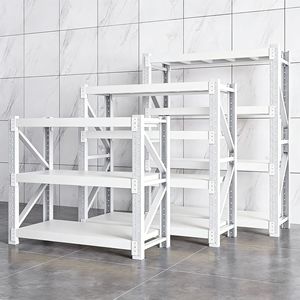
Three-Tier Cold-Rolled Steel Multi-Level Shelving Unit
High-durability white powder-coated cold-rolled steel organizer for manual light parts storage, picking room staging, or secondary warehouse buffer areas.
- SPCC Cold-Rolled
- Boltless Jointing
- 150kg / Level
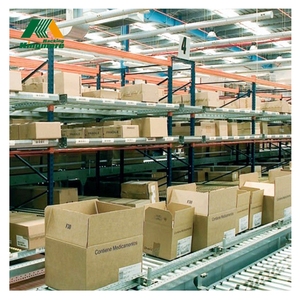
Customized Gravity Carton Flow Roller Rack System
Ergonomic split-case order picking tracks utilizing low-friction aluminum or plastic roller wheels. Drops SKU travel distance and picker retrieval cycle times by up to 45%.
- Aluminum Tracks
- Adjustable Dividers
- High-Density Picking
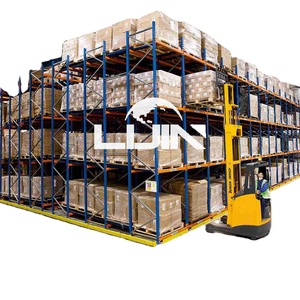
High Standard OEM Live Pallet Gravity Flow Roller System
Industrial live storage with reinforced entry funnel guides, heavy-duty structural channel beams, and dual-bearing roller axles designed for round-the-clock cold store use.
- OEM / ODM Custom
- Cold Store Rated
- 20+ Pallet Depth
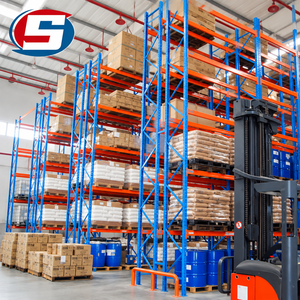
5-Layer Heavy Duty Industrial Boltless Steel Shelf Unit
CE-certified modular shelving engineered with custom upright steel thicknesses, butterfly punch holes, and reinforced steel decking for parts warehouses and assembly lines.
- CE Certified
- 500kg / Shelf
- Boltless Clip Fit
The Mechanics of High-Density Gravity Roller Beds
Unlike static selective racking, roller racks operate as dynamic machines powered entirely by controlled gravitational potential energy. Achieving zero line jams and avoiding pallet runaway acceleration requires exact calculation of slope gradients, roller friction coefficients, and brake retarder torque.
Incline Gradient & Pitch Tolerance
The standard operating incline for heavy pallet flow lanes ranges between 2.5% and 3.5% (approximately 1.5° to 2.0°), depending on pallet runner configuration (three-runner vs perimeter base) and bottom board smoothness.
- Lightweight cases: 3.5% to 4.5% decline for consistent forward roll.
- Wooden GMA/EUR pallets: 3.0% decline ensures steady restart after stops.
- Hard plastic HDPE pallets: calibrated 2.5% decline prevents overspeed.
Centrifugal Speed Controller Retarders
In lanes exceeding 3 pallets deep, uncontrolled terminal velocity creates collision forces capable of buckling uprights and destroying merchandise. Internal planetary brake rollers regulate momentum safely.
- Centrifugal brake pads engage directly as linear speed exceeds 0.3 m/s.
- Maintains uniform rolling velocity of 0.20–0.28 m/s down 25-meter lanes.
- No electrical power required; internal gears are sealed for -30°C cold stores.
End-of-Lane Pallet Separators
When retrieving the lead pallet with a counterbalance forklift, cumulative gravitational back-pressure from 10 to 20 rear pallets pushes onto the front pallet, causing dangerous fork pinches and load hang-ups.
- Mechanical rocker separators lock rear pallets 200mm back from discharge.
- Isolates the discharge pallet: zero line pressure on the operator fork blades.
- Automatic reset lever triggers only after front pallet extraction is complete.
| System Architecture | Stock Rotation | Volumetric Density | Throughput Speed | Capital Expenditure | Best Suited Operational Profile |
|---|---|---|---|---|---|
| Gravity Flow Pallet Rack | Strict FIFO | 90% Density | Rapid Dedicated Faces | Medium-High | Perishable food, FMCG, cold storage, pharmaceutical date-controlled lines |
| Carton Flow Picking Rack | Strict FIFO | 75% Density | Maximum Manual Pick Rate | Medium | E-commerce fulfillment centers, split-case picking, manufacturing kitting |
| Push Back Racking (Carts) | Strict LIFO | 80% Density | Moderate (Single Aisle) | Medium | Seasonal inventory, medium-rotation SKUs, single-wall boundary storage |
| Traditional Selective Rack | Random (Manual) | 45% Density (Wide Aisles) | 100% Direct Selectivity | Lowest Base Cost | High-SKU diversity distribution hubs with unpredictable order profiles |
Factory Direct Manufacturing & Global Compliance Infrastructure
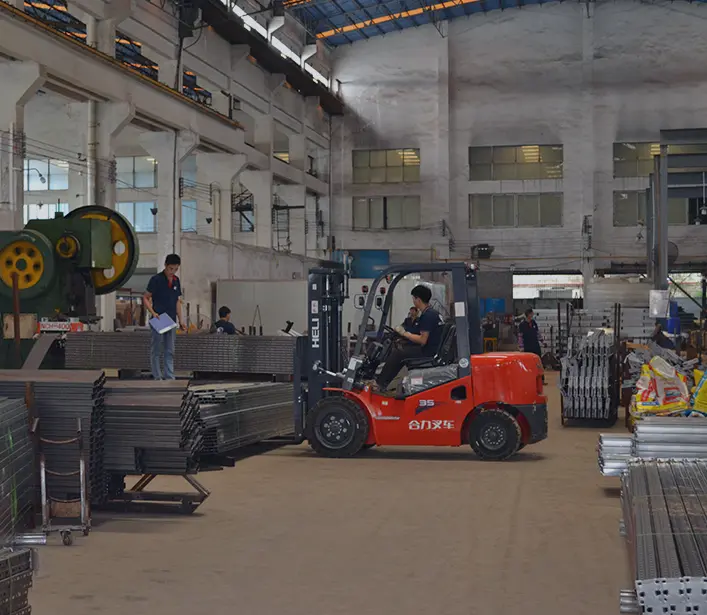
Founded in 2001, Guangzhou Heda Shelves Co., Ltd. operates an integrated 30,000 square meter manufacturing plant staffed by more than 300 experienced engineers, structural technicians, and certified welders. With an in-house fabrication capacity exceeding 30,000 metric tons per month, we serve high-volume distribution centers, cold chain operators, and racking distributors worldwide.
Our engineering design methodology is fully aligned with Australian standard AS 4084 (Steel Storage Racking), European FEM 10.2.02 codes, and American RMI specifications. For seismic active zones such as New Zealand and the Pacific Rim, we integrate site-specific lateral bracing and heavy-duty anchoring profiles verified by finite element analysis (FEA).
10-Step Quality-Controlled Manufacturing Pipeline
Every upright, beam, dynamic roller axle, and cart bracket is manufactured in-house under strict tolerance controls.
Steel Coil Inspection
Spectrometer analysis verifying high tensile Q235B/Q355B structural coil grades.
Precision CNC Slitting
Automated slitting to width within +/-0.2mm edge tolerance for stable roll profiles.
Continuous Punching
High-speed hydraulic press punching 50mm/75mm pitch connection holes.
Roll Forming Uprights
24-stage progressive cold roll-forming forming rigid omega-section profiles.
Beam Profile Forming
Dual interlocking C-profile continuous seams for high torsion beam strength.
Robotic Welding
CO2 gas-shielded multi-axis robotic welders joining beam end-connectors.
Pickling & Phosphating
Full 7-tank immersion pre-treatment removing all scale, rust, and oil residues.
Electrostatic Coating
Automated Swiss Gema powder coating line curing 60-80 micron epoxy finish.
Roller Dynamometer QC
Load spin testing on brake rollers to verify precise resistance torque curves.
Steel Stillage Crating
ISPM-15 compliant bundling and steel stillage protection for safe ocean transit.
Future Procurement & Technological Trends in Roller Racks
As automated material handling evolves, the roller rack market is undergoing a structural shift from passive mechanical hardware to intelligent, AMR-interfacing dynamic throughput engines.
1. Sensor-Integrated IoT Roller Tracks
Next-generation dynamic flow beds integrate self-powered kinetic sensors within brake rollers. These sensors relay real-time telemetry on lane occupancy percentages, velocity spikes, and internal roller temperature to warehouse execution software (WES) without external battery packs.
2. AMR & Autonomous Forklift (AGV) Interfacing
Manual forklift retrieval is rapidly transitioning to AGV systems. Modern roller racks are engineered with flared optical alignment funnels, mechanical hydraulic damping stops, and photoelectric end-of-stroke indicators, allowing robotic forks to interface with discharge pallets with zero millimeter-scale collision tolerances.
3. Energy-Decoupled Cold Chain Storage
Rising electrical power costs for sub-zero freezer warehouses (-25°C) are driving massive adoption of ultra-dense gravity flow systems. By eliminating operating forklift aisles inside refrigerated envelopes, chilled air volume waste drops by up to 60%, delivering complete payback on roller track capital investment in under 24 months.
4. Circular Economy & Pre-Galvanized Longevity
Procurement teams are moving away from short-lived painted carbon steel tracks in favor of pre-galvanized high-zinc coatings (up to 275g/m²). This prevents premature surface pitting, eliminates toxic flaking particles in pharmaceutical environments, and allows 100% recycling of modular roller beds upon warehouse decommissioning.
Frequently Asked Questions for Roller Rack Importers
Clear answers to technical, regulatory, and logistics inquiries for procurement managers, logistics consultants, and warehouse facility directors.
What is the maximum lane depth achievable in pallet flow roller racks?
Our standard engineered pallet flow roller lanes accommodate from 2 to over 25 pallets deep. In deep-lane systems, magnetic or centrifugal brake retarder rollers are installed at every single or alternate pallet pitch (typically every 1.4m to 1.8m) to control velocity and prevent runaway kinetic acceleration.
Can our existing pallets (wood, plastic, or metal) run on gravity rollers?
Yes. Full-width steel rollers handle timber pallets (GMA, EUR, standard 1165x1165mm AU pallets) provided the bottom boards are unbroken and run perpendicular to roller axles. For plastic pallets with three runners or perimeter bases, roller spacing and diameter are customized to prevent bottom-deck deflection between rollers.
How do you verify compliance with local structural codes (e.g., AS 4084 / RMI)?
Our engineering team prepares comprehensive finite element analysis (FEA) packages, section property tables, and load certification documentation. These calculation packages allow local third-party structural engineers and municipal inspectors to verify rack compliance and sign off on site safety permits.
What prevents dynamic pallet loads from jamming mid-lane?
Jams are prevented by three factors: calculating the precise slope angle (2.5% to 3.5%), specifying high-concentricity precision steel tubes with shielded ball bearings, and installing full-length flared lateral guide rails that center misaligned pallets upon initial entry.
What are the lead times for manufacturing and export sea freight?
Standard fabrication cycle times range between 15 and 25 working days depending on order volume and custom finish requirements. Ocean transit from our South China shipping terminal to major Australian, European, or North American ports typically requires 2 to 4 weeks.
How are roller tracks protected against import biosecurity holds?
All structural components and dynamic roller tracks are packed using steel stillages or ISPM-15 certified heat-treated timber. Shipments are issued clean phyto-sanitary inspection manifests, commercial invoices, and preferential certificates of origin (such as ChAFTA) to speed customs clearance.
What maintenance is required for live gravity storage roller beds?
Because the system has no electric motors, maintenance requirements are minimal. Routine quarterly inspections focus on checking roller spin freely, clearing debris from track lanes, inspecting brake roller retarder surfaces, and confirming that pallet separators actuate smoothly.
Can gravity flow racks operate in freezing cold storage conditions?
Absolutely. For cold rooms and blast freezers operating down to -30°C, we specify low-temperature synthetic grease in all roller bearings, install galvanized or zinc-plated track frames, and utilize cold-hardened synthetic polymers for brake roller contact wheels to avoid freeze cracking.
Request a Custom 3D CAD Roller Rack Design
Send your warehouse dimensions and storage requirements to our engineering department. Within 24 hours, our structural design team will deliver an optimized 3D CAD warehouse layout, capacity calculation sheet, and direct export quotation.
Have Project Parameters Ready?
Have your clear ceiling height, pallet dimensions, maximum load weights, and fork truck turn radii available for rapid engineering turnaround.
Direct Factory Export Division
CE & ISO 9001:2015 Registered Facility