Heavy Duty Cargo
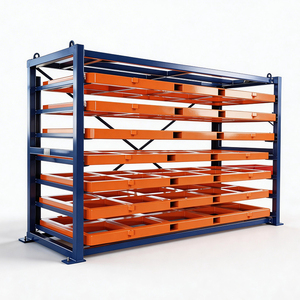
Explore our benchmark heavy-duty storage configurations, precision-manufactured with European CE standards, custom profile cold-rolling, and dynamic load testing.
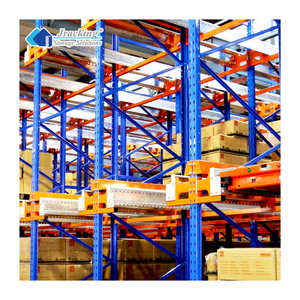
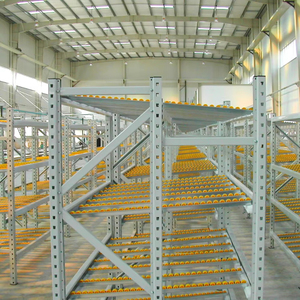
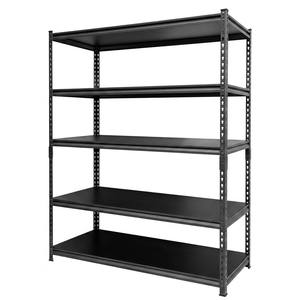
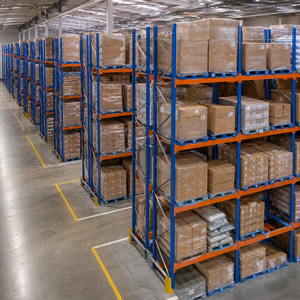
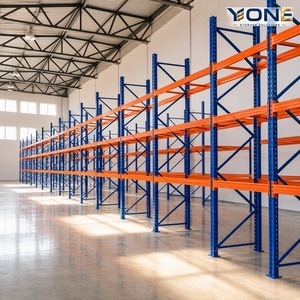
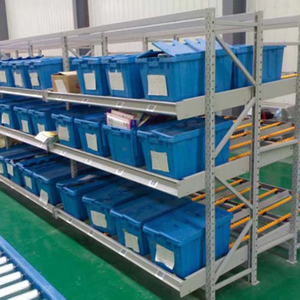
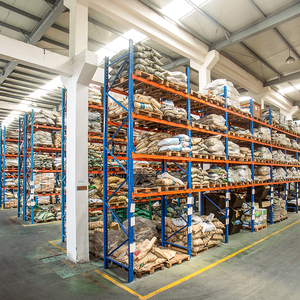
In contemporary intralogistics ecosystems, warehouse rack bins, carton-flow beds, and structural selective uprights are no longer commoditized steel structures; they are mission-critical mechanical interfaces governing supply chain throughput. Global fulfillment facilities face surging SKU proliferation, exponential land acquisition costs, and compressing pick-and-pack fulfillment windows. Consequently, selecting an enterprise-level manufacturer requires in-depth evaluation of steel metallurgical integrity, cross-sectional moment of inertia, electrostatic pre-treatment chemistry, and seismic deflection tolerances.
The structural efficacy of an industrial rack system depends primarily on steel grade consistency. Certified manufacturers utilize low-carbon Q235B hot-rolled sheet steel that undergoes controlled continuous roll-forming. This process induces work-hardening, elevating yield strengths past 235 MPa without creating the micro-fractures common in sub-standard rerolled scrap. When uprights and step beams support dynamic warehouse rack bins containing dense loose goods, sheer resistance against cyclic load fatigue becomes paramount. Our roll-formed uprights feature multi-bend Omega (Ω) profiles designed through finite element analysis (FEA), yielding exceptional radius-to-thickness ratios and buckling safety factors exceeding 1.65.
Premature structural racking failure rarely begins with gross overload; it originates at microscopic points of corrosive pitting along weld beads, anchor baseplates, and slot punchings. To eliminate oxidation risks in high-humidity ambient warehouses and sub-zero cold-storage facilities, modern automated production employs a 10-stage preparation protocol. This workflow encompasses heavy degreasing, ultrasonic multi-stage acid pickling, zinc phosphating passivation, and electrostatic thermoset epoxy-polyester powder application cured at 180°C to 200°C. The resulting 60–90 micron dry film thickness (DFT) offers complete resistance to abrasion from high-impact polypropylene rack bins, chemical spillage, and ambient moisture variations.
Integrating heavy-duty warehouse rack bins within selective, push-back, or cantilever frameworks transforms standard storage cubes into active picking engines. By pairing gravity roller lanes and divided carton flow beds with heavy-duty drop-in metal bin fronts, operations eliminate dead travel time and mitigate musculoskeletal strain on picking labor. System engineers systematically calculate beam deflection thresholds (adhering strictly to L/200 under AS 4084 and EN 15512 specifications) to prevent bin jamming, roller track binding, or accidental dislodgement during seismic shock loading.
Procurement is pivoting toward automated modularity. Future-proof rack bin structures must withstand high-acceleration automated shuttle systems, AGV loading, and narrow robotic pick-faces requiring millimetric alignment tolerances across 12-meter vertical spans.
With tightening international safety audits, rack structures operating in seismic zones require verified structural ductility. Baseplate sizing, embedment anchoring, and dynamic spine-bracing nodes are engineered to absorb harmonic base shears without catastrophic collapse.
Enterprise buyers now demand cradle-to-gate transparency. Tier-1 manufacturers provide verifiable heat numbers, chemical composition certificates, and third-party ISO 9001 and CE execution certifications (EN 1090-1) ensuring end-to-end liability mitigation.
Cross-evaluate structural parameters, loading capacities, and space utilization rates to align racking configurations with your material handling equipment (MHE).
| Racking Architecture | Typical Load Rating | Space Utilization | Stock Rotation | Primary Sector Applications |
|---|---|---|---|---|
| Selective Pallet Racking | 1,000 – 4,500 kg / level | 40% – 50% | FIFO / 100% Access | FMCG, 3PL Distribution, General Cargo |
| Carton Flow & Picking Bins | 150 – 500 kg / bed | 65% – 75% | Strict FIFO | E-Commerce, Automotive Parts, Pharma |
| Radio Shuttle High-Density | 500 – 2,000 kg / pallet | 75% – 85% | FIFO or LIFO | Cold Storage, Food & Beverage, Raw Bulk |
| Drive-In Pallet Racking | 800 – 1,500 kg / lane | 60% – 70% | Strict LIFO | High-Volume Single SKU, Seasonal Stock |
| Heavy-Duty Cantilever | 500 – 3,000 kg / arm | 50% – 60% | Direct Selective | Timber, Steel Tube, PVC Pipe, Cable Drums |
| Rack-Supported Mezzanine | 300 – 1,000 kg / m² | 90% – 100% (Vertical) | Custom Zones | Omnichannel Sorting, Packing & Kitting Centers |
Operating a modernized 30,000 m² advanced manufacturing facility staffed by 300+ structural engineers, precision machine operators, and quality specialists, Guangzhou Heda Shelves Co., Ltd. has served the global storage industry since 2001. We deliver factory-direct engineering solutions, combining rigorous design, optimized shipping cubing, and verified compliance for operations worldwide.
Our engineering division bridges the gap between raw plant capability and destination building codes (including Australian AS 4084, European FEM/EN, and US RMI specifications). By deploying in-house 3D CAD modeling, automated structural analysis software, and robotic continuous welding lines, we ensure that every column splice, connector clip, and beam end-connector performs predictably under maximum operating loads.
Exporting heavy steel components requires meticulous logistical coordination. We pack all upright frames and horizontal beams on custom steel stillages or ISPM-15 heat-treated, certified timber. This eliminates biosecurity delays during quarantine inspections by authorities such as DAFF in Australia and MPI in New Zealand. Every project is backed by a full engineering dossier containing section properties, load-rating charts, mill test certificates (MTC), and detailed installation drawings.
Critical technical considerations for supply chain directors, warehouse managers, and racking contractors prior to contract execution.