High-Efficiency Warehouse Racking Systems for Russian Infrastructure
Engineered to handle European (EUR 800×1200 mm) and Finnish (FIN 1000×1200 mm) pallet standards under extreme loading and sub-zero thermal gradients.
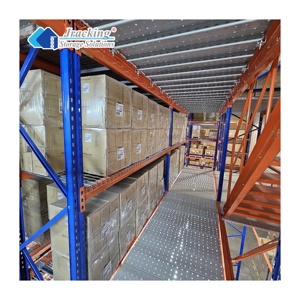
Premium Industrial Storage Stacking Shelves Racks Heavy Duty Steel EU Pallet Racking System For Logistics Warehouses
- Standard: GOST R 55525-2017
- Payload: 1,000–4,500 kg/level
- Pallet Profile: EUR / FIN Standards
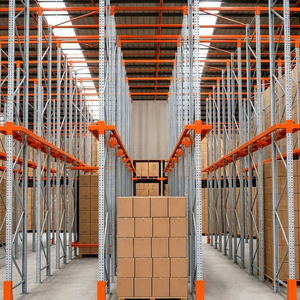
Industrial Heavy Duty Drive in Rack High Density Storage System for Warehouse
- Space Utilization: Up to 85% Volume
- Lane Depth: 2–10 Pallet Positions
- Thermal Range: -35°C to +40°C
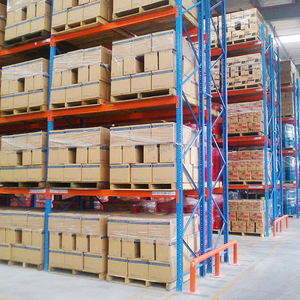
Combined Load-Row Connected Industrial Pallet Racking System Heavy Duty Warehouse Storage Racks 2000kg Steel
- Beam Section: Box / Interlocking C
- Upright Pitch: 50mm / 75mm Adjusted
- Row Spacing: Integrated Bracing Tie
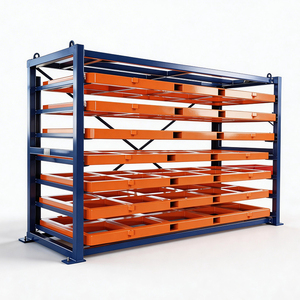
CE Certified Industrial Warehouse Steel Shelving System Heavy Duty Storage Racks Metal Racking Durable Cargo Shelves
- Finish: Epoxy Polymer Powder
- Certification: CE / ISO9001:2015
- Deck Type: Steel / Mesh / Chipboard
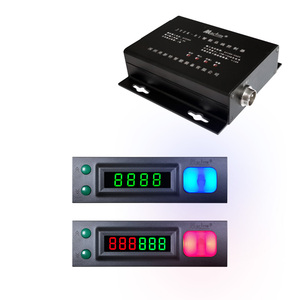
Warehouse Logistics E-commerce Order Light to Put Pick to Light Flow Rack Wired Wireless Sample System Price
- Workflow: Pick-to-Light Guided
- Throughput: +45% Picking Speed
- Roller Tracks: High-Impact Polymer
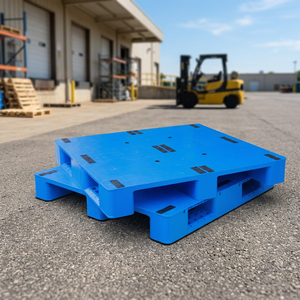
NEXARA Industrial HDPE Racking Load 4t 1208 1200*800*150mm Flat Surface Three Runner Heavy Duty Pallet for Forklift
- Dimensions: 1200×800×150 mm
- Dynamic / Racking: 1.5t / 1.0t (4t Static)
- Material: Pure Virgin HDPE Core
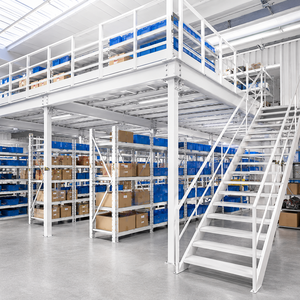
Factory Price Multi Tier Rack Customized Storage Shelf Warehouse Multi-Level Storage Platform Steel Mezzanine Racking System
- Flooring: Solid / Perforated Deck
- Deck Load: 300–1,200 kg/m²
- Levels: 2 to 4 Tiers Structural
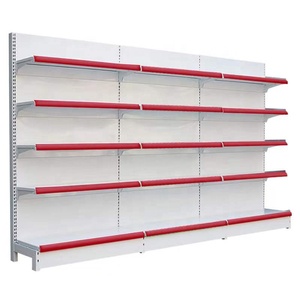
Medium Duty Racking Customizable Long Span Storage Racks Steel Shelving Warehouse Shelving
- Payload: 200–800 kg/shelf
- Assembly: Boltless Rivet / Lug Lock
- Profile: Customized Long Span
The Structural Pivot: Why Russian Warehousing Demands Direct Chinese Manufacturing Partnerships
The Russian industrial real estate and intralogistics landscape is undergoing a permanent structural re-alignment. Following the realignment of global supply corridors toward the East and the Eurasian Economic Union (EAEU), distribution centers across the Moscow Region (A-107 and A-108 orbital corridors), Saint Petersburg (Shushary and Utkina Zavod), the Ural logistics nexus of Yekaterinburg, and the trans-Siberian freight consolidation center of Novosibirsk are operating at near-capacity vacancy rates below 1.2%. At the same time, top Russian retail conglomerates, e-commerce giants (Wildberries, Ozon, Yandex Market), and food distributors (X5 Group, Magnit) have accelerated development of massive Class A distribution hubs ranging from 50,000 to over 200,000 square meters.
Historically dependent on Western European racking manufacturers (such as Bito, SSI Schaefer, and Mecalux), Russian warehouse integrators and general contractors face severe supply bottlenecks, prohibitive pricing structures, and an acute deficit of certified cold-formed structural steel profiles. China has emerged not merely as an alternative supplier, but as the primary manufacturing backbone for state-of-the-art warehouse racking systems exported into the Russian Federation. However, successfully executing racking projects in Russia requires far more than generic fabrication; it necessitates strict adherence to Russian federal technical regulations, seismic building codes, deep cross-border rail freight orchestration, and certified cold-temperature metallurgy.
Russian Macro-Logistics Demands Driving Racking Systems Procurement
Three primary macro-economic and physical phenomena characterize the contemporary Russian warehouse equipment market:
1. Unprecedented E-Commerce High-Density Demands: Russian domestic online retail expanded at over 30% year-on-year, triggering an urgent requirement for pick-tower mezzanine platforms and carton-flow picking faces. Facilities that previously utilized low-bay single-deep selective racking are transitioning to multi-tier steel mezzanines (2 to 4 levels) and pick-to-light roller flow racks to maximize high-ceiling cubic capacity (12m to 14.5m clear heights typical in modern Class A Russian terminals).
2. Sub-Zero Cold-Chain and Agro-Industrial Expansion: The rapid growth of Russian domestic agricultural producers (Miratorg, Rusagro, Cherkizovo) has spurred construction of immense deep-freeze facilities (-24°C to -30°C) across the Central and Volga Federal Districts. Racking erected in these environments requires specialized cold-tough structural steel that resists brittle fracture failure under continuous dynamic forklift impacts.
3. Heavy-Duty Industrial and Automotive Part Buffering: Parallel import logistics nodes throughout the Far East (Vladivostok) and border ports (Zabaikalsk, Blagoveshchensk) necessitate heavy-duty selective pallet racking capable of supporting combined tier weights exceeding 4,000 kg per beam level, accommodating oversized machine crates, automotive powertrain components, and industrial machinery parts.
Engineering Taxonomy of Industrial Racking for Russian Infrastructure
A rigorous comparative analysis of structural profiles, load thresholds, and operational suitability across Russian logistics climatic zones.
Selecting the optimal storage geometry requires evaluating inventory velocity, SKU diversity, fork truck kinematics, and building structural interfaces. Below is the engineering matrix applied by our structural design engineers when reviewing Russian industrial layouts.
| Racking System Classification | Common Russian Applications | Standard Load Envelope | Aisle Clearances & Equipment | Russian Standard Compliance |
|---|---|---|---|---|
| Selective Frontal Pallet Racking | Class A 3PLs, Retail Fulfillment (X5, Ozon), General Merchandise | 800 to 4,500 kg per beam level; up to 24,000 kg frame capacity | Wide Aisle (2.8–3.5m) Counterbalance / Reach Trucks; VNA (1.6–1.8m) | GOST R 55525-2017, ISO 9001:2015, CE EN 15512 |
| High-Density Drive-In / Drive-Through | Cold Storage (-25°C), Dairy & Meat Wholesale, Seasonal Agro-Inputs | 1,000 to 2,000 kg per pallet position; LIFO or strict FIFO drive-thru | Dedicated Drive-in lanes with recessed guide rails for reach trucks | GOST R 57381-2017, SP 20.13330 (Snow & Seismic Loads) |
| Multi-Tier Mezzanine (Rack-Supported) | Automotive Spares, Pharmaceutical Picking, E-Commerce Sortation | Floor decks: 300 to 1,200 kg/m²; Shelves: 200 to 600 kg/shelf | Manual picking carts, spiral gravity chutes, hydraulic cargo lifts | SNiP 21-01-97 (Fire Safety), SP 16.13330 (Steel Structures) |
| Dynamic Gravity / Carton Flow Racking | Fast-Moving Consumer Goods (FMCG), Beverage, Pharmaceutical Expiry | Pallet Flow: 1,500 kg/pallet; Carton Flow: 50–120 kg per lane | Decoupled loading/unloading aisles; gravity gradient 3–4% with brakes | GOST R 55525, Machinery Safety TR CU 010/2011 |
| Industrial Cantilever Racking | Metallurgical Warehouses, Timber Yards, Extruded PVC & Pipe Depots | 500 to 3,500 kg per arm cantilever; up to 12 meters column height | Side loaders, multidirectional reach trucks, overhead crane loading | GOST 16140-77, SP 16.13330.2017 Structural Steel |
Specific Engineering Adaptations for Russian Operations
1. Adaptation to Dual Pallet Formats (EUR vs. FIN): Unlike the Western European single-pallet market (predominantly EUR 800×1200 mm) or the North American market (GMA 48×40 in), Russian warehousing routinely intermixes European standard pallets (GOST 9557-87 identical to UIC 435-2, 800×1200 mm) and wider Finnish pallets (GOST 9078-84, 1000×1200 mm). In standard selective frontal installations, Chinese engineering teams calibrate beam lengths to 2,700 mm (for 3× EUR pallets) or 3,600 mm (for 3× FIN pallets or 4× EUR pallets). Furthermore, upright depths are standardly fabricated at 1,050 mm or 1,100 mm with heavy-duty drop-in pallet support bars to eliminate risk of pallet collapse caused by degraded bottom runners on localized timber pallets.
2. Low-Temperature Impact Toughness (Cold Store Metallurgy): Normal carbon structural steels (such as European S235JR or standard Q235A) experience ductile-to-brittle transition phenomena when operating in cold rooms below -20°C, drastically reducing charpy V-notch impact energy absorption. Under repetitive loading impacts from reach truck forks, structural columns can suffer catastrophic brittle cracking. Our company utilizes cold-tough high-strength micro-alloyed structural steels (equivalent to Russian 09G2S and Q355D/E grades). These materials preserve guaranteed impact resilience down to -40°C, providing the required structural security for industrial freezer logistics complexes.
3. Heavy-Duty Powder Coating Systems (C2 to C4 Corrosivity Resistance): Condensation in heated/unheated transitional logistics terminals in the Saint Petersburg and Baltic coastal corridors generates accelerated galvanic and atmospheric corrosion. Our production lines utilize a 10-stage automated pre-treatment system featuring high-pressure hot degreasing, zinc-manganese phosphating, and deionized ultrasonic rinsing, followed by continuous electrostatic deposition of thermosetting epoxy-polyester hybrid powder (dry film thickness 65–85 μm). This process passes strict 500-hour neutral salt spray tests (ASTM B117 / GOST 9.308-85), preventing peeling, flaking, and sub-surface oxidation under demanding humidity and thermal cycles.
Certified GOST Compliance
Full engineering validation conforming to GOST R 55525-2017, complete with calculation certificates, load limitation plaques in Russian, and verified seismic resistance profiles.
CNC Continuous Roll-Forming
Over 20 automated rolling lines with high-precision hydraulic punch cassettes ensuring pitch fidelity across 14-meter single-section cold-formed upright profiles.
Direct Cross-Border Rail Logistics
Block-train containerized dispatching from South China factories directly to Vorsino, Bely Rast, Silikatnaya (Moscow), and Shushary via Zabaikalsk and Dostyk.
Overcoming Friction: Rail Corridors, Customs Classification (HS Code), and Financial Settlements
Procuring warehouse racking from China into the Russian Federation involves complex supply chain considerations spanning freight routing, Eurasian Customs Union documentation, and non-SWIFT financial clearing. Chinese manufacturers operating at tier-one exporter level maintain specialized logistics departments dedicated to mitigating these risks for Russian buyers.
Multimodal Rail Corridors: Transit Times & Container Loading
Given the weight and bulk geometry of cold-formed steel racking components (beams ranging up to 3,600 mm, uprights bundled up to 11,800 mm to fit inside 40ft High Cube containers), sea freight to Far Eastern ports (Vladivostok/Vostochny) followed by Trans-Siberian rail or direct block container trains (China Railway Express) represents the optimal freight mechanism.
Primary Transit Routes:
- Eastern Rail Gateway (Manzhouli / Zabaikalsk): Direct container trains departing from industrial manufacturing terminals in Guangdong/Zhejiang, crossing at Zabaikalsk, reaching Moscow terminal stations (Vorsino, Elektrougli, Bely Rast) in 18 to 24 days transit time.
- Central Asian Route (Alashankou / Dostyk / Khorgos): Traverses Kazakhstan to access Southern and Central Russian hubs, offering high schedule reliability during peak winter freeze conditions.
- Direct Ocean-Rail Intermodal: Guangzhou/Ningbo to Vladivostok Commercial Sea Port (VMTP) via container vessel (5–7 days), followed by accelerated domestic rail platforms to Novosibirsk, Yekaterinburg, or Moscow (12–14 days rail leg).
Container Packaging & Stowing Optimization: Structural racking parts can suffer transit friction abrasion if packaged conventionally. We engineer custom steel cradles and heavy-gauge strapping bands. Uprights are bundled with protective corrugated paper inserts, structural plastic wrap, and timber dunnage conforming to international phytosanitary rules. Beams are nested with inter-lug protective cushioning to ensure scratch-free arrival, preventing premature field corrosion and site touch-up labor.
Russian Customs, Tariff Classification & EAC Certification
Importation of steel racking structures into the Russian Federation falls under the jurisdiction of the Federal Customs Service of Russia (FTS) and Eurasian Economic Commission technical regulations. Misclassification can lead to administrative delays, demurrage charges, or tariff recalculations.
| Customs Parameter | Standard Regulation / Coding | Engineering & Compliance Requirement |
|---|---|---|
| EAEU HS Code (ТН ВЭД ЕАЭС) | 7308 90 980 9 (Structures and parts of structures of iron or steel) | Requires detailed technical passports, component assembly drawings, mill test certificates, and gross/net weight per component bundle. |
| EAC Conformity Declaration | TR CU 010/2011 (On Safety of Machinery and Equipment) | Factory assessment test reports, safety justification (Обоснование безопасности), and Russian-language installation manuals. |
| Load Testing Certification | GOST R 55525-2017 / GOST R 57381-2017 | Design calculations verifying static safety factor (≥ 1.4 for beams, ≥ 1.5 for vertical frames) and dynamic stability under eccentric loading. |
| Financial Clearing Currencies | Direct CNY (Chinese Yuan) / RUB (Russian Ruble) | Direct cross-border settlements via non-sanctioned financial institutions (e.g., VTB Shanghai, Bank of China, local bilateral clearing banks). |
Guangzhou HEDA Shelves Co., Ltd.: 25 Years of Heavy-Duty Engineering Excellence
From automated steel slit-coil feeding to high-precision robotic welding, discover why top EPC contractors and Russian warehouse developers partner with HEDA Shelves.
Founded in 2001, Guangzhou Heda Shelves Co., Ltd. has developed over two and a half decades into one of the world's premier manufacturers and global exporters of heavy-duty industrial racking and automated storage systems. Operating from our advanced 30,000 square meter manufacturing base staffed by over 300 experienced engineers, CNC technicians, and structural designers, our monthly output exceeds 30,000 metric tons of certified structural cold-formed steel racking systems.
Our engineering division functions as an integrated turnkey partner for foreign importers, general contractors, and logistics integrators. We do not merely produce catalog items; we provide full 3D CAD modeling, finite element analysis (FEA) structural verification, load-deflection optimization, and comprehensive component labeling that streamlines on-site mechanical assembly by local Russian installation brigades.
Our 10-Step Quality-Controlled Manufacturing Protocol
Every beam, upright column, bracing diagonal, and baseplate exported to Russian clients passes through our rigorous 10-stage manufacturing process:
01-04: Material, Slitting & Cold Roll-Forming
Certified steel coil testing → Precision CNC longitudinal slitting → Continuous automated multi-stage column punching (50mm/75mm pitch) → Cold profile roll-forming through 18–24 sequential hardened tool steel rollers.
05-07: Robotic Welding & Structural Joining
Profile precision cutoff → Automatic high-speed mechanical surface polishing → Robotic gas-shielded (MIG/MAG) automated connector-to-beam seam welding with zero spatter and deep penetration bead profiles.
08-10: Surface Pretreatment & Coating
Multi-bath chemical pickling and iron/zinc phosphating → Automated electrostatic powder coat deposition → High-temperature curing tunnel (200°C) → 100% CMM dimensional audit, QA packaging, and container stowage.
Frequently Asked Questions: Sourcing Racking from China to Russia
Critical operational, regulatory, and technical questions answered directly by our senior structural engineering and export compliance team.
Does your racking comply fully with Russian standard GOST R 55525-2017?
Yes. Our engineering department designs and validates all frontal selective and drive-in racking projects with direct reference to GOST R 55525-2017 (Складское оборудование - Стеллажи сборно-разборные) and GOST R 57381-2017. For every export project, we generate a comprehensive Russian-language documentation package comprising: complete static load calculation books (расчет несущей способности), steel mill material test reports verifying yield and tensile properties, section moment of inertia certificates, anchor pull-out shear evaluations, and standardized metal capacity plates (информационные таблички нагрузок) ready for post-installation certification by accredited Russian testing laboratories.
Can you engineer racking systems for high-seismic zones in Russia (e.g., Krasnodar, Irkutsk, Sakhalin)?
Absolutely. Russia's building codes for earthquake regions (SP 14.13330.2018 "Construction in Seismic Areas") mandate strict horizontal acceleration design factors for storage equipment installed in seismically active regions ranging from 7 to 9 on the MSK-64 scale (such as the North Caucasus, Baikal seismic zone, and Kamchatka/Far East). To satisfy these conditions, our engineers increase upright material thickness (up to 2.5 mm or 3.0 mm), widen and thicken base plates with multi-hole anchoring patterns, integrate vertical and horizontal X-bracing towers between back-to-back rack rows, and utilize high-ductility anchor bolts with deepened concrete embedment.
How are financial settlements processed under current banking conditions?
We maintain active, direct Chinese Yuan (CNY) and Russian Ruble (RUB) multi-currency settlement channels via non-sanctioned financial institutions, cross-border financial communication systems, and direct bilateral accounts in major financial centers including VTB Bank (Shanghai branch) and Bank of China. Contracts can be concluded under standard Incoterms 2020 terms (FOB Chinese ports, CIF Russian ports, or DAP / DDP directly to your warehouse project site). Our commercial team provides all necessary foreign economic activity (ВЭД) documentation required for swift transaction clearance by your servicing Russian currency control bank.
What is the realistic lead time from order confirmation to arrival in Moscow?
For standard project volumes ranging from 3 to 10 forty-foot High Cube containers (equivalent to approximately 2,000 to 8,000 pallet positions), factory manufacturing time is typically 20 to 28 calendar days following CAD layout approval. Direct container rail freight transit from our loading terminals to major Moscow railway distribution stations (Vorsino, Bely Rast, or Elektrougli) requires approximately 18 to 22 days, plus 3 to 5 days for customs declaration processing. Total delivery time from initial drawing sign-off to site unloading in European Russia typically ranges from 45 to 55 days, offering substantial time savings compared to disrupted European or extended sea routes.
How do your powder-coated racks perform in unheated or cold-storage environments (-30°C)?
Our electrostatic coatings utilize premium thermosetting epoxy-polyester architectural-grade powders formulated specifically to maintain flexibility and adhesion across extreme thermal fluctuations (-40°C to +50°C). By combining this with our 10-stage automated hot phosphating and micro-etching steel preparation line, our coating forms an impervious polymer matrix that will not embrittle, crack, or flake when subject to the thermal contractions typical in Siberian unheated logistics sheds or industrial deep-freeze cold stores. For extreme corrosive environments (chemical storage, marine coastal zones), we also supply full hot-dip galvanized racking components certified under ISO 1461 / GOST 9.307-89.
What technical information is required to receive an engineered CAD layout and formal quotation?
To deliver an optimized, millimeter-accurate 3D warehouse layout and technical commercial proposal within 24–48 hours, our structural engineering department requires:
1. Architectural floor plan (AutoCAD .DWG or PDF) indicating columns, clear ceiling heights, egress doors, dock levelers, and floor slab load capacity (tons/m²).
2. Exact pallet specifications: Standard EUR (800×1200 mm) or FIN (1000×1200 mm), including overall load height (cargo + pallet) and maximum gross weight.
3. Operating forklift or reach truck specifications: Mast collapsed/extended height, lift height, and minimum turning radius / right-angle stacking aisle width (Ast).
4. Operating thermal regime (ambient dry warehouse, chilled +2°C to +4°C, or deep freeze -25°C).
Ready to Engineer Your Russian Warehouse Storage Project?
Connect directly with our senior intralogistics structural designers. We review your architectural drawings, calculate beam capacities according to GOST R 55525-2017, and provide a full 3D CAD layout with factory-direct pricing within 24 hours.