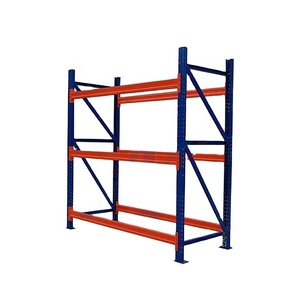
Engineered Capacity
Heavy Duty Industrial Warehouse Picking Equipment Storage Rack Q235 Steel 3 Layers 110000kg Capacity Powder Coated
Steel: Certified Q235B
Capacity: Heavy Duty
As Egypt accelerates its transformation into a global logistics gateway under Egypt Vision 2030, warehouse operators encounter critical constraints: surging industrial land acquisition fees, extreme diurnal temperature swings, and the need for scalable pallet density. Double deep pallet racking systems engineered in China provide the optimal equilibrium between capital expenditure and volumetric density.
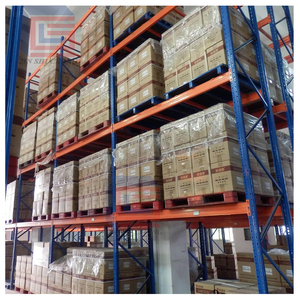
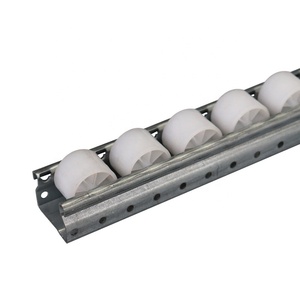
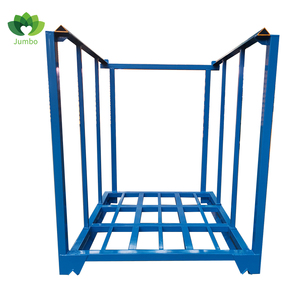
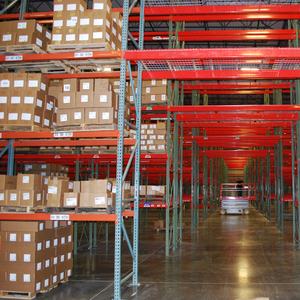
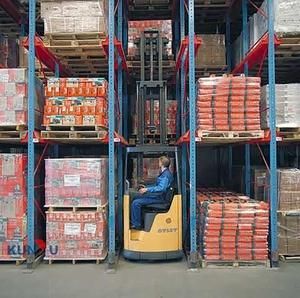
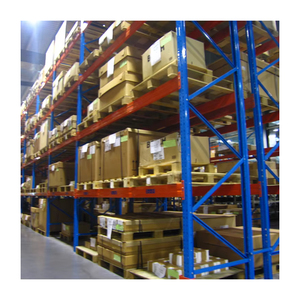
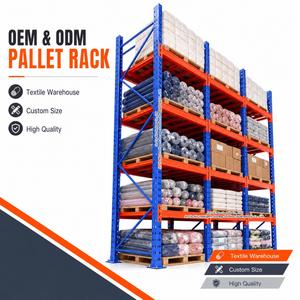
Double deep pallet racking operates on an advanced storage mechanism that eliminates 50% of the access aisles required in standard selective configurations. By pairing back-to-back rows to a depth of two pallets, materials handling facilities in Cairo and Alexandria achieve a 30% to 40% increase in net pallet density without the prohibitive operational delays associated with conventional drive-in systems.
| Storage Topology | Floor Space Utilization | Direct Pallet Accessibility | Forklift Equipment Requirement | Optimal FMCG Turnover |
|---|---|---|---|---|
| Double Deep Racking | 60% - 65% (High) | 50% Immediate Access | Pantograph Reach / Telescopic Forks | Medium-High (2-4 Pallets/SKU) |
| Selective Pallet Racking | 35% - 40% (Low) | 100% Direct Accessibility | Standard Counterbalance Forklift | High SKU Diversity / Low Count |
| Drive-In Systems | 70% - 80% (Very High) | LIFO Only (Restricted) | Standard Forklift (Drive-through) | Seasonal Bulk / Low SKU Count |
| Radio Shuttle Systems | 75% - 85% (Ultra High) | Automated FIFO / LIFO | Standard Forklift + Automated Carrier | Capital Intensive High Throughput |
For Egyptian logistics centers operating deep-reach pantograph trucks or extended reach forklifts, the double-deep geometry reduces total floor footprint cost per pallet while retaining the operational flexibility required to manage multiple fast-moving consumer goods (FMCG) and industrial building materials.
From intense desert ambient temperatures to coastal maritime humidity, our heavy-duty steel structures are customized to sustain thermal expansion, fine sand abrasion, and high operational loads.
In facilities located along the Suez Canal Economic Zone, Ain Sokhna, and Port Said, saline air promotes accelerated oxidization. We deliver multi-level corrosion protection featuring a 10-stage pre-treatment (pickling, phosphating) and heavy-gauge thermosetting polyester powder coating baked at 200°C for exceptional salt-spray resistance.
As the primary manufacturing engine for chemicals, automotive parts, and appliances in Greater Cairo, these facilities demand structural safety under high live loads. Upright frames are roll-formed from cold-rolled high-tensile Q235B steel to sustain 1,000 kg to 3,000 kg per beam level with safety factors compliant with international FEM standards.
Egypt's perishable food supply chain and cold chains face extreme power and refrigeration costs. Our double deep solutions maximize usable cubic meterage inside refrigerated temperature zones (down to -25°C), dramatically slashing the per-pallet thermal operating overhead in citrus, date, and poultry processing depots.
Key operational trends dictating the adoption of high-density storage technology in the Egyptian market through 2030.
With industrial land leasing rates escalating in Badr City and Obour City, operations are transitioning from wide horizontal sheds to vertical footprints reaching 12m to 16m clear ceiling heights.
Major regional distribution players in New Cairo require rapid consolidation buffers where 2-4 identical pallets per SKU can be buffered simultaneously without consuming full selective aisles.
Cross-border maritime trade necessitates racking systems engineered with adjustable 50mm/75mm hole pitches to effortlessly accommodate 1200x800mm Euro pallets and 1200x1000mm industrial platforms.
Egyptian Civil Protection Authority requirements demand integrated sprinkler clearance, heavy-gauge beam deflection testing (L/200), and reinforced column impact protection at aisle intersections.
Direct manufacturer capabilities engineered over 25 years of global intralogistics supply.
Verified CE Certification (No. 2435-CPR-8605159) and ISO 9001:2015 Quality Management (No. 18624Q00169R0M) ensuring precise dimensional tolerances, cold roll profiling, and automated welding lines.
Our dedicated engineering department converts your building AutoCAD drawings into full 3D spatial layouts, generating load capacity tables, flue gas passage designs, and reach truck turn radii calculations within 24 hours.
Seamless door-to-port sea freight shipping from South China ports straight to Alexandria Port, Sokhna Port, and Damietta Port. Robust steel stillage bundling and export packing prevent transit friction and marine rust.
Direct technical answers addressing customs clearance, installation, seismic compliance, and handling equipment compatibility in Egypt.
Double deep racking requires specialized material handling equipment. Standard counterbalance trucks cannot access the rear pallet position. Operators utilize either pantograph reach trucks with scissor-extending carriages or telescopic double-deep reach forks. When planning aisle widths in Egyptian warehouses, we typically allocate between 2.8m to 3.4m depending on mast specifications and turn radius capabilities.
We supply full commercial compliance packs aligned with Egyptian customs and the National Single Window for Foreign Trade Facilitation (Nafeza). This includes the Advanced Cargo Information Declaration (ACID) numbers, legalized Commercial Invoices, detailed Packing Lists, Bill of Lading (BL), Certificates of Origin (CO), and mill test certificates guaranteeing steel grade specifications.
Desert industrial zones like 10th of Ramadan and Sadat City experience extreme diurnal temperature fluctuations that cause minor structural expansion. Our interlocking beam connectors feature safety locking pins that ensure micro-flexibility without frame fatigue. Furthermore, our electrostatic powder coating resists the abrasive micro-scouring of desert sand particles, preventing early paint erosion and atmospheric rust.
Yes. We furnish comprehensive mechanical data packs, including section modulus, moment of inertia calculations, dynamic load displacement graphs, and floor anchor baseplate pressure charts. These calculations adhere to FEM 10.2.02 and EN 15512 principles, allowing licensed Egyptian civil engineers and certifiers to sign off effortlessly on local building and civil defense approvals.
Ocean freight transit from South China to Sokhna Port (Red Sea) averages approximately 18 to 24 days. Shipping through the Suez Canal to Alexandria or Port Said (Mediterranean) typically ranges between 22 to 28 days depending on ocean carrier rotation and direct vs. transshipment bookings. Fabrication lead time is managed within our 30,000 m² factory in roughly 15 to 20 business days.
Share your architectural CAD drawings or warehouse dimensions with our engineering team. Receive a zero-cost 3D layout, load-capacity calculation, and landed cost projection within 24 hours.
Contact Us