Featured Industrial Warehouse Storage Systems
Engineered from premium cold-rolled Q235B/Q355B structural steel, our factory direct range supports continuous FIFO rotation, cold-store durability, and automated logistic retrieval.
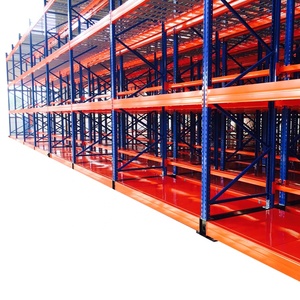
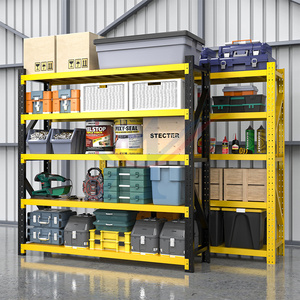
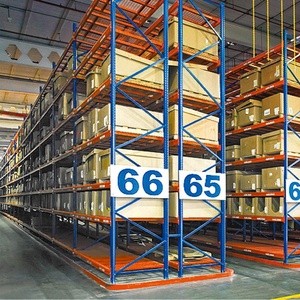
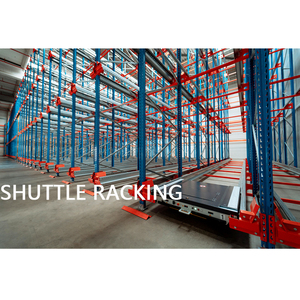
Engineering Principles of CE-Certified First-In, First-Out (FIFO) Storage Systems
In high-throughput distribution hubs, manufacturing material buffers, and perishable cold-storage facilities, inventory obsolescence represents a severe operational vulnerability. First-In, First-Out (FIFO) racking systems eliminate this liability by guaranteeing strictly disciplined inventory turnover.
When evaluating a commercial First In First Out racking system factory, procurement authorities must analyze both static load capabilities and dynamic kinetic dissipation. Unlike conventional selective or push-back racking, FIFO gravity flow and shuttle-driven systems undergo continuous mechanical stress from rolling loads, gravitational acceleration, and pallet impact forces. CE certification under the Construction Products Regulation (EU CPR 305/2011) and mechanical compliance with European Standards EN 15512, EN 15620, and EN 15629 verify that structural upright profiles, roller tracks, braking mechanisms, and separator escapements are engineered with deterministic safety factors.
1. Gravity Pallet Flow vs. Semi-Automated Radio Shuttle: Mechanical Comparative
Industrial FIFO implementations generally resolve into two mechanical philosophies: passive gravity flow beds and motorized semi-automated shuttle systems. Both configurations segregate the replenishment (loading) aisle from the picking (discharge) aisle, ensuring that material handling equipment never interferes with simultaneous putaway and order extraction.
Continuous Gravity Roller Beds
Gravity flow lanes feature inclined galvanized steel roller tracks supported by structural cross beams. Pallets glide downward solely under gravitational force, regulated by internal centrifugal brake rollers spaced at calculated intervals. Ideal for fast-moving consumer goods (FMCG) and pharmaceutical lot control.
Semi-Automated Shuttle FIFO
Instead of inclined slopes, level dynamic rails house an autonomous radio shuttle cart. Forklifts introduce pallets at the loading entry, and the shuttle independently transports them deep into the lane. The shuttle can execute both FIFO and LIFO modes via software parameters without altering physical incline geometry.
Pallet Separator Safety Locks
To safeguard operators and forklift masts at the picking face, certified FIFO gravity channels integrate mechanical end-stop pallet separators. These mechanisms isolate the lead pallet from the cumulative hydrostatic back-pressure of subsequent trailing pallets, allowing safe zero-pressure extraction.
2. Structural Physics & European CE Certification (EN 15512 Paradigm)
In non-certified manufacturing environments, racking failure often originates from underestimating dynamic second-order structural effects ($P-\Delta$ and $P-\delta$ moments). When a multi-tonne pallet decelerates against a stop or engages a brake roller, substantial horizontal forces transmit directly into the beam-to-column beam end connectors.
CE Certification (No. 2435-CPR-8605159) held by Guangzhou Heda Shelves Co., Ltd. demonstrates full factory production control compliance under European harmonized regulations. Each structural profile undergo physical coupon tensile testing, continuous weld penetration audits, and full-scale stub column crush testing. Furthermore, structural calculations account for live seismic shear factors in accordance with AS 4084 (Steel Storage Racking) and NZS 1170.5, ensuring high resilience during operational earthquakes and accidental forklift collisions.
Technical Comparison: FIFO Systems vs. Conventional Warehouse Typologies
| System Typology | Inventory Rotation | Volumetric Space Utilization | Throughput Velocity | Forklift Travel & Rack Impact Risk | Capital Investment Profile |
|---|---|---|---|---|---|
| Gravity Pallet Flow | Strict FIFO (100%) | Very High (80% - 90%) | Ultra-Rapid (Passive Descent) | Zero Rack Intrusion (External Aisles) | Medium - High (Track Hardware) |
| 4-Way / Radio Shuttle | Flexible FIFO / LIFO | Maximum (85% - 95%) | Automated High Throughput | Zero Rack Intrusion (Shuttle Driven) | High (Robotic Carts & Rails) |
| Drive-In / Drive-Through | LIFO (Drive-In) / Poor FIFO | High (70% - 80%) | Low to Moderate (Bottlenecks) | Critical Risk (Masts Enter Bays) | Low - Medium (Static Steel) |
| Push-Back Racking | Strict LIFO | High (70% - 75%) | Moderate (Cart Pushing) | Aisle Face Loading Only | Medium (Cart Assemblies) |
| Selective Pallet Racking | Operator-Dependent FIFO | Low (35% - 45%) | Fast Access / High Aisle Area | Moderate (Extensive Forklift Miles) | Baseline Economy |
3. Strategic Procurement Trends: 2025–2030 Global Outlook
Global logistics networks are experiencing massive structural re-engineering driven by escalating industrial land rents, mandatory Cold Chain transparency, and aggressive ESG decarbonization metrics. Warehouse procurement directors are re-evaluating storage system specifications through several emerging vectors:
A. Deep Integration of Ambient & Cryogenic Cold-Store FIFO: Refrigerated energy costs scale strictly per cubic meter of cooled airspace. Conventional selective racking wastes upwards of 60% of cold room volume on access aisles. Consequently, modern freezer plants are converting rapidly to CE certified deep-lane gravity flow and 4-way shuttle systems. These designs utilize low-temperature synthetic lubricants inside roller bearings rated down to -30°C and specialized cold-drawn steel chemistry that preserves ductile yield limits without brittle cold fracture.
B. Convergence with Autonomous Mobile Robots (AMRs): Material handling engineering is phasing out diesel and counterbalanced manual forklifts in favor of narrow-profile autonomous reach trucks and AMRs. FIFO racking factories are therefore manufacturing laser-guided entry cones, hardened floor guide channels, and millimetric alignment targets to ensure automated vehicles interface reliably with loading and retrieval faces without human intervention.
C. Decarbonized Steel and Recyclable Lifecycle Powder Finishes: Procurement teams under European CSRD (Corporate Sustainability Due Diligence) and Australasian environmental protocols require transparent carbon tracing for heavy structural installations. Advanced factories employ zero-effluent electrostatic powder coating lines coupled with pickling and phosphating pre-treatments that eliminate volatile organic compounds (VOCs) and hazardous heavy metal sludges.
Guangzhou Heda Shelves Co., Ltd.
Established in 2001, Guangzhou Heda Shelves Co., Ltd. has developed over 25 years into a world-class manufacturing authority for heavy-duty industrial storage, dynamic racking, and complex mezzanine structures. Spanning a 30,000 m² state-of-the-art production plant, our facility is engineered for precision, speed, and strict compliance.
We operate as a design-led manufacturing partner for global 3PL operators, retail supply chains, pharmaceutical producers, and racking distribution networks across Australia, New Zealand, Europe, the Americas, and the Middle East.
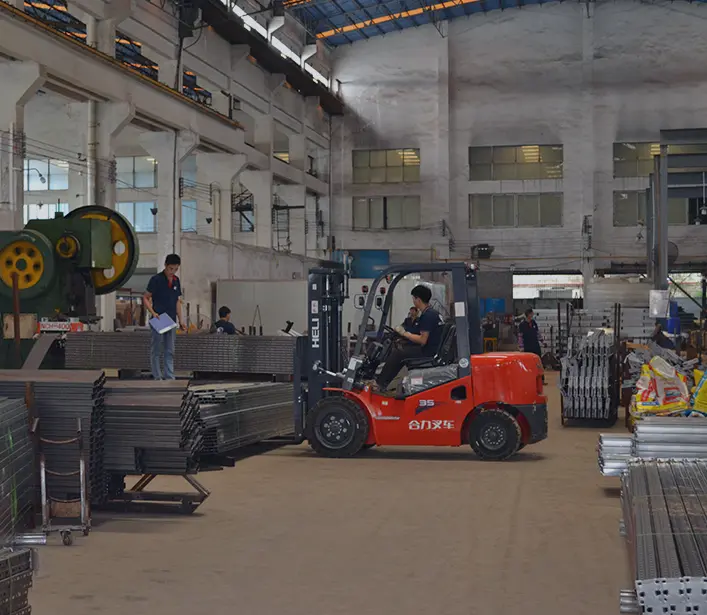
10-Stage Industrial Production & Quality Control Workflow
From mill-certified high-yield steel coil intake to automated robotic finishing, every stage is executed in-house under verifiable ISO and CE standards.
Technical & Commercial FAQ for FIFO System Buyers
Direct answers from our structural engineering division covering certifications, incline physics, roller durability, and customs compliance.
How do CE certified FIFO gravity racking systems prevent pallet runaway and lane jamming?
What specific standards does CE Certification cover for industrial pallet flow racking?
Can your FIFO racking layouts be engineered for seismic zones in New Zealand, the US, or the Mediterranean?
How do the mechanical components perform in cryogenic temperatures (-25°C to -30°C)?
What is the service life of internal brake rollers, and how is maintenance conducted?
How are shipments packaged to clear strict biosecurity inspections (e.g., Australian DAFF / NZ MPI)?
What information is required to receive a full 3D CAD layout and quotation?
Plan Your High-Density FIFO Warehouse System Today
Connect directly with our senior racking structural engineering team. We provide complimentary custom 3D CAD layouts, dynamic lane calculations, and factory-direct pricing for your next warehouse expansion or distribution center upgrade.