Engineered Warehouse Racking & Industrial Shelving Systems
Direct from our 30,000 m² high-capacity smart manufacturing plant. Designed with structural integrity, premium European and Australian compliance metrics, and high-density throughput adaptability.
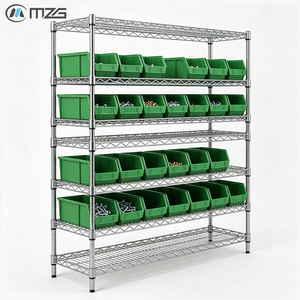
MZG Wholesale Electronics Warehouse Storage Rack Height Adjustable Metal Wire Shelving with Plastic Bins
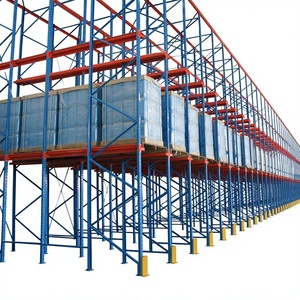
[Rongle] 2-Layer Steel Through-Aisle Drive-In Heavy-Duty Warehouse Shelving System (Blue/Red)
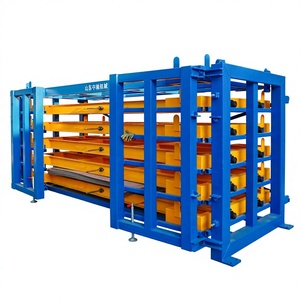
Heavy Duty Durable Steel Multi-drawer Anti-Rust Shelving Slide-out Sheet Metal Storage Drawers
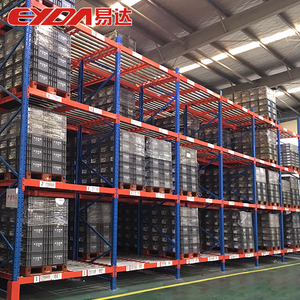
5 Layer Metal Pallet Flow Rack Gravity Storage Racks Heavy Duty Multi-Level Warehouse Industrial Cargo
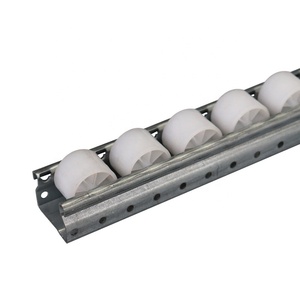
Industrial Cargo Picking Rack Roller Track, Gravity Flow Heavy Slide Rail with Guide Wheels
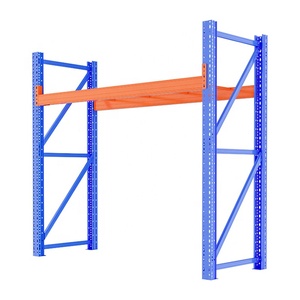
1 Layer 500kg Warehouse Racking System Stacking Racks & Shelves Medium Duty Shelving Rack
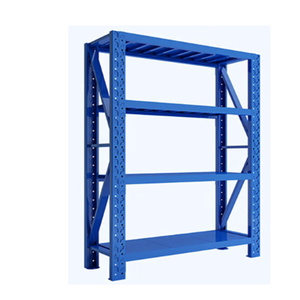
Guichang Manual Picking Light Duty Boltless Shelving Racking System Home Steel Warehouse Storage Racks
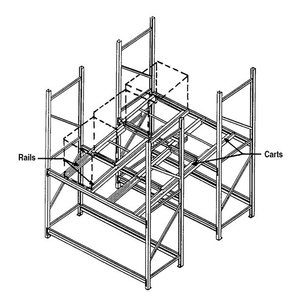
Professional Heavy Duty Pallet Racking System Warehouse Shelves (100% Direct Selective Access)
Engineering Whitepaper: Structural Anatomy & Mechanical Integrity of CE-Certified Selective Pallet Racking
In the contemporary intralogistics landscape, selective pallet racking functions as the foundational skeleton of commercial supply chains. Operating at the confluence of structural civil engineering, cold-formed steel mechanics, and precision material handling, a certified racking structure must consistently withstand static dead loads, dynamic seismic cycles, and repetitive mechanical impacts from material handling equipment (MHE). As direct-to-enterprise manufacturers certified under European Harmonized Standard EN 15512:2020, EN 15620, and Australia's rigorous AS 4084-2023, Guangzhou Heda Shelves Co., Ltd. builds structural systems engineered beyond rudimentary weight-bearing thresholds to eliminate catenary failure modes and uncontrolled sway buckling.
1. Upright Frame Profile Geometry & Slotted Perforation Dynamics
The structural column upright is subjected to complex combined stresses: axial compression combined with bi-axial bending moments generated by frame sway and asymmetric bay loading. Heda Shelves utilizes an advanced 11-fold and 13-fold continuous cold-roll formed Omega (Ω) cross-sectional geometry. The strategic internal stiffening ribs significantly enhance the cross-section's moment of inertia, preventing torsional flexural buckling and local web crippling without adding superfluous steel tare weight.
Our column punchings (standard 50 mm, 75 mm, and 76.2 mm teardrop/diamond pitches) are executed via synchronized high-tonnage multi-station CNC punch presses prior to roll forming. This guarantees zero micro-fissuring or residual internal shear stress around the perimeter of the connector claw lock slots, preserving 99.4% of the parent material's fatigue limit over millions of loading cycles.
2. Beam-End Connector Connectors and Moment-Resisting Joint Physics
Selective pallet racking stability relies heavily on the rotational stiffness (CD) of the beam-to-column connector joint. Unlike simplistic bolted racking designs, Heda incorporates cold-stamped 3-prong, 4-prong, and 5-prong high-ductility claw brackets robotic-welded to twin-C interlocking box beams. When engaged into the tapered upright perforations, the connector establishes a rigid wedge-lock mechanism that translates vertical gravity loads into horizontal clamping pressure against the upright column face. Every joint includes an automated safety locking pin (yield strength ≥ 550 MPa) resistant to a minimum 5.0 kN accidental upward dislodgement force per FEM 10.2.02 regulations.
| Component Profile | Standard Steel Grade | Yield Strength (Re / fy) | Tensile Strength (Rm / fu) | Surface Finish Metric | Compliance Standard |
|---|---|---|---|---|---|
| Heavy Duty Upright (80-120mm) | Q355B / S355JR | ≥ 355 N/mm² | 470 - 630 N/mm² | 65–85μm Epoxy Powder | EN 15512:2020 / AS 4084 |
| Twin-C Interlocking Box Beam | Q235B / S235JR | ≥ 235 N/mm² | 370 - 500 N/mm² | Electrostatic Thermo-Cured | EN 15629 / RMI MH16.1 |
| Horizontal / Diagonal Bracing | Q235B Cold-Formed C | ≥ 235 N/mm² | 370 - 500 N/mm² | Continuous Pre-Galvanized | ISO 1461 / EN 10346 |
| Footplate Base Assembly | Structural Plate Q355B | ≥ 355 N/mm² | 470 - 630 N/mm² | Heavy Duty Hot-Dip Galvanized | NZS 1170.5 Seismic / ASTM A123 |
3. Metallurgical Pre-treatment & Tribological Surface Protection
Premature oxidation, micro-corrosion in weld seams, and paint delamination from impact are catastrophic failure points for imported industrial steel structures. Guangzhou Heda Shelves applies an automated 10-stage chemical pre-treatment process prior to finishing. This includes high-pressure degreasing, multi-stage acid pickling to eliminate mill scale, surface passivation, and nano-ceramic zinc phosphating. Finished components are encapsulated in thermo-curing electrostatic epoxy-polyester powder polymer, baked at 200°C for 22 minutes. The resulting polymer matrix satisfies ISO 9227 neutral salt spray tests for > 500 hours, ensuring durability in both standard ambient warehouses and aggressive high-humidity distribution centers.
Emerging Technology & R&D Trends in Modern Racking Infrastructure
Selective pallet racking is rapidly evolving from passive structural steel frames into active, sensor-integrated cyber-physical assets aligned with Industry 4.0 automation architectures.
AGV & AMR Aisle Interface
Transitioning from traditional 3,200 mm wide counterbalance forklift aisles to ultra-precise 1,650 mm laser-guided Autonomous Mobile Robot lanes with integrated optical QR and RFID ground targets.
Dynamic IoT Strain Sensing
Embedding wireless piezoelectric deflection sensors and MEMS tri-axial accelerometers into critical lower upright nodes to instantly broadcast real-time impact alerts and exceedance warnings to the WMS.
High-Elasticity Alloy Steel
Transitioning from conventional low-carbon alloys to micro-alloyed, cold-rolled ultra-high-strength steel grades that reduce dead frame mass by 14% while augmenting shock energy absorption.
Direct BIM & Digital Twins
Direct integration of full Revit/IFC parametric 3D structural models into warehouse operational digital twins, allowing live thermal, airflow, and structural deformation simulation under peak dynamic utilization.
Strategic Global Sourcing Trends: De-risking Direct Racking Procurement
International warehouse developers and corporate procurement directors are migrating away from fragmented multi-tier trading brokers toward direct mill-scale fabrication partnerships.
Direct Mill-to-Site Supply Integration
Procuring directly from verified manufacturers eliminates the 25%–40% markup layered by domestic distributors while granting direct access to raw mill test certificates (MTCs), engineering calculation sheets, and customized roll forming tooling.
- Direct oversight of coil sourcing (Baosteel/Ansteel certified heats)
- Direct engineering interaction for bespoke seismic configurations
- Consolidated container packing optimizing FCL ocean freight density
Total Cost of Ownership (TCO) vs. Initial CapEx
Sophisticated supply chain planners prioritize lifecycle reliability. Underspecified racking with substandard upright gauge leads to frame creep, beam sagging, forklift deflection damages, and catastrophic failure liability under regional occupational safety audits.
- Heavy-duty upright floor column protectors integrated as standard
- Reinforced lower bay frames mitigating FLT mast collision risks
- Pre-calculated structural capacity signage preventing dynamic overload
Biosecurity, Tariff & Compliance Assurance
Navigating strict international cross-border logistics demands proactive adherence to quarantine and customs frameworks, notably Australia's DAFF/BMSB, New Zealand's MPI, and European CPR traceability rules.
- 100% steel stillage packaging avoiding untreated timber delays
- ISPM-15 certified heat-treated structural skids when timber is required
- Preferential Certificate of Origin (ChAFTA, RCEP) tariff mitigation
In-House 5-Stage Precision Production Cycle
Coil Slitting & CNC Punch
High-speed computerized hydraulic piercing ensures slot pitch tolerances within ±0.1 mm.
Cold Roll Forming
Continuous multi-stand roller profiles shape cold-rolled steel into rigid Omega & box profiles.
Robotic Dual-Gas Welding
Automated CO2/Argon shielding prevents weld spatter and guarantees deep structural penetration.
Pickling & Phosphating
Full chemical immersion degreasing and nano-ceramic bonding establish rust-inhibiting substrates.
Electrostatic Powder Cure
Automated spray booths apply thermoset epoxy-polyester cured at 200°C for lasting hardness.
Frequently Asked Questions: Industrial Pallet Racking Sourcing
Comprehensive engineering, compliance, and logistics guidance for international warehouse engineers, operations directors, and logistics buyers.
What distinguishes CE Certified pallet racking from uncertified commercial steel racks?
CE Certification (specifically Certificate No. 2435-CPR-8605159) mandates full Factory Production Control (FPC) compliance with harmonized European standards EN 15512, EN 15620, and EN 15629 under Construction Products Regulation (EU) 305/2011. This requires verifiable raw material traceability (EN 10204 3.1 MTCs), destructive stub column and beam joint shear testing, documented welder qualifications (ISO 9606-1), and calculated structural safety factors preventing catastrophic unannounced collapse.
Can Heda Shelves calculate and supply racking configurations compliant with Australian Standard AS 4084-2023?
Yes. Heda Shelves engineers design selective, drive-in, and cantilever storage systems with specific reference to AS 4084-2023 (Steel storage racking). We supply full section structural modulus values, moment capacities, deflection limit tables (maximum L/200 between beam connectors), and anchor shear stress calculations so your locally chartered structural engineer or independent certifier can readily verify and sign off the site installation permit.
How does your factory accommodate high seismic zone requirements (e.g., New Zealand NZS 1170.5)?
For seismically active zones in New Zealand (Wellington, Christchurch), the Pacific Rim, and Southern Europe, we execute finite element dynamic response spectra calculations based on the site-specific spectral acceleration coefficients (C(T)). We reinforce lower frame diagonal cross-bracings, increase footplate thickness to 10–16 mm, integrate dual high-tensile wedge anchors per upright, and provide heavy-duty top tie braces across back-to-back rows to control lateral inter-story drift.
What surface protection do you recommend for sub-zero cold storage and coastal facilities?
For deep-freeze environments (-25°C to -30°C), standard paint can become brittle and micro-crack. We utilize cold-rated polyurethane-modified epoxy powder coating with high low-temperature ductility, applied over a microcrystalline zinc phosphate conversion base. For coastal, marine, or open-canopy facilities where relative humidity is consistently high, we provide continuous hot-dip galvanization according to ISO 1461, yielding an 85–100 μm zinc protective layer offering 25+ years of maintenance-free service.
How are export shipments packed to satisfy Australian DAFF and New Zealand MPI biosecurity controls?
All export shipments are strapped securely onto customized heavy-gauge structural steel stillages or crating frames, effectively eliminating timber packaging materials from the container. Where wood blocking is required for sea lashing, we utilize certified ISPM-15 compliant heat-treated and debarked timber, stamped with official IPPC markings. Complete commercial packing lists, container cleanliness declarations, and bills of lading are coordinated directly to streamline port bio-clearance without fumigation holdups.
What minimum technical information is required to receive a customized 3D CAD layout and quotation?
To deliver an optimized, mathematically verified storage layout within 24 hours, our engineering department requires: (1) Architectural warehouse CAD drawing showing column grids, clear ceiling height, and dock door locations; (2) Pallet dimensions including goods overhang (Width × Depth × Height) and maximum gross weight; (3) Forklift fleet specifications including minimum turning radius, maximum lift mast height, and collapsed mast height; and (4) Ambient temperature conditions.
Initiate Your Warehouse Storage Engineering Consultation
Partner directly with Guangzhou Heda Shelves Co., Ltd. for factory-direct structural storage solutions. Our engineering team prepares preliminary 2D CAD floor plans, 3D structural elevations, and load capacity analyses within 24 hours of receiving your site parameters.