Featured Industrial Pallet Racking & Heavy-Duty Systems
Precision-formed cold-rolled structural steel solutions engineered for seismic resistance, dynamic FIFO/LIFO turnover, and maximum volumetric utilization across modern distribution hubs.
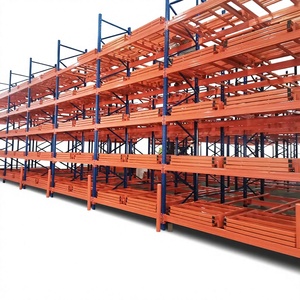
Push-Back Cold-Rolled Steel Intelligent Gravity Pallet Racking
- 2 to 6 Pallets Deep Gravity Nesting
- High-grade Q235B / Q355B Steel
- LIFO Flow for Cool Store & Bulk Staging
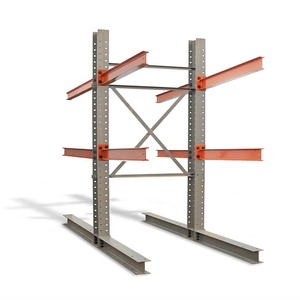
Motorised Roll-Out Cantilever Rack for Heavy Steel Pipe Storage
- 100% Electric Roll-Out Arms
- 1,000–5,000 kg Capacity per Arm
- Overhead Crane Loading Friendly
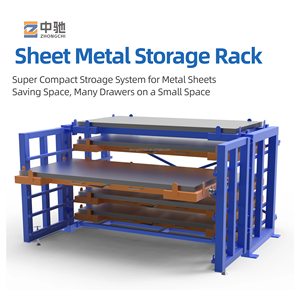
Industrial Drawer-Type Sheet Metal & Mould Pallet Rack
- Slide-Out Drawer Interlock Mechanism
- Up to 2,000 kg Level Point Load
- Anti-Corrosion Epoxy Powder Coating
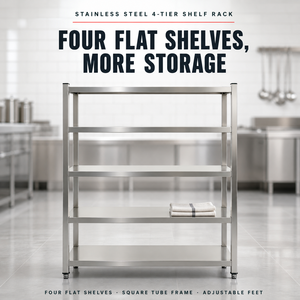
4-Tier SUS304 Stainless Steel Flat Heavy-Duty Shelving Rack
- SUS304 / SUS201 Food Grade Inox
- Heavy Flat Shelves with Under-Ribs
- Cleanroom & HACCP Compliant
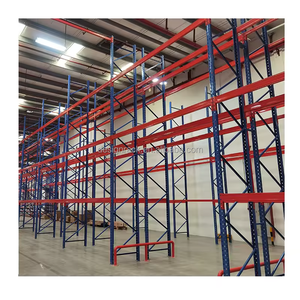
Heavy Duty Modular Upright Selective Pallet Rack Structure
- AS 4084 & EN 15512 Certified
- 1,000–4,500 kg / Beam Level
- 50mm / 75mm Pitch Adjustability
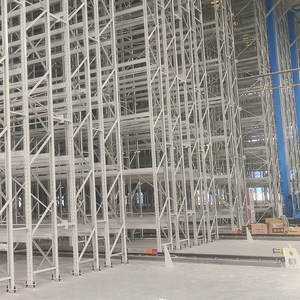
1000kg High-Density Narrow Aisle Warehouse Rack System
- VNA / High-Bay Vertical Engineering
- Reinforced Diagonal Bracing Struts
- Precision Floor Anchoring Baseplates
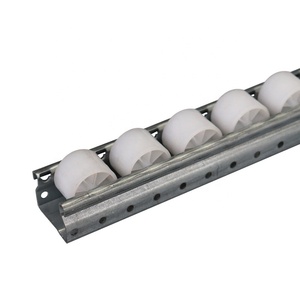
Gravity Flow Cargo Picking Rack Roller Track & Slide Rails
- Autonomous Gravity Roller Feed
- Integrated Speed Controller Dampers
- Ideal for FMCG & Pharmaceutical Picks
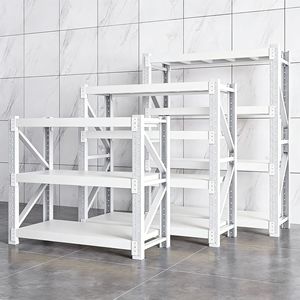
Three-Tier Cold-Rolled Precision Modular Steel Shelving Unit
- Boltless Quick-Snap Structural Fit
- Multi-Level Storage Flexibility
- Anti-Scratch Architectural Powder Coat
Why International Logistics Engineers Partner with Guangzhou Heda Shelves
Founded in 2001, Guangzhou Heda Shelves Co., Ltd. has established itself as China's premier manufacturer of high-precision heavy-duty pallet racking systems, structural mezzanines, and automated warehouse structures. Operating from an integrated 30,000 m² state-of-the-art facility in Guangzhou, China, our technical division pairs advanced mechanical engineering with high-throughput manufacturing to serve commercial enterprises, tier-1 3PLs, and racking distributors worldwide.
AS 4084 & EN 15512 Compliance
Racking profiles, upright punch geometry, and beam-end connectors are engineered to fully satisfy the limit state design principles outlined in Australian Standard AS 4084-2023, European Racking Norm EN 15512:2020, and American RMI MH16.1. Complete FEA stress calculations and load capacity plaques accompany every consignment.
Certified Metallurgy & Traceability
We strictly procure mill-certified prime hot-rolled and cold-rolled steel coils from tier-1 steelmakers (Baosteel, Shougang). Every batch is verified for tensile yield strengths (Q235B ≥ 235 MPa, Q355B ≥ 355 MPa) and supplied with comprehensive 3.1 Mill Test Certificates (MTC) to eliminate brittle fracture risks in critical cold chain loads.
Complete Biosecurity & Sea Logistics
Shipments cleared for Australia (DAFF), New Zealand (MPI), and North American ports are packed on custom welded structural steel stillages or ISPM-15 heat-treated dunnage. Components are bundled with heavy-gauge polyethylene wrapping to guarantee zero maritime salt-spray oxidation during transoceanic container transit.
10-Stage Precision Fabrication Workflow
Every structural upright frame, pallet beam, and interlocking bracket manufactured in our Guangzhou factory executes through a calibrated 10-step quality control protocol under ISO 9001:2015 accreditation (Certificate No. 18624Q00169R0M) and CE execution class standards.
Raw Steel Assay
Spectrographic chemical validation and tensile coupon elongation testing of inbound steel coils.
High-Speed Slitting
Automated uncoiling and precision slitting to exact section strip widths within ±0.2mm tolerance.
CNC Die Punching
Continuous hydraulic gang-punching of upright pitch teardrop, diamond, or hex slots at exact increments.
Multi-Pass Roll Forming
Cold-forming through 18 to 24 hardened chrome roll passes to prevent residual stress micro-fissuring.
Profile Seam Welding
Robotic twin-wire welding of boxed step beams and 3-to-5 prong beam connector brackets.
Shot Blasting (Sa 2.5)
Automated abrasive wheel blasting to remove mill scale, surface oxides, and achieve profile adhesion roughness.
Silane Pretreatment
Multi-stage immersion degreasing, rinse, and zirconium/silane anti-corrosive passivation bath.
Electrostatic Coating
Swiss Gema automated powder booth application of architectural-grade thermoset polyester powder.
Thermal Polymerization
200°C high-temperature curing oven ensuring uniform polymer cross-linking, hardness ≥ 2H.
Stillage Bundling & QC
Full dimensional cross-check, coating thickness DFT verification (60–90μm), and seaworthy steel packing.
Strategic Procurement Trends in Global Warehouse Infrastructure
Modern supply chain facilities are transitioning from static, low-density storage into dynamic, automation-ready logistics hubs. Sourcing directors and warehouse EPC contractors must align their specifications with four prevailing market shifts:
1. Convergence of Automation & Pallet Shuttles
Static drive-in racks are rapidly being superseded by semi-automated Radio Shuttle systems and 4-way autonomous shuttles. This evolution demands higher roll-forming tolerances (±1.0mm per 10m run) along guide rails to prevent automated shuttle jamming, as well as ultra-flat baseplates to distribute continuous dynamic wheel cycles.
2. Cold-Chain Cryogenic Metallurgy (Down to -30°C)
Global frozen food and biopharmaceutical distribution requires structural steel that retains ductile impact toughness at temperatures below -25°C. Sourcing trends favor low-carbon micro-alloyed structural steels (such as Q355D/E) that demonstrate documented Charpy V-notch energy values exceeding 27 Joules at sub-zero temperatures.
3. Finite Element Analysis (FEA) for Seismic Resilience
In seismically active regions such as New Zealand (NZS 1170.5), Australia (AS 1170.4), Japan, and the American Pacific Rim, generic racking designs present catastrophic collapse liability. Modern procurement frameworks mandate site-specific 3D nonlinear push-over FEA simulations to guarantee ductility under peak ground acceleration (PGA).
International Engineering Standards Matrix
How Guangzhou Heda Shelves Co., Ltd.'s export engineering bridges regional regulatory frameworks, ensuring zero liability friction during local structural engineer verification and municipal permitting:
| Evaluation Parameter | Australian Standard (AS 4084:2023) | European Norm (EN 15512:2020) | American Standard (ANSI / RMI MH16.1) | Heda Shelves Factory Export Standard |
|---|---|---|---|---|
| Design Methodology | Limit State Design (LSD) | Limit State Design (Partial Factors) | LRFD / ASD Combined | Full LSD & LRFD Verification |
| Beam Deflection Limit | Span / 200 (Elastic Limit) | Span / 200 (Serviceability) | Span / 180 (Normal Loading) | Engineered Span / 200–250 |
| Beam Safety Pin Rating | Minimum 5.0 kN Uplift Shear | Specific Uplift Verification | Minimum 1,000 lbs (4.45 kN) | Spring Interlock ≥ 6.5 kN |
| Upright Steel Spec | AS/NZS 1365 Cold-Rolled | EN 10025 / EN 10149 | ASTM A1011 / A653 HSLAS | Certified Q235B / Q355B (EN MTC) |
| Seismic Calculation | AS 1170.4 / NZS 1170.5 Dynamic | EN 16681 Storage Seismic | FEMA 460 / ASCE 7 Spec | Custom Site-Specific FEA Model |
| Corrosion Resistance | AS 4506 Powder Coated / AS 1214 | ISO 12944 Exposure Class C2–C4 | ASTM B117 Salt Spray Standard | Thermoset Polyester ≥ 500h Salt Spray |
Frequently Asked Questions by Global Buyers & Importers
Direct answers to technical, commercial, and operational questions commonly raised by procurement managers, warehousing EPC contractors, and structural certifiers sourcing from China:
How does Guangzhou Heda Shelves guarantee that imported racking achieves sign-off under Australian AS 4084 or European EN 15512?
We provide a complete engineering calculation submittal package prior to steel fabrication. This documentation includes full section properties of upright profiles (moment of inertia Ix, Iy, radius of gyration, torsional warping constant), beam connector rotational stiffness curves derived from prototype testing, and certified finite element analysis (FEA) reports. With these engineering values, locally registered structural certifiers (such as CPEng in Australia/NZ or EurIng in Europe) can verify the installation calculations and issue compliance occupancy sign-offs without delay.
What are the metallurgical differences between Q235B and Q355B steel in structural pallet rack design?
Q235B steel offers a minimum yield strength of 235 MPa and ultimate tensile strength of 370–500 MPa, comparable to ASTM A36 or European S235JR. It provides high ductility, excellent cold-bending workability, and superior cost-effectiveness for standard ambient warehouses up to 8 meters tall. Q355B is a high-tensile low-alloy steel with a yield strength of ≥ 355 MPa and tensile rating of 470–630 MPa, comparable to ASTM A572 Grade 50 or S355JR. We deploy Q355B in high-bay structures exceeding 10 meters, heavy-load cantilever columns, and automated warehouse uprights where cross-sectional thickness must be minimized without sacrificing buckling resistance.
How are biosecurity (DAFF Australia & MPI New Zealand) clearance complications avoided during sea freight?
Non-compliant timber packaging represents the primary cause of quarantine port delays in Oceania. To eliminate this vulnerability, Heda Shelves packs all heavy upright frames and beam bundles on custom-engineered welded structural steel stillages. Where timber dunnage is mandatory, we utilize fully certified ISPM-15 compliant heat-treated wood with visible treatment stamps, accompanied by endorsed phytosanitary documentation and declaration certificates. Every container is inspected and sealed under clean industrial factory conditions to prevent biological or soil cross-contamination.
What surface finishing options are recommended for coastal, cold-chain, or corrosive environments?
For standard indoor ambient warehouses, our 60–90μm electrostatic thermoset polyester powder coating provides excellent abrasion resistance and aesthetic durability. For refrigerated cold storage facilities (-30°C), specialized low-bake epoxy-polyester hybrid formulations prevent micro-cracking caused by thermal contraction. For outdoor timber yards, fertilizer distribution centres, or coastal installations exposed to marine salt atmospheres (ISO 12944 Class C4/C5), we provide Hot-Dip Galvanization (HDG) per ISO 1461, yielding an average zinc coating thickness of 70–100μm for multi-decade maintenance-free corrosion resistance.
How does Heda Shelves engineer seismic-ready pallet rack configurations for New Zealand (NZS 1170.5)?
For projects in high seismic hazard zones (such as Wellington, Christchurch, or the North Island fault lines), our engineering department applies structural dynamics principles per NZS 1170.5. We increase upright gauge thickness, integrate continuous boxed heavy-duty cross bracing, expand baseplate footprint surface areas to dissipate shear/overturning moments into the concrete slab, and utilize chemical anchor studs rated for cracked concrete under cyclic seismic loading. Dual row spacers are installed to mechanically couple back-to-back runs, dramatically improving down-aisle and cross-aisle structural stiffness.
How are shipping container load volumes maximized to minimize ocean freight costs per pallet position?
Shipping pallet racking is an exercise in balancing weight (dead load) against volume (cube). Unassembled bolted upright frames allow us to nest columns and bracing members flat, packing up to 3 to 4 times more frame components into a 40ft High Cube (40HC) container than pre-welded frames. Box and step beams are bundled in tight geometric layers with protective plastic spacers. Our shipping software simulates 3D container packing geometry to ensure every container reaches ≥ 90% volumetric utilization while strictly observing road weight legal limits (22–26 metric tons depending on the destination port's regulations).
Accelerate Your Warehouse Project with Factory-Direct Engineering
Receive a full structural engineering review, 3D CAD layout, and comprehensive bill of materials (BOM) within 24 hours. Our senior structural engineers optimize your racking configuration around your exact architectural, seismic, and material handling parameters.