Engineered Heavy-Duty Warehouse Racking & Pallet Systems
Directly manufactured at our 30,000 m² ISO-certified industrial facility in Guangzhou, China. Each system is custom-fabricated with premium Q235B/Q355B structural steel, strictly tested for seismic integrity, deflection tolerance, and dynamic load reliability.
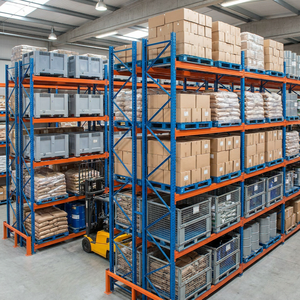
Selective Rack Warehouse Storage Rack System Heavy Duty Pallet Racking Industrial Q235B Steel For Freight Distribution
- Material: Certified Q235B cold-rolled structural steel
- Load Capacity: 1,000 kg – 4,500 kg per beam level
- Upright Pitch: 50 mm / 75 mm beam height adjustability
- Surface: Degreased electrostatic epoxy powder coat (75μm)
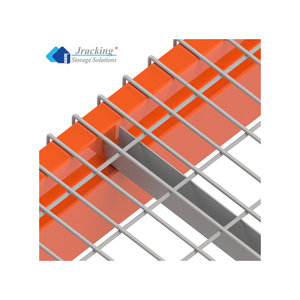
Wholesale Professional Strong Wire Mesh Garage Decking Pallet Board Low Price Selective Pallet Rack with Waterfall Racking
- Wire Diameter: 4.5 mm – 6.0 mm heavy-gauge welded wire
- Flange Type: Standard waterfall channel safety flange
- Fire Rating: Compliant with NFPA 13 sprinkler water penetration
- Finish: Hot-dip galvanised or electro-galvanised finish
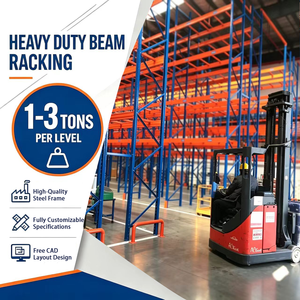
Custom Heavy Duty Steel Pallet Rack Industrial Storage Rack System for Warehouse Warehousing
- Frame Depth: 800 mm to 1,200 mm custom engineering
- Design Codes: Reference AS 4084-2023, FEM 10.2.02, RMI MH16.1
- Connector: 3-claw / 4-claw cold-stamped beam end connector
- Safety Pins: Integrated spring locking mechanisms
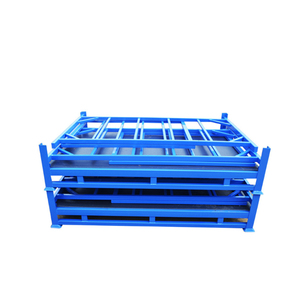
Heavy Plate Stacking Pallet Rack Capacity Tire Racking High Quality Folding Storage Cage Bulk Rotary System
- Stacking: 4 to 6 units high under full operational load
- Payload: 800 kg – 2,000 kg dynamic payload per cage
- Collapsible: 4:1 space-saving footprint when returned empty
- Application: Automotive tire distribution, castings, hardware
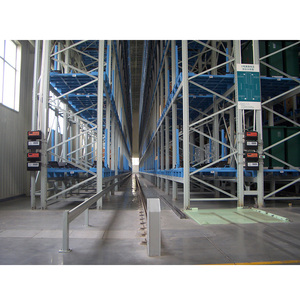
Full Space Utilization Automatic Pallet Warehouse System Asrs Automatic Racking System
- Structure: High-precision laser-aligned vertical rack-supported
- Stacker Crane Integration: Single/double-mast up to 35m height
- Throughput: High-speed automated inbound/outbound cycles
- WCS/WMS: Integrated PLC communication interface
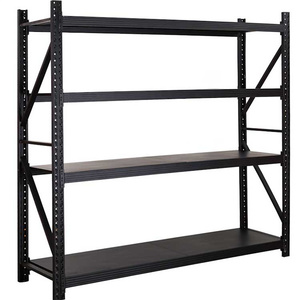
Customized Industrial Rack Heavy Duty Pallet Rack System Warehouse Storage Shelf Shelved Racking Metal Storage Rack Shelving
- Upright Section: 90x70 mm, 100x70 mm, 120x95 mm cold-formed
- Beam Profile: Double-C box beam or step beam profiles
- Corrosion Protection: 10-stage pre-treatment pickling & phosphating
- Certificates: CE, ISO 9001:2015, RoHS verification
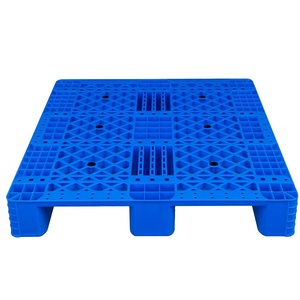
40" X 48" Plastic Racking Pallets Heavy Duty Plastic Pallets With 8 Steel Pipes
- Internal Reinforcement: 8 crossed galvanized structural steel tubes
- Racking Load: 1,200 kg – 1,500 kg in open-beam racking
- Material: Virgin HDPE or food-grade modified PP composite
- Compatibility: Compatible with Push Back nested carriage rollers
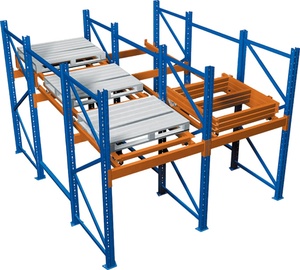
URGO 2023 New Push Back Racking Heavy Duty Pallet Rack For Intensive Storage Rack System
- Lane Depth: 2-deep, 3-deep, 4-deep, 5-deep & 6-deep nested carts
- Incline Gradient: Engineered 2.5% – 3.5% geometric gravity slope
- Cart Bearings: Sealed low-friction flanged bearing wheels
- Operation Mode: LIFO (Last-In, First-Out) high density retrieval
The Mechanics of High-Density Push Back Systems: Kinematics, Gravity Gradients, and Deflection Control
Unlike static selective racks, Push Back Racking systems rely on dynamic nested carriages operating on precision-inclined structural tracks. Understanding the underlying kinematics is critical for engineering safety, forklift driver ergonomics, and eliminating load hang-ups.
Kinematic Carriage Sequencing & Track Geometry
A push back pallet rack system utilizes a series of nested rolling carts that glide along inclined structural steel channel rails mounted to the load beams. The engineering principle operates on controlled gravitational flow combined with forklift kinetic thrust:
When loading the first pallet, the forklift operator places the unit load directly onto the top nested cart. To load the second pallet, the operator gently pushes the first cart backward using the second pallet, exposing the underlying second cart. This nesting sequence repeats for up to 6 pallets deep. Upon stock retrieval, as the front pallet is lifted and backed out of the bay, gravitational force gently advances the rearward carriages forward to the picking aisle face at a controlled speed.
Our manufacturing facility calibrates the precise angle of inclination based on the client's pallet base material (hardwood, treated softwood, virgin plastic, or perimeter base steel skids) and payload weight variation to ensure uniform advancement without runaway acceleration or sticking.
- Standard Rail Gradient 1.5° (2.6% Slope)
- Maximum Lane Depth 6 Pallets Deep (LIFO)
- Permissible Pallet Weight 500 kg – 1,500 kg / cart
- Track Channel Profile 120×50×3.5 mm High-C
- Wheel Bearing Rating Sealed ABEC-5 Precision
- Safety Stops & Catches Integrated Mechanical Stops
- Aisle Face Load Elevation +75 mm to +150 mm Rear Rise
Push Back Racking vs. Alternative High-Density Warehouse Systems
A granular quantitative comparison across operational velocity, capital expenditure, aisle clearance, and storage density metrics.
| Evaluation Parameter | Push Back Racking | Drive-In Racking | Pallet Flow (Gravity) | Radio Shuttle System | Standard Selective |
|---|---|---|---|---|---|
| Inventory Rotation | LIFO (Per Lane) | LIFO (Per Bay) | Strict FIFO | FIFO or LIFO | 100% Selective (Random) |
| Footprint Storage Density | High (70% - 75%) | Very High (75% - 85%) | Extreme (80% - 90%) | Extreme (85% - 90%) | Low (40% - 45%) |
| SKU Selectivity | High (Each lane distinct) | Low (Whole bay single SKU) | Medium (One lane single SKU) | High (Multi-tier flexibility) | 100% Immediate Direct Access |
| Forklift Aisle Time / Cycle | Fast (Truck stays in aisle) | Slow (Mast enters rack bay) | Fast (Dedicated load/unload) | Automated Internal Travel | Standard Travel Cycle |
| Rack Damage Vulnerability | Low (Zero truck entry) | High (Frequent upright strikes) | Low (Zero truck entry) | Very Low (Shuttle inside) | Medium (Column contact risk) |
| Relative Initial CAPEX | Moderate ($$) | Low ($) | High ($$$) | Very High ($$$$) | Baseline Minimum ($) |
| Cold Storage Applicability | Excellent (No electronics) | Good (Structural only) | Good (Roller lubricated) | Requires Special Lithium Bats | Standard |
Conclusion: Push Back Racking strikes the industry's most efficient economic compromise between high-density cube utilization and medium-to-high SKU variety, without the maintenance liabilities of battery-powered shuttles or the structural collision hazards inherent to Drive-In corridors.
Guangzhou Heda Shelves Co., Ltd. Enterprise Manufacturing Credentials
Established in 2001, Guangzhou Heda Shelves Co., Ltd. operates a state-of-the-art 30,000 m² factory compound. We supply distributors, intralogistics contractors, and Fortune 500 distribution hubs with complete, precision-engineered racking kits tailored to Australian, North American, and European regulatory criteria.
AS 4084 & Global Compliance Engineering
Every racking layout is engineered with finite element analysis (FEA) referencing Australia's AS 4084-2023, the American RMI MH16.1, and European EN 15512 specifications. Complete structural data packs, load signage calculations, and seismic load charts are provided for site certifier sign-off.
In-House 10-Stage Surface Treatment
Our automated production line integrates high-speed profile roll-forming, robotic CNC beam welding, and a closed-loop 10-stage pre-treatment system (acid pickling, degreasing, zinc phosphating, and 200°C electrostatic powder curing) guaranteeing 500+ hours salt spray corrosion resistance.
Free 24-Hour 3D CAD Warehouse Modeling
Provide our engineering department with your building footprint, column coordinates, sprinkler drop levels, and pallet parameters. Our senior warehouse design engineers will provide full 2D AutoCAD equipment blueprints and photorealistic 3D layout renderings free of charge.
Seismic Adaptation (NZS 1170.5 & California Zones)
For installations in high seismic zones such as New Zealand, Japan, or California, we reinforce the system with enlarged baseplates, heavy floor embedment anchors, cross-aisle portal ties, and oversized bracing chords engineered to resist ground acceleration forces.
Strict Biosecurity Export Packing & Ocean Logistics
Components are bound in heavy-gauge steel cradles or fumigated ISPM-15 compliant timber, ensuring smooth biosecurity clearance at Australian DAFF and New Zealand MPI inspection docks. Complete international import kits (Form A / FTA Certificates of Origin, BL, commercial packing manifests) guarantee seamless tariff treatment.
Push Back Racking Procurement & Technological Trends (2025–2035)
As automated material handling merges with mechanical gravity systems, next-generation warehousing demands hybrid compatibility, sensor instrumentation, and structural metallurgy resilience.
Autonomous Mobile Robot (AMR) & AGV Hybridization
Automated Counterbalance Forklifts (AGVs) require ultra-precise cart positioning tolerances at the rack face. Modern push back carriages are now being engineered with laser-reflective index points, magnetic proximity switches, and mechanical dampeners to interface seamlessly with automated guided vehicles without human operators.
Ultra-Low Temperature Dynamic Bearing Metallurgy
Rapid expansion in cold-chain pharmaceutical distribution and frozen foods has increased demand for cold-rated push back designs operating at -30°C to -40°C. Standard bearings seize when internal grease congeals; next-generation push back systems incorporate food-grade synthetic low-temp ester lubricants and stainless steel flanged roller bearings.
Integrated IoT Bay Occupancy & Impact Telemetry
Smart push back bays are adopting embedded wireless load-cell sensors beneath structural rail channels. These send real-time lane occupancy signals directly to the warehouse management system (WMS), alerting managers to hang-ups, unbalanced loads, or accidental forklift column impacts before mechanical failure occurs.
High-Strength Low-Alloy (HSLA) Decarbonized Steel
Procurement teams are prioritizing ESG metrics and life-cycle carbon footprints. Transitioning from standard Q235B to micro-alloyed Q355B and Q420 high-strength steels reduces overall structural steel deadweight by 15% to 22% while boosting load capacity, slashing ocean container shipping emissions and raw-material consumption.
Frequently Asked Questions: Sourcing Push Back Racking From China
Key engineering, clearance, shipping, and operational considerations every warehouse manager and procurement officer should verify before contract signing.
Request an Engineered 3D Layout & Factory Quote
Send our senior engineering team your warehouse blueprint, clear stack height, pallet specifications, and forklift model. We will calculate maximum storage density, generate full 3D CAD layout drawings, and provide competitive factory-direct CIF container shipping quotes within 24 hours.