Featured Automated & Heavy-Duty Racking Portfolio
Engineered for cold storage, bulk distribution centres, and fast-moving logistics hubs requiring resilient pallet integrity and maximum vertical cube utilization.
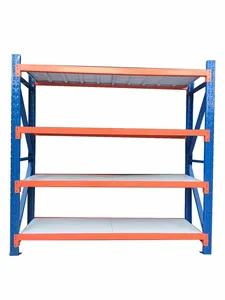
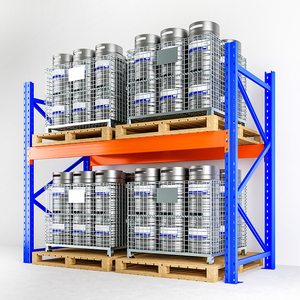
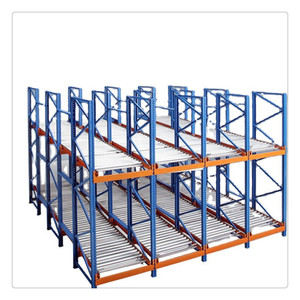
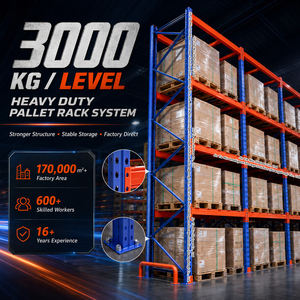
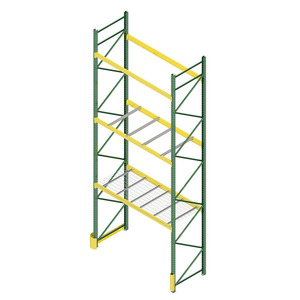
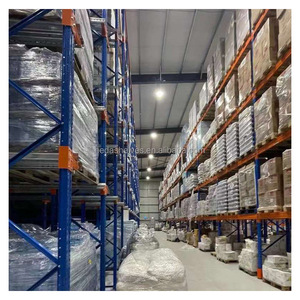
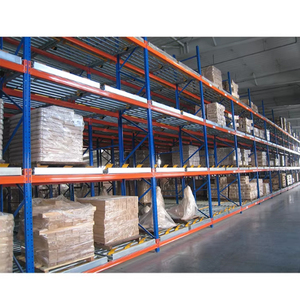
Industrial Specification: Engineering High-Density Shuttle Pallet Racking
In high-throughput warehousing, classical static storage solutions such as standard selective or drive-in racks present clear operational trade-offs between cube utilization and pallet accessibility. As global supply chains face tightening land availability, elevated commercial real estate overheads, and soaring cold-storage energy expenses, shuttle pallet racking has transitioned from an advanced operational choice to an infrastructural necessity. Manufactured in China to precision tolerances, our semi-automated radio shuttle racking systems offer the structural rigidity of heavy-duty cold-rolled steel integrated with microprocessor-guided shuttles that execute pallet storage and retrieval along specialized guide tracks inside deep storage channels.
Operating under both First-In, First-Out (FIFO) and First-In, Last-Out (FILO) methodologies, the radio shuttle eliminates the need for reach trucks or counterbalance forklifts to enter physical racking lanes. By constraining forklift operations strictly to the aisle face, material handling equipment collision hazards are minimized, maintenance downtime is eliminated, and operational travel velocity is increased by up to 40%. Every cold-formed upright, heavy-gauge beam profile, and galvanized shuttle runner is precision-engineered using high-tensile Q235B and Q355B structural steel to satisfy structural rigidity calculations under international standards, including AS 4084, FEM 10.2.02, and ANSI/RMI MH16.1.
System Deflection & Tolerances: Upright and rail configurations are calibrated to maintain maximum structural deflection below L/200 under total dynamic pallet impact loads, mitigating rail binding and guaranteeing millimetre-accurate sensor docking during continuous automation cycles.
| Storage Architecture | Volume Utilization | Stock Rotation Profile | Forklift Collision Risk | Throughput Efficiency |
|---|---|---|---|---|
| Radio Shuttle System | 80% – 85% (Ultra-Dense) | Dynamic FIFO & FILO | Negligible (Aisle Docking Only) | Very High (Automated In-Lane Transfer) |
| Drive-In Racking | 65% – 75% (High) | Strict FILO Only | High (Forklift Enters Rack Bay) | Low (Slow Driving in Storage Tunnel) |
| Standard Selective Rack | 35% – 45% (Aisle-Heavy) | Direct 100% Selectivity | Moderate (Frequent Turning In Aisle) | High (Immediate Pallet Access) |
| Gravity Pallet Flow | 70% – 80% (High) | Strict FIFO | Low (Separated In/Out Faces) | High (Passive Gravity Roller Feed) |
Future Procurement & Technological Trends in Warehouse Automation (2025–2030)
Enterprise procurement professionals are shifting their evaluation metrics away from simple unit-weight cost structures toward Total Cost of Ownership (TCO), lifetime cycle resilience, and automated warehouse system integrations. Below are the macro-engineering vectors driving modern shuttle pallet racking investments:
Lithium Titanate (LTO) Power Cells
Traditional lead-acid and standard ternary lithium battery units are giving way to Lithium Titanate and LiFePO4 modules. These deliver 10-minute ultra-fast charging capabilities and sustained thermal performance down to -30°C in blast freezers without capacity degradation.
WMS / WCS API Native Interoperability
Stand-alone handheld radio controllers are evolving into automated, bi-directional industrial IoT mesh networks. Modern shuttles receive direct task queues from Enterprise WMS, optimizing multi-pallet batch allocation and dynamic channel balancing in real time.
2D Directional to 3D/4D Shuttles
While standard 2-directional shuttles operate across a single horizontal lane, the global trend is accelerating toward 4-way multi-directional automated shuttles that transfer across aisles via integrated vertical lifts, unlocking dark warehouse automation.
Seismic Ductility & Base-Isolation
In high seismic zones (such as New Zealand NZS 1170.5 and Western US seismic codes), shuttle racking frames are being upgraded with custom high-ductility base plates, oversized anchor patterns, and specialized vertical back-bracing systems to dissipate lateral shockwaves.
Direct Factory Manufacturing & Structural Engineering Advantages
Procuring industrial racking from Guangzhou Heda Shelves Co., Ltd. connects international logistics integrators directly with heavy-gauge manufacturing infrastructure built over two decades. Our 30,000 m² automated production facility in South China outputs over 30,000 tons of structural steel storage equipment every month, maintaining complete in-house control over roll forming, robotic welding, pre-treatment, and finishing.
Verified Structural Certifications
Our quality and engineering compliance are backed by verifiable third-party accreditations: CE Certification (No. 2435-CPR-8605159), ISO 9001:2015 Quality Management System (No. 18624Q00169R0M), and strict RoHS raw material tracing.
In-House 10-Step Quality Regimen
From metallurgical analysis of hot-rolled steel strip coils to CNC column punching, automated cold bending, multi-point robotic welding, continuous pickling, phosphating, and electrostatic epoxy coating, each production milestone undergoes rigorous dimensional QA.
Biosecurity-Compliant Global Shipping
To eliminate border delays at ports like Sydney, Melbourne, Auckland, and Rotterdam, all components are banded into rigid custom steel stillages or ISPM-15 heat-treated timber crates, ensuring compliance with Australian DAFF, New Zealand MPI, and USDA standards.
Technical Procurement FAQ: Shuttle Pallet Racking
Essential guidance addressing engineering tolerances, pallet quality constraints, and cross-border logistics when specifying shuttle racking systems directly from China manufacturers.
Shuttle systems require sound pallets without missing baseboards or severe bottom deflection. Because optical proximity sensors, laser rangefinders, and mechanical stops identify pallet positioning inside channels, pallet bottom deflection under load must not exceed 20 mm to prevent the shuttle chassis from scraping or misdetecting.
Our cold-storage shuttle variants are engineered with sealed electronic enclosures, low-temperature lubricants, internal heating resistors to prevent condensation during defrost cycles, and cold-resilient battery packs. They operate down to -30°C in food-grade blast freezers without losing RF range or motor torque.
Yes. We custom-profile our galvanized guide rails and shuttle wheel centers based on site pallet dimensions. Dual-depth channel sensors can also be integrated into shuttle units to identify whether a 1200x1000mm, 1200x800mm, or 1165x1165mm pallet is loaded, adjusting run distance accordingly.
Our engineering department supplies complete finite element analysis (FEA) packages, section property tables, load plaques, and frame bracing calculations designed to Australian Standard AS 4084 and NZS 1170.5 seismic rules, allowing your local third-party structural engineer to sign off the installation quickly.
Factory manufacturing typically requires 20 to 30 days depending on total tonnages and custom finish requests. Ocean freight from South China (Guangzhou / Nansha / Shenzhen ports) to Australasian and Pacific ports ranges from 14 to 28 days, supported by complete bills of lading, packing lists, and FTA Certificates of Origin.
Ready to Optimize Your Warehouse Cubic Storage?
Submit your warehouse layout, clear building height, pallet specifications, and forklift model to receive a complimentary 3D CAD design layout and dynamic capacity calculation within 24 hours.