Featured Heavy-Duty Very Narrow Aisle (VNA) Systems
Direct from Guangzhou Heda Shelves Co., Ltd.—over 25 years of automated cold-roll forming, certified high-tensile structural steel, and turnkey intralogistics systems exported to Australia, New Zealand, Europe, and the Americas.
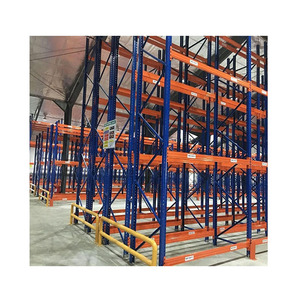
Industrial Galvanized Heavy Duty VNA Pallet Racking
Designed for cold stores, chemical hubs, and humid ports. Full hot-dip anti-corrosion barrier with high-density vertical clearance.
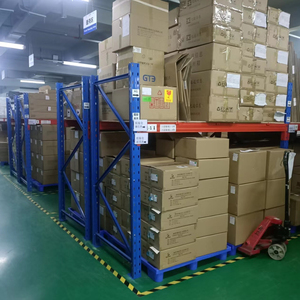
5-Layer Adjustable Boltless Industrial VNA System
Engineered for quick-pitch 50mm/75mm height adjustments. Boltless omega-profile uprights engineered for rapid structural reconfiguration.
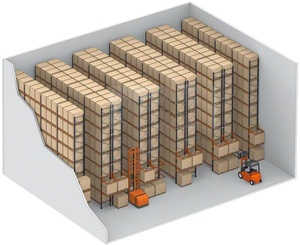
URGO High-Tolerance Very Narrow Aisle Pallet Racking
Ultra-narrow aisle design compatible with swing-reach turret trucks and high-precision inductive wire or mechanical guide rails.
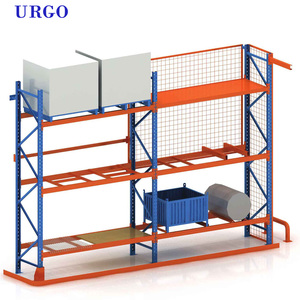
Extra Heavy-Duty VNA Structural Beam System
Double-C welded interlocking box beams minimize deflection under maximum dynamic loads. 100% individual pallet selectivity.
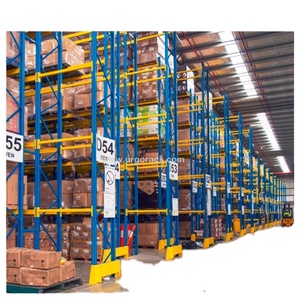
URGO High-Utilization Vertical VNA Racking Tower
Vertical space optimization reaching up to 18 meters. Pre-punched slots designed for AS/RS automated stacker crane integrations.
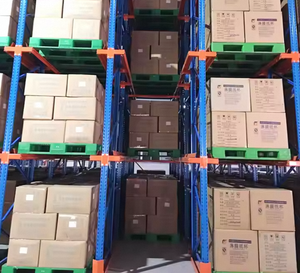
Adjustable Anti-Corrosive Warehouse VNA System
Features dual-stage phosphating and epoxy powder coating. Highly resilient to rigorous daily mast vibrations and chemical exposure.
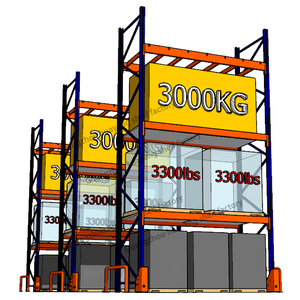
China Factory 5-Layer Precision VNA Pallet Rack
Constructed with high-ductility cold-rolled profile steel. Features welded truss bracing for seismic damping and horizontal stability.
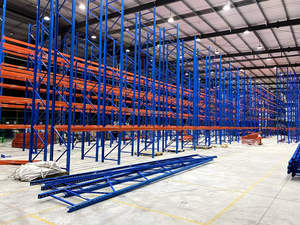
VNA Storage System with Structural Guide Railings
Integrated with anchored high-strength mechanical guide rails and heavy-duty upright column wrap-around guards to prevent impact damage.
Structural Precision in Very Narrow Aisle (VNA) Engineering
Why precision calculation matters: unlike conventional selective racking where aisle widths reach 3.2m to 3.8m, a VNA system shrinks operating aisles down to 1.5m–1.8m. In heights reaching 15m to 18m, horizontal deflection of even 0.5 degrees at floor level can trigger mast head deviation of tens of centimeters. Here is how our engineering eliminates structural sway.
Omega Upright Profile Mechanics
We roll-form cold-rolled structural steel (Q235B / Q355B) into a multi-ribbed continuous Omega cross-section. The presence of up to 13 mechanical bends ensures an optimal moment of inertia along both the X-X and Y-Y axes.
- Resists torsional buckling under high point-loading.
- Precision CNC slot stamping with 50mm/75mm increments.
- Heavy baseplates with chemical wedge anchoring.
Dual-C Interlocking Box Beams
Two nested C-sections are seam-welded automatically via robotic MIG units to create a hollow closed-box profile. This structural morphology maximizes flexural rigidity, keeping beam vertical deflection strictly under L/200.
- 4-claw or 5-claw high-ductility cast connectors.
- High-visibility safety locking pins prevent dislodgement.
- Uniformly distributed load rating up to 4,500 kg per pair.
DIN 15185 & Guidance Tolerance
VNA systems depend heavily on precise interaction between the racking envelope and the lift truck. We supply both heavy-section structural steel guide angles (100x75x6mm) and sub-floor inductive wire-tracking layout coordinates.
- Meets VDMA 42001 and DIN 15185 floor tolerances.
- Calculated 75mm minimum lateral safety buffer.
- Entry funnels and lead-in rollers for smooth truck entry.
Storage System Architectural Comparison: VNA vs. Alternative Solutions
| Racking Topology | Operating Aisle Width | Max Usable Height | Floor Footprint Utilization | SKU Selectivity Ratio | MHE Investment Level |
|---|---|---|---|---|---|
| VNA Racking (Very Narrow Aisle) | 1,500 mm – 1,850 mm | Up to 18.0 Meters | 85% – 90% | 100% Direct Access (1:1) | Turret Truck / Stacker Crane |
| Standard Selective Racking | 3,200 mm – 3,800 mm | Up to 10.5 Meters | 40% – 50% | 100% Direct Access (1:1) | Standard Counterbalance Forklift |
| Double Deep Pallet Racking | 3,100 mm – 3,500 mm | Up to 11.5 Meters | 55% – 65% | 50% Immediate Access | Deep-Reach Pantograph Forklift |
| Drive-In / Drive-Through Racks | Aisles eliminated | Up to 12.0 Meters | 70% – 80% | Very Low (LIFO / FIFO Bulk) | Standard Narrow Reach Truck |
| Radio Shuttle Pallet System | Transfer Aisle Only | Up to 16.0 Meters | 80% – 85% | Deep Lane Batched Selection | Standard Reach + Automatic Shuttle |
Future Procurement & Technology Trends in VNA Systems (2026–2030)
Global supply chain directors are no longer purchasing static steel; they are investing in adaptive intralogistics backbones. As industrial warehouse land lease prices surge across North America, Australasia, and Europe, here are the dominant technology shifts reshaping VNA racking procurement.
1. Convergence of VNA Infrastructure with Autonomous Mobile Robots (AMRs)
Traditional manual man-up and man-down turret trucks are rapidly transitioning to unmanned autonomous navigation. Future-ready VNA systems must be built with strict millimeter tolerances, eliminating frame twist to allow lidar-guided automated guided vehicles (AGVs) and AMRs to dock smoothly at high elevations without optical sensor blinding.
2. Digital Twin Pre-Commissioning & BIM Integration
Global EPC contractors now demand building information modeling (BIM Level 2/3) Revit files and digital twins prior to steel fabrication. By mapping column footprints, overhead sprinkler pipe grids, and smoke extraction channels into 3D structural simulations, interference detection reduces on-site erection errors to near-zero.
3. Rigorous Seismic Dampening Protocols (NZS 1170.5 & AS 4084-2023)
Seismic risk mitigation is a major priority for logistics hubs located in dynamic geological zones like New Zealand, the Pacific Rim, and the US West Coast. VNA procurement now requires engineered seismic base dissipators, oversized anchor brackets, and specialized X-bracing truss networks designed to absorb ground motion energy while protecting multi-ton payloads.
4. Circular Economy & Eco-Certified Electrostatic Powder Finishes
Enterprise ESG targets require suppliers to show transparent carbon footprint accounting. At Heda Shelves, we use zero-VOC, heavy-metal-free thermosetting polyester powders, combined with closed-loop multi-stage acid-wash and recovery systems that comply with RoHS certifications while delivering 500+ hours of ASTM B117 salt-spray corrosion resistance.
Guangzhou Heda Shelves Co., Ltd.: Global Manufacturing Strength
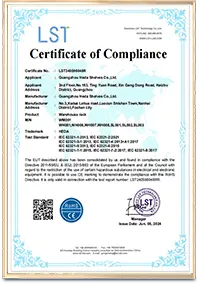
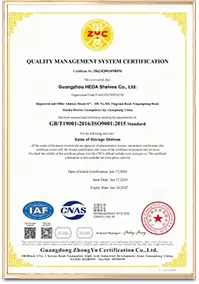
Since our founding in 2001, Heda Shelves has grown into one of China's premier racking exporters. Operating a 30,000 square meter modern production base with a monthly production capacity of 30,000 tons, our factory has delivered over 10,000 logistics installations worldwide. Every component is produced under strict quality control according to CE and ISO 9001:2015 standards.
In-House 10-Step High-Precision Racking Production Workflow
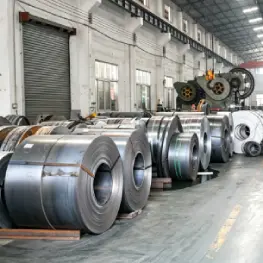
Coil Mill Inspection
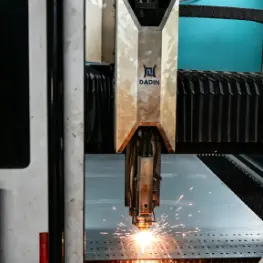
Precision Slitting
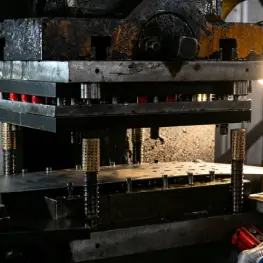
CNC Hole Punching
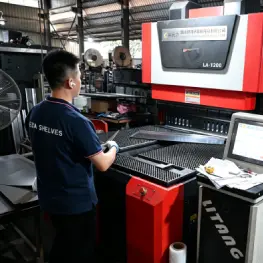
Continuous Roll Forming
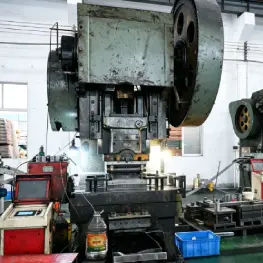
Structural Calibrating
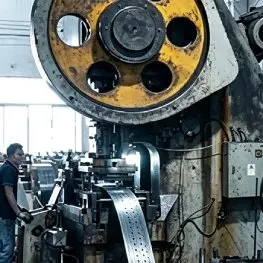
Deburring & Polishing
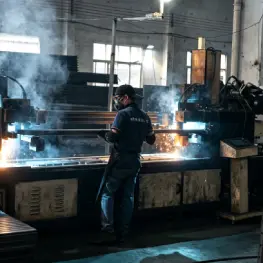
Robotic MIG Welding
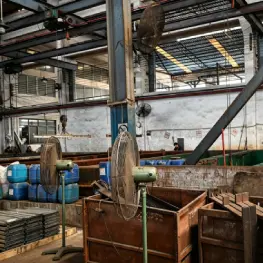
Acid Phosphating
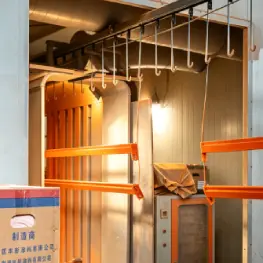
Powder Coating
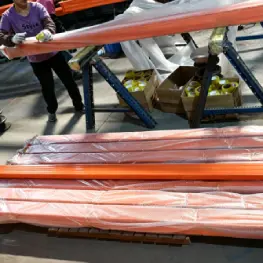
QC & Biosecure Pack
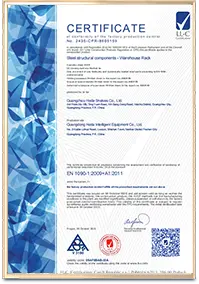
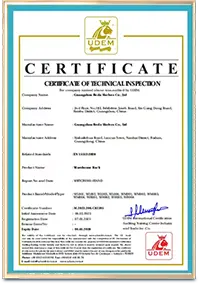
Independently Verified Certification Numbers
Procurement engineers and third-party inspectors can independently verify all our load calculations, structural steel material test reports (MTRs), and compliance dossiers:
- CE Factory Production Control Certificate: No. 2435-CPR-8605159
- ISO 9001:2015 Quality Management System: No. 18624Q00169R0M
- Seismic Calculation Verification: AS 4084 (Australia) & NZS 1170.5 (New Zealand)
- Export Biosecurity: Full compliance with DAFF (Australia) & MPI (New Zealand) using ISPM-15 marked dunnage or 100% steel stillages.
B2B Procurement & Engineering FAQ
Straightforward answers for warehouse design engineers, EPC contractors, and global logistics buyers evaluating VNA racking systems.
Plan Your Warehouse Layout with Our Engineering Team
Send us your warehouse CAD floor plan, clear ceiling height, pallet dimensions (e.g. 1165×1165mm Australian standard, 1200×1000mm ISO, or 1200×800mm Euro), maximum load weights, and forklift specifications. Our engineering department will return a detailed 3D design and quotation within 24 hours.
Get a Quote