Industrial Dynamic Storage Engineering White Paper
China Top Span Track Flow Rack Factories & Suppliers
High-density gravity carton and pallet flow systems, structural roll-formed profiles, and turnkey fulfillment engineering designed for AS 4084, ISO 9001:2015, and global supply chains.
Precision Manufacturing Catalog
Engineered Dynamic & Static Heavy-Duty Storage Systems
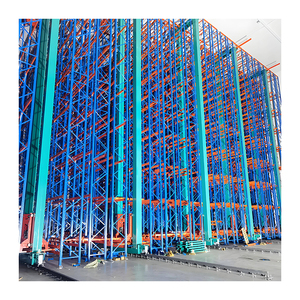
Direct from our 30,000 m² Guangzhou manufacturing complex, these 8 structural systems showcase heavy payload resilience, gravity flow dynamics, and automated density utilization.
Engineering White Paper: Mechanics of Span Track Flow Racks
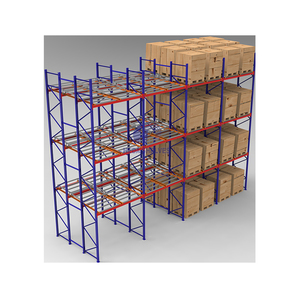
In modern high-velocity distribution centers, traditional static pallet racks fail to address the core bottleneck of fast piece-picking: excessive operator transit time. Span track flow racks (also termed carton flow beds or dynamic roller track racks) convert standard storage bays into high-throughput gravity-fed replenishment systems. By utilizing continuous rows of engineered rollers suspended between structural beams, these dynamic racks guarantee flawless First-In, First-Out (FIFO) stock rotation, compress aisle requirements by up to 50%, and double order fulfillment speed.
The Physical Dynamics: Roller Bed Gradient, Rolling Friction, and Momentum Control
The operational reliability of gravity-fed flow racks relies entirely on balancing the gravitational slide angle against carton rolling friction. Unlike light-duty plastic wheel tracks that bind under heavy weights, top Chinese factories employ roll-formed structural steel side channels encasing heavy-gauge galvanized steel rollers or high-impact polyolefin wheels fitted with sealed steel ball bearings.
Standard Engineering Slope Specification: The typical pitch gradient ranges precisely between 2.5% and 4.5% (approximately 5/16" to 1/2" per linear foot). Softer corrugated cardboard boxes with base deflection require steeper 4.0% angles, whereas rigid polypropylene returnable plastic containers (RPCs) glide at a shallower 2.5% angle. Speed-governing impact dampers and dynamic centrifugal brake rollers are integrated on runs exceeding 6 meters to prevent high-velocity package crashes at the pick face.
Full-Bed Continuous Rollers
Continuous steel or heavy-duty plastic rollers span the full width of the bay, eliminating the need for rigid lane re-profiling when box SKU dimensions fluctuate season by season.
Drop-In Hanger Adapters
Engineered brackets clip directly over roll-formed step beams, structural C-channels, or teardrop profiles without requiring field welding or destructive beam perforations.
Integrated Pick Trays
Cantilevered ergonomic tilt shelves positioned at the discharge picking face angle containers towards the operator at 15° to 25° for fatigue-free split-case retrieval.
Technical Comparison Matrix: Span Track vs. Traditional Carton Flow
Procurement teams must carefully assess whether continuous span tracks or dedicated plastic skatewheel tracks suit their SKU volatility profile. The table below outlines empirical performance thresholds tested across industrial manufacturing conditions:
The global intralogistics landscape is experiencing structural disruption. The rapid maturation of automated order picking, micro-fulfillment centers (MFCs), and stringent occupational health mandates have fundamentally shifted what supply chain directors demand from Chinese racking manufacturers.
Hybrid AMR/AGV Flow Interfaces
Modern span track racks are no longer purely manual. Rear charging lanes are being re-engineered with robotic gripper alignment guides, enabling Autonomous Mobile Robots (AMRs) to replenish cartons automatically from rear aisles while human pickers operate undisturbed at the front.
Integrated Pick-to-Light (PTL) Channels
Factory-integrated frontal wire management ducts and pre-drilled extrusions allow immediate snap-in of electronic LED displays, barcode scanning mirrors, and IoT inventory sensors without cumbersome on-site drilling.
Sub-Zero Cryogenic Roller Bearings
E-grocery and pharmaceutical cold-chain facilities demand grease-free sealed bearings rated for -30°C. Modern metallurgy utilizes synthetic polymer outer sleeves that prevent moisture condensation freezing and track seizure.
Global Procurement Directives: What B2B Buyers Prioritize
Western enterprise procurement directors are steering away from spot brokers in favor of direct-from-factory alliances with major Chinese manufacturers. Key procurement criteria in 2025–2026 encompass:
Structural Carbon Traceability: Tier-1 suppliers must present certified environmental product declarations (EPDs) demonstrating lower carbon footprints during steel smelting and scrap recycling.
Dual-Finishing Technologies: Combined hot-dip galvanizing for harsh marine/sub-tropical Pacific climates alongside scratch-resistant, heavy electrostatic powder coats that emit zero VOCs.
Modularity & Backward Compatibility: Standardized span track brackets capable of retrofitting effortlessly into legacy North American teardrop, European 50mm pitch, and Australasian AS 4084 teardrop or box-beam configurations.
Founded in 2001, Guangzhou Heda Shelves Co., Ltd. has developed over a quarter-century into one of China's premier racking and dynamic warehouse storage manufacturers. Operating from a massive 30,000 square meter modernized manufacturing complex, we combine automated roll-forming lines, robotic welding cells, and high-efficiency pre-treatment powder coating facilities capable of producing over 30,000 metric tons per month.
With an engineering and technical staff exceeding 300 specialists, HEDA Shelves acts as the authoritative engineering backbone for warehouse operators, 3PL distributors, and industrial integrators across Australia, New Zealand, North America, Southeast Asia, and Europe.
Engineering Rigor
Certified Global Compliance
Our structures strictly satisfy CE Certification No. 2435-CPR-8605159 and ISO 9001:2015 Quality Management System No. 18624Q00169R0M, as well as AS 4084:2023 design standards.
Design Engineering
Free 3D & CAD Layouts in 24h
Our in-house structural engineering group calculates exact load curves, seismic factors, and flue spaces, delivering comprehensive 3D visual renderings and CAD layouts before production begins.
Direct Export Mastery
Biosecurity-Compliant Packing
All ocean export shipments arrive secured in heavy steel stillages or ISPM-15 heat-treated certified timber, preventing border quarantine delays with Australian DAFF and New Zealand MPI authorities.
Manufacturing Depth
10-Stage Precision Production
From raw steel chemical composition checks through CNC automated column punching, cold-bending roll profiling, robotic welding, to 8-stage pickling and phosphating, our process is entirely in-house.
Private Label & OEM
Full OEM/ODM Customization
We supply private-label racking components, customized track stampings, and bespoke corporate RAL powder coat colors for global racking brands and regional distributor networks.
Logistics Network
Direct Port-to-Door Logistics
Situated in Guangzhou with streamlined maritime routes connecting directly to Sydney, Melbourne, Auckland, Los Angeles, Rotterdam, and Singapore with full ChAFTA documentation support.
Procurement Intelligence
Frequently Asked Questions: Sourcing Flow Racks from China
Critical engineering, regulatory, and logistics answers compiled by our senior structural engineers to simplify overseas procurement.
How do Chinese span track systems comply with Australian AS 4084 and NZ seismic regulations?
Our structural uprights, step beams, and span track mounting adapters are engineered with reference to AS 4084:2023 (Steel storage racking) standards. For seismic regions across New Zealand (NZS 1170.5) and the Pacific Rim, we provide full structural engineering calculations, steel section modulus data, and material mill test certificates. These comprehensive calculation packs allow your registered domestic engineer (RPEQ/Chartered Professional Engineer) to verify the installation sign-off and issue compliant site load notices.
Can HEDA span track flow tracks be retrofitted onto existing selective pallet racks?
Yes. Our span tracks are specifically engineered as universal drop-in assemblies. We manufacture custom universal mounting brackets that lock directly over roll-formed step beams, structural structural C-channels, and standard teardrop beams. This retrofitting capability enables warehouses to convert existing lower static pallet positions into high-speed dynamic carton flow pick tunnels without dismantling existing upper pallet storage frames.
How do we determine the correct roller pitch and track gradient for mixed carton types?
The standard industry guideline requires that at least three roller centers support the shortest package at all times to prevent the package from dipping between rollers. For instance, a carton with a 300mm length requires a roller pitch of 75mm or 100mm maximum. Slope is calculated between 2.5% (for rigid containers) and 4.5% (for corrugated cardboard). We routinely conduct physical roll tests in our Guangzhou testing facility using your actual box weights and dimensions to ensure friction balance prior to volume fabrication.
What prevents carton crushing and runaway packages on deep gravity runs?
On deep-lane flow beds (exceeding 4 to 6 meters), hydrostatic kinetic energy builds up quickly. To prevent carton damage, we integrate centrifugal speed controllers that engage internal brake pads when rotation exceeds a critical speed. At the picking face, we incorporate heavy-duty full-width impact trays with heavy-gauge end-stops that distribute forward collision forces harmlessly across the steel shelf structure.
How does HEDA Shelves manage biosecurity and ocean freight cargo protection?
Export packaging complies stringently with strict Australian Department of Agriculture, Fisheries and Forestry (DAFF) and New Zealand Ministry for Primary Industries (MPI) biosecurity mandates. All components are packed on dedicated structural steel transport stillages or ISPM-15 marked, heat-treated certified timber skids. Upright frames and beams are strapped with plastic edge protectors and wrapped in multi-layer VCI (vapor corrosion inhibitor) moisture-barrier plastic film to protect paint and bearings against salt spray during ocean transit.
What is the standard production lead time and maritime delivery schedule?
Standard manufacturing cycle for a typical 40ft high-cube container project spans 15 to 25 days following technical drawing sign-off. Direct maritime shipping from South China ports (Guangzhou, Shenzhen, Hong Kong) to major ocean hubs such as Sydney, Melbourne, Brisbane, and Auckland typically requires 14 to 24 days. Complete commercial invoices, bills of lading, and Certificates of Origin are delivered promptly to take advantage of preferential tariff frameworks under ChAFTA.
Transform Your Warehouse Throughput with Factory-Direct Engineering
Send our senior engineering department your warehouse floor drawings, building clear heights, carton dimensions, and target picking SKU profiles. We will return a comprehensive 3D CAD layout, structural load matrix, and transparent container-load pricing within 24 hours.