[email protected] Supplying Australia, New Zealand & the Pacific Islands
Industrial Storage Architecture Whitepaper

China Top Warehouse Roller Racks Factories & Exporter

High-Density Gravity Flow Systems, Precision Dynamic Roller Tracks, and Automated Logistics Engineering Designed to AS 4084, FEM 10.2.02, and RMI MH16.1 Standards.

Engineered Storage Solutions

High-Efficiency Warehouse Racking & Roller Systems

Explore precision-fabricated dynamic roller racking, automated high-density systems, and specialized industrial storage solutions direct from our 30,000 m² smart manufacturing plant.

2001.
Year Established
30,000m²
Intelligent Production Facility
30,000T
Monthly Structural Output
10,000+
Global Projects Installed
Engineering Excellence

Structural Physics & Mechanical Principles of Roller Flow Racking

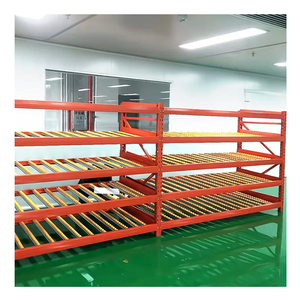
Roller racks (commonly designated as pallet live storage, carton flow racks, or dynamic gravity flow systems) convert gravitational potential energy into a strictly controlled kinetic velocity vector. Engineered for zero-energy First-In-First-Out (FIFO) stock turnover, these systems optimize picking travel times by up to 65% and eliminate redundant internal forklift travel lanes.

Dynamic Incline & Kinematics

Pallet flow beds require a calculated slope angle between 2.5% and 3.5% (approx. 1.5° to 2°), balancing starting inertia and terminal velocity. Our engineers calibrate slope tolerances down to ±0.1° using structural cold-formed cross-beams and high-yield bolted brackets to ensure steady rolling without hang-ups.

Gradient Precision: 2.8%–3.2%

Centrifugal Speed Controllers

To prevent pallet runaway acceleration down extended dynamic lanes (10m to 30m+ deep), internal centrifugal brake rollers automatically engage as velocity exceeds 0.25 m/s. Planetary gearing dissipates kinetic energy continuously, maintaining uniform roll speed irrespective of 500kg or 1,500kg gross pallet mass.

Brake Engagement: ≤ 0.3 m/s

Back-Pressure Load Separators

In deep-lane gravity racks, combined pallet back-pressure against the discharge end pallet can exceed 3,000 kgf. Our mechanical separator mechanisms lock upstream pallets 300mm behind the lead pallet, enabling safe forklift extraction without frictional pinching or hazardous pallet kickback.

Zero Back-Pressure Extraction
System Architecture Comparison

High-Density Dynamic Storage vs. Conventional Systems

Selecting the ideal racking format demands a holistic evaluation of footprint utilization, stock rotation protocols (FIFO vs. LIFO), cycle throughput, and CAPEX amortization.

Storage System Topology Space Utilization Rotation Logic Throughput Speed Forklift Damage Exposure Relative CAPEX / Pallet Best Suited Application
Pallet Gravity Flow (Roller Racks) Very High (85%) Strict FIFO High Dynamic Low (No aisle entry) Medium - High Cold storage, FMCG, dairy, pharmaceuticals, fast dispatch
Carton Live Flow (Roller Shelves) Maximum Picking Area Strict FIFO Ultra Fast Pick Zero (Manual/E-commerce) Medium Order fulfillment tunnels, piece-picking, automotive spare parts
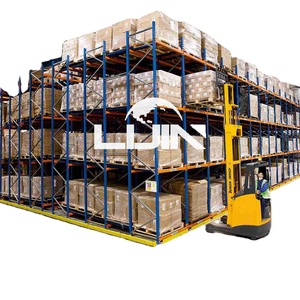
Radio Shuttle Cart Racking Extreme (88%) FIFO / LIFO Flexible Moderate - High Low (Cart automated) High (Battery/Robotics) Bulk beverage, raw material staging, seasonal agriculture
Drive-In Racking High (70%) Strict LIFO Slow (Mast entry) High (Frequent strikes) Low (Static) Homogeneous SKU storage, low-rotation cool rooms
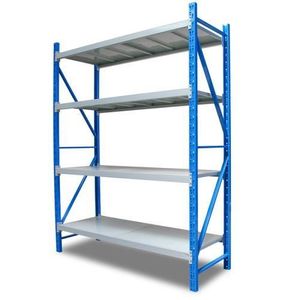
Selective Pallet Racking Low - Medium (40%) 100% Selective Immediate Access Medium (Aisle travel) Lowest Initial General 3PL warehouses, highly diversified retail distribution
Strategic Sourcing Whitepaper

Future Procurement Trends in Industrial Warehouse Roller Racks

Global supply chains, nearshoring shifts, and warehouse automation are rewriting procurement specifications. Sourcing directors at multinational 3PLs and distribution hubs are prioritizing smart mechanical integration over simple steel tonnage.

TCO Lifecycle Analysis vs. Spot Steel Pricing

Leading international procurement directors are moving beyond raw price-per-kilogram metrics. Purchasing decisions now weigh 15-year Total Cost of Ownership (TCO), accounting for high-grade Q355B micro-alloyed steel ductility, powder coating thickness (≥70μm), and roller bearing fatigue life (>1,000,000 revolutions).

15+ Year Fatigue Lifecycle

AGV / AMR Kinetic Interface Integration

Autonomous Mobile Robots (AMRs) and automated counterbalanced forklifts are increasingly executing loading and picking at roller rack faces. Modern roller tracks feature engineered entry alignment funnels, photoelectric reflector cut-outs, and zero-deflection front discharge stops to guarantee millimeter docking tolerances.

Robotic Millimeter Docking

Sub-Zero Cold Chain Kinetic Lubricants

Global frozen protein and pharmaceutical cold chains demand specialized roller tracks capable of continuous duty at -30°C. Procurement standards now mandate low-temperature synthetic ester greases, zinc thermal diffusion on mechanical surfaces, and cryogenic impact-tested steel uprights that resist brittle fracturing.

Ductile Toughness at -30°C

Cross-Border Structural Certifications

Tier-one project tenders require verifiable third-party certification. Exporters must supply certified structural calculations in compliance with European EN 15512:2020, Australian AS 4084-2023, and American ANSI/RMI MH16.1, including finite-element analysis (FEA) for site-specific seismic ground accelerations (PGA ≥ 0.3g).

AS 4084 · EN 15512 · RMI
In-House Manufacturing Governance

Guangzhou HEDA Shelves: 10-Stage Precision Production

Operating since 2001, Guangzhou Heda Shelves Co., Ltd. governs every manufacturing phase inside our 30,000 m² heavy-industrial complex, ensuring metallurgical consistency, precision cold-roll tolerances, and certified structural reliability.

01

Steel Coil Inspection

Mill cert verification, tensile yield stress testing, and thickness calibration of prime Q235B/Q355B coils.

02

Precision CNC Slitting

High-speed automated coil slitting lines produce strip widths with ±0.05mm edge tolerances.

03

Automated Upright Punching

Continuous hydraulic punching stations ensure exact pitch spacing for teardrop or diamond slot patterns.

04

Cold Roll Forming

Multi-stand precision roll forming machines profile open or closed upright columns and box-welded beams.

05

Roller Bed Fabrication

Automated assembly of galvanized steel roller tracks, dynamic bearings, and high-tensile axle shafts.

06

Robotic Laser & Welding

Dual-arm robotic GMAW welding units fuse structural beam connectors with zero spatter and full root penetration.

07

Pickling & Phosphating

9-stage chemical surface conversion removes mill scale and establishes an anti-corrosion zinc phosphate key.

08

Electrostatic Powder Line

Reciprocating spray booths apply heavy-duty thermosetting polyester powder at a uniform 70–90 micron layer.

09

High-Temp Thermal Curing

Convection bake ovens bake parts at 200°C for 25 minutes, cross-linking polymers for superior impact resistance.

10

Final QC & Export Stillage

Dynamic load deflection auditing, laser dimensional check, and steel-stillage packing compliant with ISPM-15.

CE Certificate: 2435-CPR-8605159
ISO 9001:2015 Quality Management System
RoHS Environmental Compliance
Australian DAFF & NZ MPI Quarantine Protocols
Direct Answers for Storage Architects

Frequently Asked Questions on Roller Racks Procurement

Clear technical guidance addressing engineering calculations, international compliance, biosecurity protocols, and long-lane kinetic safety.

How do you calculate the precise roller pitch and slope incline for variable wooden and plastic pallets?

Roller pitch is determined by ensuring a minimum of three pallet bottom runners are in continuous, unsupported contact with adjacent rollers at all times (Formula: Roller Pitch ≤ Center-to-Center Runner Distance / 3). For standard 1200x1000mm or 1165x1165mm Australian standard pallets, roller pitch typically ranges from 50mm to 75mm depending on bottom runner orientation.

The gravity slope gradient is engineered between 2.8% and 3.5% (approx. 30mm vertical drop per linear meter of track). Plastic pallets or soft pine timber pallets with non-uniform surface deflections require full-width cylindrical steel rollers with polyurethane traction rings, whereas hardwood or composite boards with rigid bottom skids can utilize heavy-duty dual-flanged roller wheel tracks. HEDA validates all custom pallet dimensions in our test lab prior to production roll-out.

What braking mechanisms prevent pallet runaway in long gravity lanes exceeding 15 meters?

In flow lanes exceeding 10 meters, unchecked gravitational acceleration can propel a 1,200 kg pallet to destructive velocities (>1.5 m/s). To counteract this, HEDA integrates internal centrifugal friction brake rollers positioned at regular intervals (typically one brake roller per pallet position).

These self-governing speed controllers utilize a planetary gear train that expands internal friction pads against the cylinder wall in direct proportion to angular velocity. Once rolling velocity reaches 0.25 m/s to 0.30 m/s, the centrifugal brake exerts dynamic counter-torque, limiting descent speeds to a controlled 0.15–0.25 m/s. Brake rollers operate purely mechanically without requiring external electrical lines or sensors, guaranteeing fail-safe performance during facility power disruptions.

How do HEDA rack systems ensure structural compliance with AS 4084, EN 15512, and RMI standards?

Structural compliance begins at the finite element analysis (FEA) stage. Our engineering team calculates section modulus, torsional buckling resistance, and beam-to-column connector semi-rigidity in strict adherence to:

1. AS 4084-2023 (Australia): Upright frame section verification, floor slab anchor pull-out resistance, and dynamic load factor safety ratios (≥1.5).
2. EN 15512:2020 / FEM 10.2.02 (Europe): Limit state design principles, serviceability deflection thresholds (L/200 for dynamic rollers, L/300 for structural beams), and seismic provisions.
3. ANSI MH16.1 (North America): Upright impact resistance reserves and hole-pattern stress concentration validations.

We provide formal static calculation packages, stamped drawings, and material mill test certificates (MTCs) to streamline verification by independent local certified engineers.

Can roller racks and dynamic flow beds operate inside -30°C freezer facilities without jamming?

Yes. Low-temperature environments induce two primary engineering challenges: lubricant congealing within roller bearings and low-temperature ductile-to-brittle transition of structural steel.

For blast freezer and cold storage operations (-18°C to -30°C), HEDA specifies cold-grade low-viscosity synthetic hydrocarbon lubricants rated down to -50°C to eliminate bearing stall. Roller surfaces are treated with zinc thermal diffusion or heavy galvanization to resist condensation-driven frost bonding. Uprights and primary load rails are fabricated from Q355D fine-grained micro-alloyed structural steel, ensuring Charpy V-notch impact toughness ≥27J at -20°C to guarantee zero brittle failure risks under sudden fork impact.

How are export biosecurity and packaging handled for Oceania, Americas, and European destinations?

To eliminate import detention by strict quarantine agencies—such as the Department of Agriculture, Fisheries and Forestry (DAFF) in Australia and Ministry for Primary Industries (MPI) in New Zealand—HEDA strictly packs racking systems either on structural steel shipping stillages or 100% heat-treated ISPM-15 compliant certified timber.

Uprights and roller rails are banded with heavy polyester strapping and wrapped in high-micron vapor-corrosion-inhibiting (VCI) shrink wrap to prevent marine humidity corrosion during container transit. All components are tagged with water-resistant alphanumeric labels corresponding with 3D assembly manifests for seamless on-site unloading and erection.

What is the pallet load separator, and why is it mandatory for OSHA and AS 4084 operator safety?

In gravity flow racking lanes with 5 to 20 pallets stored in series, the aggregate hydrostatic back-pressure exerted against the forward-most pallet can exceed 25 kN. When a forklift operator attempts to lift the discharge pallet, this pressure generates severe friction against the upright stops, frequently resulting in load toppling, mast damage, or violent pallet ejection.

The automatic mechanical load separator is mounted directly to the roller track. As the lead pallet advances into picking position, it triggers a spring-actuated latch that mechanically holds back the second and upstream pallets 300mm behind. Only when the lead pallet is completely lifted clear by the forklift does the separator cycle, releasing the subsequent load to roll smoothly into the pick position at a controlled speed.

What project parameters are required for HEDA to generate a 3D CAD layout and quotation within 24 hours?

To deliver an engineering layout and commercial proposal within 24 hours, our application engineering team requires five core warehouse parameters:

1. Building Architectural Plan: CAD DWG or clear dimensional PDF showing columns, perimeter walls, fire egress corridors, overhead doors, and clear height under sprinkler/lighting trusses.
2. Pallet Footprint & Mass: Overall width, depth, height, and maximum gross weight including pallet runner bottom configuration (crucial for roller pitch calculations).
3. Inventory Velocity & Lane Depth: Number of unique SKUs, desired lane depth (e.g., 4-pallet deep, 10-pallet deep, 20-pallet deep), and daily throughput velocity.
4. Material Handling Equipment: Forklift make/model, mast collapsed height, maximum lift height, and minimum aisle turning radius (AST).
5. Ambient Conditions: Indoor temperature operating ranges (-30°C cold room vs. +40°C dry warehouse) and site seismic coefficient.
Optimize Your Warehouse Floor Space with HEDA Engineering

Connect directly with our senior intralogistics structural engineers. We will analyze your SKU turnover, compute precise roller gradients, and supply complete 3D layouts, finite element load tables, and factory-direct pricing for your upcoming storage project.

  • Free 3D & CAD Layouts in 24 Hours
  • AS 4084, FEM & RMI Calculations
  • Direct Factory Pricing (No Middlemen)
  • Full Turnkey Export Stillage Packaging

Request Engineering Consultation

Launch our live technical desk now to transmit your layout files, pallet specifications, and target project timeline.

Get a Quote