Retail & Display
Examine our certified manufacturing lines encompassing high-density pallet racking, dynamic roller lanes, specialized longspan frameworks, and export-grade logistics components.
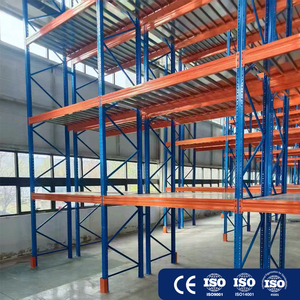
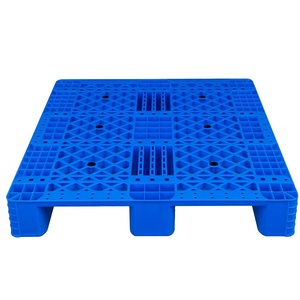
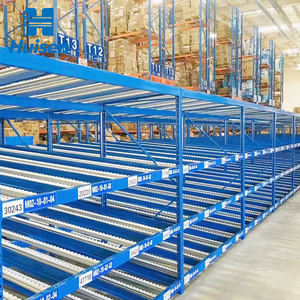
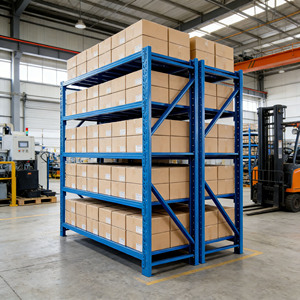
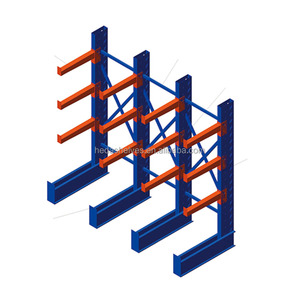
Unlike conventional selective racking or closed-end Drive-In racking, Drive-Through racking creates open access corridors at both operational faces, unlocking true First-In, First-Out (FIFO) material handling for high-density storage cubes.
In high-throughput industrial storage environments, warehouse square meterage commands an unprecedented premium. Supply chain directors, third-party logistics (3PL) conglomerates, and industrial cold-chain operators face the dual imperative of maximizing cubic volumetric efficiency while maintaining stringent inventory rotation schedules. The Drive Through Racking System represents an advanced structural engineering solution specifically configured to eliminate internal access aisles without sacrificing rotational discipline. While structurally correlated to Drive-In racks, Drive-Through configurations feature independent loading and retrieval faces. Forklifts enter through one side of the bay to position pallets onto continuous load-bearing support rails, while retrieval equipment navigates from the opposing side to discharge inventory under rigorous First-In, First-Out (FIFO) batch governance.
Because Drive-Through structures lack the continuous rear cross-bracing characteristic of traditional Drive-In systems, mechanical stability must be engineered through alternative, high-rigidity structural mechanisms. As a premier OEM/ODM drive through racking system manufacturer, Guangzhou Heda Shelves Co., Ltd. incorporates high-tensile structural tie beams, heavy-duty horizontal overhead portal frames, reinforced floor baseplates, and specialized cantilevers engineered from prime hot-rolled or cold-formed Q235B and Q355B structural steel. This structural paradigm redistributes horizontal dynamic forces across the upper portal assembly and vertical columns, counteracting the torsion and harmonic vibrations induced by forklift traffic operating directly within the storage lanes.
Because rear bracing is omitted to facilitate pass-through vehicle traversal, our engineering team implements continuous longitudinal and transversal top portal bracing. This network rigidifies the entire matrix against sway and seismic shear loads.
Pallet support rails are cradled by heavy-duty one-piece pressed cantilever arms bolted or slotted into the upright frames. The tapered geometric angle ensures smooth pallet centering while preventing point-load structural deflection under full pallet load ratings.
To isolate structural uprights from mast collisions, high-profile steel floor guide tracks (angle or structural channel) are anchored along the bay floor. These serve as steering tracks for counterbalanced trucks, reach trucks, or AGVs within narrow-bay corridors.
Selecting the optimal storage topology requires balancing density, stock rotation dynamics, capital expenditure per pallet location, and equipment cycle velocity.
| Evaluation Parameter | Drive Through Racking | Drive-In Racking | Pallet Flow (Gravity) | Radio Shuttle Racking |
|---|---|---|---|---|
| Inventory Rotation Logic | Strict FIFO (Pass-Through) | LIFO (Single Entry Face) | Strict FIFO (Continuous Rollers) | Configurable FIFO / LIFO |
| Storage Volumetric Density | Very High (75% - 85%) | Ultra High (80% - 88%) | Ultra High (85% - 90%) | Maximum (85% - 92%) |
| Forklift Mast Encroachment | Direct entry inside lanes | Direct entry inside lanes | Outer loading/unloading aisle only | Aisle-bound only (Carrier enters lane) |
| Capital Cost Per Position | Moderate ($ - $$) | Low-Moderate ($) | High ($$$ - $$$$) | Moderate-High ($$$) |
| Mechanical Wear / Maintenance | Low (Static Structural Steel) | Low (Static Structural Steel) | High (Brake rollers & speed controllers) | Medium (Shuttle battery & electronics) |
| Best Application Sector | Perishable food, cold storage, FMCG buffers | Non-perishable bulk raw materials | High-throughput distribution dispatch | Multi-deep cold stores & automated centers |
Guangzhou Heda Shelves Co., Ltd. provides end-to-end custom engineering for multinational brand owners, system integrators, distributors, and large warehousing operators.
Procuring industrial racking on an OEM or ODM basis demands verifiable metallurgy, certified robotic welding, repeatable CNC punch tooling, and surface treatment protocols tailored to harsh climates. At Heda Shelves, our 30,000 square meter manufacturing infrastructure processes over 30,000 tons of structural steel monthly, utilizing cold-formed roll tooling configured to manufacture continuous upright columns up to 12 meters in a single continuous section.
Our engineering division designs Drive Through systems that interface smoothly with regional and national building codes. For Australian installations, structures reference AS 4084 (Steel Storage Racking) criteria, accompanied by documented section modulus profiles, load tables, and floor anchor engineering packets. For seismic active jurisdictions like New Zealand, sections are engineered according to NZS 1170.5 parameters, integrating widened column footplates, enlarged anchor diameter ratings, reinforced horizontal cross-bracing ties, and heavy gauge bottom row ties to suppress sway acceleration forces under seismic events.
Certified Q235B/Q355B coils tested for yield strength, tensile resilience, and chemical elongation.
Automated multi-station hydraulic CNC lines punch pitch patterns with tight micrometer tolerances.
Cold-roll profiling ensures uniform wall thickness across multi-bend high-stiffness column sections.
Full-dip acid pickling, phosphating, followed by 180°C baked electrostatic thermoset powder coat.
Export components strapped on dedicated steel frames or heat-treated timber for biosecurity clearance.
Discover how autonomous mobile robots, automated cold-storage facilities, circular steel procurement, and seismic sensor networks are reshaping the drive-through racking sector.
The transition from manually operated forklifts to Automated Guided Vehicles (AGVs) and Autonomous Forklifts (AMRs) requires millimeter-level lane tolerances. Next-generation ODM Drive Through systems are manufactured with magnetic or optical guide integration, sensor cut-outs in floor rails, and entry chamfers designed for automated navigation.
Global demand for frozen food, pharmaceuticals, and biologics has triggered major investment in sub-zero refrigerated facilities. Drive-Through racking minimizes chilled volume losses while guaranteeing FIFO compliance. Systems use low-temperature impact-resistant powder coatings or hot-dip galvanizing to prevent embrittlement at -30°C.
Global supply chain executives now prioritize Total Cost of Ownership (TCO) over initial sticker prices. Modern procurement frameworks demand EPD (Environmental Product Declarations), traceable structural steel mill certificates, modularity for future bay expansions, and bolted rail components that reduce downtime during repairs.
Clear technical answers addressing load calculations, seismic stability, biosecurity compliance, and pallet handling dynamics.
Connect directly with our senior structural engineering department. Provide your warehouse dimensions, clear height, pallet dimensions, and target capacity—we will deliver a comprehensive 3D CAD layout, load-capacity profile, and competitive OEM/ODM manufacturing quote within 24 hours.