[email protected] Supplying Australia, New Zealand & the Pacific Islands
Direct OEM/ODM Industrial Manufacturing

OEM/ODM Medium Duty Pallet Racking Manufacturers & Suppliers

Engineered high-density warehouse racking systems certified to AS 4084, ISO 9001:2015, and CE standards with turnkey precision layout engineering.

2001
Established Year
30,000m²
Production Plant
30,000t
Monthly Output
300+
Certified Engineers

Engineered Medium & Heavy Duty Warehouse Racking Products

Rigidly roll-formed Q235B/Q355B structural steel storage configurations optimized for third-party logistics (3PL), e-commerce fulfillment, cold chains, and retail warehousing.

Technical Architecture of Medium-Duty Pallet Racking Systems

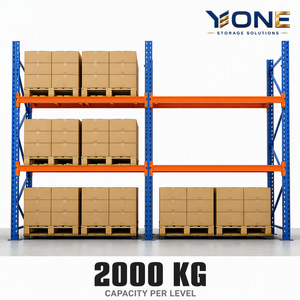
Medium-duty pallet racking functions as the structural backbone of modern intermediate logistics. Sitting strategically between lightweight manual longspan shelving (typically rated under 400 kg per level) and high-tonnage heavy structural beam racks (engineered for up to 4,000 kg per beam pair), medium-duty pallet racking accommodates load thresholds of 500 kg to 2,000 kg per beam tier. This weight classification captures approximately 62% of fast-moving consumer goods (FMCG), light industrial assembly parts, automotive components, and retail distribution SKUs.

From a metallurgical perspective, structural integrity starts with cold-rolled micro-alloyed carbon steel—predominantly grades Q235B and high-tensile Q355B (equivalent to ASTM A36 and S355JR under European nomenclature). The manufacturing process requires multi-station cold continuous profile roll forming to maintain cross-sectional consistency across column profiles without inducing residual internal stress concentrations.

Structural Uprights and Beam Connection Dynamics

The system leverages upright frames formed with omega-profile columns (Ω-profile) or boxed tubular geometries. Uprights feature precision automated hole punching in either teardrop configuration (predominant in North American footprints) or diamond/butterfly pitch slots (50mm, 75mm, or 76.2mm pitch) conforming to European FEM 10.2.02 and Australian AS 4084 standards. Step beams and box beams utilize robotic plasma welding to secure three-claw or four-claw forged steel connectors to the beam tube, integrating an automatic safety locking clip that prevents accidental beam dislodgement under violent upward forklift mast impacts.

Technical Parameter Standard Medium Duty (500-1000 kg/tier) Heavy-Medium Industrial (1000-2000 kg/tier) Validation Protocol / Regulatory Standard
Steel Substrate Grade Q235B Cold-Rolled Carbon Steel Q355B High-Yield Structural Steel GB/T 700 / ASTM A36 / EN 10025-2
Upright Section Dimensions 55mm × 47mm × 1.5mm / 1.8mm 80mm × 60mm × 1.8mm / 2.0mm Section Modulus Calculation: AS 4084
Beam Profile Geometry 50×30mm / 60×40mm Step Beam 80×50mm / 100×50mm Welded Box Beam Deflection Limit: L/200 (Design Load)
Surface Pre-Treatment Hot Alkaline Degreasing + Zinc Phosphate Continuous 7-Stage Pre-treatment Dip ISO 12944 Surface Cleanliness Class Sa 2.5
Powder Coating Finish Thermoset Epoxy-Polyester (60-80μm) Anti-Microbial or Hot-Dip Galvanized (>65μm) ASTM B117 Neutral Salt Spray (>500 Hours)
Safety Factor Standard 1.5 to 1.65 Under Working Limit Load 1.65 to 1.8 Seismic Rated Load FEM 10.2.02 / RMI ANSI MH16.1 / AS 4084

A frequent error made by warehouse procurement engineers is treating deflection limits as purely cosmetic. While standard commercial shelving may allow a maximum beam deflection ratio of 1/150 of span length, precision industrial medium-duty pallet racking requires a deflection constraint of no more than 1/200 under maximum uniformly distributed load (UDL). Exceeding this boundary induces rotational torsional stress on beam end-connectors, accelerating metal fatigue and substantially reducing the lateral rigidity of the upright aisle columns.
Future Procurement & Technological Trends in Racking Systems

How next-generation material science, robotics-ready clearance parameters, and global supply chain shifts dictate procurement decisions over the next decade.

AGV and AMR Navigation Compatibility

Warehouses are replacing standard manual counterbalanced forklifts with Autonomous Mobile Robots (AMRs) and Automated Guided Vehicles (AGVs). This shift demands millimeter-level manufacturing tolerance. Future-ready medium duty systems require CNC punched positioning targets, elevated bottom ground-clearance clearances for undercarriage straddle legs, and continuous floor anchoring plates that eliminate base deflection under automated transit.

Total Cost of Ownership (TCO) Procurement

Global corporate procurement teams are transitioning away from evaluating initial invoice price per pallet location toward life-cycle Total Cost of Ownership. TCO models account for powder coating durability, corrosion resistance in micro-climates, residual resale value, modular reconfigurability without structural cutting, and insurance rate reductions achieved by deploying certified AS 4084 and CE-tested components.

Seismic Engineering & Climate Resilience

With escalating supply chain operations across the Pacific Rim, Australia, and New Zealand, seismic engineering under NZS 1170.5 and AS 4084 is mandatory. Racking configurations must incorporate site-specific response spectrum analysis, enlarged anchor footings with chemical epoxy anchors, top horizontal bracing truss ties, and ductile steel formulas that absorb kinetic energy without brittle fracturing.

Factory-Direct Engineering, Compliance & Global Execution

Founded in 2001, Guangzhou Heda Shelves Co., Ltd. delivers institutional-grade supply chain infrastructure across Oceania, Southeast Asia, Europe, and the Americas.

Verified Third-Party Compliance

HEDA operates under strict audited credentials, maintaining certified compliance with European Construction Products Regulation CE Certificate No. 2435-CPR-8605159, Quality Management System ISO 9001:2015 No. 18624Q00169R0M, and continuous RoHS chemical purity monitoring for eco-friendly surface coatings.

Complimentary 24h 3D CAD Layouts

Our team of over 300 technical specialists and structural engineers generates tailored 3D CAD layout simulations within 24 hours. We evaluate floor load capacity (kN/m²), clear ceiling heights under HVAC and fire sprinkler clearance lines, and forklift turning radius (AST) requirements to maximize storage density.

Direct Port-to-Port Logistics & Packing

We safeguard export shipments via dedicated steel stillages and ISPM-15 heat-treated dunnage, eliminating biosecurity quarantine rejections at Australian DAFF and New Zealand MPI ports. Complete container packing maximizes cube efficiency to lower per-unit freight rates to Sydney, Melbourne, Brisbane, and Auckland.

Frequently Asked Questions by Industrial Buyers & Importers

Clear, engineering-backed answers addressing structural calculations, certifications, load ratings, and customs logistics.

What are the key technical differences between teardrop and slotted medium-duty upright profiles?
Teardrop racking utilizes an inverted punch pattern standard across North American distribution networks, allowing beam drop pins to lock into place via gravity and wedge pressure without requiring nuts, bolts, or specialty tools. Slotted, diamond, or rectangular patterns (standardized at 50mm, 75mm, or 76.2mm pitch) are predominant across European, Australian, and British Commonwealth infrastructures. Slotted configurations offer enhanced lateral torsional resistance when paired with wrap-around column connectors, making them structurally preferred in heavy industrial environments requiring AS 4084 or FEM compliance.
How does HEDA guarantee structural compliance with Australian AS 4084 and NZS 1170.5 standards?
Our engineering division designs racking arrays strictly referencing the mathematical formulations of AS 4084:2023 (Steel Storage Racking) and NZS 1170.5 structural design actions. We generate comprehensive engineering data packages containing section properties (moment of inertia, radius of gyration, yield strength), upright frame stub test calculations, beam-connector shear test ratings, and customized load capacity plaques. This data package allows local Australian or New Zealand chartered professional engineers (CPEng) to audit, inspect, and legally certify the installation on-site without delays.
What surface treatment should be specified for humid, coastal, or refrigerated cold storage warehouses?
For standard ambient, dry indoor environments, our 7-stage phosphated electrostatic thermoset powder coating (60-80 microns thickness) provides exceptional abrasion resistance and durability. For environments with high humidity, coastal exposure (within 5 km of saltwater), or freezer installations operating at -25°C with frequent condensation cycles, we recommend pre-galvanized or hot-dip galvanized steel components conforming to ISO 1461 (>65 microns zinc coating thickness). Galvanization protects against micro-fissuring and electrolytic rust creep inside enclosed tube profiles.
What parameters are required to calculate the exact load capacity per level?
Accurate load calculations require five fundamental variables: (1) Exact pallet dimensions (length, width, height including overhang); (2) Maximum gross weight of loaded unit pallet loads; (3) Type of load distribution—whether Uniformly Distributed Load (UDL) or concentrated point load; (4) Total clear beam length spanning between upright columns; and (5) Vertical pitch distance between successive beam levels (which dictates column unsupported length and allowable slenderness ratio). HEDA’s engineers input these variables into finite element simulation software to determine the exact steel gauge and profile needed to maintain safety factors above 1.65.
How does factory-direct procurement handle container optimization and biosecurity clearance?
Racking structural steel involves high volumetric density and long components (beams and uprights up to 11.8 meters for 40ft HQ containers). HEDA designs modular frame configurations that nest efficiently, utilizing customized heavy-duty steel stillages and high-tensile strapping. No untreated timber is ever permitted in the container, strictly complying with Australian Department of Agriculture, Fisheries and Forestry (DAFF) and New Zealand Ministry for Primary Industries (MPI) biosecurity mandates. Each shipment is supported by an international Certificate of Origin, detailed commercial bill of lading, and serialized packing manifests.
Can HEDA provide customized OEM white-label manufacturing for local racking distributors?
Yes. We currently produce OEM/ODM racking for dozens of major warehouse equipment brands and regional distributor networks worldwide. Our manufacturing capabilities include custom brand-specific punch patterns, proprietary beam connector forgings, customized corporate powder coat RAL color matching, branded embossed beam end-caps, and private-label packaging with custom installation manuals and load warning stickers.

Transform Your Warehouse Density Today

Partner directly with an ISO 9001:2015 and CE certified factory. Send us your architectural floor plan, storage dimensions, and pallet SKU specifications for a complimentary 3D CAD layout and quotation within 24 hours.

Send an Inquiry