High Density
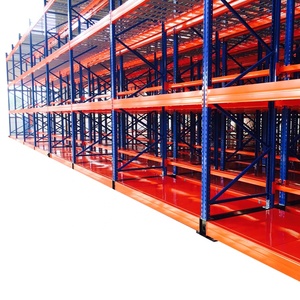
High Density Automated Retrieval Type Electric Mobile Pallet Racking
- +85% Volume Efficiency
- PLC-Controlled Rails
- Cold Store Ready (-30°C)
Exporting custom-engineered racking systems manufactured from certified high-tensile structural steel. Our in-house production lines deliver tailored section moduli, beam profiles, and automated carrier compatibility.
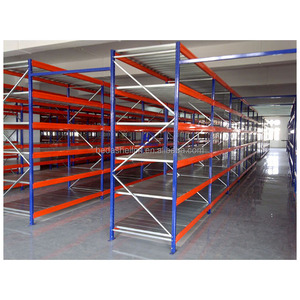
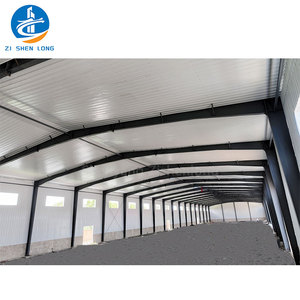
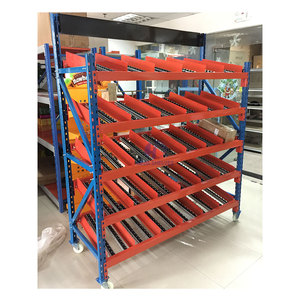
Established in 2001, Guangzhou Heda Shelves Co., Ltd. operates one of southern China’s largest dedicated storage equipment manufacturing bases. We bridge the gap between high-volume primary steel production and stringent overseas structural standards.
We supply brand-labeled profiles, custom perforation pitches (50mm, 75mm, 76.2mm teardrop), and custom section configurations for rack manufacturers and distributors across North America, Europe, Australia, and New Zealand.
Every profile and weld assembly undergoes physical yield testing and numerical validation. We hold CE Certificate No. 2435-CPR-8605159, ISO 9001:2015 Management Certification (No. 18624Q00169R0M), and full RoHS compliance reports.
Exporting over 10,000 completed warehouse installations across 130 countries. We pack strictly on custom steel stillages or ISPM-15 heat-treated dunnage, eliminating port biosecurity holdups at Australian DAFF and New Zealand MPI borders.
Evaluate storage footprint, equipment compatibility, and operational throughput across primary commercial racking architectures to maximize floor-space ROI.
| System Type | Pallet Density Ratio | Selectivity Index | Stock Rotation | Forklift Compatibility | Typical Application Sector |
|---|---|---|---|---|---|
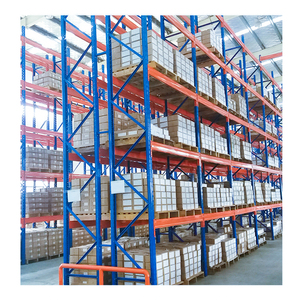
| Selective Pallet Racking | Standard (40-50%) | 100% Direct | FIFO / LIFO | Counterbalance, Reach, Articulated | 3PL, FMCG, General Distribution |
| Very Narrow Aisle (VNA) | High (60-70%) | 100% Direct | FIFO / LIFO | VNA Turret Man-Up / Man-Down | E-commerce hubs, High-bay pharmaceutical |
| Electric Mobile Racking | Maximum (85-90%) | 100% Direct | FIFO / LIFO | Standard Reach / Counterbalance | Cold storage, Blast freezers, High-rent sites |
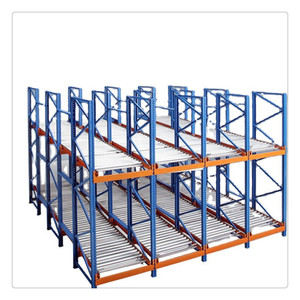
| Pallet Flow (Gravity) | Ultra-Dense (75-80%) | Face Accessible | Strict FIFO | Standard Counterbalance / Reach | Food & Beverage, Perishables, Buffer areas |
| Radio Shuttle Racking | Ultra-Dense (80-85%) | Lane Accessible | FIFO or LIFO | Any standard lift truck + Shuttle | Meat, Dairy, Raw material bulk lots |
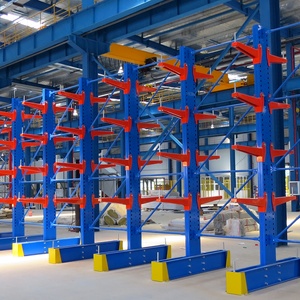
| Heavy Duty Cantilever | Application Dependent | 100% Direct Face | Open Rotation | Side loaders, Multi-directional forklifts | Steel pipes, Timber, Extrusions, Sheet pack |
Global supply chain shocks, escalating industrial real-estate lease rates, and strict carbon accountability are driving fundamental shifts in industrial racking procurement.
Procurement departments now request Scope 3 carbon assessments on structural steelwork. Modern cold-forming factories are transitioning toward electric arc furnace (EAF) certified steel billets and non-toxic zinc-rich thermosetting powders, allowing warehouse EPC developers to meet LEED and BREEAM industrial infrastructure standards.
Procurement Insight: High-yield Q355B micro-alloyed steel enables reduced profile wall thicknesses while matching load carrying capacity, cutting raw steel tonnage, shipping weight, and embodied CO2 by up to 18%.
The boundary between static pallet racking and Automated Storage and Retrieval Systems (ASRS) has dissolved. Buyers require traditional selective racking layouts that can convert downstream into autonomous mobile robot (AMR) navigation grids or automated radio shuttle lanes without replacing upright profiles.
Procurement Insight: Uprights specified with modular 50mm pitch punchings and pre-engineered seismic base anchors allow easy retrofitting of run-in rails, safety laser brackets, and shuttle bus bars.
Middleman equipment brokers are being phased out in favor of direct collaboration between end-user logistics planners and factory engineering departments. Buyers demand real-time CAD and 3D FEA (Finite Element Analysis) stress-testing outputs directly from the manufacturer before steel coil shearing begins.
Procurement Insight: Working directly with an OEM/ODM factory like HEDA cuts lead times by 3–5 weeks and eliminates markups, while guaranteeing direct engineering liability and section certification.
Next-generation rack systems combine metallurgical resilience, robotic roll-forming precision, and digital lifecycle monitoring.
Following seismic code revisions across the Pacific Rim (NZS 1170.5, AS 1170.4, and IBC/RMI), racking frames feature ductile base isolators, enlarged anchoring footprints, and box-welded stiffener channels engineered to absorb harmonic frequencies during seismic events without progressive joint collapse.
Continuous CNC roll-forming lines execute multi-pass cold bending to achieve multi-ribbed omega upright sections. This profile geometry optimizes the section radius of gyration, dramatically enhancing lateral torsional buckling resistance under heavy asymmetric axle loads.
In harsh environments like cold stores, fertilizer blending hubs, and coastal facilities, traditional wet spray finishes quickly fail. Modern continuous lines deploy 10-stage automated pickling and silane chemical pre-treatments followed by 70–90 micron electrostatic epoxy-polyester thermoset powder coatings baked at 200°C for exceptional salt-spray longevity.
Every beam, upright column, and brace is manufactured in-house under our strict ISO 9001:2015 quality control regimen, ensuring dimensional tolerances within ±0.5mm across high-volume production runs.
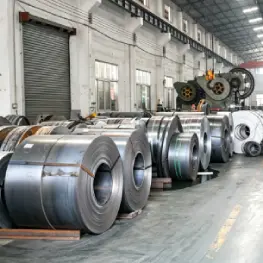
Spectrographic verification of chemical composition and tensile elongation on prime steel coils.
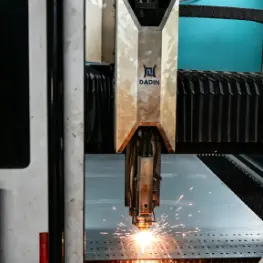
Automated uncoiling and strip slitting ensuring burr-free edges and exact strip width tolerances.
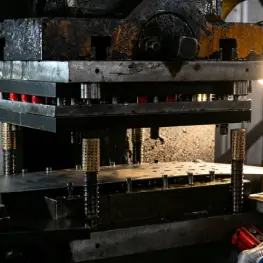
High-tonnage mechanical punching presses maintaining 50mm/75mm hole pitch accuracy over 12-meter columns.
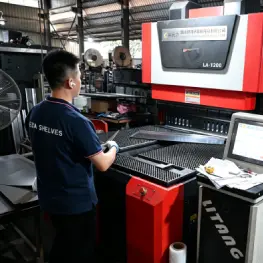
Progressive station cold roll-formers shaping complex Omega upright profiles with high stiffness.
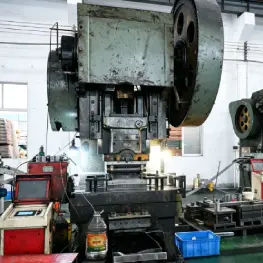
Twin-C interlocking roll forming producing seamless heavy-duty box and step beams.
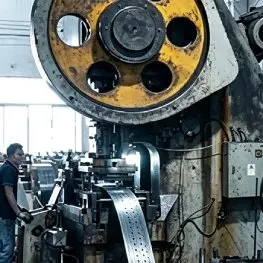
Mechanical edge-dressing and shot-blasting to eliminate micro-burrs and surface slag.
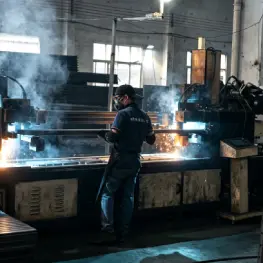
Multi-axis robotic welding cells bonding 3-claw/4-claw connectors to beams with deep weld penetration.
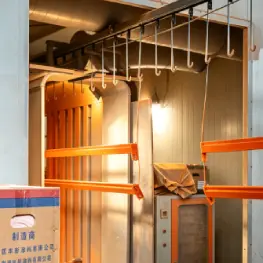
Acid pickling, phosphating, electrostatic powder spray, and 200°C curing for uniform film thickness.
Essential design standards, engineering calculations, metallurgical properties, and logistics considerations for overseas pallet racking procurement.
Send us your warehouse CAD floor plan, clear ceiling height, pallet dimensions (Width × Depth × Loaded Height), maximum unit weights, and forklift specifications. We provide complete 2D/3D layouts, structural load capacities, and FOB/CIF pricing within 24 hours.