Featured Heavy-Duty Industrial Racking & Storage Systems
Precision cold-rolled Q235B/Q355B structural steel storage configurations fabricated for high volumetric efficiency, automated integration, and heavy dynamic loading.
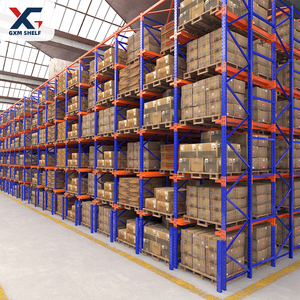
GXM Industrial Heavy-Duty Boltless Pallet Racking System
Optimized for high-turnover FMCG operations and drive-in configurations with rapid boltless beam assembly.
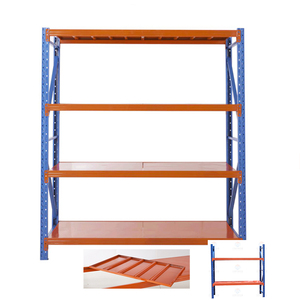
200kg Industrial Steel Longspan Wide-Span Shelving
Versatile manual order picking solution tailored for retail fulfillment centers, automotive parts, and wholesale distribution.
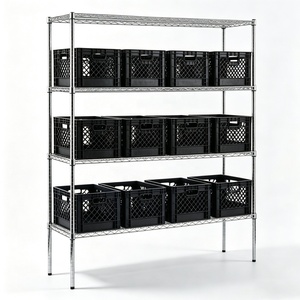
Heavy-Duty 4-Tier Galvanized Industrial Wire Shelving
Engineered for cold room circulation and dust prevention with certified fire sprinkler water penetration compliance.
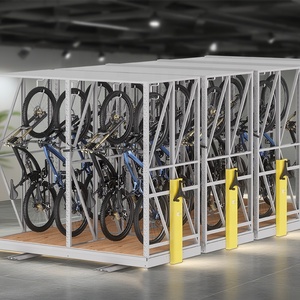
High-Density Compactor Mobile Racking & Track System
Maximizes floor utilization up to 85% by eliminating fixed access aisles using precision mechanical gear-driven tracks.
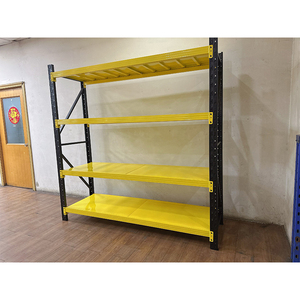
Multi-Tier Modular Industrial Warehouse Storage Racking
Versatile modular shelving structure readily integrated with mezzanine flooring, conveyors, and sorting walkways.
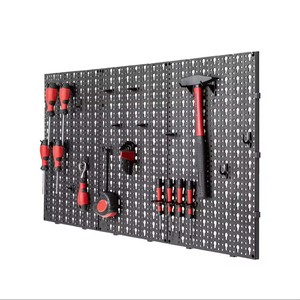
Perforated Metal Pegboard Tool Storage & Display Rack
Heavy-gauge perforated panels configured for 5S lean manufacturing maintenance bays, toolrooms, and pick workstations.
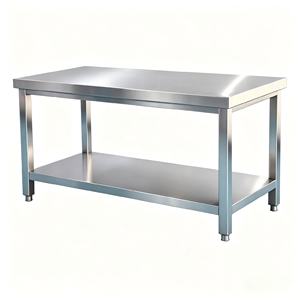
Two-Tier SUS304 Stainless Steel Industrial Workstation
Corrosion-proof food and pharmaceutical staging bench with reinforced under-shelf hat channels and leveling feet.
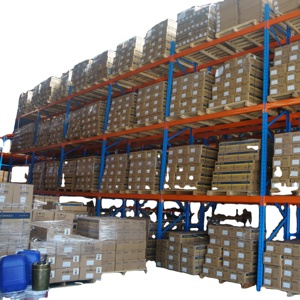
Master-Series Heavy-Duty Selective Pallet Racking
The gold standard for multi-SKU selectivity, accommodating standard Australian (1165x1165mm) and Euro (1200x800mm) pallets.
Why Global Supply Chains Rely on HEDA OEM/ODM Engineering
Operating direct from Guangzhou, our integrated manufacturing plants deliver custom structural steel cold-forming, robotic welding, and automated surface treatments backed by rigorous quality assurance.
Accredited Engineering Compliance
Manufactured under ISO 9001:2015 (Cert No. 18624Q00169R0M) and CE Certification (Cert No. 2435-CPR-8605159). Structural calculations cross-verified against Australian AS 4084:2023, European EN 15512, and American RMI MH16.1 specifications.
Complimentary 3D CAD & FEA Layouts
Our in-house design office of 300+ technical personnel formulates bespoke spatial blueprints within 24 hours. We evaluate floor slab load capacity, forklift turning radii, flue space ventilation, and clear headroom down to the millimeter.
Seismic & Sub-Zero Metallurgical Design
Specialized engineering for high-risk seismic environments (NZS 1170.5 ductility criteria) featuring reinforced baseplates and heavy bracing patterns. Low-temperature steels withstand -30°C freezer embrittlement without structural fatigue.
10-Stage Anti-Corrosion Surface Finishing
Automated shot blasting, chemical degreasing, ultrasonic phosphating, and electrostatic powder coating baked at 200°C creates an ultra-durable 60–90µm polyester shield. Hot-dip galvanizing per ASTM A123 available for marine and exterior zones.
Custom OEM/ODM Profile Roll-Forming
High-speed CNC continuous roll-forming lines process high-tensile hot and cold-rolled steel coils into custom upright profiles, box beams, and step beams with teardrop, slotted, or keyhole punch intervals customized to distributor ecosystems.
Biosecurity & Containerized Export Ready
Racks bundled with precision protective steel stillages or ISPM-15 heat-treated dunnage compliant with Australian DAFF and New Zealand MPI bio-security requirements. Optimized 40ft HQ container nested packing cuts international sea-freight overhead.
Industrial Racking System Engineering Matrix
Assess structural parameters, access throughput, and space optimization metrics across primary warehouse racking topologies.
| System Topology | Space Utilization | Stock Rotation | Selectivity | Max Height (m) | Forklift Requirement | Compliance Standards |
|---|---|---|---|---|---|---|
| Selective Pallet Racking | 40% – 50% | FIFO / LIFO | 100% Direct | Up to 12.0m | Standard Counterbalance / Reach | AS 4084 / EN 15512 |
| Drive-In / Drive-Through | 65% – 75% | LIFO (Drive-In) / FIFO | Low (Bulk SKUs) | Up to 11.0m | Narrow Reach / Cab-in Guided | ISO 9001 / CE Mark |
| Radio Shuttle Automation | 80% – 90% | FIFO & LIFO Dual | Medium-High By Channel | Up to 24.0m | Any standard forklift + Shuttle Cart | FEM 10.2.02 / CE |
| Cantilever Racking | 50% – 60% | Direct Accessible | 100% Open Face | Up to 9.0m | Side Loader / Multi-directional | AS 4084 / ANSI MH16.1 |
| Multi-Tier Mezzanine | 100% – 200% Floor Gain | Manual Order Picking | 100% Granular | Multi-Level (2–4 Floors) | Goods Lift / Vertical Conveyor | Building Code / AS 1657 |
1. Future Procurement Trends in Industrial Steel Racking (2025–2030)
The global procurement landscape for steel warehouse storage equipment is experiencing a seismic paradigm shift driven by e-commerce fulfillment dynamics, soaring commercial real estate lease rates, and stringent ESG decarbonization mandates. As procurement directors and operations engineers plan their capital expenditure cycles, five distinct structural purchasing trends have surfaced:
1.1 Shift Toward Semi-Automated and Shuttle-Compatible Engineering: Traditional static racking is increasingly giving way to semi-automated deep-lane configurations, notably Radio Shuttle and Automated Storage and Retrieval Systems (ASRS). Procurement teams are no longer evaluating uprights solely on static yield capacity; they demand precise dimensional tolerances (±1.5mm overall lane plumbness) and high-cycle anti-wear rail profiles capable of sustaining autonomous shuttle carts operating at acceleration speeds exceeding 1.2 m/s².
1.2 Decarbonization Mandates and Green Steel Sourcing: Industrial logistics developers backed by institutional infrastructure capital face rigorous Scope 3 carbon emission accounting. Consequently, suppliers must document the provenance of raw steel billets. Guangzhou Heda utilizes certified low-emission electric arc furnace (EAF) and basic oxygen steel with transparent mill test certificates (MTCs), coupled with heavy metal-free, zero-VOC TGIC polyester powder coatings.
"High-density vertical expansion is the ultimate hedge against commercial land inflation. Modern warehouse design has transitioned from two-dimensional footprint sizing to three-dimensional volumetric cubic capacity engineering."
1.3 Dynamic Demand for Multi-Tier Rack-Supported Platforms: Facing prohibitive urban construction permits and exorbitant square-meter leasing costs across global distribution corridors, supply chain managers are adopting multi-tier rack-supported mezzanine floors. By transforming dead ceiling headroom into functional picking catwalks, facilities double or triple their operational floor area without expanding their foundation footprint or undergoing lengthy structural municipal zoning reassessments.
1.4 Standardized Global Modularity with Local Compliance: Enterprise buyers are consolidating global supply lines. Rather than managing divergent regional vendors, multinational logistics operators partner with Tier-1 OEM/ODM manufacturers capable of delivering a unified roll-formed profile geometry that can be adapted via engineering calculations to fulfill local standards—whether it is AS 4084 in Australia, NZS 1170.5 in New Zealand, FEM 10.2.02 across the EU, or ANSI MH16.1 in North America.
2. Technical & Structural Development Trends: Cold-Forming, Metallurgy & Seismic Rigidity
From an engineering vantage point, industrial steel storage racking is not mere metal framing; it is a complex, hyper-slender skeletal structure subject to variable dynamic live loads, forklift impact shears, cyclic pallet placements, and seismic base excitation. Recent innovations in roll-forming technology and structural metallurgy have unlocked unparalleled performance benchmarks:
2.1 High-Yield Cold-Rolled Steels (Q235B vs. Q355B Grade Analysis): Modern roll-forming allows the cold-working of micro-alloyed structural steels. While standard light-duty shelving relies on commercial cold-rolled steel with yield points around 235 MPa, heavy-duty industrial uprights increasingly specify Q355B high-strength structural grade (minimum yield stress $f_y = 355\text{ MPa}$; tensile strength $R_m = 470\text{–}630\text{ MPa}$). This elevates the permissible compressive buckling capacity of upright columns by over 32% while reducing total structural deadweight by 18%, decreasing global maritime freight costs per pallet location.
2.2 Finite Element Analysis (FEA) and Buckling Limit States: Thin-walled, perforated cold-formed members are vulnerable to three distinct buckling modes: local buckling of the flange walls, distortional buckling around the perforations, and global flexural-torsional buckling. Guangzhou Heda Shelves deploys advanced non-linear Finite Element Analysis (FEA) to simulate complex stress distributions around beam teardrop and hook apertures. By incorporating optimized stiffening lips, return flanges, and multi-faceted Omega ($\Omega$) post cross-sections, our upright profiles maintain an exceptional structural safety coefficient of 1.65 to 1.95 under ultimate limit state (ULS) conditions.
2.3 Engineered Seismic Dissipation for Active Fault Zones: For projects deployed across the Pacific Ring of Fire—including New Zealand, Japan, and the western Americas—racking frames must absorb cyclic ground accelerations without brittle catastrophic collapse. Seismic-ready racking incorporates oversized ductilized baseplates, multi-anchor epoxy chemical expansion studs, and high-ductility diagonal cross-bracing. In accordance with NZS 1170.5 standards, connection ductility factors ($k_\mu$) and structural performance factors ($S_p$) are meticulously calibrated to guarantee that beam connector locks slip safely to dissipate seismic energy while retaining the pallet safely above warehouse personnel.
3. Comprehensive OEM/ODM Manufacturing Workflow: Raw Coil to Container Loading
Precision manufacturing is the bedrock of warehouse safety. Unlike small-scale fabrication workshops, our 30,000 m² Guangzhou production facility operates fully integrated, semi-automated industrial assembly lines adhering to a strict 10-stage quality verification workflow:
Stage 1: Raw Material Metallurgy Inspection: Hot-rolled and cold-rolled steel coils arrive from premier state-owned mills accompanied by standard EN 10204 Type 3.1 inspection certificates. Every heat batch undergoes laboratory spectrometer chemical verification (Carbon, Manganese, Silicon, Phosphorus, Sulfur thresholds) and mechanical tensile testing before entering the uncoiler.
Stage 2 & 3: High-Speed CNC Punching & Precision Roll-Forming: Coils pass through high-speed automated hydraulic punching presses to pierce beam connector slots (50mm or 75mm pitch increments) with an index precision of ±0.1mm. The strip enters continuous multi-station cold roll-forming mills featuring 20 to 24 hardening chrome forming passes, gradually shaping the steel into rigid omega upright profiles with zero residual twist or camber.
Stage 4 & 5: Robotic Plasma Cutting & Submerged Arc Welding: Upright cross-bracing channels and heavy box-beam connectors are precision cut using CNC 3D laser-cutting equipment. Beam-to-end-plate connectors (3-prong or 4-prong heavy-gauge claws) are fusion welded by six-axis ABB robotic welding cells using gas-shielded metal arc welding (GMAW), ensuring 100% deep root penetration with smooth, spatter-free weld seams.
Stage 6 & 7: 10-Tank Chemical Pretreatment & Automated Powder Coating: Structural components are immersed across ten sequential chemical preparation baths: alkaline degreasing, twin water cascades, hydrochloric acid pickling (scale removal), phosphating (iron-phosphate micro-crystal bonding coat), and passivation rinses. Once dried, frames enter an enclosed automated electrostatic powder coating tunnel where high-durability epoxy-polyester thermosetting powder is applied with a uniform thickness of 70–90 microns, followed by an indirect-fired convection curing oven operating at 200°C for 25 minutes.
Stage 8, 9 & 10: Non-Destructive Testing (NDT), Export Stillage Packaging & Shipping: Every production shift conducts cross-cut coating adhesion testing (ISO 2409 Class 0), impact resistance tests, and weld ultrasonic flaw inspection. Components are nested into heavy structural steel stillages, protected with edge-protector guards, wrapped in heavy shrink-film, and strapped with high-tensile steel strapping. Wood dunnage is rigorously heat-treated in compliance with ISPM-15 standards to guarantee rapid quarantine clearance at Australian DAFF and New Zealand MPI ocean terminals.
4. Factory Capabilities, OEM Customization, and Production Capacity
Guangzhou Heda Shelves Co., Ltd. (established in 2001) has evolved over a quarter-century into an undisputed leader in industrial storage manufacturing. Our facility output exceeds 30,000 metric tons of fabricated steel structures per month, supported by over 300 experienced engineers, certified welders, and logistics planners.
Tailored OEM / ODM Support for Global Distributors: We act as an invisible private-label production engine for racking distributors, system integrators, and industrial shelving suppliers globally. Custom capabilities include:
- Proprietary Perforation Profiles: Replication of regional connection patterns (Dexion-compatible 76.2mm pitch, Colby-compatible, Teardrop 50.8mm pitch, or Speedlock-compatible hook geometries).
- Bespoke Load Capacity Stamping: Custom steel tonnage embossing on beam connectors and laser-etched manufacturer serial identifiers for total lifecycle traceability.
- Custom Corporate RAL Colorways: Precision color-matching for uprights and beams (RAL 5015 Sky Blue, RAL 2004 Pure Orange, RAL 7035 Light Grey, RAL 9005 Jet Black) using UV-stabilized outdoor-grade powders.
- Full Technical Documentation Packs: Comprehensive load rating charts, safe working load (SWL) calculation sheets, dynamic deflection analyses, and customized assembly user manuals bearing your brand identity.
Frequently Asked Questions by Industrial Buyers & Engineers
In-depth technical answers addressing regulatory verification, seismic modeling, biosecurity protocols, and maritime logistics.
How does your pallet racking comply with Australian Standard AS 4084:2023?
AS 4084:2023 specifies rigorous design, testing, and operational criteria for steel storage racking in Australia. Our engineering team calculates beam load deflection limits strictly to $\le L/200$ (where $L$ is the clear span distance between uprights) under uniformly distributed load (UDL), and structural upright frames are verified against combined axial compression and bending moments according to limit state mechanics. We provide comprehensive engineering data packs—including second moment of area ($I$), section modulus ($Z$), and steel mill mechanical tensile certificates—so that your independent local Australian chartered engineer (RPEQ/NER) can verify and provide the formal structural engineering certification and Safe Working Load (SWL) signage required for workplace health and safety (WHS) compliance.
Can your structural racking and mezzanines be engineered for New Zealand seismic zones?
Yes. New Zealand is subject to stringent seismic requirements under NZS 1170.5 (Structural design actions - Earthquake actions). When manufacturing for NZ projects (e.g., Auckland, Wellington, or Christchurch regions), our structural designers work from your site-specific seismic hazard acceleration coefficients ($C_h(T)$), soil subsoil class (Class A through E), and building importance category. We integrate heavy-duty seismic baseplates (typically 12mm to 16mm thick with quad-anchor anchoring arrays), increase the gauge thickness of bottom-tier upright profiles, and design reinforced horizontal and vertical spine bracing towers to absorb seismic shear forces, ensuring the installation can be readily signed off for Producer Statement 1 (PS1) design verification.
How do you handle Australian (DAFF) and New Zealand (MPI) biosecurity and timber treatment rules?
Non-compliant packing materials can lead to catastrophic container rejection, re-exportation, or costly quarantine fumigation at major ports like Sydney, Melbourne, Brisbane, and Auckland. To eliminate quarantine risk, HEDA Shelves utilizes custom-welded structural steel shipping stillages to secure pallet racking components wherever possible. If timber dunnage or skids are required, they are 100% compliant with ISPM-15 standards, having undergone verified heat treatment (HT) core temperature exposure of 56°C for a minimum of 30 minutes and displaying the official IPPC stamp mark. Full packaging declarations and clean container cleanliness declarations accompany every ocean bill of lading.
What essential technical data is required to generate a 3D CAD layout and quotation?
To deliver an accurate, mathematically verified storage layout within 24 hours, our engineering department requires six key inputs: (1) Architectural warehouse floor plan indicating clear building dimensions, column locations, entry/egress roll-up doors, and dock levelers; (2) Building clear internal height measured to the lowest hanging ceiling obstruction (fire sprinklers, HVAC ducting, or purlins); (3) Pallet specifications including width, depth, overall load height (including wooden skid), and maximum gross weight; (4) Material handling equipment (forklift model, minimum turning aisle requirement, collapsed mast height, and maximum lift reach); (5) Operating environment conditions (ambient distribution, cold room, or sub-zero freezer); and (6) Regional project postal code for wind and seismic loading criteria.
What metallurgical steel grades are used, and how do they resist low-temperature embrittlement?
Our standard production utilizes prime certified Q235B ($f_y \ge 235\text{ MPa}$) and Q355B ($f_y \ge 355\text{ MPa}$) structural carbon steel with verified chemical ladle analysis and mechanical elongation exceeding 21%. For cold chain cold storage and deep-freeze logistics operating from -20°C down to -30°C, ordinary structural steel can undergo a dangerous ductile-to-brittle transition, risking sudden fracture under shock loading. For sub-zero installations, we source killed, fine-grain structural steels (such as Q355D or Q355E) with certified Charpy V-notch impact energy absorption ($\ge 34\text{ J}$ at -20°C or -40°C), eliminating low-temperature micro-cracking risks.
What is the shipping duration and 40ft HQ container loading density for export orders?
Production cycles for standard customized 40-foot High Cube (40HQ) container orders range from 15 to 22 business days depending on finish specifications. Direct ocean transit times from our major departure hubs (Guangzhou / Shenzhen / Hong Kong ports) typically average: 12 to 18 days to Australian East Coast ports (Sydney, Melbourne, Brisbane); 18 to 24 days to Auckland and Tauranga (New Zealand); 22 to 28 days to major European gateways (Rotterdam, Hamburg, Felixstowe); and 16 to 22 days to US West Coast hubs (Los Angeles, Long Beach). Our computer-modeled nesting packing plans maximize weight and volume balance, achieving 22 to 26 metric tons per 40HQ container to lower your per-pallet landed freight cost.
How does electrostatic polyester powder coating compare to Hot-Dip Galvanizing (HDG)?
Electrostatic powder coating provides an exceptional, impact-resistant aesthetic surface finish (60–90µm thick) that excels in indoor ambient and temperature-controlled distribution warehouses, offering superior resistance against daily pallet rubbing, scuffing, and industrial cleaning agents. Conversely, for external yard storage, highly corrosive coastal warehouses exposed to salt-spray atmospheres (ISO 12944 C3–C5 corrosive categories), or chemical fertilizer facilities, we recommend Hot-Dip Galvanizing (HDG) conforming to ISO 1461 / ASTM A123. The HDG immersion process creates a metallurgically bonded zinc-iron alloy barrier of 85–120µm thickness that provides galvanic sacrificial protection for 30+ years without maintenance.
Can you facilitate private-label OEM manufacturing for regional racking distributors?
Yes. Private label OEM and ODM fabrication comprises a substantial portion of our international output. We support regional racking suppliers and warehouse equipment integrators by manufacturing compatible replacement frames, bespoke punch patterns, proprietary beam connectors, and branded componentry. All export cartons, steel tags, and plastic film packaging can feature your distributor logo, custom part numbering, and tailored assembly instruction sheets. Strict Non-Disclosure Agreements (NDAs) protect your intellectual property and client confidentiality.