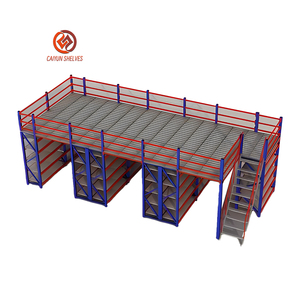
Industrial Dynamic Racking & Material Handling Systems
Comprehensive engineering portfolios compliant with ISO 9001:2015 and CE standards, optimized for dynamic intralogistics, FIFO stock handling, and e-commerce picking in high-density facilities.
Strategic Engineering Adaptations for the Colombian Supply Chain
A technical examination of how roller rack (live storage) architecture integrates into the distinctive climatic, topographic, and commercial realities of the Republic of Colombia.
1. Andean Seismic Micro-Zoning and NSR-10 Structural Structural Criteria
Industrial warehousing complexes located in the savannah of Bogotá D.C., Cundinamarca (Funza, Mosquera, Tenjo) and the Aburrá Valley (Medellín, Itagüí, Girardota) operate within intermediate to high seismic design zones according to the Colombian Earthquake Resistant Building Code (Reglamento Colombiano de Construcción Sismo Resistente - NSR-10). In standard static racking, horizontal ground acceleration can cause dynamic loads that dislodge stored units. In roller rack and dynamic pallet flow systems, seismic activity introduces the critical hazard of uncontrolled pallet migration or kinetic derailment along the gravity lane.
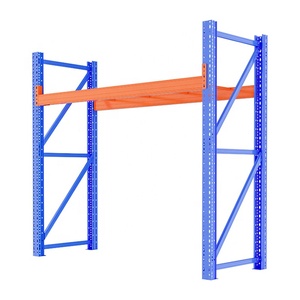
Our export engineering protocol integrates widened footplates (baseplates minimum 12mm thickness with grade 8.8 expansion anchors), reinforced upright cold-formed profiles using certified Q235B and Q355B high-tensile structural steel, and intermediate dual-directional frame bracing. Gravity roller tracks are built with secondary safety end-stops, centrifugal braking rollers positioned at engineered pitch calculations, and side guide flanges that prevent pallet or carton tilting under unexpected ground acceleration vibrations.
2. Macro-Logistics Distribution Hubs: E-Commerce, Retail & FMCG in Bogotá and Medellín
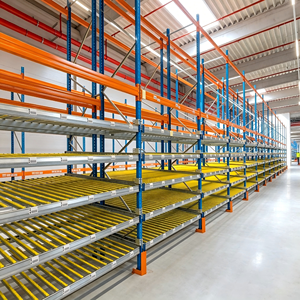
Colombia has become one of Latin America's fastest-growing digital commerce ecosystems, driven by retail giants and omnichannel distribution networks across the Sabana de Bogotá. Traditional selective pallet racking creates long walking distances, leading to low picking efficiency and congested forklift traffic. Carton flow racks (dynamic roller tracks) resolve this operational bottleneck by separating the replenishment aisle from the order-picking aisle.
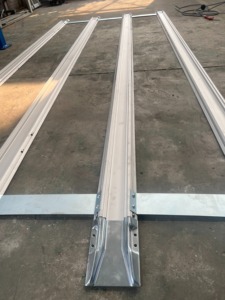
Goods are loaded from the rear loading face and roll gently along heavy-duty aluminum or galvanised roller tracks at an engineered inclination gradient of 2.5% to 4%, presenting items automatically at the pick face. This guarantees flawless First-In, First-Out (FIFO) stock rotation, shrinks picking travel distances by up to 60%, and increases order throughput for high-frequency pharmaceutical, cosmetic, and FMCG fulfilment operations.
3. Cold-Chain Agro-Export Applications: Flowers, Avocado & Perishables
Colombia's position as the world's leading exporter of cut flowers (Sabana de Bogotá, Rionegro) and a major exporter of Hass avocados demands rigorous cold-chain integrity. Cold storage facilities are extremely capital-intensive to build and maintain in terms of electrical consumption per cubic metre. Operating static racking in refrigerated or blast-chilling conditions squanders valuable refrigerated volume on access aisles.
By implementing deep-lane gravity pallet flow roller systems, warehouse density can be increased by over 75% compared to conventional layouts. Our specialized low-temperature roller bearings, synthetic food-grade lubricants rated down to -30°C, and electrostatic powder coatings pre-treated with zinc phosphating ensure that humidity, frost formation, and sanitization washes will not cause structural corrosion or bearing seizure.
4. Maritime Port Logistics: Buenaventura & Barranquilla Transshipment
For import-export logistics platforms operating adjacent to ocean terminals in Barranquilla, Cartagena, and Buenaventura, environmental salinity poses an aggressive threat to bare steel. We offer industrial hot-dip galvanization conforming to ISO 1461, achieving zinc deposition depths beyond 70 microns, alongside high-durability epoxy-polyester coatings cured at 200°C. This level of surface protection prevents pitting corrosion across roller spindles, frame braces, and track connectors exposed to continuous coastal humidity.
Macro-Trends Shaping Colombian Intralogistics & Racking Demand
Data-driven insights into warehousing expansion, urban land scarcity, and the technical migration from static shelving to dynamic flow solutions across Colombia.
Rising Industrial Land Values in Free Trade Zones
Industrial land leasing rates in prominent Colombian Zona Franca developments (such as Zona Franca de Bogotá, COTA, and Parque Industrial Megacentro) have seen steady real estate valuation increases. Operations can no longer afford wide, non-productive operating aisles. Roller racking transforms 2D floor plans into 3D high-density cubic storage, maximizing footprint return on investment.
SKU Proliferation & Omnichannel Splitting
Traditional manufacturing and distribution networks are adapting to micro-fulfilment. Rather than full-pallet picking, Colombian distribution networks now handle complex carton-level and split-case picking. Aluminum FIFO roller rail systems provide adjustable divider tracks that accommodate rapid changes in box dimensions without requiring specialized re-tooling.
Nearshoring & Cross-Border Procurement Efficiency
With multinational corporations establishing regional distribution centres (CDIs) in Colombia to serve the Andean Community, procurement managers prioritize suppliers that provide fully documented technical packages, clear Bill of Lading traceability, and verified steel mill certificates to secure quick customs release under DIAN supervision.
Enterprise Advantages: Why Choose Our Engineering & Export Infrastructure
Drawing on over two decades of production discipline, our manufacturing operation in Guangzhou integrates complete in-house quality control from structural raw coil to international container dunnage.
Complimentary 3D CAD & Finite Element Design
Before steel cutting begins, our design office generates comprehensive 3D CAD models, structural load distribution tables, and dynamic flow velocity simulations tailored to your warehouse layout, clear height, and pallet specifications.
Certified Metallurgy & Rigorous Compliance
Certified under CE Certification No. 2435-CPR-8605159 and ISO 9001:2015 No. 18624Q00169R0M. Our raw structural steel coils undergo continuous ultrasonic flaw detection, yield stress validation, and chemical composition analysis.
Precision End-to-End Manufacturing
Equipped with automatic CNC continuous roll-forming lines, precision multi-head punching machines, robotic welding stations, and a 12-stage chemical pre-treatment and electrostatic powder-coating line producing a consistent 60–80 micron protective finish.
Ocean Export Dunnage & Container Packing
Racking components are strapped on reinforced steel stillages or ISPM-15 heat-treated dunnage. Critical roller channels, bearings, and upright columns are bubble-wrapped and moisture-barrier sealed to ensure pristine transit across Pacific shipping lanes.
Complete Customs & DIAN Clearance Documentation
We supply complete commercial packages: detailed packing lists with piece weight tallies, Commercial Invoices with correct Colombian Tariff Codes (Partida Arancelaria 7308.90), Certificates of Origin, and mill test certificates for frictionless customs clearance.
Field-Tested Assembly Kits & Technical Support
Each upright, beam connector, and roller guide bed is clearly numbered to match provided layout engineering schematics. We furnish step-by-step bilingual installation blueprints and provide remote video supervision for your local assembly contractors.
Frequently Asked Questions: Importing Roller Racks into Colombia
Essential guidance addressing technical specifications, logistics corridors, Colombian tariffs, and installation standards for warehouse procurement teams.
What are the typical sea freight transit times from China to Colombian maritime ports?
Ocean freight shipped from major South China ports (such as Nansha, Shekou, or Yantian) directly to the Pacific terminal of Buenaventura generally requires 24 to 32 days transit time, depending on carrier routing and transshipment calls (e.g., Manzanillo or Balboa). For Caribbean ports such as Cartagena and Barranquilla, sea transit via the Panama Canal typically takes 28 to 36 days. Once discharged, inland bonded trucking to the central plateau (Bogotá, Medellín, or the Coffee Axis via the Túnel de La Línea) generally takes 2 to 5 days, depending on highway logistics and customs release.
How does your roller rack design accommodate typical wooden pallet quality and sizes used in Colombia?
In the Colombian logistics sector, warehouses utilize a combination of standard 1000 mm × 1200 mm 4-way entry wooden pallets (often conforming to ARLOG or local ANDI logistics guidelines) as well as non-standard domestic wooden pallets. Lower-grade wooden pallets with uneven, sagging, or cracked bottom runner boards present a serious jamming risk in standard gravity flow tracks. To overcome this, our engineering includes triple-track roller designs, wider full-width cylindrical rollers, or closely spaced intermediate roller pitches (e.g., 50mm or 75mm center-to-center). This ensures that uneven runner surfaces maintain continuous contact with at least three rollers at all times, preventing system hang-ups.
What customs duties, tariff codes, and taxes apply to racking systems imported under DIAN regulations?
Industrial steel storage racking, carton flow shelving, and mezzanine systems are generally classified under Colombian Harmonized Tariff Schedule code Partida Arancelaria 7308.90.00.00 (Estructuras y sus partes, de fundición, hierro o acero). Typical import duty (Arancel) ranges from 5% to 10%, accompanied by Value Added Tax (IVA of 19%) calculated over the CIF customs value. For manufacturing enterprises operating within registered Colombian Free Trade Zones (Zonas Francas), import duties and IVA may be deferred or exempted on equipment utilized in certified industrial operations. We provide accurate commercial invoices, packing lists, and steel mill declarations to support your customs broker (Agencia de Aduanas).
How do speed controller braking rollers function in deep-lane pallet flow systems?
In deep pallet gravity flow lanes (ranging from 4 to over 15 pallets deep), an unrestricted rolling pallet of 1,000 kg can accelerate to unsafe terminal velocities, causing crushing impacts at the discharge face. Our system incorporates indirectly driven centrifugal brake rollers embedded inside the roller bed at calculated intervals (typically one every pallet length). These internal planetary gear systems engage friction brakes proportionately to speed: the faster the pallet moves, the higher the braking resistance applied. This regulates pallet rolling speed to a safe, constant pace of approximately 0.3 meters per second, protecting operators and product integrity.
Can carton flow beds be retrofitted into our existing selective pallet racking frames?
Yes. Our carton flow roller track modules and dynamic FIFO aluminum rails are designed with universal step-beam connectors and adjustable drop-in brackets. They can be installed into standard teardrop, European 50mm pitch, or custom box-beam pallet racking frames. You can convert the ground or lower beam levels of your current static warehouse racking into high-velocity split-case picking lanes without replacing your primary upright structural columns.
What warehouse parameters must be provided to receive a tailored structural proposal?
To produce an exact 3D CAD schematic, load distribution table, and quotation, our engineers need: (1) Architectural warehouse layout showing column spacing, clear ceiling height, overhead obstructions (sprinklers/lighting), and dock locations; (2) Unit load characteristics: carton or pallet outer dimensions (width, depth, height), minimum and maximum unit weights; (3) Operational rotation method: FIFO or LIFO; (4) Substrate floor slab details (concrete thickness and reinforcement) to calculate anchor embedment in seismic-prone zones.
Transform Your Warehouse Efficiency in Colombia
Consult with our structural racking engineers to design an optimized, seismically stable, high-throughput roller flow system tailored to your specific facility dimensions and SKU profiles.
Send an Inquiry