Factory-Direct Single Deep Selective Pallet Racking Systems
Custom-engineered profile sections, EN 15512 & GOST R 55525-2017 compliant cold-formed structural steel, designed for direct access, high throughput, and demanding temperature-controlled operations.
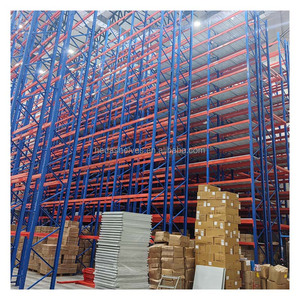
Heavy Duty Selective Storage Racking
Industrial beam configurations designed for versatile euro and standard industrial pallet loading up to 4,500 kg per tier.
- 100% SKU Selectivity Ratio
- 75 mm & 50 mm Pitch Adjustability
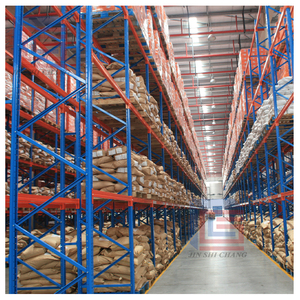
Standard Steel Selective Warehouse Rack
Optimized upright omega profiles built from certified high-tensile structural coil, engineered for Class A warehouse heights up to 14m.
- Cold-Rolled Q235B/Q355B Steel
- Scratch-Resistant Powder Coating
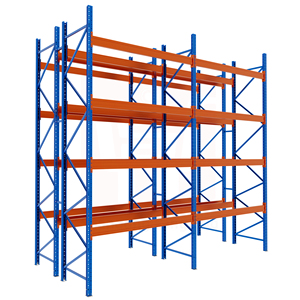
Custom Heavy-Duty Adjustable Beam Racks
Custom beam profiles engineered with interlocking connector claws to eliminate rotational torsion under non-uniform pallet positioning.
- High Torsion Resistance Design
- Integrated Safety Lock Pins
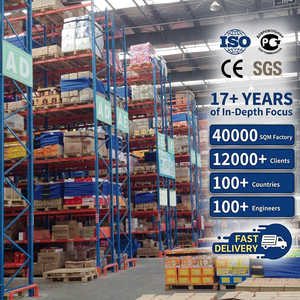
SDFD Durable Box-Beam Pallet Storage System
Reinforced dual-C interlocking seam-welded box beams ensuring minimal deflection under heavy dynamic and static payload pressures.
- Deflection Ratio ≤ L/200 Under Load
- ISO 9001 Structural Rigidity
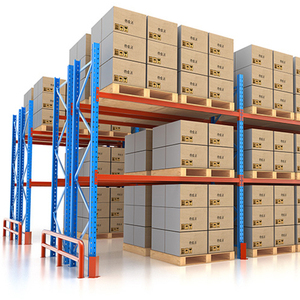
Single-Depth CE Certified Corrosion-Resistant Rack
Tough epoxy thermo-setting polymer finishing pre-treated via nine-stage degreasing and phosphating, protecting against moisture and cold.
- Cold-Chain Tested to -30°C
- European CE Safety Certification
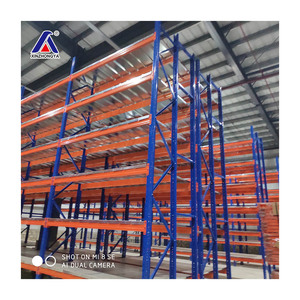
Single Deep Back-to-Back Pallet Storage Frame
Standard aisle double-sided setup maximizing access efficiency for reach trucks and counterbalanced forklifts in fulfillment sectors.
- Back-to-Back Spacer Stability
- Heavy Column Base Anchor Footplates
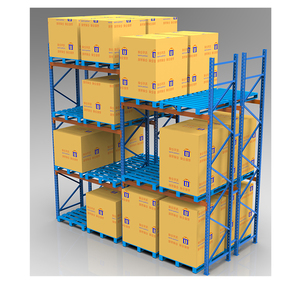
Industrial Single Deep Metal Racking System
Factory-direct heavy-gauge structural assemblies accommodating EUR 1, EUR 2, EUR 3, and non-standard industrial skids safely.
- Certified Raw Material Testing
- Rapid Knock-Down Modularity
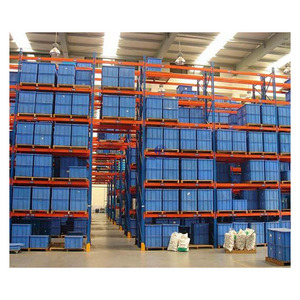
Heda Heavy Engineering Warehouse Pallet Racks
Flagship selective racking infrastructure equipped with reinforced aisle frame protectors and wire mesh fall protection accessories.
- Certified Dynamic Load Rating
- Full Project Engineering Support
1. Executive Overview: Single Deep Selective Racking Dynamics in Moscow Intralogistics
The logistics infrastructure across the Moscow Metropolitan Area and the wider Central Federal District (CFD) represents the highest concentration of high-throughput Class A and Class B+ warehouse stock in the Russian Federation. Spanning critical artery routes including the MKAD (Moscow Ring Road), TsKAD (Central Ring Road), and key arterial federal highways such as the M-11 "Neva", M-4 "Don", and M-7 "Volga", logistics operators confront persistent challenges: soaring square-meter lease rates, ultra-high SKU turnover volumes, rapid retail omnichannel shifts, and severe sub-zero seasonal temperatures. Within this operational ecosystem, the single deep selective pallet racking system remains the undisputed cornerstone of industrial storage engineering.
Single deep selective pallet racking provides unencumbered 100% direct accessibility to every individual pallet bay without requiring repositioning or buffer shuffling. While high-density configurations such as drive-in or deep-lane shuttle systems offer greater spatial density per cubic meter, they compromise selectivity and flexibility when handling tens of thousands of dynamic stock keeping units (SKUs). For the modern third-party logistics provider (3PL), national retail distribution centers (such as FMCG supermarket chains), pharmaceutical distributors, and burgeoning domestic e-commerce marketplaces (Wildberries, Ozon, Yandex Market), immediate pallet access, compatibility with all Material Handling Equipment (MHE), and rapid operational cycle velocity outweigh theoretical volumetric packing densities. This technical whitepaper analyzes engineering frameworks, localized structural challenges, cold-environment metallurgical resilience, and procurement best practices for deploying factory-direct single deep selective pallet racking throughout the Moscow trade territory.
2. Localized Moscow Market Landscape & Strategic Warehouse Growth Corridors
The geographic orientation of Moscow's warehousing real estate has undergone tectonic structural transformations over the past decade. Historically clustered along internal ring lines, massive logistics hubs have migrated decisively toward modern logistics parks situated between 30 km and 60 km beyond the MKAD, anchored along the TsKAD beltway. Key regional corridors include:
- Southern Logistics Axis (Podolsk, Chekhov, Domodedovo, Stupino): Serving as the primary national distribution gateway connecting Moscow with southern Russian agricultural and industrial regions via the M-4 and M-2 corridors. Characterized by high-clearance (12m to 14.5m) mega-fulfillment centers where floor load-bearing capacity and seismic wind/structural frame calculations require heavy-duty upright column sections.
- Northern & North-Western Logistics Hubs (Sheremetyevo, Solnechnogorsk, Dmitrov, Khimki): Heavily integrated with air cargo handling, fast-moving high-value consumer goods, and rapid express courier logistics via the M-11. Racking layouts here prioritize narrow-aisle (VNA) or high-speed selective counterbalanced configurations to achieve maximum picking lines per hour.
- Eastern Industrial Distribution Nodes (Noginsk, Elektrostal, Balashikha): Anchoring heavy manufacturing, automotive spare parts, construction supplies, and chemical processing facilities connecting directly into the Urals and Siberia along the M-7 and M-12 motorways. Racking requirements heavily favor heavy box-beam sections and robust column impact shielding.
As warehouse developers in Moscow optimize construction economics, clear ceiling heights in new builds routinely attain 12.0 m to 14.5 m to underside of haunch. In response, selective pallet racking systems must withstand significant cumulative buckling stresses and eccentric vertical loading. Selecting an experienced factory-direct manufacturing partner capable of engineering cold-formed column geometries exceeding standard thickness, backed by validated finite element modeling (FEM), is paramount for the operational lifespan of the installation.
3. Technical Engineering Specifications & GOST R Regulatory Compliance
Procuring racking systems for the Russian industrial market requires rigorous alignment with statutory national standards. In the Russian Federation, storage equipment design, manufacturing tolerances, structural calculations, and operational safety inspections are strictly governed by state standard bodies. Key structural frameworks include:
- GOST R 55525-2017 ("Storage equipment - Selective pallet racks - General technical conditions"): Dictates precise deflection thresholds (maximum allowable horizontal and vertical beam deflection under working load not to exceed 1/200 of the span), weld seam continuous testing protocols, installation leveling verticality tolerances (within 1/350 to 1/750 of frame height depending on category), and mandatory annual technical inspections.
- GOST R 57381-2017: Specifies structural and dynamic testing parameters for high-tier automated and conventional industrial warehouse equipment.
- SP 20.13330 (Snow, Wind, and Dynamic Structural Loads): Essential for calculating frame anchoring parameters, chemical anchor embedment depths, and floor slab dynamic load transfer through heavy baseplates.
| Engineering Parameter | Standard Export Configuration | Moscow Class A Heavy-Duty Specification | Engineering Compliance Standard |
|---|---|---|---|
| Steel Grade & Metallurgical Profile | Commercial Quality Q235B Cold-Rolled | Q235B / Q355B / 09G2S Equivalent Micro-Alloyed | EN 10025-2 / GOST 19281-2014 |
| Upright Profile Form | 80–90 mm Omega Section (1.5–1.8 mm) | 90–120 mm Heavy Omega Section (2.0–2.5 mm) | FEM 10.2.02 / GOST R 55525-2017 |
| Beam Profile System | Standard C-Profile Interlocking | Heavy-Duty Dual-C Seam-Welded Box Beam | Deflection ≤ L/200 Safe Working Load |
| Beam-to-Column Connection | 3-Claw / 4-Claw Hook Connector | 4-Claw / 5-Claw Torsion-Resistant Connector + Pins | Anti-Dislodgement Safety Tested |
| Surface Finishing & Pretreatment | Single-Stage Spray Coating | 9-Stage Chemical Pretreatment + 80-120μm Epoxy Powder | ISO 12944 / ISO 9227 Corrosion Class |
| Operating Ambient Range | 0°C to +40°C Standard Dry Warehouse | -30°C Low-Temp Cold Chain to +40°C Ambient | Charpy V-Notch Impact Tested Low Temp |
4. Metallurgical Integrity in Sub-Zero Moscow Cold Chain & Deep Freeze Storage
Moscow serves as the supreme transit and consumption center for chilled and frozen perishables across European Russia, featuring massive cold logistics clusters in Vidnoye, Podolsk, and Dmitrov. Operating deep-freeze facilities at temperatures from -18°C to -30°C introduces critical metallurgical engineering risks known as low-temperature embrittlement. Standard carbon steels undergo a ductile-to-brittle transition when sustained at sub-zero temperatures, rendering ordinary mild steel susceptible to micro-fracture propagation and catastrophic structural shearing upon impact from counterbalanced forklifts or reach trucks.
To eliminate this catastrophic risk profile, Guangzhou Heda Shelves Co., Ltd. incorporates high-purity, fully killed low-carbon structural steel alloys featuring optimized manganese-to-carbon ratios, refined ferritic grain structures, and micro-alloying elements (such as Vanadium and Niobium). For Moscow cold storage projects, uprights and connector plates undergo Charpy V-notch impact toughness testing verifying impact resistance down to -30°C. Furthermore, pre-treatment finishing incorporates an electrostatic anti-static polymer powder coating that resists condensation delamination, thermal shock contraction, and micro-cracking caused by cyclic defrost air currents.
5. Comparative Analysis: Single Deep vs. Alternative Racking Systems
Logistics directors and supply chain engineers evaluating facility layouts across the Moscow region must balance volumetric cube utilization against operational labor expenditure. The following comparative matrix outlines how single deep selective racking contrasts with high-density alternatives:
Single Deep Selective
Selectivity: 100% direct access. MHE: Standard reach & counterbalanced. SKU Profile: High SKU diversity, fast rotation. Throughput: Highest pallet cycle rate per hour per operator.
Double Deep Selective
Selectivity: 50% immediate access. MHE: Specialized pantograph reach trucks. SKU Profile: Medium SKU batches (2–4 pallets per SKU). Space Gain: Reduces aisle requirements by ~30%.
Drive-In / Drive-Through
Selectivity: Low (LIFO/FIFO). MHE: Standard trucks enter rack lane. SKU Profile: Very low SKU diversity, bulk commodities. Space Gain: High density but elevated risk of upright structural strikes.
6. Fire Safety Engineering & Russian Ministry of Emergency Situations (EMERCOM) Standards
A vital component of warehouse certification in the Moscow market is compliance with technical fire safety regulations (Federal Law No. 123-FZ and relevant SP fire codes). In massive fulfillment hubs exceeding 20,000 m², internal building compartmentalization, smoke exhaust zones, and early-suppression fast-response (ESFR) ceiling sprinkler geometries dictate racking design parameters.
Single deep selective pallet racking excels in fire engineering clearance due to consistent longitudinal and transverse flue spaces. Flue spaces—unobstructed vertical channels running continuously between back-to-back rack rows (typically 100 mm to 150 mm) and between pallet loads (typically 75 mm to 100 mm)—permit rapid upward heat venting directly toward ceiling heat detectors and allow ESFR sprinkler water curtains to penetrate deep into lower pallet tiers. Factory installations by Guangzhou Heda Shelves include calibrated back-to-back row spacers, rigid beam pallet stops, and heavy-duty wire mesh decking or drop-over galvanized panels. These wire mesh decks prevent loose carton drops into flue cavities while maintaining up to 70% open surface porosity, well above EMERCOM fire code mandates.
7. Factory-Direct Strengths: Why Guangzhou Heda Shelves Co., Ltd. Stands Out
For international general contractors, Russian procurement consortia, and 3PL facility managers, buying direct from a proven Tier-1 manufacturer eliminates distributor markups, guarantees design-phase structural customization, and ensures strict quality control. Established in 2001, Guangzhou Heda Shelves Co., Ltd. has developed into a premier industrial manufacturing powerhouse possessing extensive engineering and export execution credentials:
- Scalable Production Infrastructure: Operating a modern 30,000 square-meter production facility staffed by over 300 experienced engineers, CNC machine operators, and certified welders. With a reliable monthly throughput surpassing 30,000 metric tons of cold-formed steel racking components, large-scale projects requiring 15,000 to 40,000 pallet positions are fabricated within brief manufacturing windows.
- Comprehensive Automated Fabrication: In-house manufacturing encompasses precision high-speed decoiling, continuous automated column punching with micro-millimeter pitch consistency, multi-pass cold roll-forming lines, automated robotic seam-welding cells for box beams and connector plates, continuous automated 9-stage degreasing and pickling wash bays, and double-line electrostatic thermoset powder-coating booths.
- International Certified Management Systems: Certified in strict conformity with ISO 9001:2015 Quality Management Systems (Certificate No. 18624Q00169R0M) and European CE Factory Production Control (FPC No. 2435-CPR-8605159). Every steel heat batch is supplied with certified Mill Test Certificates (MTC) detailing yield strength, tensile limits, and chemical composition.
- Proven Global Project Execution: Over 10,000 completed warehouse systems worldwide across retail distribution, heavy manufacturing, automotive assemblies, pharmaceuticals, and cold-storage operations.
- Comprehensive Export Packing & Freight Coordination: Heavy upright frames and beams are nested onto structural steel transport stillages and packaged with edge protectors and high-tensile strapping, ensuring secure transit across multi-modal rail and container routes without mechanical surface scoring or warping.
8. Cross-Border Multimodal Logistics Architecture to the Moscow Region
Managing the transport of thousands of tons of structural steel components from South China to the Central Federal District requires robust logistics pathways. Guangzhou Heda Shelves supports multiple expedited multi-modal shipping channels:
- Direct Accelerated Rail Freight (China-Europe / Russia Express): Consolidated rail container trains dispatching from major logistics terminals, passing through frontier border crossings (Manzhouli/Zabaikalsk or Dostyk/Alashankou) directly to key Moscow railway hubs including the Vorsino (Kaluga Oblast), Bely Rast, or Elektrougli logistics terminals. Average transit time spans 16 to 22 days, providing rapid schedule predictability for fast-track warehouse openings.
- Sea-Rail Combined Transit via Far East Ports: Container vessels moving from southern Chinese seaports to Vladivostok or Vostochny Commercial Port, followed by immediate transshipment onto the Trans-Siberian rail corridor to Moscow terminals. This route provides optimal freight economics for high-volume orders exceeding 20 to 50 forty-foot high-cube containers (40' HC).
- Customs & Import Documentation Support: Provision of full export customs packages, HS code alignment (Tariff Heading 730890), technical passports, assembly layout diagrams, detailed packing lists, and commercial invoicing enabling seamless customs clearance at Russian customs terminals.
Frequently Asked Questions: Moscow Warehouse Racking
Essential regulatory, technical, and logistical questions addressed by our engineering project managers for Russian procurement directors and warehouse developers.
Engineering Your Moscow Warehouse Storage Solution
Send our senior engineering team your warehouse CAD drawings, ceiling clearance heights, pallet specifications, and forklift model details. We provide customized 2D/3D layouts, structural loading capacity calculations, and factory-direct pricing within 24 hours.
Contact Us