Engineered Industrial Storage Systems Portfolio
Engineered cold-formed steel structural systems designed for maximum volumetric utilization, seismic resilience, high-density SKU throughput, and automated material handling integration.
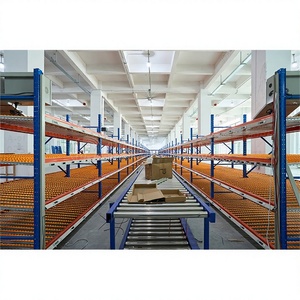
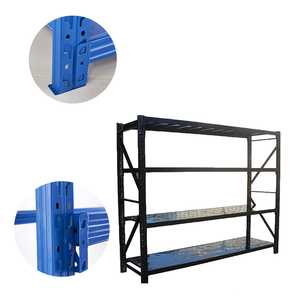
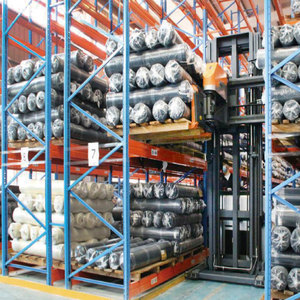
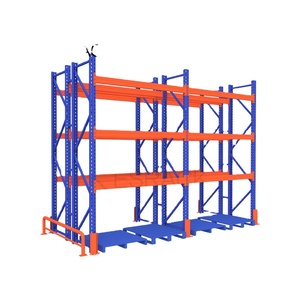
Structural Mechanics, Certified Metallurgy & Compliance Engineering
In modern high-density industrial warehousing, heavy-duty racking is not merely static steel shelving; it is a critical, load-bearing skeletal structure designed to withstand severe static loads, dynamic forklift impacts, and seismic lateral acceleration. At Guangzhou Heda Shelves Co., Ltd. (HEDA Shelves), our structural engineering processes strictly align with premier international codes, including the Australian Standard AS 4084:2023 (Steel Storage Racking), European Standard EN 15512 / FEM 10.2.02, and the American Rack Manufacturers Institute RMI ANSI MH16.1.
1. Steel Metallurgy & Cold-Formed Section Properties
Structural reliability starts with raw material integrity. We source prime structural-grade coils exclusively from verified Tier-1 mills (such as Baosteel and Shougang Group). All cold-formed uprights, load beams, and bracing members utilize premium Q235B and high-tensile Q355B (comparable to ASTM A572 Grade 50 and AS/NZS 3678 Grade 350). Our upright profiles feature an Omega (Ω) 11-13 fold continuous roll-formed cross-section that maximizes the radius of gyration, suppresses torsional-flexural buckling, and ensures an optimal strength-to-weight ratio.
Load beams are fabricated as closed interlocking twin-C box beams continuously seam-welded by automated robotic systems. The 3-claw or 4-claw cold-stamped connectors incorporate engineered safety lock pins capable of resisting upward shear forces exceeding 1,000 kgf (10 kN) to prevent accidental beam dislodgment during high-cycle reach truck and counterbalanced forklift handling operations.
2. Comparative Industrial Racking Systems Matrix
Selecting the optimal racking system requires balancing spatial density against pallet selectivity and SKU throughput speed. The following technical comparison matrix provides logistics architects and procurement directors with empirical metrics across common configurations:
| Storage Racking System | Pallet Selectivity | Floor Utilization | Stock Rotation | Typical Max Load/Bay | Seismic & Impact Rating |
|---|---|---|---|---|---|
| Standard Selective Racking | 100% Direct Access | 35% – 42% | FIFO / LIFO Flexible | Up to 24,000 kg | Standard to High (AS 4084 Compliant) |
| Very Narrow Aisle (VNA) | 100% Direct Access | 55% – 65% | FIFO Controlled | Up to 28,000 kg | High Rigidity (Wire/Mechanical Guidance) |
| FIFO Pallet Live Flow Rack | 1 SKU per Lane | 65% – 75% | Strict FIFO (Gravity Rollers) | Up to 1,500 kg/pallet | Heavy Duty Frame Bracing |
| Radio Shuttle Automation | Lane-Dependent | 75% – 85% | FIFO & LIFO Dual Mode | Up to 2,000 kg/pallet | Robotic Shuttle Channel Engineering |
| Drive-In / Drive-Through | Low (Bulk SKU) | 65% – 75% | Strict LIFO (Drive-In) | Up to 18,000 kg | Top & Back Braced X-Ties |
| Heavy Duty Cantilever | Immediate Front Access | 40% – 55% | Batch / Selective | Up to 5,000 kg/arm | Heavy Base Column Anchoring |
3. Deflection Criteria and Safety Factors
In accordance with Limit State Design philosophies, all our beam designs operate within maximum deflection limits under full Working Load Limit (WLL) of L/200 for standard selective pallet systems, and L/300 to L/400 for high-tolerance automated material handling and automated storage and retrieval system (ASRS) interfaces. Furthermore, a minimum safety factor of 1.5 to 1.67 against ultimate material yield is rigorously engineered into every calculation packet supplied for local engineering sign-off.
Enterprise Advantages: Why Global EPCs & Warehouses Partner with HEDA
With over two decades of dedicated industrial manufacturing in Guangzhou, China, we bridge the gap between competitive factory-direct manufacturing costs and rigorous international engineering compliance.
Verified Certifications & Traceability
Full CE Certification (No. 2435-CPR-8605159), ISO 9001:2015 Quality Management System (No. 18624Q00169R0M), and complete mill test certificates (MTC) providing batch traceability for every coil.
Complimentary 3D CAD & Static Calculations
Our 300+ strong technical workforce includes registered structural engineers who model your facility in 3D BIM and AutoCAD within 24 hours, including section modulus data, load tables, and egress clearances.
Autonomous High-Volume Fabrication
With an active monthly output exceeding 30,000 metric tons across 30,000 square meters of production space, we guarantee prompt delivery schedules for mega-distribution hubs spanning up to 50,000 pallet positions.
Advanced Surface Treatment & C4 Coating
Our automated 10-stage pre-treatment line includes degreasing, ultrasonic cleaning, zinc phosphating, and electrostatic epoxy-polyester powder baking (60-80 μm) with hot-dip galvanizing options for corrosive/cool-room duties.
Biosecurity-Compliant Global Packaging
Export packaging options feature heavy-gauge steel stillages and certified ISPM-15 heat-treated dunnage designed to sail through Australian DAFF, New Zealand MPI, and US CBP inspections without costly quayside quarantine delays.
Turnkey OEM / ODM & Distributor Programs
We provide comprehensive private-label roll-forming, customized upright punching pitch (50mm, 75mm, 76.2mm, teardrop), customized load plaques, and installation engineering supervision worldwide.
Our Closed-Loop 10-Stage Precision Manufacturing Workflow
Dimensional tolerances dictate on-site assembly speed and overall structural stability. Our production line operates within strict ISO 9001 guidelines from raw coil uncoiling to final container loading:
Incoming coil chemistry, yield stress, and elongation validation.
High-speed CNC slitting lines holding width tolerances to ±0.1mm.
Multi-punch presses forming pitch holes with non-cumulative tolerance.
24-station rolling mills shaping intricate Omega upright geometries.
Twin-C profile interlocking and high-frequency automated seam locking.
Shielded metal arc robotic arms fusing end-connectors to beams.
Hot acid pickling, multi-stage water rinsing, and silane/phosphate bath.
Swiss Gema automatic spray guns applying uniform TGIC-free polyester.
200°C curing tunnel ensuring 2H pencil hardness and cross-hatch adhesion.
DFT paint thickness audit, load deflection test, and export banding.
Strategic Global Procurement Trends: Industrial Storage (2025–2035)
Enterprise procurement directors in manufacturing, third-party logistics (3PL), cold-chain grocery, and e-commerce fulfillment are confronting rapidly evolving market demands. Strategic procurement policies are shifting decisively from evaluating basic spot steel prices to assessing long-term systemic durability and lifecycle return on investment (ROI):
1. Transition from Static Storage to Automation-Ready Racking Substructures
Driven by escalating logistics labor expenses and acute warehouse footprint shortages globally, static storage is increasingly retrofitted for automation. Modern procurement requires that racking systems purchased today must be dimensionally compatible with Autonomous Mobile Robots (AMR), Automated Guided Vehicles (AGV), and Radio Shuttle fleets tomorrow. This requires tighter structural manufacturing tolerances (±1.0mm per 10m height) and reinforced floor anchor designs capable of handling high-frequency cyclic loading cycles.
2. Steel Commodity Hedging and Fixed-Cost Supply Agreements
Hot-rolled coil (HRC) steel price volatility represents the single largest variable in storage infrastructure budgets. Strategic enterprise buyers now partner with high-capacity Chinese manufacturers capable of offering volume-hedged material contracts. Utilizing our massive 30,000-ton monthly capacity, HEDA Shelves empowers international distributors to lock in firm pricing on multi-phase turnkey projects spanning 6 to 18 months, neutralizing global currency and commodity price swings.
3. Total Cost of Ownership (TCO) vs. Initial Capital Outlay (CAPEX)
Savvy logistics executives evaluate rack assets over a 15- to 20-year horizon. Low-cost systems that compromise on steel thickness, weld penetration, or surface powder quality suffer from frame twists, beam sagging under continuous static deadweight, paint flaking, and corrosion in damp climates. Incorporating impact-absorbing post protectors, reinforced bottom column wraps, and multi-tier mezzanine floor integrations significantly cuts long-term maintenance outages and avoids catastrophic rack collapses.
Technological & Material Development Trends in Heavy Industrial Racking
The structural engineering field for intra-logistics is experiencing rapid scientific acceleration. HEDA Shelves continuously invests in advanced materials research, sensor integration, and sustainable metallurgy to build resilient, next-generation warehousing systems:
1. High-Yield Micro-Alloyed Cold-Formed Steels
Emerging developments in thermo-mechanically controlled processed (TMCP) high-strength micro-alloyed steels allow us to achieve yield strengths of 420 MPa to 550 MPa while preserving ductile elongation characteristics. This metallurgical enhancement allows for thinner section profiles that decrease the dead load on warehouse slabs, substantially reduce global shipping container weights, and lower carbon emissions per pallet position without compromising ultimate load capacity.
2. Integrated Structural Health Monitoring (SHM) & IoT Sensorization
Industrial warehousing is transitioning into the Industry 4.0 paradigm. We are pioneering integration channels for wireless tri-axial accelerometer sensors and embedded fiber-optic strain gauges inside primary upright columns. These telemetry modules monitor continuous elastic strain, capture peak forklift impact shocks, and detect micro-deflections in real time. Fleet managers receive instant mobile alerts whenever a structural member experiences an impact exceeding certified safe engineering thresholds.
3. Eco-Friendly Circular Powder Chemistry & Low-VOC Thermal Systems
Environmental, Social, and Governance (ESG) compliance is now a prerequisite for multinational enterprise contracts. HEDA Shelves has eliminated all heavy-metal and TGIC-based chemical agents across our coating lines. Our multi-stage curing furnaces recapture exhaust heat, reducing energy consumption per metric ton of steel by 24%, while our zero-effluent wastewater recycling system ensures rigorous environmental responsibility.
Frequently Asked Questions on Importing Industrial Racking Systems
Clear, definitive answers to technical engineering, compliance verification, and international cross-border logistics questions frequently asked by EPC contractors and warehouse owners.